
 By Basiran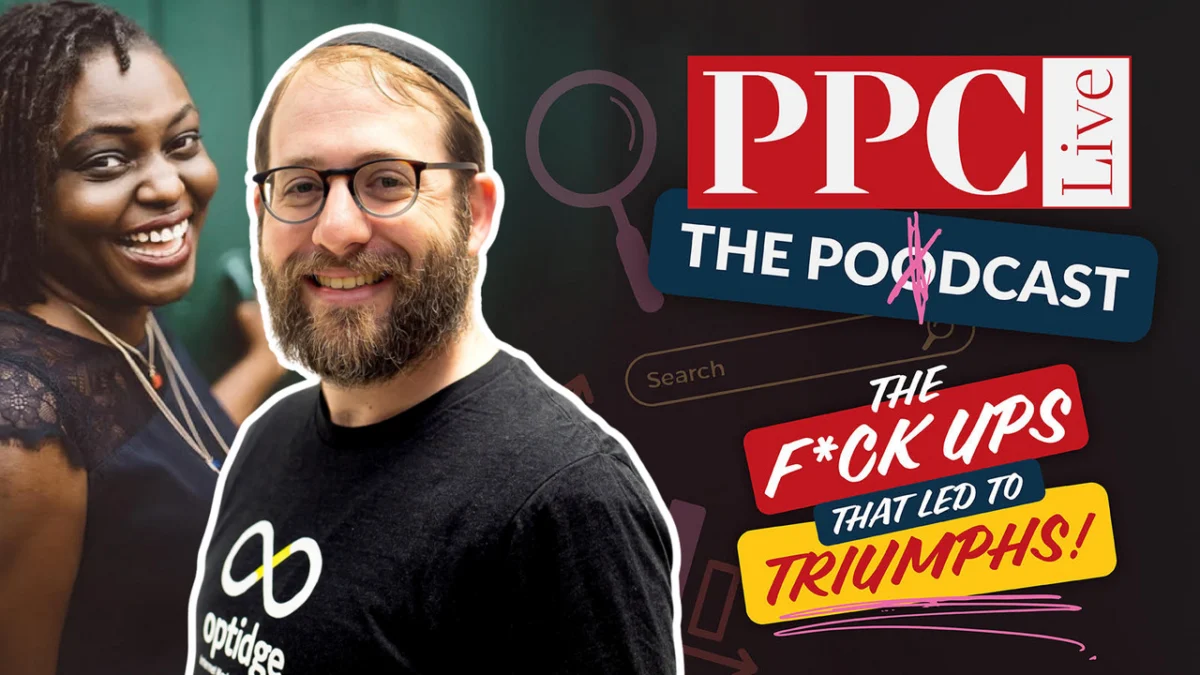
In the high-stakes world of pay-per-click (PPC) advertising, success is almost universally measured by numbers on a dashboard. Marketers celebrate soaring click-through rates, declining costs per acquisition, and climbing conversion curves. Yet, as Danny Gavin, founder of Houston-based digital marketing agency Optidge, recently shared on PPC Live The Podcast, there is a dangerous gulf between what an advertising platform reports as a "conversion" and what a client experiences as a business outcome.
For Gavin, this lesson was forged in a painful, multi-month operational crisis early in his agency’s history. It was a technical failure that did not stem from a flawed bidding strategy, a poor creative asset, or an overspent budget, but rather from a silent breakdown in a simple backend email notification system.
The fallout from that incident, how it was handled, and the structural changes it provoked offer a masterclass in agency operations, client communication, and the critical importance of human oversight in an increasingly automated marketing landscape.
Main Facts: The Silent Disconnect Between Ads and Reality
At the time of the incident, Optidge was a boutique agency operating with a lean team. One of their key clients was an autism therapy provider—a business where leads are not merely transactional queries but critical lifelines for families seeking urgent support.
From a purely technical PPC perspective, the campaigns were performing exceptionally well. Inside the Google Ads interface, the data paint a picture of textbook optimization:
- Click Volume: Consistently increasing week-over-week.
- Cost Per Lead (CPL): Dropping to highly efficient levels.
- Conversion Rate: Showing strong, positive upward trends.
To the PPC managers running the account, the campaign was an unqualified success. However, the client’s real-world experience was the exact opposite. Weeks passed, and the therapy center received no phone calls, no email inquiries, and no new patient bookings. The client’s frustration escalated as they watched their advertising budget disappear without a single tangible business opportunity to show for it.
[Google Ads Dashboard] ---> Shows "Conversions" (Forms Submitted & Stored in Database)
                                     |
                                     v
                        [SMTP/Email Notification Relay]  <--- TECHNICAL FAILURE (Emails Blocked/Not Sent)
                                     |
                                     x
[Autism Therapy Client] <--- Receives 0 Lead Notifications (Believes Campaigns are Failing)
The issue lay entirely outside of Google Ads and the visual design of the landing page. While the landing page forms successfully captured user data and stored it in the website’s database, the automated email notification system designed to alert the client of a new lead had failed. Because neither the agency nor the client realized the email relay had broken, the campaign ran silently in a vacuum for nearly two months, capturing high-quality leads that immediately went cold in an unread database.
Chronology of the Crisis
To understand the systemic nature of this failure, it is useful to map out the timeline of how the error occurred, persisted, and was ultimately resolved.
Phase 1: Campaign Launch and Initial Success
Optidge designed and launched a targeted search campaign for the autism therapy provider. In the initial weeks, the campaign generated immediate traction. Landing page forms were submitted, and the technical tracking pixels fired correctly, reporting successful conversions back to the Google Ads algorithm.
Phase 2: The Silent Interval (Weeks 1 to 8)
As the campaigns entered their second month, the agency continued to optimize based on the positive feedback loop within Google Ads. Unbeknownst to the team, a server-side update or SMTP configuration error caused the form-handler script to stop sending email notifications. The database continued to log the entries, but the real-time alerts to the client ceased.
Phase 3: The Escalation of Client Frustration
The client, who shared a personal connection with Gavin, reached out to express deep concern over the complete lack of incoming leads. Because the agency team was looking strictly at the platform metrics, they initially assumed there might be a lag in the client’s internal intake process or sales tracking, rather than a technical failure on the website itself.
Phase 4: The Technical Audit and Discovery
Driven by the persistent disconnect between the client’s reports and the platform data, the agency initiated a deep-dive technical audit. Upon logging directly into the website’s backend database, they discovered dozens of unforwarded leads. The leads were highly qualified, containing detailed inquiries from families, but they had been sitting idle for up to eight weeks.
Phase 5: Damage Control and Account Termination
Gavin chose a path of radical transparency. He exported the raw data from the database and delivered all recovered leads to the client immediately, acknowledging the agency’s oversight without excuse. Despite the honesty, the relationship was severely strained; the leads had gone cold, and the therapy center had lost weeks of valuable operational time. The client ultimately decided to terminate the contract.
Phase 6: The Long-Term Epilogue
Years after the contract was terminated, the same client reached out to Gavin to request a proposal to work together again. In her communication, she noted that despite the technical failure, Optidge remained the most professional and honest agency she had ever employed, citing their transparent handling of the crisis as the defining factor in her long-term assessment of their character.
Supporting Data: Common Point-of-Failure Vulnerabilities in Modern PPC
The silent failure experienced by Optidge is far from an isolated incident. In modern digital marketing, agencies frequently encounter blind spots where technical tracking fails to align with CRM reality.
+-------------------------------------------------------------+
|              COMMON BACKEND LEAD-FLOW FAILURES              |
+-------------------------------------------------------------+
|  1. CRM Integration Breakdowns (Expired API Tokens)          |
|  2. Silent SMTP Failures (Spam Filters & Server Blocklists)  |
|  3. Unverified Offline Conversion Uploads                   |
|  4. Broken Javascript Triggers on Form Submissions           |
+-------------------------------------------------------------+
According to industry audits, a significant percentage of lead-generation campaigns suffer from tracking discrepancies. When analyzing backend infrastructures, agencies regularly uncover accounts that fail to address key points of failure:
- Unverified CRM Integrations: Leads may fire a Google Ads tag on a "Thank You" page but fail to write to the client’s CRM (such as Salesforce or HubSpot) due to expired API tokens or field-mapping errors.
- Lack of Closed-Loop Reporting: Optimizing campaigns based purely on form fills rather than actual closed sales or qualified opportunities.
- Missing Offline Conversion Tracking (OCT): Failing to import actual sales data back into Google Ads, forcing the algorithm to optimize for volume rather than lead quality.
- Failure to Audit the Lead-to-Sale Pipeline: Treating the lead generation process as complete the moment a user clicks "submit."
Official Responses and Operational Overhaul
Reflecting on the crisis, Danny Gavin emphasized that the emotional toll of the mistake far outweighed the financial loss. Because the client was a personal contact, the disconnect between reporting "success" and delivering "zero value" felt like a profound ethical failure.
"Honesty became the only viable response," Gavin noted. "We didn’t try to hide it. We owned it, extracted the data, and focused on ensuring it could never happen again."
To prevent similar technical blind spots from threatening client relationships, Optidge fundamentally restructured its operational procedures, implementing a multi-tiered safety net.
1. Multi-Channel Safeguards for Lead Capture
Rather than relying on a single email notification, the agency introduced redundant communication channels for every lead-generation campaign:
- Database Mirroring: Real-time logging of all form submissions in a secure, secondary database.
- SMS and Slack Alerts: Instant notifications sent via third-party APIs (such as Zapier) directly to internal Slack channels and client mobile numbers, bypassing email servers entirely.
- Mandatory Manual Testing: A strict standard operating procedure (SOP) requiring account managers to manually submit test leads through every active landing page on a weekly basis to verify end-to-end delivery.
2. Separation of Technical Execution and Client Management
One of the core organizational lessons from the incident was the danger of expecting technical PPC specialists to handle all client communications. When a specialist is deep in the weeds of keyword bids and search term reports, they can easily lose sight of the client’s day-to-day business reality.
Today, Optidge employs dedicated Account Managers whose primary responsibility is to serve as a bridge between the technical team and the client. These managers do not look at Google Ads metrics in isolation; their job is to regularly ask the client: "Are these leads actually hitting your desk, and what is the quality of the conversations you are having?"
Implications for the Industry: The Intersection of AI and Human Oversight
The lessons learned from Optidge’s early technical failure take on new relevance in the era of artificial intelligence and machine learning. Today, advertising platforms like Google and Meta urge marketers to hand over control to automated systems like Performance Max and Advantage+ Shopping.
Where AI Genuinely Enhances Lead Generation
Gavin acknowledges that AI has revolutionized certain aspects of lead validation, particularly in call-tracking and quality analysis. Instead of manually listening to hours of recorded phone calls to verify if a lead was qualified, modern AI tools can:
- Transcribe phone calls instantly.
- Conduct sentiment analysis to determine if the caller was a viable prospect.
- Automatically flag and filter out spam, robocalls, and wrong numbers.
- Provide real-time feedback to the Google Ads algorithm to optimize bids for high-intent callers.
The Critical Need for "Human-in-the-Loop" Verification
Despite these advancements, Gavin warns against treating AI and automation as infallible systems. Just as a silent server-side script failed in his agency’s early days, AI systems are prone to their own unique, silent errors:
                  [THE HUMAN-IN-THE-LOOP TRIANGLE]

                         Human Oversight
                         (SOPs, Audits,
                          Verification)
                              /
                             /
                            /
                           /
                          /
                         /
  AI & Automation ------+-------------+------ Business Outcomes
  (Bidding, Scripting,                         (Sales, Revenue,
Call Transcripts) Patient Intake)- Hallucinations and Context Failures: AI models can misinterpret customer inquiries or misclassify leads based on subtle nuances in human speech.
- Privacy and Compliance Constraints: In highly regulated fields such as healthcare (governed by HIPAA in the United States) or finance, routing sensitive user data through unencrypted AI processors can lead to severe legal and compliance violations.
- The "Black Box" Trap: Relying entirely on automated platforms to optimize campaigns can lead to a state of complacency where marketers assume everything is functioning correctly simply because the platform’s self-reported charts are green.
Conclusion: The Value of a Mistake
The ultimate measure of an agency’s maturity is not the complete absence of errors, but the systemic resilience built in response to them. Danny Gavin’s experience demonstrates that while technical perfection is an admirable goal, operational transparency and human empathy are the true foundations of client retention. In an industry increasingly dominated by automated algorithms, the agencies that thrive will be those that remember to step outside the dashboard and verify the human reality of their results.
 Jia Lissa
  Nana Muazin
  Layla Zulfa