In a move that further cements its transition from a pure-play artificial intelligence research laboratory to a formidable competitor in the global digital advertising market, OpenAI has quietly rolled out a native, AI-powered ad generation feature within its "ChatGPT Ads" platform.
The tool, discovered by digital marketing professionals, is designed to automate the creation of advertising assets. By analyzing an advertiser’s landing page and campaign settings, the system automatically drafts ad copy and configurations. The advertiser then reviews, edits, and approves these assets before they are served to users navigating ChatGPT’s conversational interface.
This development marks a significant milestone in the monetization of conversational search. It positions OpenAI to capture a larger share of the performance marketing budget currently dominated by tech giants like Google and Meta.
1. Main Facts: Inside the New ChatGPT Ad Generation Feature
The automated ad generation utility was first spotted in the wild by Anthony Higman, a prominent search engine marketing (SEM) expert and founder of the digital advertising agency Adsback. Higman shared screenshots of the newly integrated interface on the social media platform X (formerly Twitter), sparking immediate discussion across the pay-per-click (PPC) and search engine marketing industries.
[Webpage / Campaign Settings] ──> [OpenAI Ad Generator] ──> [Draft Ad Variation] ──> [Human Review & Edit] ──> [Live on ChatGPT]
How the Interface Works
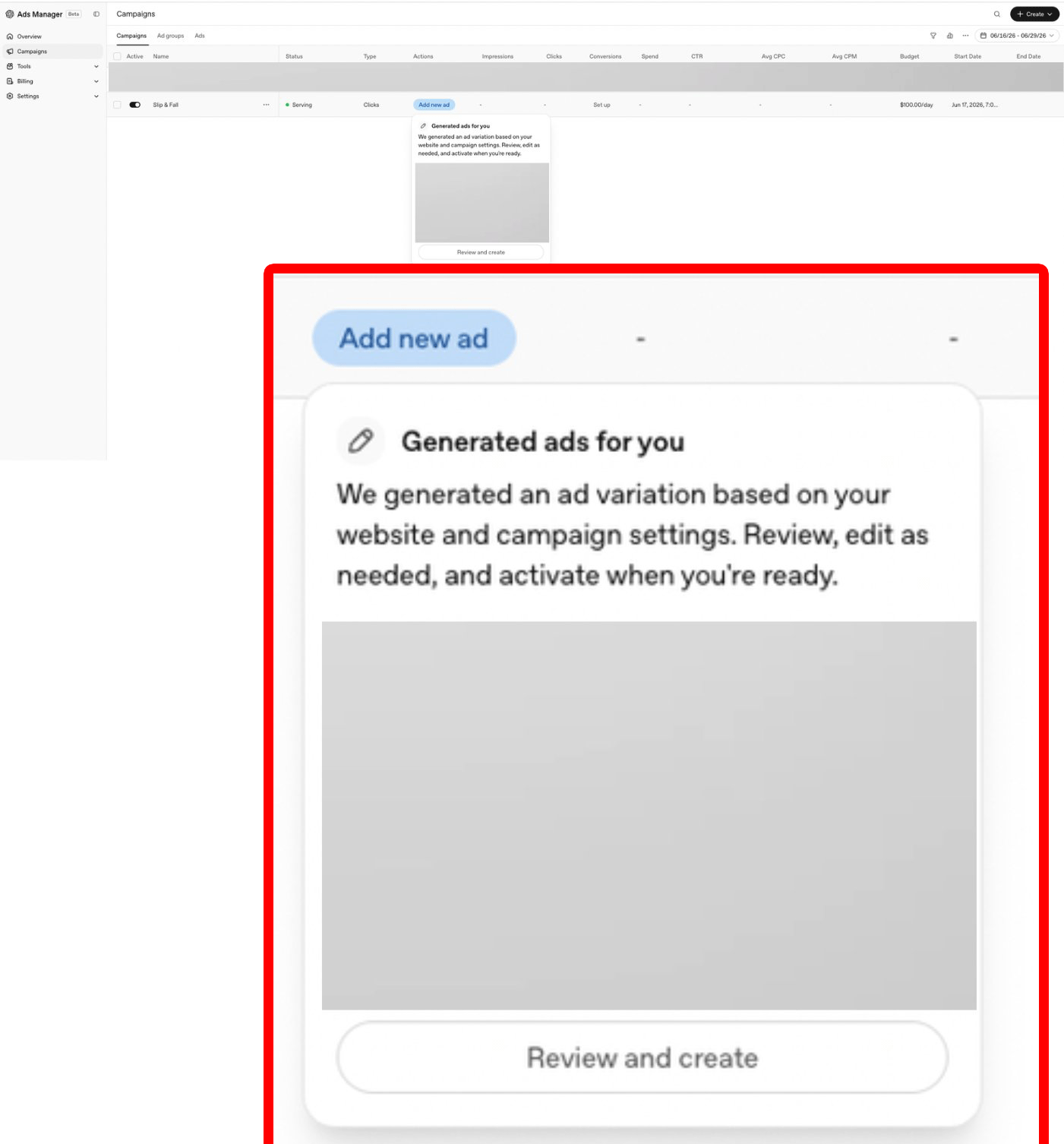
According to the interface leaks, the feature is housed directly within the advertiser dashboard under the standard "Add new ad" workflow. Upon selecting this option, users are presented with a prompt to "generate ads for you."
Once activated, the platform’s underlying language models crawl the advertiser’s specified landing page, parse its context, and cross-reference this information with active campaign parameters (such as target audience demographics, bidding strategies, and search intent indicators).
The system then displays a notification to the user:
"We generated an ad variation based on your website and campaign settings. Review, edit as needed, and activate when you’re ready."
From this stage, the marketer can click "Review and create" to modify the copy, adjust call-to-action buttons, or approve the asset for immediate delivery.
The "Quick Duplicate" Option
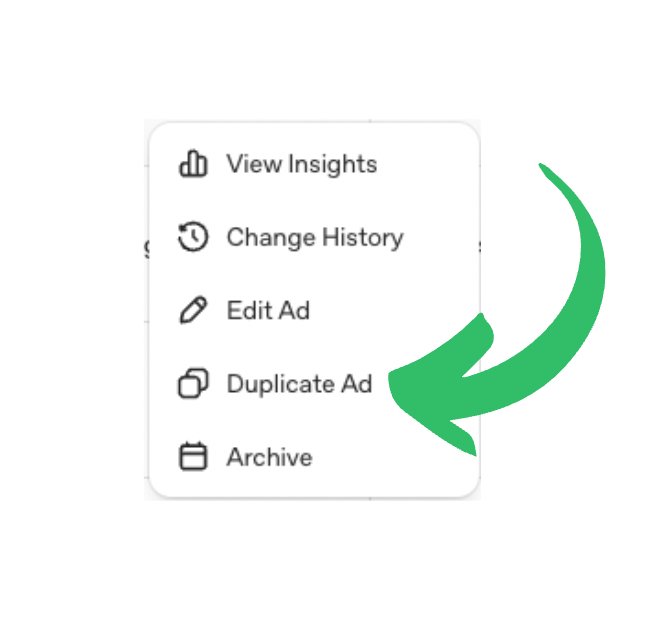
In addition to automated generation, the update introduces a streamlined "Duplicate Ad" utility. This feature allows marketers to quickly clone existing, high-performing ad setups and apply minor creative variations or targeting tweaks. This capability is essential for running A/B tests and rapidly scaling campaigns without manually rebuilding ad groups from scratch.
2. Chronology: The Evolution of OpenAI’s Advertising Ecosystem
To understand the significance of this update, it is necessary to examine the rapid timeline of OpenAI’s commercialization efforts, which have evolved from ad-free consumer subscriptions to a highly sophisticated, automated ad-tech stack.
2022–2023: Consumer Growth & Subscription Focus
   │   (ChatGPT launches; rapid user acquisition; monetized via ChatGPT Plus)
   ▼
Mid-2024: SearchGPT Prototype
   │   (OpenAI tests real-time web search interface; signals direct threat to Google)
   ▼
Late 2024: ChatGPT Search Integration
   │   (Search engine capabilities fully integrated into the main ChatGPT interface)
   ▼
Early 2025: "ChatGPT Ads" Platform Rollout
   │   (Closed beta testing of sponsored links and conversational ads)
   ▼
Mid-2026: Fully Automated Ad Creation (Current State)
       (Native AI ad generation launched to streamline campaign setups)
November 2022 – Late 2023: The Consumer Foundations. OpenAI launches ChatGPT, achieving the fastest-growing consumer application user base in history at the time. The company’s early monetization strategy relies strictly on consumer subscriptions (ChatGPT Plus) and API licensing fees for enterprise developers.
July 2024: The SearchGPT Threat. OpenAI announces "SearchGPT," a temporary prototype of new search features designed to combine the strength of its AI models with real-time information from the web. This marks the company’s first direct entry into the search market, raising immediate questions about how it will fund free search queries at scale.
Late 2024: Integrating Conversational Search. SearchGPT features are fully merged into the standard ChatGPT interface. Users can access up-to-the-minute news, sports scores, and stock quotes directly within their chats. Industry analysts note that conversational queries are highly monetizable, mirroring the commercial intent of traditional Google search queries.
Early 2025: The Launch of ChatGPT Ads. OpenAI officially introduces its proprietary advertising platform. The initial offering focuses on sponsored citations, contextual product recommendations, and inline native ads that appear naturally within conversational responses.
July 2026: End-to-End Automation. Realizing that onboarding traditional search advertisers requires simplifying creative workflows, OpenAI rolls out the native "generate ads for you" feature. This tool lowers the barrier to entry, allowing businesses to transition their budget from Google and Meta to ChatGPT with minimal creative friction.
3. Supporting Data & Technical Mechanics
The integration of automated creative tools is not merely a convenience; it is a structural necessity for modern ad platforms. In the digital advertising space, speed-to-market and creative volume are critical performance drivers.
The Underlying Technology
The automated generation tool relies on a specialized implementation of Retrieval-Augmented Generation (RAG) coupled with OpenAI’s flagship multimodal models (such as GPT-4o).
Semantic Parsing: The system crawls the destination URL provided by the advertiser, extracting key value propositions, brand messaging, pricing details, and call-to-action (CTA) phrases.
Context Matching: The AI aligns the extracted website data with user search intents typically observed within ChatGPT’s conversational interface.
Creative Assembly: The engine drafts optimized headlines, body copy, and button text that adhere to OpenAI’s strict ad formatting and policy guidelines.
Market Context: The Shift Toward Autonomous Ad-Tech
OpenAI’s feature mirrors successful automation suites deployed by legacy ad networks. The digital marketing ecosystem has increasingly favored "black box" automated solutions that prioritize performance algorithms over manual control:
Generative AI asset creation (text/images), budget allocation across YouTube, Search, and Display.
Meta
Advantage+ Creative
Automated image enhancements, text variations, personalized catalog matches.
According to industry reports from agencies like Search Engine Land and Semrush, over 73% of digital marketers currently use generative AI tools to assist in copy drafting or creative ideation. By offering this technology natively within its platform, OpenAI eliminates the need for third-party copywriting software, keeping advertisers within its ecosystem.
4. Official Responses and Industry Reactions
While OpenAI has not published an official press release for this specific UI update, the design choices and helper text within the platform reveal the company’s strategic priorities.
The Advertiser’s Dilemma: Speed vs. Control
Reaction from the digital marketing community has been a mix of enthusiasm and caution.
Anthony Higman, whose screenshots first brought the feature to light, emphasized the convenience of the duplication and generation features but urged marketers to remain vigilant:
"As a marketer, you should be very careful when using AI to generate ads. Make sure to review the ads that were generated for you carefully so they meet your branding and marketing criteria, including your ROI goals."
This sentiment is echoed by search marketing consultants worldwide. While automated copy generation can significantly reduce the hours spent drafting campaigns, it carries inherent risks regarding brand voice, compliance, and accuracy.
The Professional Consensus
Many practitioners view the tool as a double-edged sword:
The Optimistic View: For small and medium-sized businesses (SMBs) without dedicated copywriting resources, native AI generation democratizes access to high-quality, conversion-focused ad copy. It allows lean teams to compete with larger brands on equal footing.
The Skeptical View: Enterprise brands with strict legal guidelines, medical companies subject to regulatory compliance, and luxury brands with highly curated voices cannot afford to run unvetted, machine-generated copy. The risk of AI "hallucinations"—where the model invents product specifications, discounts, or guarantees not found on the website—remains a concern.
5. Strategic Implications for Marketers and the Ad-Tech Landscape
The introduction of native ad generation within ChatGPT Ads signals a broader shift in how brands must approach digital marketing in the era of conversational search.
Traditional Search Engine Results Page (SERP)
[ Query ] ──> [ List of Links ] ──> [ Multiple Ad Banners (High Noise) ]

Conversational Search Interface
[ Query ] ──> [ Synthesized Answer ] ──> [ Inline, Contextual Ad (High Focus) ]
1. The Death of the Traditional SERP Ad
Traditional search ads rely on matching keywords to user queries and displaying a list of sponsored links on a search engine results page (SERP). Conversational search is different. It provides users with a single, synthesized response.
Ads in this environment must be highly contextual, less intrusive, and deeply aligned with the ongoing dialogue. OpenAI’s native generation tool is specifically designed to write ads that fit this conversational tone, making them feel like natural recommendations rather than disruptive banners.
2. The Changing Role of the PPC Specialist
As ad platforms automate copywriting, bidding, and targeting, the day-to-day responsibilities of PPC specialists are shifting:
From Production to Curation: Marketers will spend less time drafting headlines and descriptions and more time editing, auditing, and guiding AI systems.
Strategic Brand Governance: The primary challenge for modern agencies will be defining the guardrails within which AI ad platforms operate, ensuring compliance, brand safety, and alignment with business goals.
Deep Landing Page Optimization: Because OpenAI’s ad generator relies heavily on scanning landing pages, the quality of an advertiser’s website copy will directly dictate the quality of its AI-generated ads. Conversion Rate Optimization (CRO) and clear on-page copywriting will become even more critical.
3. A Direct Challenge to the Google-Meta Duopoly
For years, Google and Meta have maintained a duopoly on digital ad spend, largely due to their sophisticated self-serve ad platforms and automated optimization suites. By building an intuitive, automated ad creation pipeline directly into ChatGPT, OpenAI is removing the technical friction that often deters advertisers from trying new platforms.
If ChatGPT can continue to deliver high-intent user traffic alongside frictionless ad creation, it could capture a meaningful portion of performance marketing budgets, particularly from tech-forward brands and direct-to-consumer (DTC) e-commerce companies.
6. Best Practices for Advertisers Using ChatGPT Ad Generation
For digital marketers planning to test OpenAI’s new automated ad tools, industry experts recommend a structured approach to mitigate risks:
Establish a Multi-Step Review Protocol: Never allow AI-generated ads to activate automatically. Establish a strict policy where all generated variations must be reviewed by a human editor before launch.
Verify Claims and Compliance: Carefully check all generated headlines and descriptions against actual product capabilities, return policies, and legal disclosures. Ensure the AI has not made unauthorized promises or exaggerated claims.
A/B Test Human vs. Machine: Run split tests comparing your best human-written ad copy against the AI-generated variations. This will help you measure the actual performance of the platform’s native copy generation.
Optimize On-Page Metadata: Before running the generator, ensure your landing page has clear, up-to-date metadata, structured headings, and concise product descriptions. This gives the AI the cleanest possible data source to build from.
As conversational interfaces continue to change how consumers find information online, the tools used to reach those consumers must evolve in tandem. OpenAI’s latest update demonstrates that the future of advertising will not only be powered by AI delivery but shaped by AI creation.

 By Asep Darmawan

 Jia Lissa
  Nana Muazin
  Layla Zulfa