
 By Raul Delapena Setiawan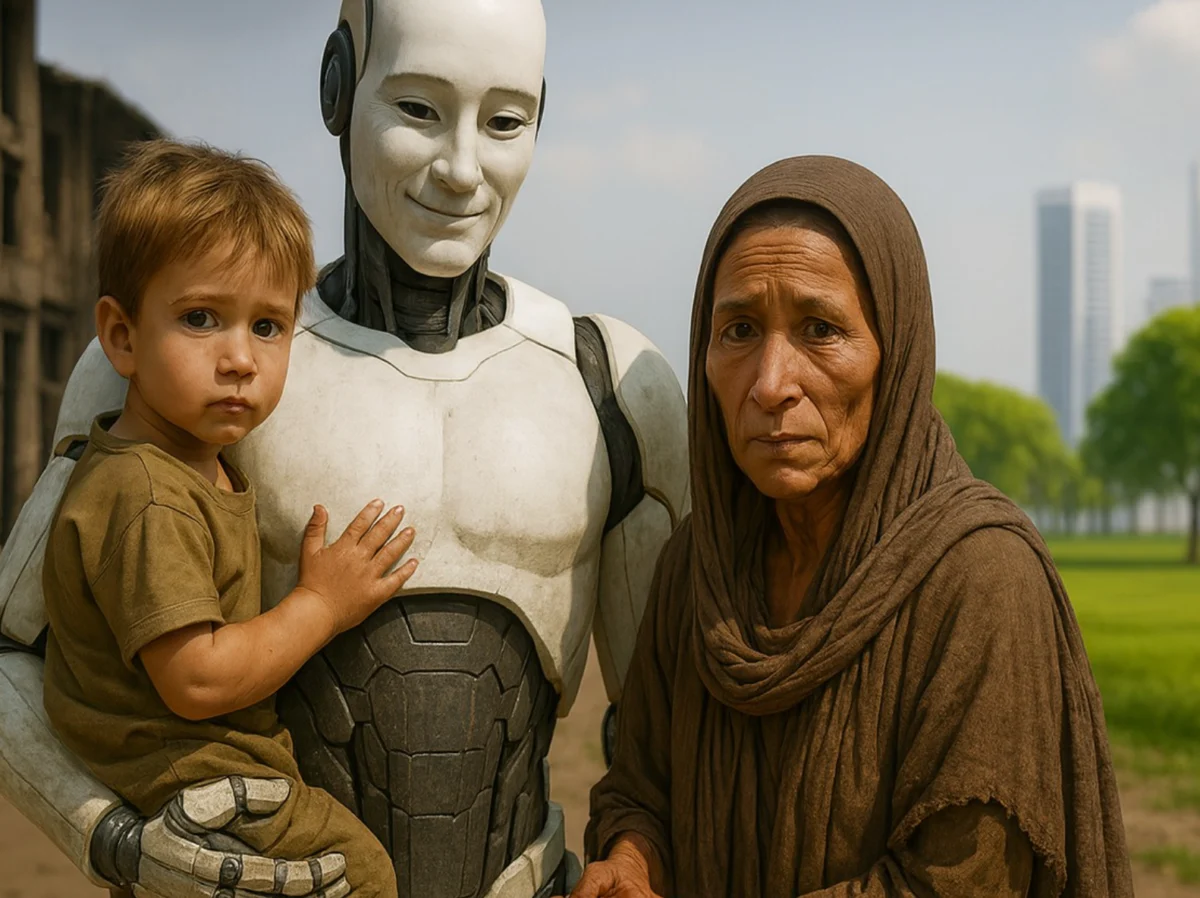
Main Facts: The End of the PR Stunt Era
For decades, the concept of the "android revolution" was a comfortable fixture of science fiction, safely sequestered within the pages of Isaac Asimov novels or the cinematic frames of Blade Runner. However, recent technological leaps have signaled a definitive end to the era of humanoid robots as mere public relations stunts. We are no longer looking at clunky machines designed to wave at crowds; we are witnessing the birth of sophisticated entities capable of autonomous labor, nuanced expression, and unsettling realism.
The current landscape is defined by a shift from laboratory curiosity to industrial and social integration. Companies like Figure AI, Tesla, and Hanson Robotics are not just building machines; they are developing "synthetic colleagues" and "digital companions." As these robots become increasingly lifelike, society faces a looming convergence of psychological, economic, and ethical challenges. The fundamental question is no longer whether we can build machines that look like us, but how society will function when the boundary between biological humans and electromechanical androids becomes virtually indistinguishable.
Chronology: From Stair-Climbing to Sheet Metal
To understand the velocity of this evolution, one must look at the timeline of development over the last quarter-century.
2000–2015: The Era of Mobility and Balance
In November 2000, Honda introduced ASIMO, a robot that became the face of early humanoid technology. At the time, ASIMO’s ability to walk up a flight of stairs or kick a soccer ball was considered the pinnacle of engineering. However, these machines were essentially pre-programmed puppets, requiring millions of lines of rigid code to perform even the simplest tasks. They were feats of mechanical engineering, but they lacked "intelligence."
2016–2022: The Rise of Social AI and Mimicry
In 2016, Hanson Robotics activated Sophia. While her mechanical movements were limited, Sophia represented a breakthrough in social robotics. She could simulate 60 different facial expressions and engage in conversation using early natural language processing. This period marked the beginning of the "Uncanny Valley" in the public consciousness—the psychological phenomenon where a near-human object triggers a sense of unease or revulsion in observers.
2023–Present: The AI Convergence
The current era is defined by the integration of Generative AI and advanced robotics. In 2024, Figure AI’s "Figure 02" model successfully completed a multi-month deployment at BMW’s Spartanburg plant. Unlike ASIMO, Figure 02 did not need specific programming to handle sheet metal; it learned by watching humans. Simultaneously, Tesla began testing its Optimus humanoids within its own Gigafactories, aiming for mass-market industrial scale by 2026.

Supporting Data: The Anatomy of a Modern Android
What separates a 2025-era humanoid from its predecessors is not just its exterior, but its internal "cognitive" architecture.
The Digital Brain: Neural Networks and GR00T
Modern robots are powered by foundation models specifically designed for embodiment. NVIDIA’s Project GR00T and Figure AI’s Helix software allow robots to understand natural language and emulate movements through "reinforcement learning." Data suggests that these robots can now reduce the time taken to learn a new manual task (like folding laundry or sorting parts) from months of coding to just hours of visual observation.
Physical Synthesis: Skin and Muscle
To cross the threshold of indistinguishability, scientists are moving beyond plastic and metal. Current research into silicone composites has produced artificial skin that is not only flexible but possesses thermal properties to mimic human warmth.

- Micro-actuators: Modern heads, such as those developed by Realbotix (the Aria model), utilize hundreds of tiny, silent motors that attach to the "skull" to create micro-expressions—the subtle twitches, blinks, and sighs that signal life.
- Intentional Flaws: AI is now being trained to incorporate human imperfections. By programming a robot to pause, use "filler" words like "um," or blink randomly, developers can bypass the Uncanny Valley, tricking the human brain into accepting the machine as a peer.
Current Limitations
Despite the progress, several data points highlight the hurdles remaining:
- Energy Density: Most current humanoids can only operate for 2 to 5 hours before requiring a recharge.
- Navigation: While factory floors are controlled environments, "the wild"—unstructured public streets—presents a navigational challenge that current bipedal systems still struggle to solve safely.
- Cost: A high-end humanoid like Realbotix’s Aria can cost upwards of $175,000, though mass production is expected to drive this down to the price of a mid-sized sedan within a decade.
Official Responses and Industry Perspectives
The industrial sector has responded with aggressive optimism, while the social sector remains wary.
The Industrial View
BMW and Tesla executives have framed the deployment of humanoids as a solution to "labor shortages" and "ergonomic risks." Industry leaders argue that by delegating the "3D" jobs—Dull, Dirty, and Dangerous—to robots, they can increase productivity while protecting human workers from musculoskeletal injuries and toxic environments. NVIDIA CEO Jensen Huang has frequently stated that "everything that moves will eventually be autonomous," positioning humanoid robots as the ultimate evolution of the mobile computer.

The Social and Healthcare Perspective
In nations like Japan and South Korea, which face a demographic "silver tsunami" (rapidly aging populations), the government has been more welcoming of companion robots. Official health departments are exploring the use of hyper-realistic robots in psychotherapy and elderly care. The goal is to provide 24/7 monitoring and emotional companionship that a dwindling human workforce cannot provide.
The Regulatory Void
Currently, there is no global "Android Treaty." While the EU has made strides with the AI Act, specific regulations regarding the physical presence of humanoids in public spaces remain largely unwritten. Ethical boards are currently debating whether robots should be legally required to identify themselves as non-biological entities at all times.
Implications: The Social and Existential Shift
As we move toward a world where androids walk among us, the implications span from the utopian to the dystopian.

Economic Displacement and the Post-Scarcity Myth
The most immediate concern is the displacement of blue-collar labor. If a humanoid can perform the work of a warehouse clerk, a driver, or a construction worker for the cost of electricity, millions of jobs could vanish in a single decade. Proponents argue this will lead to a "post-scarcity" economy where the cost of goods plummets, potentially necessitating a Universal Basic Income (UBI). However, critics warn of a massive wealth gap where the owners of the robot fleets accumulate unprecedented power.
The Erosion of Human Authenticity
Perhaps the most profound impact is psychological. As robots become perfect substitutes for human presence—always patient, never argumentative, and perpetually available—there is a risk of "social withdrawal." If a person can buy a lifelike companion that caters to their every emotional whim, the messy, difficult, but rewarding nature of real human relationships may lose its appeal. This could lead to a crisis of isolation, where the "perfect" machine becomes the enemy of the "good" human.
Security and National Risks
The potential for misuse by malicious actors is significant. Hyper-realistic androids present a new frontier for:

- Infiltration: An android that looks like a specific CEO or political leader could bypass physical security measures that digital hacks cannot.
- Synthetic Empathy: Corporations could use robots to manipulate consumers, using a "friendly" face to harvest data or push products in the sanctity of a person’s home.
- Autonomous Surveillance: Governments could deploy indistinguishable androids in public spaces for covert monitoring, effectively ending the concept of public anonymity.
Conclusion: Establishing Ethical Guardrails
The arrival of lifelike humanoid robots acts as a mirror, forcing us to define what truly makes us unique. If a machine can talk, feel, work, and express emotion as well as a human, our value must be found elsewhere—in our biological history, our shared vulnerability, and our capacity for genuine, unprogrammed creativity.
To ensure the "Android Revolution" benefits rather than destroys the social fabric, three guardrails are essential:
- The Transparency Mandate: Every humanoid must be easily identifiable through a digital or physical "watermark" to prevent identity theft and deception.
- Hardcoded Ethics: Safety protocols, including "kill switches" and non-harm directives, must be embedded in the hardware level, making them unalterable by the software "brain."
- Labor Transition Funds: Governments must tax robot labor to fund the retraining and support of the human workforce they displace.
Technological progress cannot be stopped, but it can be steered. The goal of the humanoid era should not be to replace the human experience, but to liberate us from drudgery, allowing us to focus on the art, philosophy, and connection that machines—no matter how lifelike—can only ever simulate.
 Nana Wu
  Nana
Nana 