
 By Neng Nana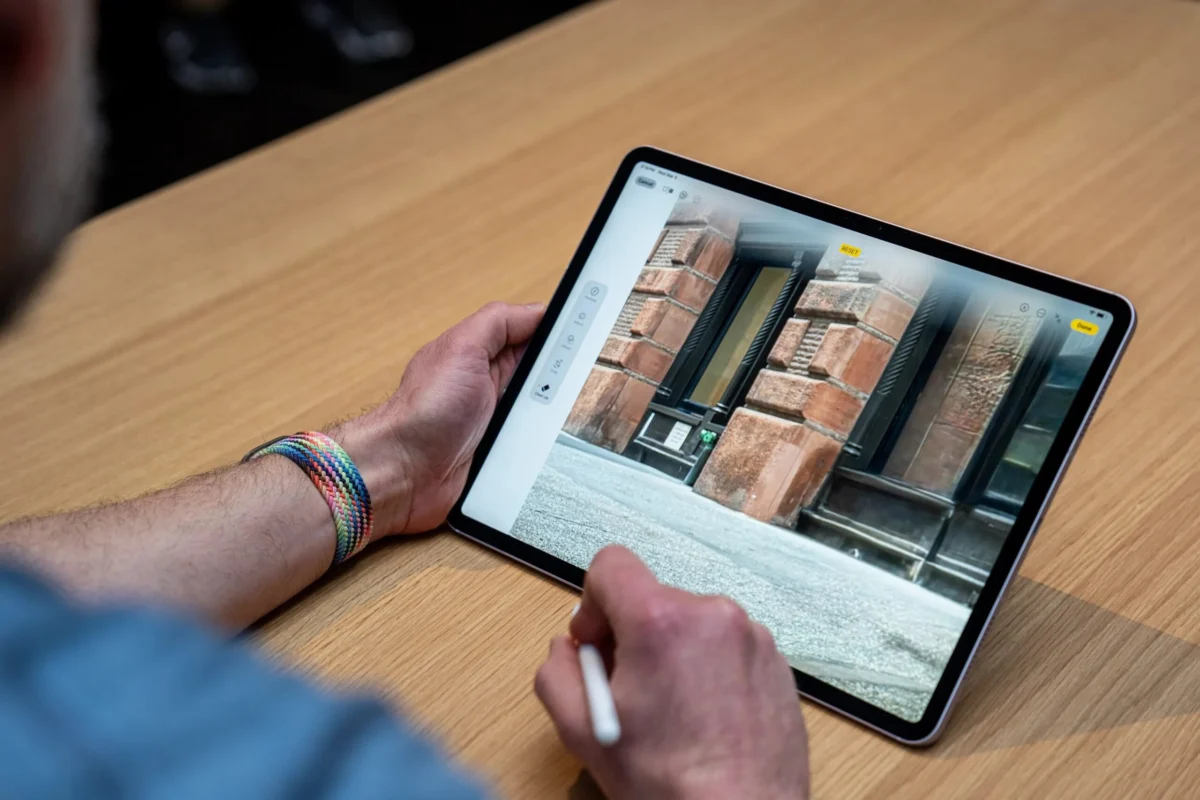
By Cameron Faulkner
June 29, 2026
In the wake of a sweeping series of price adjustments across Apple’s hardware ecosystem, consumers are navigating a significantly more expensive landscape for tablets, laptops, and home devices. As costs for base-model hardware climb by hundreds of dollars, the threshold for "value" has shifted, forcing power users and casual buyers alike to rethink their purchase strategies. Amidst this volatility, the 128GB M3-powered iPad Air, currently priced at $499 at Best Buy, has emerged as an anomaly—a high-performance machine that retains its utility without the inflationary sting felt elsewhere in the lineup.
Main Facts: The $499 Anomaly
For those scouting the market for a high-end tablet experience, the landscape has fundamentally changed over the past week. With the base-model iPad now retailing at $449—a sharp increase from its previous $349 price point—the value proposition for entry-level devices has been severely diluted.
This is where the 128GB iPad Air with the M3 chip disrupts the status quo. At $499, this model represents one of the few remaining "sweet spots" in Apple’s catalog. For a mere $50 premium over the base-model iPad, users are not just buying a tablet; they are gaining access to the M3 processor, 5G cellular connectivity, and a display architecture that stands leagues above the standard entry-level screen. In an era where hardware costs are consistently moving upward, this specific configuration provides a rare opportunity to secure future-proofed technology at a price that defies the current trend of widespread price hikes.
Chronology: The Road to the 2026 Price Adjustment
The current state of Apple’s pricing is the culmination of a long-term shift in global supply chain economics and internal fiscal strategy.
- Early 2025: The M3 iPad Air launched to critical acclaim, positioned as the mid-tier powerhouse between the standard iPad and the professional-grade iPad Pro.
- Late 2025: Market analysts began noting the rising costs of advanced silicon manufacturing, particularly with the transition toward more sophisticated AI-ready chipsets.
- June 2026 (The "Price Correction"): Apple enacted a broad price increase across its tablet and desktop lines. This move was characterized by observers as a response to sustained inflationary pressure on rare-earth materials and the increased R&D costs associated with Apple Intelligence deployment.
- June 29, 2026: In the immediate aftermath of the adjustments, consumer interest shifted toward retail partners like Best Buy, where legacy pricing and promotional incentives created a temporary bridge for buyers looking to avoid the new retail MSRPs.
Supporting Data: Why the M3 Air Outperforms
When comparing the M3 iPad Air to the current $449 base-model iPad, the performance gap is not merely incremental—it is foundational.

Processing Power and Longevity
The M3 processor is a generational leap over the A16 chip found in the base models. With significantly more cores and advanced GPU architecture—including dynamic caching—the M3 is designed to handle the heavy lifting required for modern creative suites and the upcoming suite of Apple Intelligence features. While the A16 remains capable for basic tasks, it lacks the headroom required for the demanding multitasking and AI-driven processes slated for integration in iPadOS 27.
Display and Build Quality
Beyond the silicon, the M3 iPad Air offers a distinct tactile and visual advantage. Unlike the standard iPad, the Air features a fully laminated display with an antireflective coating. This isn’t just an aesthetic choice; it drastically reduces glare and brings the display closer to the glass, providing a more direct, natural feel when using the Apple Pencil Pro. Furthermore, the wider color gamut ensures that content creators—photographers, graphic designers, and illustrators—have the accuracy they require, a feature lacking in the base-model display.
Connectivity and Expansion
The inclusion of 5G cellular support in the $499 configuration is a critical differentiator. In an increasingly mobile workforce, the ability to bypass unreliable public Wi-Fi is a necessity for many. When paired with support for the latest Magic Keyboard—which boasts a larger footprint and a dedicated 14-key function row—the M3 iPad Air begins to blur the line between a "tablet" and a "laptop replacement."
Official Responses and Market Context
Apple has remained largely tight-lipped regarding the specific mechanics of the recent price hikes, attributing the adjustments to "broader market conditions and the evolving cost of high-performance hardware manufacturing."
However, industry analysts suggest that this strategy is twofold: first, it protects profit margins in a period of economic tightening; second, it pushes consumers toward the high-end hardware that is capable of running the next generation of generative AI tools. By raising the floor for entry-level devices, Apple is effectively signaling that the future of the iPad is inextricably linked to the M3 and M4 chip families.
Retailers, however, are operating with more flexibility. Partners like Best Buy, which currently hold the $499 M3 iPad Air deal, are using such aggressive pricing to clear inventory and capture market share while other retailers adjust to the new, higher price floors. This has created a "window of opportunity" for savvy consumers who are willing to act while these specific promotional price points remain active.

Implications for the Future of Tablets
The implications of these price changes are far-reaching for the average consumer. For years, the iPad was marketed as a ubiquitous, accessible tool for education and casual media consumption. With the price of the entry-level iPad creeping closer to the $500 mark, the barrier to entry has undeniably risen.
The "Pro-sumer" Shift
The market is clearly segmenting. The base-model iPad is becoming an increasingly niche choice for those who do not require high-performance tasks, while the M3 iPad Air is becoming the new "standard" for anyone who plans to use their device for professional work or creative hobbies. The $499 price point is likely the lowest we will see for a device of this caliber for the foreseeable future.
Software and OS Longevity
With the upcoming release of iPadOS 27, the gap between chips will become more apparent. Features that rely on local, on-device AI processing will be heavily optimized for the M-series chips. Consequently, buying an A-series device today may result in a shorter software support lifecycle compared to the M3-equipped Air. For those who prioritize device longevity—a crucial factor in justifying a higher upfront cost—the M3 iPad Air is the mathematically superior choice.
Final Verdict: A Strategic Buy
If you are currently in the market for a tablet, the recommendation is clear: avoid the base-model devices if you can stretch your budget to the $499 M3 iPad Air. The value you receive in terms of raw processing power, screen quality, and compatibility with upcoming Apple Intelligence features far outweighs the $50 difference.
In a tech ecosystem currently defined by rising costs and shrinking value, the $499 M3 iPad Air is not just a good deal; it is a tactical acquisition. As the retail landscape continues to shift, these types of price points will likely become rarer, making the current moment the ideal time to invest in a device that is designed to stay relevant for years to come.
Interested in staying updated on the best hardware deals? Sign up for the Verge Shopping newsletter to receive curated, expert-tested recommendations directly in your inbox.
 Raul Delapena Setiawan
  Siti Muinah
  Asro
Asro 