
 By Nana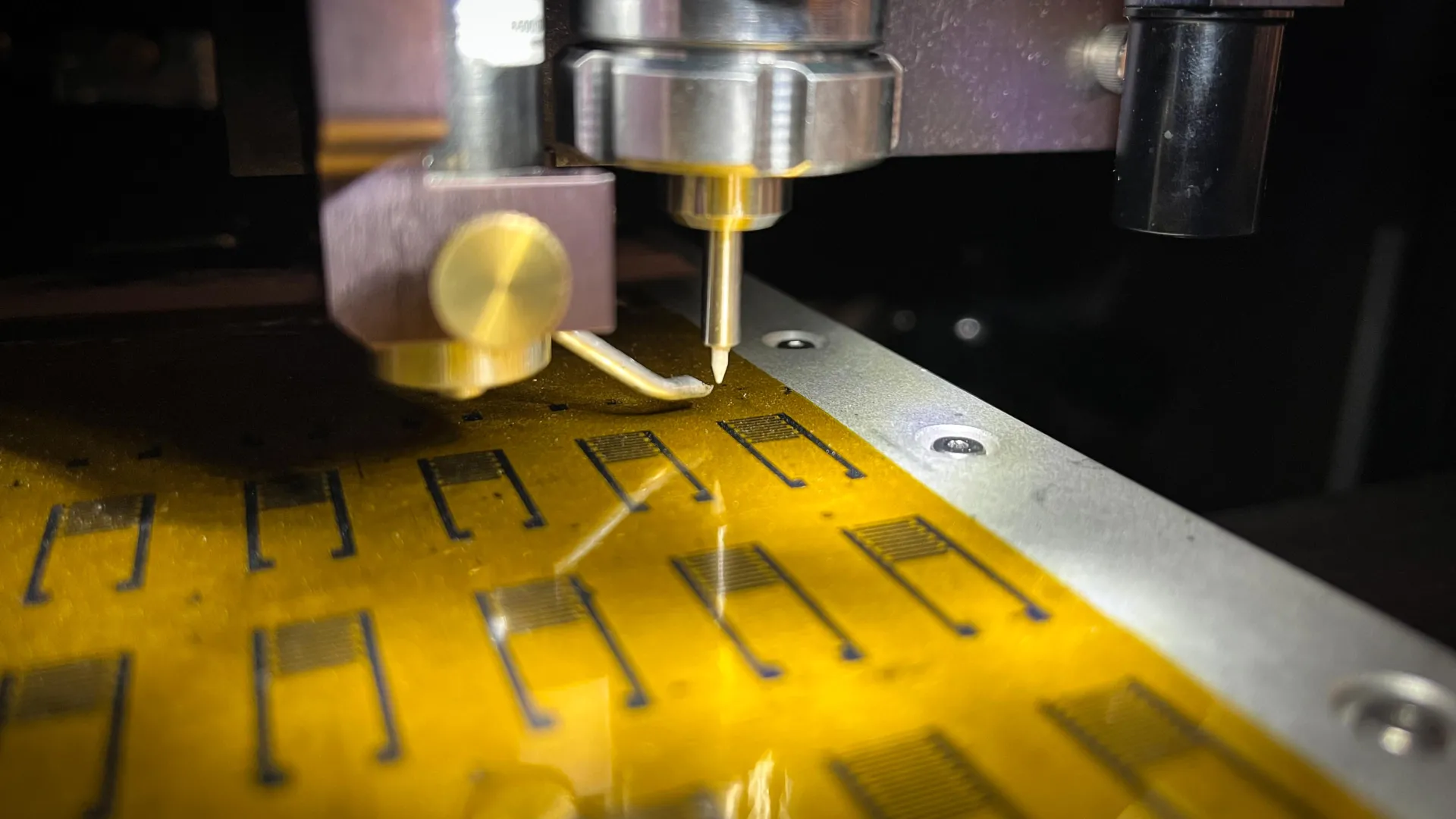
In a landmark achievement for neuroengineering and synthetic intelligence, researchers at Northwestern University have unveiled a breakthrough that blurs the boundary between man-made electronics and living tissue. By utilizing aerosol jet printing and advanced nanomaterials, the team has successfully developed artificial neurons capable of not only mimicking the behavior of biological brain cells but also engaging in direct, functional communication with them.
This development, set to be published on April 15 in the journal Nature Nanotechnology, represents a significant departure from traditional silicon-based computing. It offers a tangible path toward high-efficiency artificial intelligence (AI) and sophisticated neuroprosthetics capable of seamlessly integrating with the human nervous system.
The Synthesis of Silicon and Synapse: Main Facts
The core innovation lies in the creation of artificial neurons that are flexible, cost-effective, and—most importantly—biologically compatible. Unlike standard transistors, which are rigid and binary, these artificial neurons are printed using a sophisticated "electronic ink." This ink consists of molybdenum disulfide (MoS2), a semiconductor, and graphene, a highly efficient conductor, deposited onto flexible polymer substrates.
The resulting devices are not merely passive switches; they are dynamic systems that can generate complex electrical spike patterns. These patterns—ranging from single, isolated bursts to continuous, rhythmic firing—closely mirror the electrical signatures of living neurons. In controlled experiments, these artificial devices were shown to stimulate real mouse brain slices, successfully triggering responses in biological neural circuits. This marks a critical milestone in bio-electronic interface technology, proving that a man-made device can "speak the language" of the brain.
A Chronological Shift in Neurocomputing
The journey toward this achievement reflects a growing frustration among scientists with the limitations of classical computing. For decades, the tech industry has relied on Moore’s Law, packing billions of identical, rigid transistors onto silicon wafers. While this has powered the digital age, it has created a bottleneck: silicon is inherently static.
- The Early Challenges: Previous attempts to create artificial neurons often failed to replicate the complexity of biological firing. Some organic-material-based neurons functioned too slowly to be relevant, while metal-oxide alternatives were far too fast, lacking the precise temporal alignment required to interact with human neural pathways.
- The Breakthrough: The Northwestern team, led by Mark C. Hersam, shifted the paradigm by focusing on the "flaws" in manufacturing. By intentionally leaving a polymer residue in the printed ink and subjecting it to controlled electrical stress, the researchers induced a "spatially inhomogeneous" decomposition. This process creates a conductive filament that constricts current into a narrow path, forcing the device to mimic the nuanced electrical "spiking" behavior of a biological neuron.
- The Validation: Following the successful fabrication of these neurons, the team collaborated with neurobiologist Indira M. Raman. By applying the signals from these devices to slices of mouse cerebellum, they confirmed that the artificial spikes matched biological properties in both timing and morphology, confirming the device’s ability to communicate with living cells.
Decoding the Complexity: Supporting Data
The superiority of the brain over traditional silicon is not a matter of speed, but of architecture and efficiency. Modern digital computers are inherently "homogeneous"—every transistor performs the same task in the same way. The brain, by contrast, is a heterogeneous, three-dimensional network where neurons possess specialized roles and connections are in a state of constant, dynamic flux.
The Power Consumption Crisis
The motivation for this research is underscored by the staggering energy demands of modern AI. As Hersam points out, the current trajectory of AI development is unsustainable.
- Energy Intensity: Training large-scale AI models on data-heavy hardware consumes vast amounts of electricity.
- Thermal and Resource Constraints: To support these demands, data centers are increasingly energy-hungry, requiring specialized power sources and massive amounts of water for cooling.
- The Efficiency Gap: The human brain is estimated to be five orders of magnitude more energy-efficient than the best digital supercomputers. By replicating the brain’s neuronal communication, the Northwestern team aims to create "brain-inspired hardware" that can handle complex data processing tasks with a fraction of the current energy footprint.
Perspectives from the Laboratory: Official Responses
Mark C. Hersam, the Walter P. Murphy Professor of Materials Science and Engineering at Northwestern’s McCormick School of Engineering, emphasizes that the era of "brute-force" AI scaling must come to an end.
"The way you make AI smarter is by training it on more and more data," Hersam noted. "This data-intensive training leads to a massive power-consumption problem. Therefore, we have to come up with more efficient hardware to handle big data and AI. Because the brain is five orders of magnitude more energy efficient than a digital computer, it makes sense to look to the brain for inspiration for next-generation computing."
Regarding the technical hurdles overcome by the team, Hersam added, "Other labs have tried to make artificial neurons with organic materials, and they spiked too slowly, or they used metal oxides, which are too fast. We are within a temporal range that was not previously demonstrated. You can see the living neurons respond to our artificial neuron."
Co-lead of the study, Vinod K. Sangwan, a research associate professor at the McCormick School of Engineering, worked alongside Hersam to refine the aerosol jet printing process, ensuring that the additive manufacturing approach was not only effective but also minimized waste, making the production of these devices a sustainable enterprise.
Future Horizons: Implications for Medicine and Tech
The implications of this research are twofold: the transformation of computing and the revolution of neuro-restorative medicine.
1. The Next Generation of Computing
By utilizing materials that can be printed, the cost of producing neural-inspired hardware could plummet. This enables a move away from massive, energy-draining data centers toward localized, high-efficiency AI systems. These chips would be capable of "on-device" learning, mimicking the brain’s ability to adapt and change connections, rather than relying on a fixed, static instruction set.
2. Neuroprosthetics and Brain-Machine Interfaces (BMIs)
Perhaps the most profound application is in the field of medicine. Current neuroprosthetics—such as cochlear implants or deep-brain stimulators—often struggle with the "mismatch" between rigid metal electrodes and soft biological tissue. The flexible, printable nature of these new artificial neurons allows for a much more intimate interface.
- Restoration: Future implants could theoretically replace damaged neural pathways, helping to restore lost motor function, vision, or hearing by integrating directly into the nervous system’s existing circuitry.
- Compatibility: Because the artificial neurons produce signals with the "right spike shape" and the "right timescale," the body is less likely to reject them, and the communication between the device and the brain remains high-fidelity.
3. Environmental Sustainability
The manufacturing process itself is a testament to sustainable design. The additive printing method ensures that materials are deposited only where necessary, significantly reducing the environmental footprint compared to traditional semiconductor manufacturing, which involves chemical etching and significant material waste.
Conclusion: A New Dawn for Neuro-Electronics
The study, titled "Multi-order complexity spiking neurons enabled by printed MoS2 memristive nanosheet networks," and supported by the National Science Foundation, marks a departure from the "silicon-only" mindset.
As society grapples with the dual pressures of an AI-driven power crisis and the urgent need for medical breakthroughs in neurology, the Northwestern team has provided a blueprint for a more harmonious future. By moving toward hardware that learns, adapts, and speaks the same electrical language as our own minds, engineers are not just building better computers—they are building a bridge between the synthetic and the biological, potentially unlocking the next stage of human and machine evolution.
 Sagoh
Sagoh  Asro
Asro  Siti Muinah