
 By Iffa Jayyana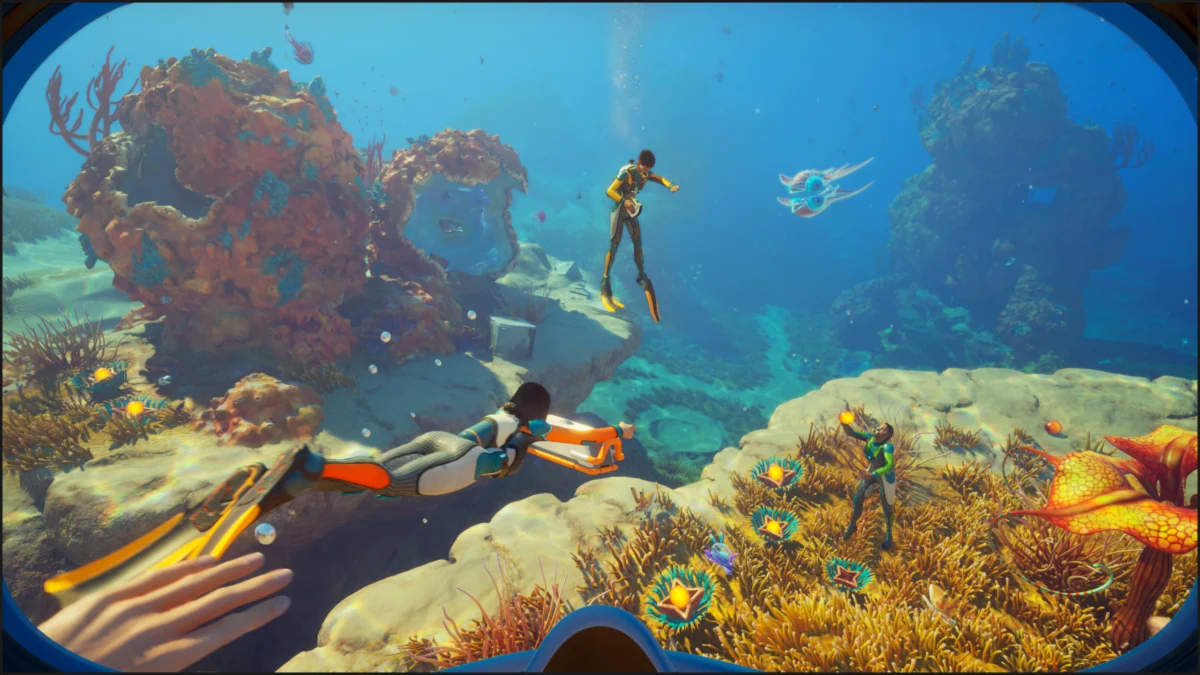
In a significant resolution to a protracted legal conflict that threatened to destabilize one of its most valuable creative assets, gaming giant Krafton has reached a settlement with the leadership of its subsidiary, Unknown Worlds Entertainment. The agreement, which effectively ends a bitter legal standoff, mandates that Krafton will distribute long-contested bonuses to the staff of the studio behind the hit franchise Subnautica.
The resolution marks a turning point for the developer, which has spent the last year navigating a volatile transition period characterized by executive ousters, court-ordered reinstatements, and the high-profile launch of Subnautica 2. As part of the settlement, however, the studio will also undergo a major leadership transition, with CEO Ted Gill confirming his departure.
The Core of the Conflict: A $250 Million Bonus Dispute
The legal firestorm was ignited last year following a controversial move by Krafton to dismiss Unknown Worlds co-founders Charlie Cleveland and Max McGuire, alongside CEO Ted Gill. The timing of these departures was particularly contentious; they occurred just prior to the potential payout of a $250 million bonus pool tied to the achievement of specific financial and developmental milestones for the studio.
Under the terms of the acquisition agreement from 2021, the studio’s staff and leadership were set to receive performance-based incentives upon reaching these benchmarks. The sudden removal of the key executives who had negotiated these terms led to widespread accusations that Krafton was attempting to circumvent its financial obligations to the developers who built the Subnautica brand.
The lawsuit that followed was not merely about individual compensation; it was a battle over the autonomy of acquired studios and the integrity of earn-out agreements within the gaming industry. The legal proceedings brought to light the underlying tensions between Krafton’s corporate objectives and the creative culture maintained by Unknown Worlds.
A Chronology of the Standoff
The trajectory of this dispute offers a window into the complexities of corporate acquisitions in the gaming sector.
- 2021: Krafton, the publisher behind the global juggernaut PUBG: Battlegrounds, acquires Unknown Worlds Entertainment in a deal intended to diversify its portfolio with the critically acclaimed Subnautica series.
- 2025 (Early): Tensions escalate as Krafton moves to remove co-founders Charlie Cleveland and Max McGuire, as well as CEO Ted Gill, ahead of the $250 million bonus milestone.
- March 2026: A pivotal court ruling occurs, with a judge siding with the ousted executives and ordering the immediate reinstatement of Ted Gill as CEO of Unknown Worlds.
- May 2026: Subnautica 2 enters early access. The launch is an immediate commercial success, with the game clearing four million copies sold within the first five days, proving the franchise’s enduring market viability.
- July 2026: Krafton and the studio leadership reach a definitive settlement, ending all litigation and establishing a new path forward for the payment of employee bonuses.
Supporting Data: The Commercial Might of Subnautica 2
The urgency of the settlement is arguably tied to the staggering performance of Subnautica 2. Despite the internal turmoil and the specter of legal proceedings, the studio managed to deliver a product that resonated deeply with the gaming community.
According to industry trackers, the game’s performance in early access has been nothing short of exceptional. By selling over four million units in less than a week, the title surpassed internal and external projections, effectively validating the work of the development team and putting immense pressure on Krafton to resolve the compensation issue.
The settlement agreement dictates that the bonus structure has been revised to be more inclusive. Rather than limiting the payouts to the staff who were present during the 2021 acquisition, the new agreement extends the bonus eligibility to all current Unknown Worlds staffers. These payments are scheduled to be disbursed over the next three years, ensuring a stable, long-term retention incentive for the team.
Official Responses and the Departure of Leadership
The resolution has been met with a sense of finality, though it comes at the cost of continuity at the top of the studio’s hierarchy. In a formal statement released to Game Developer, Krafton stated: "Krafton, Inc., Unknown Worlds Entertainment, and Ted Gill, Charlie Cleveland, and Max McGuire have reached a mutual settlement and agreed to dismiss all pending legal proceedings."

For his part, Ted Gill, who fought to return to his position, has opted to step down in the wake of the settlement. "We mutually agreed to part ways," Gill noted in an interview with Bloomberg. "New leadership is the best way for the studio to move forward."
This acknowledgment highlights the difficulty of maintaining a professional relationship between a parent company and a subsidiary after a public legal battle. While the lawsuit has been settled, the "parting of ways" signals that the trust between the original founders and Krafton has been irrevocably altered.
Implications for the Gaming Industry
The resolution of the Unknown Worlds-Krafton dispute carries broader implications for the video game industry, which has seen an uptick in mergers and acquisitions over the past decade.
1. The Precedent for Earn-Out Agreements
The dispute highlights the potential for "earn-out" clauses to become points of extreme friction. When large conglomerates acquire independent studios, the cultural and financial expectations often clash. This case serves as a warning to both founders and corporate entities that clear, enforceable language regarding performance-based compensation is essential to prevent costly litigation.
2. Studio Autonomy Post-Acquisition
Unknown Worlds is known for its distinct, iterative development process. The attempt to replace the founding leadership suggested a desire for more direct corporate control—a move that often stifles the very creativity that made the studio attractive in the first place. By reinstating leadership and paying out the bonuses, the settlement effectively protects the studio’s right to operate with a degree of independence.
3. The Power of Early Access
The commercial success of Subnautica 2 in early access served as the ultimate leverage for the employees. It proved that the team was capable of delivering a high-quality product even while management was occupied with court dates. This underscores a shift in power dynamics: when a development team is essential to a company’s financial health, their leverage in labor and compensation disputes is significantly amplified.
4. Stability for the Workforce
Perhaps the most positive outcome is the resolution for the rank-and-file developers. By expanding the bonus pool to all staff, the settlement ensures that the entire team—not just the executives—is compensated for the success of their work. This is a crucial step in maintaining morale and retaining top-tier talent in an industry where turnover is notoriously high.
Conclusion: A New Chapter
While the legal battle has concluded, the future of Unknown Worlds now rests on its ability to navigate the transition to new leadership. The studio has proven that its creative engine remains intact, having produced one of the most successful early-access launches in recent memory.
For Krafton, the settlement represents a necessary concession to stabilize a key asset. The company has moved to put a volatile chapter behind it, though the reputational cost of the public fight remains. As Unknown Worlds moves forward, the industry will be watching closely to see how the new leadership integrates with the established team and whether the studio can maintain its unique creative identity while under the ownership of a major global publisher.
For now, the developers at Unknown Worlds can focus on the ongoing development of Subnautica 2, secure in the knowledge that their efforts have been formally recognized and their compensation is guaranteed. The saga serves as a reminder that in the high-stakes world of modern gaming, the human capital behind the code is the most important—and often the most volatile—asset of all.
 Raul Delapena Setiawan
  Siti Muinah
  Asro
Asro 