
 By Muslim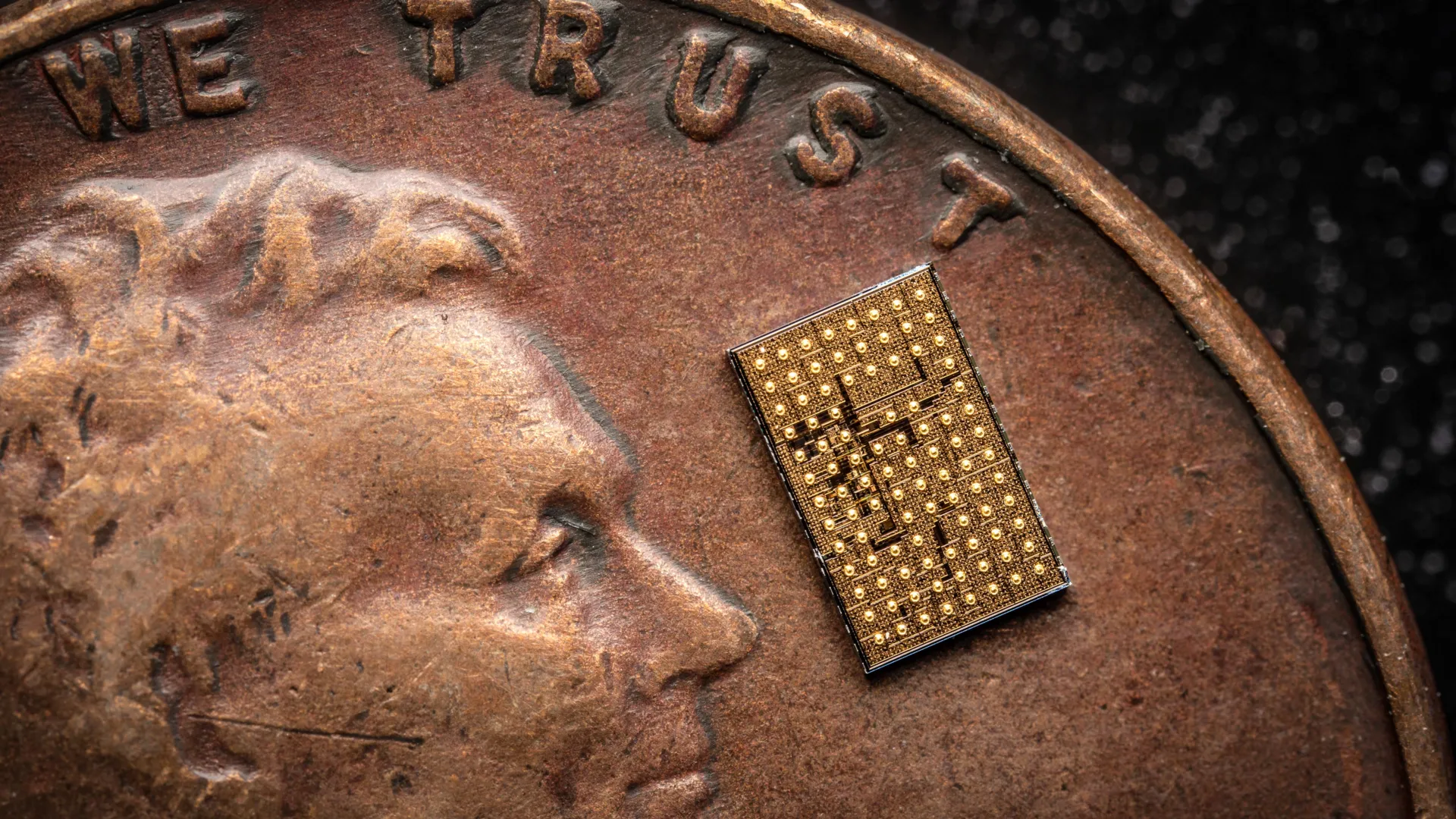
As the global demand for high-performance computing—driven by the rapid expansion of artificial intelligence, cloud storage, and large-scale data analytics—continues to skyrocket, the physical infrastructure supporting these digital ecosystems is facing a critical bottleneck: energy efficiency. Data centers, the silent engines of the modern economy, consume vast amounts of electricity, much of which is lost as heat during the conversion of power from the grid to the micro-scale requirements of a Graphics Processing Unit (GPU).
Engineers at the University of California San Diego have recently unveiled a transformative chip design that promises to redefine how power is managed in these high-demand environments. By reimagining the fundamental architecture of DC-DC step-down converters, the research team has moved beyond the traditional limits of magnetic-based components, offering a glimpse into a future where data centers are smaller, cooler, and significantly more energy-efficient.
The Core Challenge: Bridging the Voltage Gap
At the heart of every electronic device, from a simple smartphone to a massive server rack in a hyperscale data center, lies a DC-DC converter. Its role is simple yet essential: it acts as a "power bridge," taking high-voltage electricity supplied by the grid or a distribution system and stepping it down to the low-voltage levels required by processors.
In the context of a modern data center, electricity is typically distributed at 48 volts. However, the GPUs and CPUs powering advanced AI models operate at a much lower "sweet spot," usually between 1 and 5 volts. This represents a significant voltage drop. In conventional engineering, this task is handled by converters that rely on magnetic components, such as inductors.
For decades, inductive converters have been the industry standard. However, as compute density increases, these components are hitting a "hard ceiling." As the gap between input and output voltage grows, the efficiency of traditional converters plummets. Furthermore, because inductors are bulky and struggle to scale down, they create a physical limitation on how small and efficient a power delivery system can be. As Professor Patrick Mercier, the study’s senior author and a faculty member at the UC San Diego Jacobs School of Engineering, aptly puts it, "We’ve gotten so good at designing inductive converters that there’s not really much room left to improve them to meet future needs."
Chronology of the Innovation
The journey toward this breakthrough began with a fundamental questioning of material science in electronics. Recognizing that magnetic-based conversion had reached a point of diminishing returns, the UC San Diego team, led by Mercier and Ph.D. student Jae-Young Ko, began investigating piezoelectric resonators.
Phase 1: Identifying the Piezoelectric Advantage
Piezoelectric materials are substances that generate an electric charge in response to mechanical stress, or conversely, undergo mechanical deformation in response to an electric field. By leveraging these materials, the team sought to store and transfer energy through mechanical vibrations rather than the magnetic fields utilized by traditional inductors. Theoretically, piezoelectric components offer a superior path: they are inherently smaller, more energy-dense, and potentially cheaper to manufacture at scale.
Phase 2: Solving the Performance Gap
While the potential of piezoelectric resonators has been known in academic circles for years, previous implementations consistently failed to match the power density and efficiency of their magnetic counterparts, particularly when managing large voltage differentials. The researchers spent months in the lab experimenting with different configurations to bridge this gap.
Phase 3: The Hybrid Breakthrough
The team’s primary innovation was the development of a hybrid architecture. Instead of relying solely on a piezoelectric component, they integrated it with a carefully calibrated array of commercially available capacitors. This hybrid design creates multiple, efficient pathways for energy to flow, effectively spreading the load and reducing the strain on the piezoelectric resonator.
Phase 4: Prototyping and Validation
The culmination of this research was a prototype chip that was put through rigorous testing. In trials that simulated the harsh power-density requirements of modern data centers, the chip successfully converted 48 volts down to 4.8 volts with a peak efficiency of 96.2 percent. Perhaps most significantly, it delivered roughly four times the output current of any previous piezoelectric-based design, proving that the technology was not just a laboratory curiosity, but a viable contender for industrial applications.
Supporting Data and Technical Nuances
The findings, published in the journal Nature Communications, provide a comprehensive analysis of the performance metrics achieved by the team. The shift from a purely magnetic system to the hybrid piezoelectric-capacitor system results in several key technical advantages:
- Peak Efficiency: The 96.2 percent efficiency rating is a landmark figure. In a data center containing thousands of servers, an efficiency gain of even a few percentage points translates to massive savings in electricity costs and a reduction in the carbon footprint of the facility.
- Current Density: By delivering four times the output current of prior designs, the prototype overcomes the "power-starvation" issues that previously plagued piezoelectric converters.
- Reduced Heat Waste: Because the hybrid system minimizes energy loss during the conversion process, less heat is generated at the board level. This, in turn, allows for more compact server designs, as the cooling requirements are less demanding.
- Structural Efficiency: By creating multiple energy-transfer pathways, the system ensures that no single component is overstressed, leading to better long-term reliability and component longevity.
Official Responses and Expert Perspective
The significance of this work has been acknowledged by both the academic community and funding partners. The project was supported in part by the Power Management Integration Center (PMIC), an Industry-University Cooperative Research Center (IUCRC) funded by the National Science Foundation.
"Piezoelectric-based converters aren’t quite ready to replace existing power converter technologies yet," Mercier noted in a press statement. "But they offer a trajectory for improvement. We need to continue to improve on multiple areas—materials, circuits, and packaging—to make this technology ready for data center applications."
The sentiment from the team is one of cautious optimism. While the prototype demonstrates the feasibility of the concept, the transition from a laboratory bench to a server rack involves complex supply chain and manufacturing challenges. The research team emphasizes that this is not a finished product, but a "proof of concept" that paves the way for the next generation of power management integrated circuits (PMICs).
Broader Implications for Computing
The implications of this technology extend far beyond the walls of a research lab. As the global digital economy shifts toward energy-intensive AI processing, the "energy tax" paid by data centers is becoming unsustainable.
1. Reducing Data Center Footprint
By increasing the efficiency of voltage conversion, the physical space required for power distribution units within a server rack can be significantly reduced. This allows for higher compute density, effectively enabling more powerful AI training clusters to exist within the same physical footprint.
2. Environmental Impact
Data centers are responsible for a non-trivial percentage of global electricity consumption. Any innovation that reduces the energy wasted during power conversion contributes directly to sustainability goals. By minimizing heat dissipation, the reliance on massive, energy-draining cooling systems (such as liquid immersion or industrial HVAC) can be partially mitigated.
3. The Manufacturing Hurdle: A New Engineering Frontier
A critical implication identified by the team is the challenge of integration. Piezoelectric resonators, by their very nature, must vibrate to function. This mechanical requirement makes them incompatible with standard "reflow" soldering techniques used in mass-market PCB assembly. Developing a way to mount these components without dampening their vibrations or damaging the circuit board is the next major engineering hurdle. This has sparked a new sub-field of research focused on advanced packaging and assembly techniques specifically for piezoelectric-based power systems.
4. Scalability and Future-Proofing
The hybrid design provides a roadmap for future hardware developers. As compute requirements evolve—potentially pushing toward even higher voltage differentials or more stringent power-delivery requirements—the hybrid approach can be tuned and optimized. This flexibility is a key differentiator from the rigid limitations of magnetic inductors, which have largely reached their physical peak.
Conclusion: The Road Ahead
The research from UC San Diego represents a fundamental shift in how we approach one of the most persistent problems in electrical engineering. By stepping away from the magnetic-centric status quo and embracing a hybrid piezoelectric-capacitor approach, the team has opened a door to a new era of power efficiency.
While the technology is currently in the early stages of development, the trajectory is clear. As the team works to refine the materials and packaging methods necessary for industrial-grade deployment, the industry will be watching closely. If successfully scaled, this innovation could become a cornerstone of future sustainable computing, ensuring that the digital world continues to grow, innovate, and process information without hitting a physical wall of power consumption. The transition from magnetic to piezoelectric is not just a change in components—it is a change in the philosophy of power management, one that may well define the next decade of data center design.
 Sagoh
Sagoh  Asro
Asro  Siti Muinah