
 By Reynand Wu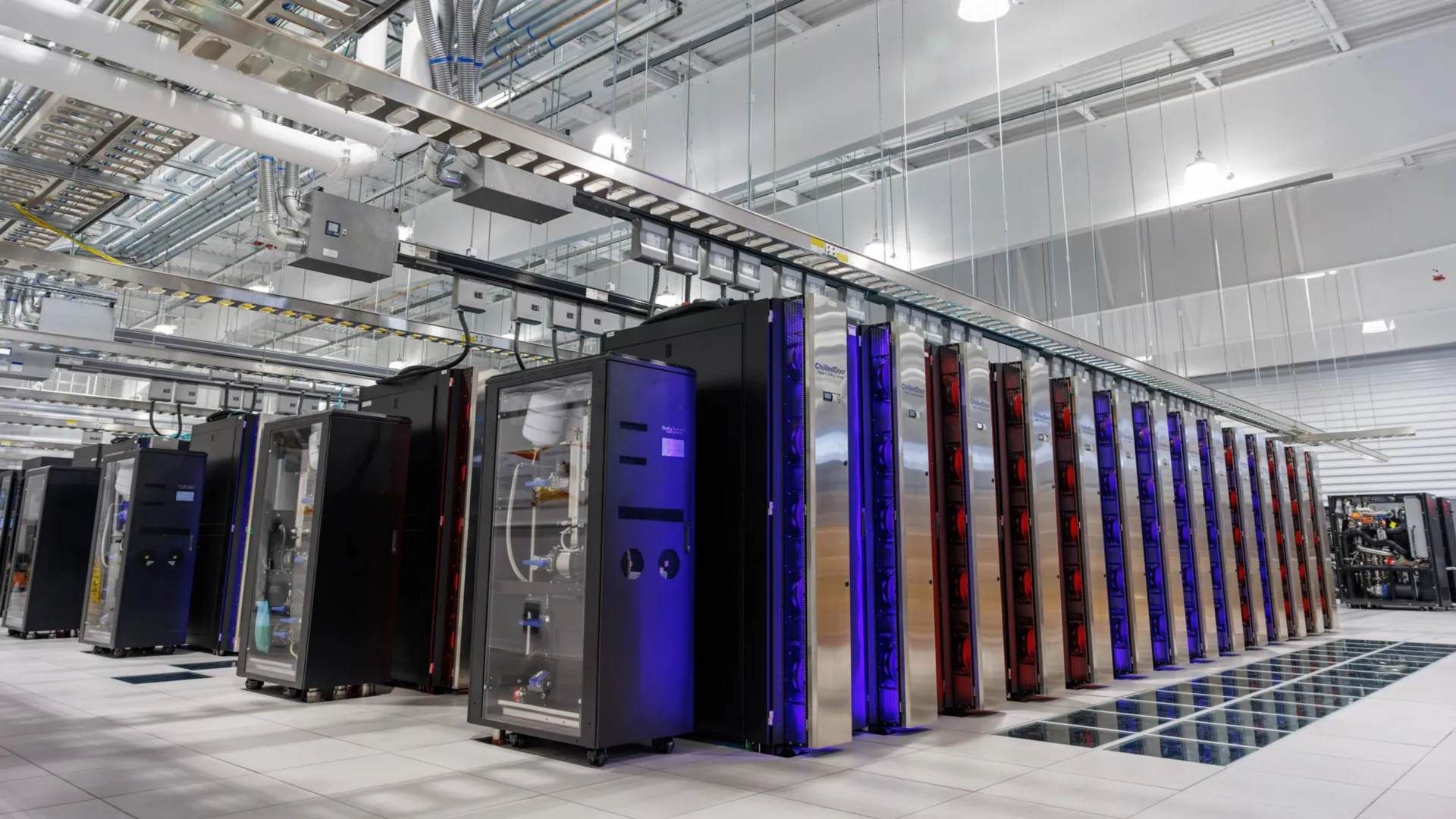
As the artificial intelligence revolution accelerates, a silent, invisible cost is mounting: a staggering surge in electricity consumption that threatens to overwhelm global power grids. From the massive, humming server farms of Northern Virginia to the sprawling data centers in the deserts of the American West, AI is consuming energy at a rate that is increasingly difficult to ignore.
According to data from the International Energy Agency (IEA), AI systems and the data centers that house them consumed approximately 415 terawatt-hours of power in 2024. This figure represents more than 10% of the entire United States’ annual electricity production. Even more concerning, experts project this demand will double by 2030, raising urgent questions about the environmental sustainability of the current AI trajectory.
In response to this looming crisis, a team of researchers at the School of Engineering, led by Matthias Scheutz—the Karol Family Applied Technology Professor—is pioneering a revolutionary approach. By developing "neuro-symbolic" AI, they have created a proof-of-concept system that is not only more accurate but potentially 100 times more energy-efficient than existing models.
The Chronology of an Energy Crisis
The rapid ascent of Large Language Models (LLMs) and Visual-Language-Action (VLA) models has fundamentally altered the technological landscape. However, the path to this dominance has been defined by a "brute force" methodology.
The Rise of Brute Force Computing
For the past decade, the industry standard has been to scale up: more data, more parameters, and more computational cycles. In the early 2020s, as companies like OpenAI, Google, and Meta competed to create the most capable models, the primary metric of success was performance, with energy efficiency often relegated to a secondary concern.
The Turning Point
By 2023, the environmental impact of this growth began to enter the public discourse. The massive electricity requirements for training models like GPT-4 or Gemini led to reports of data centers requiring dedicated power substations, sometimes consuming as much energy as a small city. This spurred a shift in academic and corporate research, moving away from pure scaling toward "efficient AI."
The Breakthrough (2024–2025)
In May 2025, the research conducted by Professor Scheutz’s laboratory reached a critical milestone. By successfully integrating symbolic reasoning—a traditional method of rule-based logic—with modern neural networks, the team demonstrated that AI does not need to "guess" its way through every problem. This work, set to be presented at the International Conference of Robotics and Automation in Vienna, represents a fundamental pivot in how machines learn.
Supporting Data: Efficiency vs. Statistical Guesswork
To understand why current AI systems are so power-hungry, one must look at how they function. Traditional VLA models—the systems that allow robots to "see" their environment and interact with it—rely on massive statistical probability.
The Failure of Pure Statistics
Traditional models are designed to predict the next word in a sentence or the next movement of a robot’s arm based on billions of previous examples. When tasked with a simple physical problem, such as stacking blocks, these models often falter. They may be confused by lighting, shadows, or subtle variations in the shape of an object. Because they lack an inherent understanding of physics or logic, they must "learn" through millions of attempts, wasting immense computational energy on trial and error.
The Power of Symbolic Reasoning
The neuro-symbolic approach changes the game by providing the AI with a "rulebook." Instead of relying solely on statistical patterns, the system incorporates abstract concepts like balance, weight, and geometry.
- Success Rates: In the classic Tower of Hanoi puzzle, the team’s neuro-symbolic model achieved a 95% success rate, compared to 34% for standard models.
- Complexity Handling: When presented with a novel, more complex version of the puzzle, the hybrid model maintained a 78% success rate, whereas traditional models failed entirely.
- Training Speed: The new system reached proficiency in just 34 minutes, a task that required over 36 hours of training for conventional models.
Quantifiable Energy Savings
The environmental implications are profound. The research indicates that the neuro-symbolic model requires only 1% of the energy to train compared to standard VLA systems. During active operation, the system uses just 5% of the energy required by traditional AI. As Professor Scheutz notes, "When you search on Google, the AI summary at the top of the page consumes up to 100 times more energy than the generation of the website listings." This disparity highlights the systemic inefficiency of current AI-integrated consumer tools.
Official Perspectives: The Institutional Challenge
The implications of this research are being felt across the engineering community. The strain of AI on global power infrastructure is not merely a technical problem; it is a geopolitical and economic one.
The Infrastructure Bottleneck
As companies race to build larger data centers, the power grid is reaching a breaking point. Some of the largest planned facilities are designed to draw hundreds of megawatts of electricity—a level of consumption that forces local utility providers to rethink their capacity planning. In regions where renewable energy adoption is slow, this increased load directly correlates with higher carbon emissions from fossil-fuel-burning power plants.
A New Philosophy for AI Development
Professor Scheutz’s lab argues that the "LLM-first" mindset is inherently unsustainable. "These systems are just trying to predict the next word or action in a sequence," Scheutz explains. "But that can be imperfect, and they can come up with inaccurate results or hallucinations. Their energy expense is often disproportionate to the task."
The industry is beginning to listen. Leading AI researchers are increasingly discussing the "Energy-per-Inference" metric—a measure of how much power a system uses to complete a single, meaningful task. The shift toward neuro-symbolic architecture is a direct response to this call for accountability.
Implications: The Path Toward Sustainable Intelligence
The development of neuro-symbolic AI serves as a proof-of-concept for a more sustainable future, but the transition will be neither immediate nor easy.
Bridging the Gap
The primary hurdle for neuro-symbolic systems is the integration process. Neural networks are excellent at pattern recognition, while symbolic reasoning is excellent at logic and planning. Getting these two disparate systems to "talk" to each other requires complex software architecture. However, the gains in efficiency make the extra development time a worthy investment.
A More Reliable Foundation
Beyond the energy savings, neuro-symbolic AI offers a secondary, critical benefit: reliability. Because these systems are guided by rules and logic, they are less prone to the "hallucinations" that plague current LLMs. Whether it is a chatbot fabricating a legal case or a robot knocking over a stack of objects, the root cause is often a lack of grounding in reality. By injecting logical rules into the system, researchers can create AI that is not only "greener" but safer and more predictable.
The Future of Industry Adoption
As electricity costs continue to rise and environmental regulations tighten, companies will be forced to move away from inefficient, resource-heavy AI models. We are likely to see a "bifurcation" in the AI market:
- Generalist LLMs: Continue to rely on massive, energy-intensive training for creative and broad-knowledge tasks.
- Specialized Neuro-Symbolic Agents: Deployed in robotics, medicine, and engineering, where precision and energy efficiency are paramount.
Conclusion
The rapid growth of AI has brought us to a crossroads. We can continue to fuel the expansion of massive, inefficient data centers at the cost of our energy grids and the environment, or we can embrace a new paradigm. The neuro-symbolic research coming out of the School of Engineering is a beacon for the latter path. By teaching machines not just to mimic human output, but to mirror the human capacity for structured reasoning, we can build a future where artificial intelligence is as efficient as it is intelligent. The technology to reduce AI’s energy footprint by orders of magnitude exists; the question remains whether the industry will have the foresight to implement it before the grid—and our sustainability goals—reach a breaking point.
 Sagoh
Sagoh  Asro
Asro  Siti Muinah