
 By Basiran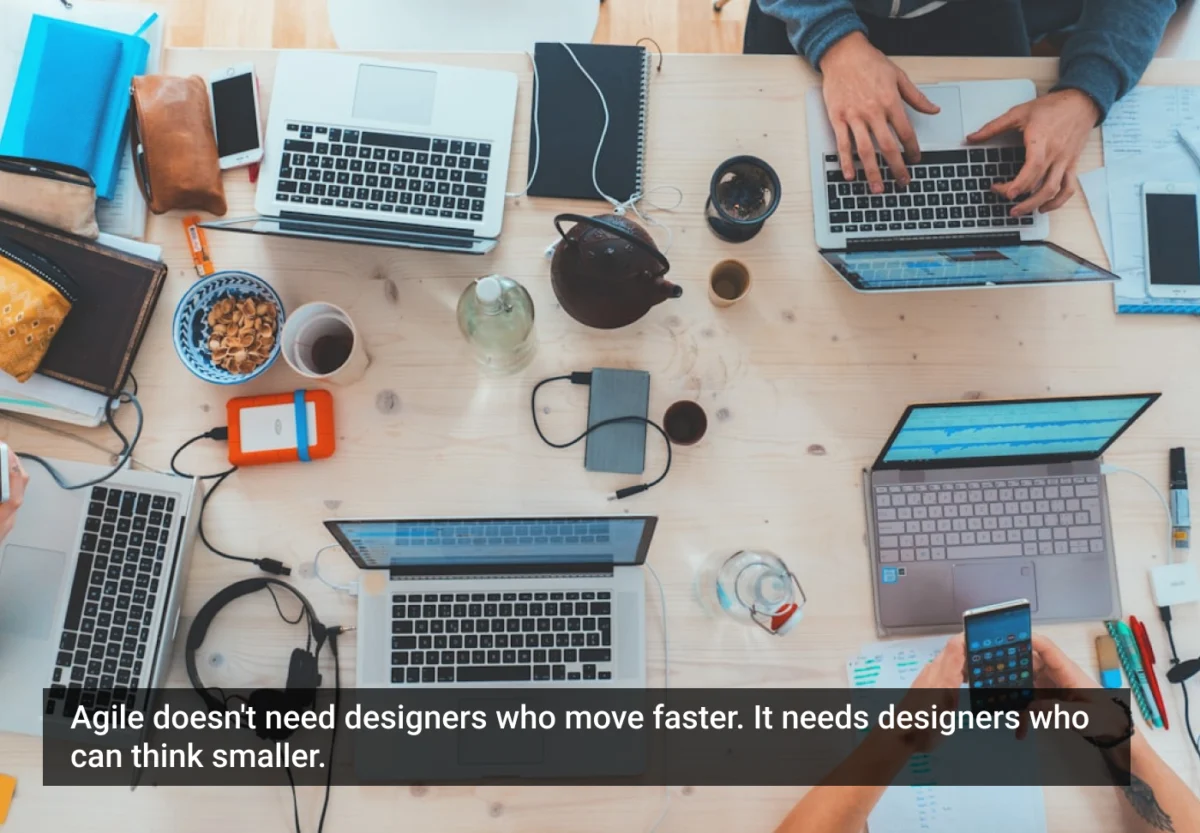
In the modern digital product landscape, the term "Agile" is often conflated with a singular, relentless metric: velocity. For design teams integrated into sprint-based environments, the prevailing pressure is to keep pace with engineering cycles that seem to accelerate by the day. However, Päivi Salminen, a veteran of over a decade in Agile marketing and a student of UX methodology, argues that this preoccupation with speed is fundamentally misguided.
Agile does not demand that designers move faster; it demands that they design smaller. This distinction is not merely semantic—it represents a profound shift in how designers must approach problem-solving, moving from the comfort of holistic systems to the precision of incremental value delivery.
The Holistic Instinct: A Double-Edged Sword
To understand why "designing small" is so challenging, one must first recognize the inherent training of the modern designer. Design education and professional practice emphasize systemic thinking. When faced with a complex problem, a designer’s instinct is to "zoom out." They map the entire ecosystem, anticipating edge cases, long-term scalability, and the interconnectedness of user touchpoints.
This systemic instinct is a significant professional asset. It prevents fragmented user experiences and ensures that a product does not become a patchwork of disconnected features. However, in an Agile framework, this instinct can become a source of friction. Agile methodology operates on the principle of the "Minimum Viable Product" (MVP) and iterative refinement. It rarely starts with the finished cathedral; it begins with a single, functional brick.
For a designer accustomed to crafting a comprehensive, polished solution, the requirement to release a "partial" experience feels counterintuitive. It can feel, to the untrained eye, like a recipe for a disjointed or inferior product. Yet, this tension is where the most effective Agile teams operate.
The Anatomy of the Misconception: Chronology of a Failed Design Strategy
The confusion surrounding Agile UX often stems from a misunderstanding of how product requirements are broken down. In a typical development sprint, the chronology of work often falls into a trap known as "horizontal slicing."
The Horizontal Slicing Trap
Consider the hypothetical task of building a job search portal. A holistic, traditional design approach might follow this sequence:
- Architecture: Mapping the entire user journey, from landing page to application confirmation.
- Infrastructure: Designing the search engine, filtering algorithms, and database taxonomy.
- UI/UX Implementation: Building the detailed views and application workflows.
When teams attempt to execute this in an Agile environment, they often default to building by technical layer. They spend the first two sprints designing and coding the "search engine" (the horizontal slice).
The Resulting Crisis:
- Lack of Content: Because the "job listing" content layer hasn’t been built, the search engine has nothing to index.
- Testing Paralysis: Without real content, the design team cannot validate whether the search filters are actually useful to job seekers.
- The "Technically Impressive, Practically Useless" Outcome: The team has a functional search bar, but they have delivered zero value to the user. They have spent weeks on a foundation that remains entirely invisible to the end-user.
This, according to experts like Laura Klein, is the fundamental flaw of horizontal slicing: it prioritizes technical modularity over user value.
Supporting Data: The Value of Learning Loops
The shift toward "vertical slicing"—delivering a tiny, functional sliver of the full experience—is backed by the need for faster learning loops. Data derived from real-world user interactions is exponentially more valuable than the most well-researched assumptions.
By releasing a simple, bare-bones job listing page first, a team gathers data on:
- User Intent: Are users actually clicking these listings?
- Information Architecture: Does the information provided meet the users’ criteria for "interested"?
- Conversion Friction: Does a simple email-based "Apply" button suffice, or do users abandon the process because they expect a formal portal?
These data points are impossible to capture in a vacuum. The smallest slice that delivers real value acts as a probe into the market. If the team discovers that users find the jobs via search but refuse to apply through a simple email form, they have learned a critical business requirement early, saving weeks of wasted development on a complex application portal that no one would have used.
Official Perspectives: The Philosophy of "Design Smaller"
Päivi Salminen, reflecting on her studies with UX thought leader Laura Klein, emphasizes that the difficulty of designing small is primarily psychological. "After 10+ years working in Agile marketing teams, I thought I understood Agile," Salminen notes. "Then I started studying UX and realized I’d been looking at it from the wrong angle."
The official consensus among Agile UX practitioners is that the "design smaller" mandate is an exercise in prioritization and radical empathy. Designers must move away from the question, "What is the perfect, comprehensive solution?" and toward, "What is the smallest version of this idea that still validates our hypothesis?"
This requires a high degree of collaboration between Product Managers, Engineers, and Designers. It turns the designer from an "aesthetic guardian" into an "outcome-oriented architect."
Implications for the Future of Design Teams
The move toward designing smaller has significant implications for how design teams are structured and how they communicate their value to stakeholders.
1. From "Perfect" to "Validated"
Designers must become comfortable with the concept of "good enough for now." This does not mean sacrificing quality; it means prioritizing the utility of the release. The goal is to reach a state of validated learning as quickly as possible.
2. Radical Prioritization
Designers must actively participate in the creation of user stories. If a ticket is too large, the designer should be the one to challenge it, asking: "Can we strip this down to the core value proposition?" This requires the designer to have a deep understanding of the product’s business goals, not just its visual components.
3. The End of the "Big Reveal"
The traditional design process often involves a "big reveal" of a finished system. Agile effectively kills this model. In its place, designers are now expected to provide "living" designs that evolve with every sprint. This requires a shift in mindset from designing a product to designing a system of continuous improvement.
4. Cultural Resilience
Perhaps the most difficult implication is the need for cultural change. Stakeholders, clients, and even leadership often demand the "whole cathedral." Designers must act as educators, explaining that the "brick" approach is not a sign of laziness or a lack of vision, but a strategic move to de-risk the product development lifecycle.
Conclusion
The challenge of working in an Agile environment is not about the clock. It is about the scope. By embracing the art of the "smallest slice," designers can transition from being bottlenecks in the development process to being the primary drivers of product intelligence.
When a design team stops trying to build the cathedral in a single sprint and focuses on the integrity of the individual brick, they discover that they aren’t just designing faster—they are designing smarter, more effectively, and with a significantly higher probability of success. The future of UX is not in the grand, holistic vision, but in the precision of the incremental step.
 Ammar Sabilarrohman
  Neng Nana
  Sagoh
Sagoh 