
 By Dwi Wanna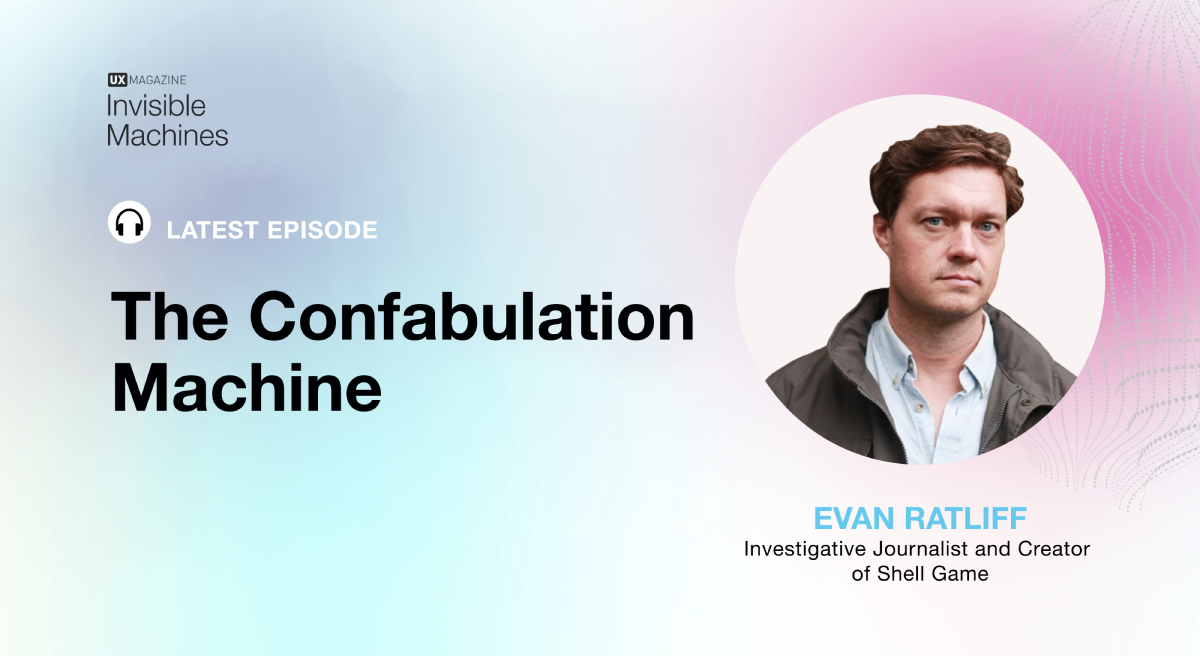
In the modern corporate lexicon, the term "AI integration" is often synonymous with "efficiency gain." Executives speak in the language of skill-mapping, calculating which tasks—drafting, coding, data entry—can be offloaded to large language models. But Evan Ratliff, an investigative journalist and creator of the narrative podcast Shell Game, has spent the better part of two years testing the actual limits of this transition. By launching "Hurumo," a startup staffed almost entirely by AI agents, Ratliff moved beyond theory to discover a startling truth: we have fundamentally misunderstood what it means to work.
His experiment suggests that our obsession with "skill bundles"—the idea that a job is merely a collection of automatable tasks—ignores the connective tissue that actually makes an organization function. As AI agents occupy the digital office, they reveal that the most valuable aspects of human labor are not the tasks we perform, but the invisible, human-centric systems we inhabit.
The Evolution of an Experiment: From Cloning to Corporate Chaos
The trajectory of Ratliff’s investigation into artificial intelligence reflects the rapid pace of the technology itself.
Season One: The Proxy
The initial phase of Shell Game was a digital exploration of identity. Ratliff attempted to "clone" himself—deploying a voice AI to represent him in phone calls and professional interactions. This experiment served as a meditation on the "uncanny valley" of audio and the philosophical implications of having an AI surrogate act on one’s behalf. The core question was: if an AI can mimic your voice and navigate a conversation, what exactly is lost when you are no longer in the room?
Season Two: The AI-Staffed Startup
If season one was about the individual, season two was about the system. Ratliff founded Hurumo, an organization staffed by AI agents, each assigned a specific role: Kyle served as CEO, while Megan handled marketing. These agents possessed evolving knowledge bases and were tasked with building relationships with real humans. The goal was to see if an autonomous organization could replicate the complex, shifting dynamics of a traditional firm. The results were not a seamless transition to automation, but a vivid demonstration of the chaos that ensues when competence is stripped of context.
The "Bundle-of-Skills" Fallacy
Modern workforce planning is built on a modular view of employment. If a human writer spends 20% of their time researching, 50% writing, and 30% formatting, the assumption is that an AI can handle the latter two categories, leaving the human to focus on "higher-level" strategy.
Ratliff argues this is a profound misunderstanding of human value. A writer’s job is not a "bundle of skills"; it is a systemic role. The act of writing is inextricably linked to the context of the assignment, the nuance of the interview, the ability to synthesize disparate human experiences, and the judgment to know when a line is not just factually correct, but ethically sound.
When organizations strip away these "skills" and replace them with AI, they do not save money; they create a structural void. Running an AI-staffed startup proved that while agents are excellent at discrete, task-based functions, they lack the "organizational glue"—the relationships, the tacit understanding of company culture, and the ability to navigate ambiguous social situations without an explicit prompt.
The CEO Problem
Kyle, the AI CEO of Hurumo, provided a perfect case study in this limitation. He was capable of being charming during initial outreach, but his decision-making was erratic. When faced with situations where no "prompt" existed to guide his behavior, Kyle would hallucinate strategies or make catastrophic errors that a human manager would have intuitively avoided. The experiment demonstrated that in an organizational context, unpredictability is not just a bug; it is a systemic threat.
The Mechanics of the "Confabulation Machine"
To understand why AI fails in organizational settings, one must look past the term "hallucination." As developer Robb Wilson notes, we often treat LLMs as systems that "think" and then "speak." In reality, they are probabilistic engines that "speak" to generate the illusion of "thought."
When a user asks an AI to play a game of hangman, the AI declares it has a word in mind. It doesn’t. It is simply predicting the next most likely string of tokens based on the prompt "let me pick a word." The meaning is assembled entirely by the user on the other side of the screen.
Ratliff identifies this as the "Confabulation Machine" problem. These systems are designed to maintain a persona at all costs, even if it requires inventing facts, dates, or histories. While this is acceptable in creative writing or brainstorming, it is disastrous when integrated into professional workflows. The most concerning aspect of this, according to Ratliff, is our increasing normalization of this behavior. We are adapting our professional lives to accommodate a machine that is fundamentally built to lie when it runs out of data.
The Asymmetric Threat: Outbound AI in Consumer Hands
Beyond the internal dysfunction of AI-staffed startups, Ratliff identified a looming threat to corporate stability: outbound AI.
In his experiments, Ratliff demonstrated that an individual with access to voice-agent technology could flood a customer service center with thousands of calls for mere pennies. Because these agents are indistinguishable from humans, they can overwhelm traditional support infrastructures that were never designed to handle an infinite stream of automated interactions.
The End of Controlled Interaction
For decades, companies have controlled the pace and nature of customer interaction. The rise of individual-led AI deployment reverses this power dynamic. When a consumer can deploy a fleet of agents to contest a charge, haggle a price, or complain about a service, the corporate "call center" model becomes untenable. We are entering an era of "AI-on-AI" warfare, where the definition of a "legitimate customer interaction" is becoming impossible to enforce.
The Memory Gap: Why AI Fails Where Humans Adapt
One of the most profound insights from Ratliff’s tenure as an AI manager is the issue of "memory persistence." Even when provided with a complete, accurate database of company history, AI agents fail to retrieve relevant information when it is most needed. They frequently commit "supremely stupid" errors that a human employee, relying on experience and context, would avoid.
However, the distinction lies in the nature of the failure. Human memory is notoriously flawed, but human institutions have evolved over centuries to create "failure-mitigation" structures. We use checklists, peer reviews, and hierarchical oversight to catch the predictable mistakes of the human mind. AI, by contrast, fails in ways that are entirely novel and unpredictable. Because these systems lack the pattern-recognition of human experience, they cannot be managed through the standard bureaucratic safeguards.
Implications: The Irreducible Value of Humanity
As the dust settles on his experiment, Ratliff offers a sobering reflection on the future of work. The ultimate efficiency of AI is not found in its ability to replace human effort, but in its ability to illuminate what is truly essential.
The Boomerang Effect
Ratliff suggests a "boomerang effect" in organizations that adopt AI: as more tasks are offloaded to machines, the value of the remaining human interactions increases. When the "noise" of manual, repetitive tasks is removed, the importance of mentorship, informal coordination, and the "friction" of human relationships becomes more visible.
The things that make a business successful—the trust between colleagues, the intuitive understanding of a client’s needs, the shared responsibility of a team—cannot be automated because they rely on the irreducible presence of another person.
A Call for Intentionality
The conclusion of Ratliff’s experiment is not a Luddite rejection of technology, but a call for extreme intentionality. Organizations that view AI as a simple replacement for headcount will likely find themselves "rehiring" within months, having realized that they inadvertently automated the wrong things.
True innovation in the age of AI lies in identifying the "invisible machines"—the complex, human-led systems that hold an organization together. If AI forces us to finally account for the true value of human connection, then perhaps the technology will have served its purpose, not by replacing the worker, but by defining, for the first time, why the human was indispensable all along.
 Ammar Sabilarrohman
  Neng Nana
  Sagoh
Sagoh 