
 By Laily UPN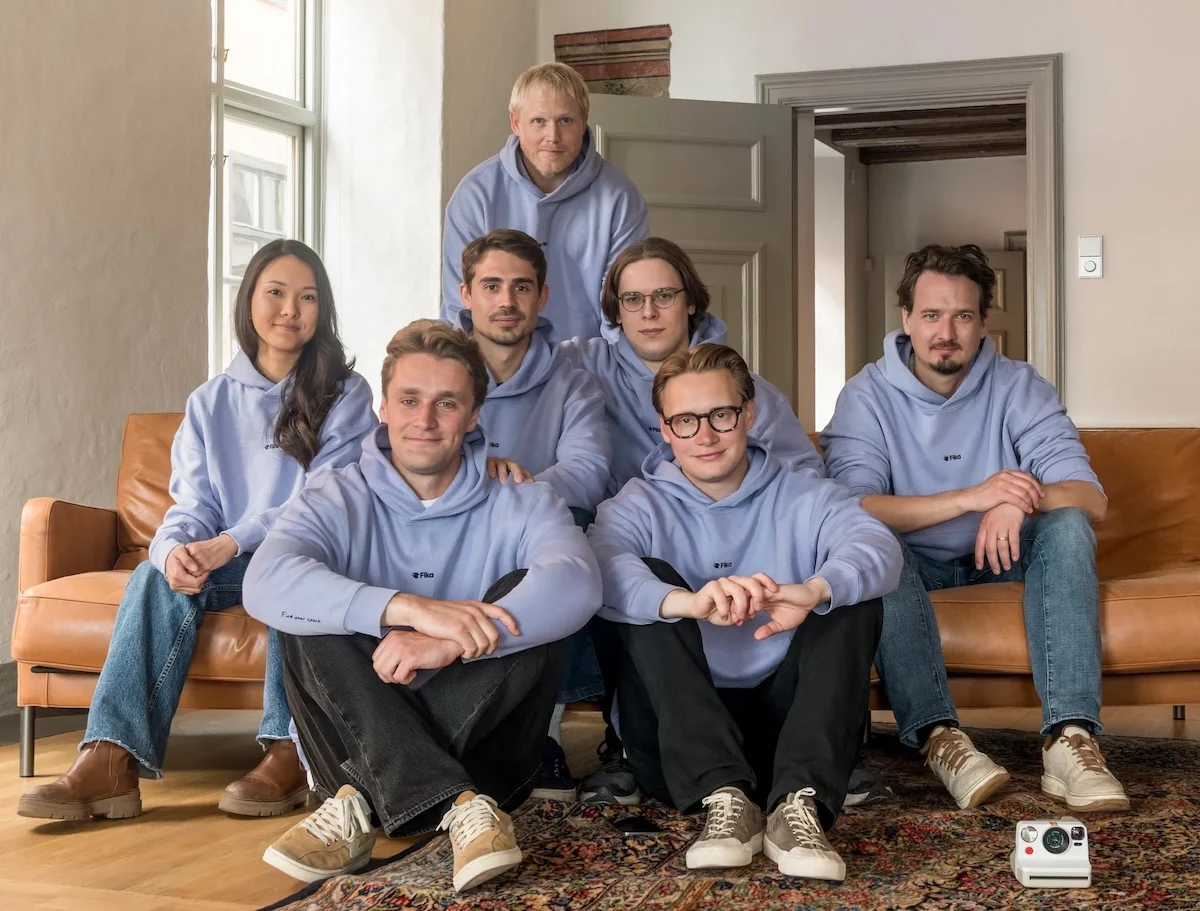
The modern job market has long been plagued by a systemic inefficiency: the "black box" of recruitment. For millions of job seekers, the path to employment involves hours spent tailoring resumes and crafting cover letters, only for those documents to vanish into applicant tracking systems (ATS) that often prioritize keyword density over human potential. As generative AI has proliferated, this process has only become more congested, with companies flooded by an overwhelming volume of automated applications.
Stockholm-based startup Fika Jobs is emerging as a disruptive force in this space, aiming to replace the static, text-heavy resume with a dynamic, video-first ecosystem. By blending the professional utility of LinkedIn with the short-form engagement of TikTok, Fika Jobs seeks to humanize the digital hiring process. The company announced this week that it has successfully closed a $4 million pre-seed funding round, capital it plans to deploy to scale its team and ready its platform for a wider international rollout.
The Genesis of a Video-First Vision
The inspiration for Fika Jobs was born from the direct, often frustrating experience of its co-founders, brothers Jakob and Alexander Dubois. During their time building their previous venture, a social application called Gaff, the duo found themselves struggling to reconcile the paper qualifications of candidates with the actual requirements of their team.
"When we were building Gaff, we spent a lot of time recruiting and almost passed on a candidate because his resume did not really stand out," Jakob Dubois, CEO of Fika Jobs, told reporters. "We ended up speaking with him anyway, and within minutes, his grit, drive, and ambition became obvious. He was exactly the kind of person we wanted to hire."
That singular moment of realization served as the catalyst for Fika. The founders recognized that the most critical soft skills—communication style, passion, intellectual curiosity, and cultural fit—are notoriously difficult to extract from a two-dimensional document. By shifting the focus to a video-first interaction, they believe they can bridge the gap between a candidate’s credentials and their real-world capabilities.
How the Fika Ecosystem Functions
The Fika Jobs platform operates on a model that prioritizes candidate agency and employer efficiency. The process for job seekers is streamlined and modern:
- Onboarding: Candidates begin by syncing their LinkedIn profiles. This serves as the foundational data point for the platform’s AI engine.
- AI-Generated Interviews: Utilizing Google’s Gemini models, the platform generates a series of personalized interview questions tailored specifically to the candidate’s professional history and stated career goals.
- The 10-Minute Interaction: Candidates participate in a roughly 10-minute video interview conducted by the AI agent. This session is designed not to test rote memorization, but to elicit authentic responses that highlight the individual’s communication skills and personality.
- Profile Curation: Once the interview concludes, Fika’s software automatically edits the responses into concise, high-impact video clips. These clips are organized into a permanent, live professional profile.
- The "Live" Candidate Pool: Unlike traditional platforms where a candidate must apply to every individual role, a Fika profile remains active. Employers browse this curated pool of pre-interviewed candidates, allowing for a proactive rather than reactive discovery process.
Financials and Market Positioning
The $4 million pre-seed round, led by Luminar Ventures with support from Alliance VC and notable angel investors—including Candy Crush co-founders Sebastian Knutsson and Riccardo Zacconi—signals significant investor confidence in the model.
The startup’s business model is designed to be highly competitive against traditional executive search firms. While the platform is free for job seekers, Fika Jobs operates on a success-based commission: the company takes 10% of a candidate’s first-year salary upon a successful hire. This price point is strategically positioned to undercut the 20% to 30% fees typically charged by traditional headhunters, providing a compelling value proposition for startups and scale-ups looking to manage their recruitment budgets.
Currently, the company is in its early access phase. With over 100 companies already on the waitlist and more than 50 organizations, including firms like Plenty Labs, SICS.ai, Kognity, and Rebtel, having stress-tested the platform, the momentum is building for a broader public release later this year.

The Implications: A Shift in Hiring Paradigms
The rise of Fika Jobs represents a significant pivot in how early-career professionals and those from non-traditional backgrounds might be evaluated. Historically, recruitment has favored those with polished resumes, prestigious academic credentials, or well-connected networks. A platform that prioritizes "grit and drive" over keywords could theoretically democratize access to opportunities.
However, the shift toward video-first recruitment is not without controversy. Industry analysts have pointed to the inherent risks of bias. When hiring managers are exposed to a candidate’s physical appearance, age, gender, race, or accent in the earliest stages of the process, it introduces the potential for subconscious, or even overt, discrimination. While some major corporations have moved toward "blind" resume screening specifically to mitigate such biases, Fika’s model moves in the opposite direction.
The founders are aware of these challenges. The ultimate success of the platform will depend on its ability to balance the benefits of human-centric, video-based assessment with the rigorous safeguards required to ensure fair and equitable hiring practices.
Comparative Landscape
Fika Jobs is entering a crowded arena. The landscape is currently dominated by high-profile AI recruiting startups such as Alex, Maki, and the unicorn-valued Mercor. However, the Dubois brothers believe their approach is distinct.
Whereas competitors like Mercor focus heavily on the backend—sourcing, screening, and matching candidates for the employer—Fika focuses on the "front end." By turning the candidate into a media-rich, discoverable asset, Fika creates a marketplace where the candidate is in control of their own narrative. This focus on the "candidate-as-product" marks a departure from the "employer-as-customer-only" paradigm that has defined the HR-tech industry for decades.
Roadmap: From Stockholm to the World
The immediate roadmap for Fika Jobs is focused on stability and growth. The company intends to keep its operations lean, aiming to reach a team of approximately 10 employees by the end of 2026. While the primary focus is currently on the Swedish market, the ambition is clearly international.
As the company prepares for its public launch, it faces a two-fold challenge: proving to companies that AI-curated video clips are a reliable metric for talent, and convincing candidates that their time spent on these AI interviews will yield tangible career outcomes.
If successful, Fika Jobs may do more than just refine the hiring process; it may redefine the very definition of a "qualified candidate." In a world where the resume is becoming an increasingly outdated artifact, the ability to communicate, present oneself, and showcase ambition through digital mediums may well become the new gold standard for the global workforce.
Summary of Key Developments
- Funding: $4 million pre-seed round led by Luminar Ventures.
- Technology: Uses Google’s Gemini models to conduct and parse 10-minute video interviews.
- Target Audience: Initially Sweden-based, with plans for rapid international scaling.
- Monetization: 10% of the candidate’s first-year salary upon a successful placement.
- Key Differentiator: Shifts from text-based resumes to a "TikTok-style" video profile, allowing candidates to highlight personality traits over keyword-optimized history.
 Sagoh
Sagoh  Iffa Jayyana
  Lina Hope