
 By Asro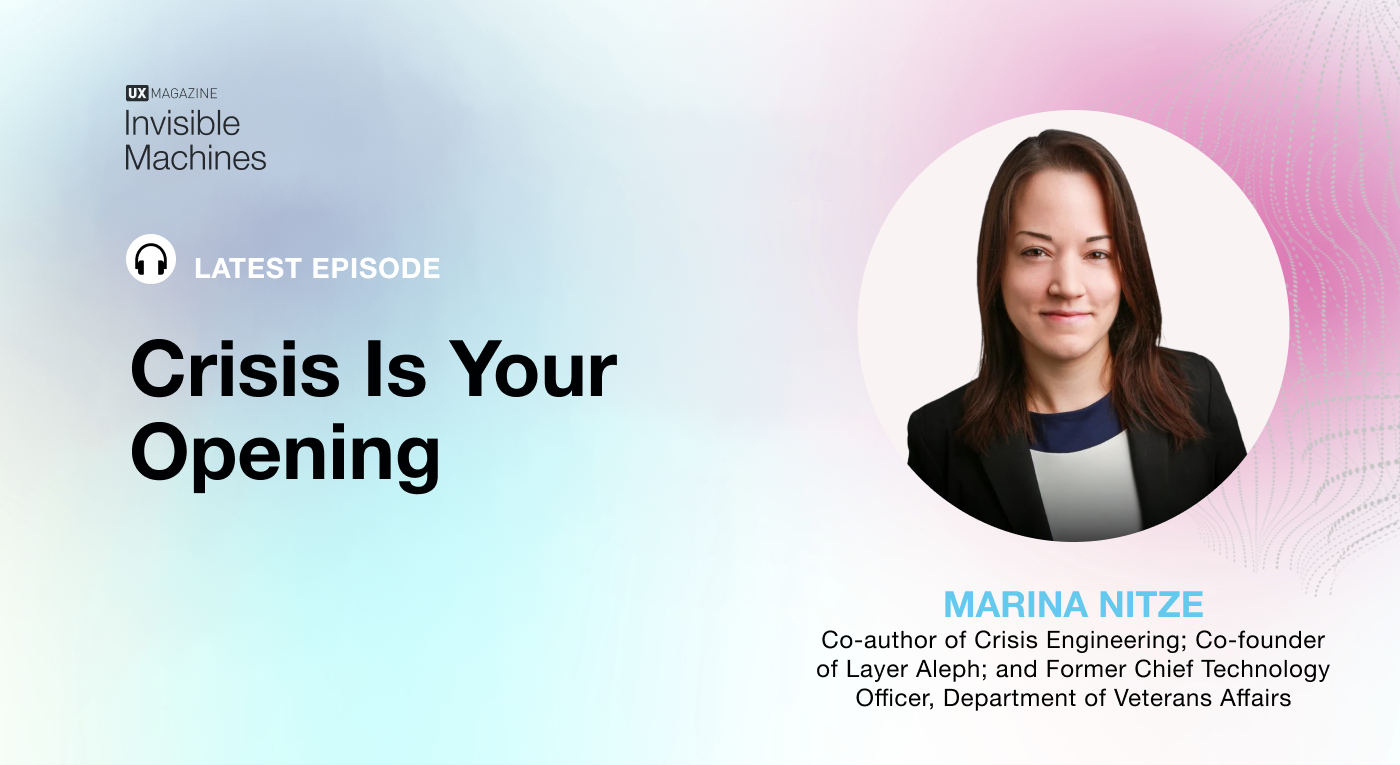
In the corridors of institutional power, there is a persistent, comforting myth: that the organizations running our society—from government agencies to multinational corporations—operate according to the manuals they have written. But what happens when the manual is a work of fiction?
Marina Nitze, former Chief Technology Officer of the Department of Veterans Affairs and co-founder of the consultancy Layer Aleph, has spent her career uncovering a fundamental truth about complex systems: organizations do not run on reality; they run on "sensemaking"—the stories they tell themselves about how their processes function. When a crisis hits, those stories often shatter, revealing a chasm between the map and the territory. This is the premise of Crisis Engineering, a discipline that argues that moments of total system failure are not just disasters to be mitigated, but rare, fleeting windows of opportunity to rewire how an institution operates.
The Phantom Call Center: A Case Study in Institutional Delusion
The California unemployment system during the height of the COVID-19 pandemic serves as the definitive case study in broken sensemaking. As the state’s economy stalled, the unemployment office was inundated with millions of claims. As the system buckled, officials in the governor’s office and agency leadership offered a singular, reassuring mantra to deflect panic: "Don’t worry, we have the call center."
It was a perfect, self-reinforcing narrative. Executives believed it because it matched their organizational chart; managers repeated it because it provided a sense of control; and workers clung to it as a buffer against public outcry.
When Nitze and her team were brought in to troubleshoot the collapse, they did the one thing no one else had bothered to do: they went to the physical location of the "call center." They expected a bustling room of agents managing a high-volume telecommunications infrastructure. Instead, they found a room of empty cubicles.
One lone employee sat in the corner, confused by the visit. He was not a call center operator; he was an unemployment specialist whose primary role was processing manual paperwork. There was no call center infrastructure. The "system" was merely a phone number that routed randomly to individual desks. When the pandemic forced staff to work from home, the calls rang into a silent, empty room. The "call center" was a ghost—a story that had replaced the reality of the operation for years.
Chronology: The Anatomy of a Breakdown
The collapse of the California unemployment system, and similar failures in foster care licensing or corporate IT outages, follow a distinct, predictable timeline:
- The Era of Institutional Comfort: The organization functions under a "story" that may have been true years ago but has drifted from reality. Processes are assumed to be streamlined, despite evidence to the contrary.
- The Trigger Event: A "fundamental surprise"—an event that the current mental model cannot explain or accommodate—occurs.
- The Phase of Denial: Leadership attempts to fix the problem by doubling down on the existing story. They commission studies, form task forces, and hold "status meetings," which only serve to fill the time until the crisis window closes.
- The Window of Vulnerability (and Opportunity): The cognitive dissonance becomes unbearable. The old story has shattered, but a new one hasn’t yet been built. This is the period of "Crisis Engineering."
- The Resolution or Regression: Either a "novel action" is taken—a bold, evidence-based intervention that replaces the old model—or the organization reverts to its previous state, having learned nothing.
Supporting Data: Why We Prefer Stories Over Evidence
The psychological roots of this phenomenon lie in the human aversion to cognitive dissonance. Organizational psychologist Karl Weick, who pioneered the theory of sensemaking, argued that our brains are not objective processors of reality. They are storytellers.
Nitze points to research into the American jury system as a primary example. The legal assumption is that jurors evaluate evidence to reach a verdict. In reality, jurors often arrive at a conclusion first and then assemble the evidence to fit that narrative. This same cognitive bias permeates executive boardrooms.
The Five Indicators of a "Useful Crisis"
Nitze defines a "useful crisis"—one that can be leveraged for systemic improvement—by five specific markers:
- Fundamental Surprise: The crisis was entirely unforeseen by current planning.
- Disruption in Core Function: The fundamental "output" of the organization has ceased (e.g., claims cannot be processed).
- Rigid Timeline: There is no room for extended debate; the clock is ticking.
- High Visibility: The failure is public, putting immense pressure on leadership.
- Failure of Sensemaking: The reality of the crisis directly contradicts the organization’s long-held narrative of how it works.
The "Novel Action": Breaking the Cycle of Meetings
The standard organizational response to failure—convening committees and commissioning reports—is what Nitze calls "the death of progress." These actions are performative; they signal "seriousness" without risking the failure of actually trying something new.
In contrast, "novel action" requires a hypothesis-driven approach. When a system fails, the goal is not to study the map; it is to touch the territory. Nitze’s work in the foster care system provides a stark example. A six-month delay in licensing foster grandparents was blamed on "bureaucratic friction" with the DMV. By ignoring jurisdictional boundaries and actually walking into the DMV, Nitze discovered the "friction" was entirely imaginary. The DMV had the records ready in an hour; the two departments were simply stuck in a loop of outdated, unverified assumptions. By introducing the two parties, the timeline was slashed by 30 days.
Implications: The AI-Driven Future
The urgency of Nitze’s framework has reached a fever pitch due to the rapid, decentralized adoption of Artificial Intelligence.
The AI Stress-Test
For years, bureaucratic organizations have relied on the fact that humans are generally bad at navigating complex, poorly documented processes. The "IVR tree" (the automated phone menu) was a sufficient barrier to entry. However, AI agents are now capable of probing these systems at scale. An AI bot can navigate a phone menu, wait on hold, and extract concessions in a way that would take a human customer hours of frustration.
When these AI agents hit the "gaps" in institutional processes—the places where the map does not match the territory—they will trigger "useful crises" with unprecedented frequency. Organizations that have not done the work of "walking the process" to understand their own internal realities will find their systems overwhelmed by bots that expose their inefficiencies in real-time.
Automation vs. Foundation
As Robb Wilson, host of Invisible Machines, notes, many companies are rushing to automate their processes without first fixing them. This is a fatal error. If you automate a broken process, you are simply "encoding the map" into the system. You are building a high-speed, automated way to fail.
"Knowledge management"—the foundational layer that provides AI with institutional context—is the missing link. Before an organization can safely leverage AI, it must undergo the grueling, manual work of mapping its actual operations, not the aspirational ones.
Conclusion: Preparing for the Window
The takeaway for modern leaders is both simple and daunting: a crisis is coming. It may be triggered by a market shift, a technical outage, or an AI agent navigating your customer service portals. When it arrives, the "window" will open—a brief period where the old story is dead, and the organization is desperate for a new one.
Nitze’s advice is to prepare for that window before it opens. Build the infrastructure for crisis communication that operates outside your standard systems. Keep a "back pocket" project—a pilot program or a data-backed proposal—that is ready to deploy the moment the old narrative fails.
The organizations that survive and thrive will be those that realize the truth is rarely found in the boardroom’s slide decks. It is found in the gaps, the manual forms, and the empty rooms where the "call center" was supposed to be. If you know what your system is actually doing—rather than what you hope it is doing—you can turn a moment of chaos into the spark for a long-overdue evolution.
As Nitze suggests, the question is not if your story will be stress-tested, but whether it is close enough to the truth to be the one that sticks.
 Ammar Sabilarrohman
  Neng Nana
  Sagoh
Sagoh 