
 By Dwi Wanna
New research conducted by Fable and the University of California, Irvine, reveals that users with cognitive disabilities identify nearly twice as many usability issues as the general population, offering a "stress test" for digital accessibility that benefits all users.
In the rapidly evolving landscape of digital product design, the "average user" has long been the primary benchmark for success. However, a groundbreaking exploratory study suggests that this narrow focus may be causing companies to miss nearly half of the potential friction points in their user journeys. The study, led by researchers at the accessibility platform Fable in collaboration with the University of California, Irvine (UCI), found that participants with cognitive disabilities identified 1.8 times more usability issues and offered 1.8 times more suggestions for improvement than participants from the general population.
As cognitive disabilities—a broad umbrella covering challenges with memory, focus, and learning—become increasingly prevalent, these findings suggest that inclusive research is no longer just a matter of compliance, but a vital strategy for business efficiency and product quality.
Main Facts: The 1.8x Insight Multiplier
The core of the study’s findings rests on a stark numerical disparity. Across three distinct web environments, testers with cognitive disabilities surfaced 197 unique usability issues, compared to just 113 identified by the general population (gen pop) group. This "insight gap" suggests that users with cognitive access needs act as a high-sensitivity barometer for design flaws that might otherwise go unnoticed until they impact a company’s bottom line through lost conversions or high bounce rates.
Cognitive disability is currently the most prevalent disability in the United States, affecting approximately 13.9% of the population according to the CDC. Recent data from Yale University further indicates that these numbers are rising rapidly. The research conducted by Fable’s VP of Innovation, in partnership with UCI’s Syed Fatiul Huq and a team of specialist researchers, aimed to validate a long-standing hunch: that designing for the most cognitively taxed users creates a better experience for everyone.
The study utilized the Accessible Usability Scale (AUS), a 10-question standardized tool, to quantify the user experience. The results were telling: while the general population often "muddled through" complex or poorly designed interfaces, cognitive participants provided deep, qualitative feedback on why certain elements failed, specifically citing "mental energy drain" and a lack of "predictable interactions."
Chronology: From Working Group to Validated Data
The journey toward these findings began in the summer of 2024. Recognizing a lack of industry-standard best practices for performing accessibility testing with people with cognitive disabilities, a working group of expert researchers was formed.
Phase 1: Establishing the Framework (Summer 2024)
The group set four primary goals: to define recruitment screeners, establish best practices for moderation, create a quantitative survey for cognitive experiences, and document the findings for the broader UX community. They began by reviewing existing literature and published studies to synthesize a "best practice" guide for working with neurodivergent testers, including those with ADHD, Dyslexia, and Autism.
Phase 2: The Pilot Study (Late 2024)
To refine their approach, the team conducted a pilot study with an initial group of 25 testers. This phase was iterative; the researchers fine-tuned their interview guides and developed a specialized survey that could accurately capture the nuances of the cognitive user experience without being an accessibility barrier in itself.
Phase 3: The Cognitive Usability Study (2025)
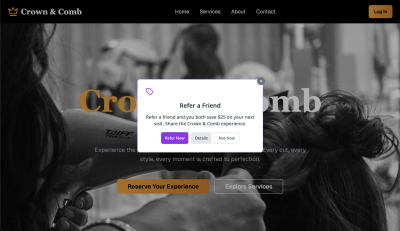
With a refined methodology, the team launched a joint study with the University of California, Irvine. This study involved 30 participants—split evenly between a cognitive disability group and a general population group. Using AI prototyping tools, the researchers generated three distinct websites—"Strong Snacks," "Turning Pages," and "Crown & Comb"—each designed with varying levels of complexity to test different user goals.

Phase 4: Analysis and Publication (2026)
Following the data collection phase, every recording and transcript was meticulously reviewed. Researchers counted every concern, question, or moment of difficulty as a "usability issue." The final analysis, published in mid-2026, confirmed the hypothesis: cognitive participants provided significantly more actionable data for UX teams than traditional testing groups.
Supporting Data: A Tale of Three Websites
The researchers designed the study to see how different interface complexities affected the two groups. The findings across the three sites provided a nuanced look at how cognitive load impacts usability.
Website 1: Strong Snacks (Simple Design)
This site featured a "brutalist" and bright design with three-ingredient recipes. It was the simplest site in the study.
- Gen Pop: Found an average of 6.4 issues.
- Cognitive Group: Found an average of 9.8 issues.
- Key Insight: Even on a "simple" site, cognitive participants found 3.4 more issues, specifically pointing out that continuous animations (like rotating badges) were distracting and that the lack of clear "Read More" labels created unnecessary uncertainty.
Website 2: Turning Pages (Complex Functionality)
A moody, dark-themed bookstore site with extensive filtering, a "book swiping" profile builder, and a checkout flow.
- Gen Pop: Found an average of 11 issues.
- Cognitive Group: Found an average of 17 issues.
- Key Insight: Cognitive participants were highly sensitive to "affordance" issues—not knowing if a button was clickable or what would happen next. They identified 20 issues related to buttons and links, compared to only 7 found by the general population.
Website 3: Crown & Comb (Intentionally Difficult)
A hair salon site designed to be bold but complex, with a "VIP program" and a bridal package hidden deep in the architecture.

- Gen Pop: Found an average of 5 issues.
- Cognitive Group: Found an average of 12 issues.
- Key Insight: An interesting inversion occurred here. While the gen pop group gave this site a very low median AUS score (35.0) because they found it "frustrating," the cognitive group actually scored it higher (68.0). Researchers suggest this is because cognitive participants are used to navigating difficult interfaces and were more appreciative of the visual elements, even as they identified more technical flaws.
Categorical Breakdown of Issues
| Issue Category | Gen Pop (Total) | Cognitive (Total) |
|---|---|---|
| Content & Clarity | 45 | 88 |
| Buttons & Links | 10 | 25 |
| Icons & Visuals | 9 | 42 |
| Navigation | 45 | 46 |
| Media (Video/Animation) | 0 | 3 |
Official Responses and User Perspectives
The qualitative feedback from the study highlighted a "well-being gap" between the two groups. While the general population described poor design in terms of "frustration" and "lack of engagement," participants with cognitive disabilities described it as a "drain on mental energy."
One general population participant noted: "As soon as you see a service repeated on a page multiple times and you’re still not able to select it, it’s really, really frustrating. This feels not particularly engaging."
In contrast, a participant with a cognitive disability explained: "The mental energy aspect of it… maybe the website has too many options to look through. I have to go through a lot of stuff. It makes me feel drained and less able to focus."
Industry experts have begun to take note of these findings. A UX Manager at Bell Media, who was not involved in the study but utilizes similar inclusive research methods, stated: "Two sessions with cognitive users feel like 200 because of the volume of insights we get." This sentiment reflects a growing realization in the tech industry that inclusive research is a "force multiplier" for design teams.
Implications: The Future of Universal Design
The results of the Fable/UCI study have significant implications for the future of digital product development, particularly as the global population ages.
1. The Aging Demographic
According to U.S. Census projections, the percentage of Americans aged 65 and older will increase from 17% to 25% by 2060. As cognitive decline is a natural part of aging, a massive segment of the future market will have the same access needs as the participants in this study. Companies that fail to optimize for cognitive load now are essentially designing products with an expiration date.
2. The "Curb-Cut Effect" in Digital Spaces
The study reinforces the "Curb-Cut Effect"—the phenomenon where designs intended for people with disabilities end up benefiting everyone. A clearer "Add to Cart" button or a less distracting homepage helps the neurodivergent user complete a task, but it also helps a tired parent, a distracted commuter, or someone using a device in bright sunlight.
3. Efficiency in UX Research
For budget-conscious UX departments, the study provides a compelling argument for inclusive recruitment. If cognitive participants identify 1.8 times more issues, a team can theoretically achieve the same level of insight with fewer sessions, provided those sessions include a diverse range of cognitive abilities.
4. Beyond Compliance
While web accessibility often focuses on technical markers (like alt-text for screen readers), this research shifts the focus toward "cognitive accessibility"—predictability, clarity, and the conservation of user energy. Researchers argue that when a usability issue becomes so taxing that it prevents a user from finishing a task, it is no longer just a "bug"; it is an accessibility barrier.
In conclusion, the study serves as a call to action for the tech industry. Cognitive inclusion is not merely a "nice-to-have" or a charitable addition to a research plan. It is a rigorous, high-yield methodology for building simpler flows, clearer content, and more resilient products that stand up to the complexities of human cognition.
 Nana Wu
  Nana
Nana 