
 By Nana
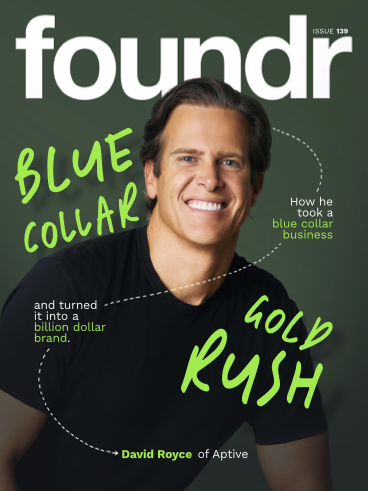
In the high-stakes world of modern entrepreneurship, the blueprint for success is often mythologized: it involves Silicon Valley venture capital, disruptive software, or a revolutionary AI platform. However, David Royce, the founder and chairman of Aptive Environmental, suggests that the path to a billion-dollar valuation doesn’t lie in the next big app. Instead, it lies in the industry your peers wouldn’t touch with a ten-foot pole.
Royce has built a career on the counter-intuitive principle that success is not about the prestige of the industry you select, but rather your willingness to perform the tasks others shun—consistently, effectively, and for long enough to become the undisputed master of that craft. Today, Aptive stands as the third-largest residential pest control service in North America, a testament to the power of "unsexy" business models executed with elite-level precision.
The Early Years: Redefining Intelligence and Persistence
The narrative of David Royce’s success is not one of inherited genius or academic pedigree. In fact, his journey began with a profound struggle to fit into the traditional education system. As a child, Royce grappled with an undiagnosed case of ADHD, a condition that left him feeling "not smart" in the classroom. He found traditional schooling to be an environment of stifling boredom, where his inability to focus made him feel like a liability.
Everything changed in the sixth grade when he encountered a teacher named Mrs. Luft. She saw potential where others saw only distraction, and her belief in him served as a catalyst. For the first time, Royce found the internal motivation to excel. This early period of his life instilled a vital lesson: in environments that captivate him, his brain is a superpower; in static ones, it is a challenge to be managed.
This realization would later define his approach to business, where he learned to treat sales and entrepreneurship as the ultimate arena for his high-energy, hyper-focused mind.

Chronology: From Door-to-Door Novice to Industry Titan
Royce’s trajectory into the pest control industry was entirely accidental. While in college, he heard a friend mention earning $25,000 in a single summer through door-to-door sales. Driven by the prospect of income, he ventured into the field, only to face a brutal reality check.
The First Summer of Silence
Royce spent his first week in Sacramento failing. He didn’t close a single sale. While his peers were consistently landing accounts, he was effectively doing "free cardio." Rather than quitting, Royce retreated to a bookstore, purchased a stack of sales literature, and committed to 90 minutes of intensive study every day. By the end of the season, he wasn’t just catching up; he was the top rookie sales representative in a company of 200 people. He had discovered that persistence, when paired with study, is essentially genius in disguise.
The Pivot to Entrepreneurship
After four summers of lucrative door-to-door sales—during which he saved $300,000 intended for MBA school—Royce stood at a crossroads. He was on track to enter investment banking. However, his mentor, who had just sold his own startup for $10 million, challenged him: "Why work 100-hour weeks for someone else when you can own the system?"
Royce swallowed his ego. He realized that while "pest control" lacked the glamor of a Manhattan investment bank, the financial opportunity was undeniable. He used his savings as startup capital and set to work.
Scaling the Mountain
Royce’s early years were characterized by extreme growth and near-catastrophic cash flow issues. In his first year, he projected 5,000 new customers but landed 7,500. While impressive, the company’s commission-heavy model meant he had to pay his sales force before the revenue from those customers arrived. He survived by negotiating with his team, offering interest in exchange for time—a moment that solidified his mantra: "Revenues are vanity, profits are sanity, but cash flow is reality."

Following this, Royce refined his strategy: he built a series of companies, sold the customer portfolios to strategic buyers, but retained his core leadership team and infrastructure. He then used the capital to launch the next iteration on a larger scale. This "rinse and repeat" cycle eventually culminated in the birth of Aptive, a company that would scale to over $500 million in annual revenue.
Supporting Data: Why Blue-Collar Industries Dominate the Wealth Gap
Royce’s success is supported by a broader economic trend. According to data, roughly 43% of the top 0.1% of income earners in the United States—those earning over $2.3 million annually—are involved in "boring" blue-collar industries.
- Recession Resistance: As Royce notes, "Recessions come and go, but bugs don’t read The Wall Street Journal."
- The AI Shield: While AI threatens to automate coding, legal analysis, and administrative office work, it cannot physically perform home services. The manual labor requirement serves as a natural barrier to entry against the tech-centric disruption that is eroding other sectors.
- The Boomer Succession Gap: Millions of small business owners in trades and services are approaching retirement with no succession plan. This creates a massive market for those capable of acquiring, optimizing, and scaling these essential service businesses.
The Architecture of Culture: Beyond the Perks
A common misconception in corporate leadership is that culture is defined by "perks"—ping-pong tables, catered lunches, or game rooms. Royce acknowledges that while these things can be fun, they are merely "sugar," not the "protein."
At Aptive, the real culture was built on training and ownership. Royce famously gave away 25% of his company to his employees. By aligning the financial interests of his staff with the company’s valuation, he turned his workforce into stakeholders. When the company hit the $500 million revenue mark, the resulting exit provided life-changing capital to hundreds of employees.
"Ownership is a far better retention tool than a ping-pong table," Royce says. His focus remained on developing leaders, not just followers. By institutionalizing sales methodologies, such as "option closes" and "resolve the doubt" (RAC) techniques, he created a machine that could outperform competitors by 70% in terms of individual productivity.

Official Responses and Lessons in Leadership
Royce’s journey has not been without its setbacks. The most notable occurred when he brought in a high-level CFO from a billion-dollar tech company to help manage an exit. The hire, while impressive on paper, lacked the "on-the-ground" understanding of the business’s unique cash flow and expense structures. The resulting misalignment led to missed forecasts, causing potential buyers to drop out during the sale process.
Reflecting on this, Royce offers three critical lessons for entrepreneurs:
- Trust, but verify: Never assume a resume replaces institutional knowledge.
- Forecasts are sacred: Never enter a sale process if you are missing your internal financial targets; it hands all leverage to the buyer.
- The 50% Rule: Many entrepreneurs don’t sell on their first attempt. That is acceptable. The process itself is a diagnostic tool that reveals exactly what buyers are looking for.
Implications: The Legacy of the Architect
David Royce’s story is a profound rebuttal to the modern obsession with "disruptive" innovation. He suggests that we have undervalued the power of operational excellence in essential services.
For the aspiring entrepreneur, the implication is clear: stop looking for the "sexiest" industry and start looking for the industry with the most significant "pain points." If you can apply high-level financial rigor, systematic training, and a culture of ownership to a traditionally overlooked sector, the market rewards are substantial.
As Royce moves into a new chapter of his career, he emphasizes that the summit of success is a moving target. He no longer views himself as the "hero" of the story—the one who has to jump in and save every deal. Instead, he sees himself as the architect. The true legacy of a leader, in his view, is not the final valuation of their company, but the number of other leaders they helped build along the way.
"If you don’t enjoy the climb," Royce concludes, "the summit is going to disappoint you." For those willing to do the hard work that others avoid, the climb is not just a path to wealth—it is the ultimate proving ground for character and capability.
 Dwi Wanna
  rifanmuazin
  Asep Darmawan