
 By Layla Zulfa
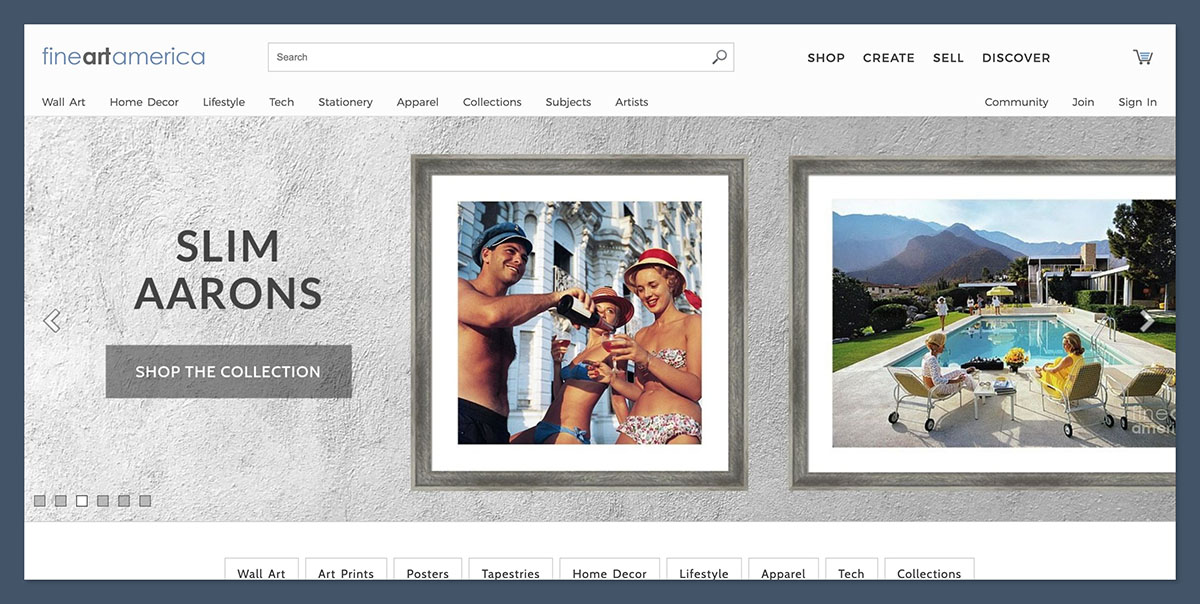
Fine Art America (FAA) has long stood as a titan in the print-on-demand (POD) landscape. Unlike the trend-chasing marketplaces that focus on ephemeral graphic tees and meme-culture merchandise, Fine Art America has carved out a niche as the premier digital gallery for serious photographers, traditional artists, and illustrators.
With a business model that prioritizes product quality and artist autonomy, the platform offers something most competitors do not: the ability for creators to dictate their own profit margins. However, as the digital art market shifts and the creator economy matures, the question remains: is Fine Art America still a viable engine for professional growth, or is it a legacy platform facing an existential turning point?
The Core Philosophy: Why Fine Art America Remains Unique
At its heart, Fine Art America is a fulfillment powerhouse. It operates on a straightforward premise: the artist provides the high-resolution imagery, and the platform handles the production, shipping, customer service, and payment processing.
The feature that sets it apart from the "big box" POD sites—such as Redbubble or Society6—is the markup system. On most platforms, artists receive a fixed percentage (typically 10% to 20%) of the retail price. On Fine Art America, the platform establishes a base manufacturing cost for every item. Any amount you add on top of that base price is 100% yours. This autonomy allows artists to treat their storefronts like high-end boutiques rather than bargain-bin print shops, positioning their work at premium price points that reflect its artistic value.
A Chronology of the Platform: From Niche to Industry Giant
Fine Art America’s journey mirrors the evolution of the digital art market.
- The Inception (Early 2000s): FAA began as a localized solution for artists struggling to find high-quality printing for their work. It quickly gained traction by emphasizing gallery-quality materials like canvas and metal prints rather than cheap paper.
- The Global Expansion (2010s): The company scaled its operations by opening a global network of manufacturing facilities. By bringing production in-house, they eliminated the "third-party vendor" lottery, ensuring that a print sold in London looks identical to one sold in Los Angeles.
- The Rise of Pixels.com: The parent company launched Pixels.com as a sister site, utilizing the exact same backend, fulfillment, and artist inventory. This allowed artists to tap into two distinct marketplaces with a single upload workflow.
- The Current Era (2025–2026): The platform is currently navigating a period of market saturation and changing consumer behaviors. While traffic remains high, the company is facing increased competition from boutique POD providers and the rise of personal, AI-integrated storefronts like Shopify.
Supporting Data: The State of the Marketplace
To understand whether Fine Art America is a smart business move, one must look at the numbers. As of March 2026, the platform maintains a robust presence with over 3.3 million monthly sessions.
Key Performance Metrics
| Metric | 2026 Data Point |
|---|---|
| Annual Revenue | ~$144.8 Million |
| Average Order Value (AOV) | $100–$125 |
| Conversion Rate | 2.50%–3.00% |
| Global Reach | 16 Manufacturing Centers |
While revenue has seen a slight year-over-year decline (5-10% projected), the high Average Order Value (AOV) suggests that the platform attracts a more affluent, "collectible-focused" buyer compared to competitors like Redbubble, where the AOV often hovers between $50 and $75.

The User Experience: Testing the Workflow
Onboarding and Dashboard
Signing up for a Standard account is frictionless, requiring no initial capital or credit card. However, users familiar with modern UI/UX design may find the backend "dated." The dashboard is utilitarian, favoring function over form. While this may frustrate those used to the sleek, drag-and-drop aesthetics of Squarespace, it is purposefully designed for high-volume portfolio management.
The Upload Process
Uploading is where the platform shines. Upon uploading a high-resolution image, the system automatically generates mockups for the entire catalog—ranging from canvas prints and metal wall art to tote bags, mugs, and apparel. The ability to bulk-apply markups is a time-saver for artists with large portfolios, though I recommend manual pricing adjustments for your "flagship" pieces to ensure competitive market positioning.
Official Responses and Service Reality
One of the most critical aspects of this review involves the disparity between "Buyer Support" and "Artist Support."
The Buyer Experience: Fine Art America is highly rated for its consumer-facing operations. The 30-day return policy and the consistent quality of the in-house manufacturing mean that the average customer is highly satisfied.
The Artist Experience: This is the platform’s "Achilles’ heel." Reports from the artist community—verified through Reddit forums and independent creator groups—indicate that artist-facing support can be slow or unresponsive. Common pain points include:
- Account Locking: Occasionally, accounts are flagged or frozen during review periods, leading to frustration for artists reliant on the platform for income.
- Payout Transparency: While payments are reliable, the 30-day delay for the return window can disrupt cash flow for growing businesses.
When queried about these concerns, the platform emphasizes its commitment to "maintaining a secure, high-quality marketplace" and notes that its support team is scaled to manage the needs of hundreds of thousands of users. Artists should treat FAA as a channel in a diversified strategy rather than a sole business partner.
Strategic Implications: Is It Right for Your Business?
The Case for the "Pro"
If you are a photographer or fine artist who requires high-fidelity reproduction, Fine Art America is arguably the best-in-class option. The ability to sell original art alongside reproductions is a unique feature that allows you to capture two distinct segments of the market: the casual decor buyer and the serious collector.
The Limitations
If you are looking for a platform to build a "brand identity," you will be disappointed. The platform provides a template, not a design suite. If your goal is to build a mailing list, capture customer data, or create a unique aesthetic experience, you will find FAA restrictive.
Pro Tip: Most successful users utilize a "Hybrid Strategy." They use Fine Art America as their fulfillment backend—embedding the shopping cart widget into their own custom-built website. This allows the artist to own the design and the customer relationship, while offloading the logistical burden of high-quality printing to FAA.
Summary of Findings
The Pros
- Unmatched Print Quality: In-house production ensures global consistency.
- Markup Control: You set the price, you keep the profit.
- Broad Catalog: From museum-grade metal prints to functional home decor.
- Low Barrier to Entry: The free account is a perfect "sandbox" for testing.
The Cons
- Dated Interface: The backend lacks modern aesthetic and customization tools.
- Discoverability: With 700,000+ artists, you must drive your own traffic to be successful.
- Support Hurdles: Artist-side support can be a bottleneck during disputes.
- Revenue Trends: The platform is currently experiencing a period of contraction, suggesting that internal marketplace sales are becoming harder to achieve.
Final Verdict: The 2026 Outlook
Fine Art America is not a "get-rich-quick" scheme. It is a mature, robust tool for the professional artist. It works best when you view it as a silent partner—one that handles the complex, messy work of physical production so you can focus on creation and marketing.
If you are just starting, sign up for the Standard account. Upload your 25 best pieces and focus on driving traffic from your own social media channels. If you generate sales and find that the fulfillment quality meets your standards, the $30 Premium membership is one of the most cost-effective investments in the creator economy.
However, do not rely on the marketplace alone to "make" you. In 2026, the artists who thrive on Fine Art America are those who treat their storefront not as a lottery ticket, but as a professional, scalable extension of their own personal brand.
Disclaimer: This review is based on independent testing, current market analytics, and aggregated community feedback. Prices and features are subject to change; always verify terms of service directly with the platform before committing to a long-term business strategy.
 Dwi Wanna
  Lina Irawan
  Basiran