
 By Laily UPN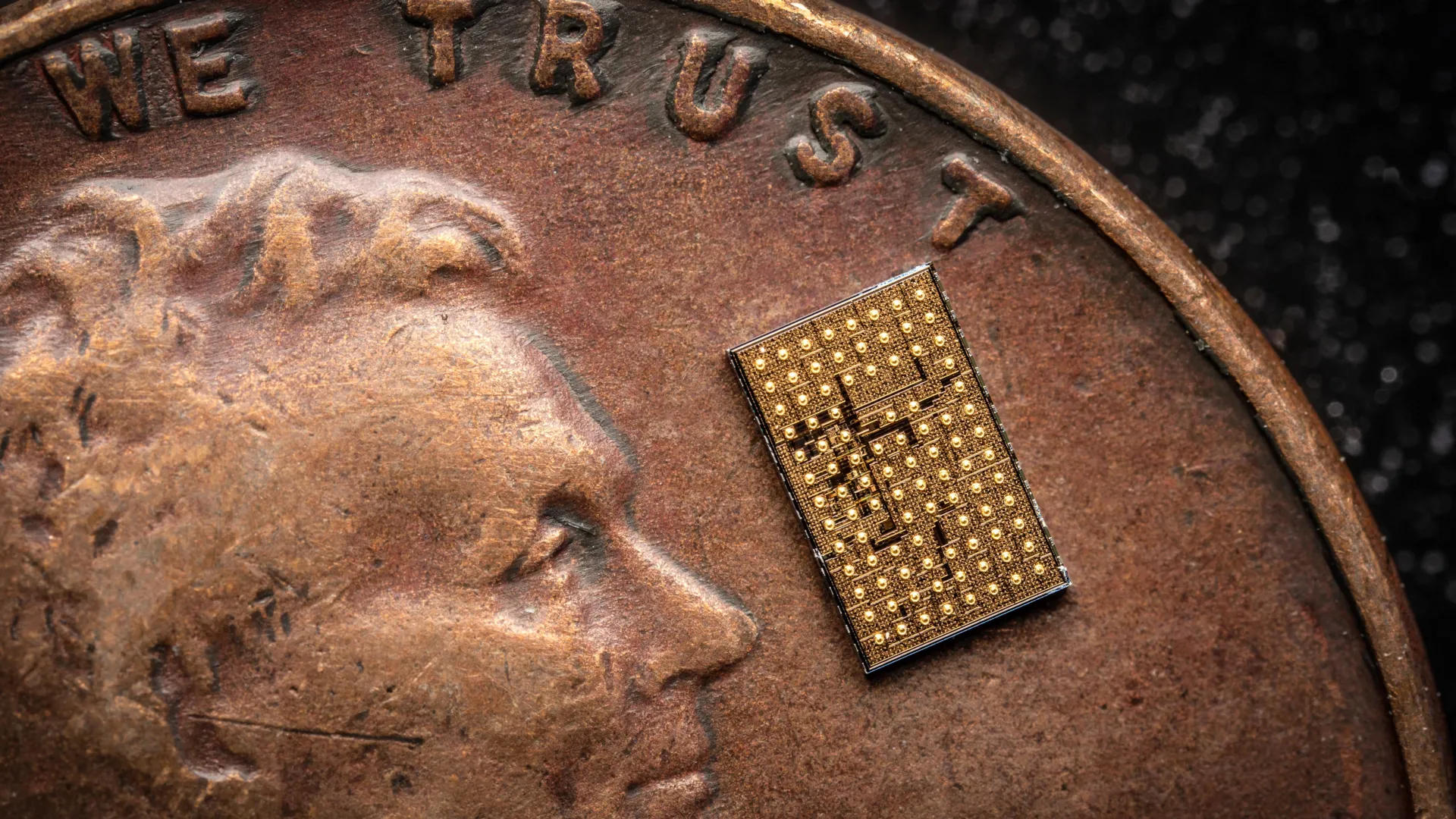
Introduction: The Looming Energy Crisis in the Digital Age
As the global appetite for artificial intelligence, cloud computing, and real-time data processing surges, the infrastructure supporting these technologies—the modern data center—is reaching a critical inflection point. These facilities are massive consumers of electricity, and a significant portion of that energy is lost as heat during the conversion process required to power high-performance graphics processing units (GPUs).
In a significant breakthrough that could reshape the future of hardware architecture, engineers at the University of California San Diego have unveiled a novel chip design that addresses the fundamental inefficiencies of power conversion. By moving away from traditional magnetic-based components and embracing a hybrid piezoelectric approach, the researchers have demonstrated a pathway to significantly more efficient and compact power delivery systems. The findings, recently published in the journal Nature Communications, represent a departure from decades of established engineering practices, offering a glimpse into the next generation of energy-dense computing.
Main Facts: The Challenge of Voltage Step-Down
At the heart of every electronic device, from a smartphone to a massive server rack, lies a DC-DC step-down converter. These components are the unsung gatekeepers of modern electronics, tasked with a seemingly simple but technically arduous job: taking a high-voltage input and transforming it into the low-voltage, high-current electricity that processors require to function.
In the high-stakes environment of a data center, electricity is typically distributed at 48 volts. However, the GPUs that drive AI workloads—such as those used for large language models—operate at voltages between 1 and 5 volts. This massive "step-down" requirement creates a significant engineering hurdle. As the gap between input and output voltage widens, traditional converters struggle to maintain efficiency.
Historically, engineers have relied on magnetic components, such as inductors, to manage this energy flow. While these components have been the industry standard for decades, they are currently approaching their theoretical and practical performance limits. They are bulky, difficult to shrink further, and inherently inefficient when tasked with the dramatic voltage swings required by modern, compact, and high-power computing environments.
Chronology of the Innovation
The journey toward this new design began with the realization that the "magnetic bottleneck" could not be overcome through incremental improvements to existing inductor technology.
- Identifying the Wall: Researchers at the UC San Diego Jacobs School of Engineering, led by senior author Patrick Mercier, conducted a thorough analysis of current power management integrated circuits (PMICs). They concluded that the industry had reached a point of diminishing returns in inductive converter design.
- The Piezoelectric Pivot: Under the leadership of Mercier and first author Jae-Young Ko, a Ph.D. student in the Department of Electrical and Computer Engineering, the team shifted their focus toward piezoelectric resonators. Unlike inductors, which rely on magnetic fields, piezoelectric resonators store and transfer energy via mechanical vibrations.
- Overcoming Early Limitations: Previous attempts to utilize piezoelectric converters had failed to provide the necessary power density or maintain high efficiency when handling large voltage differentials. The UC San Diego team spent months iterating on a hybrid architecture that integrated these resonators with conventional capacitors.
- Validation and Testing: The team successfully fabricated a prototype chip that bridged the 48-to-4.8-volt gap. Laboratory tests confirmed that the device achieved a peak efficiency of 96.2 percent, while simultaneously delivering four times the output current of earlier piezoelectric designs.
Supporting Data: Efficiency and Performance Metrics
The data produced by the UC San Diego prototype provides a compelling argument for the viability of piezoelectric-based power conversion. In the context of data center energy consumption, a gain of even a few percentage points in efficiency can translate into megawatts of saved energy and millions of dollars in operational costs across a large-scale facility.
Technical Performance Breakdown:
- Conversion Ratio: The prototype successfully managed a 10-to-1 voltage step-down (48V to 4.8V).
- Peak Efficiency: The system achieved a record-setting 96.2% efficiency, minimizing energy loss as heat.
- Current Density: The hybrid design provided roughly four times the output current compared to previous non-magnetic alternatives, proving it can handle the intense demands of modern GPUs.
- Architecture: By combining piezoelectric resonators with small capacitors, the researchers created multiple energy pathways. This "hybrid" approach effectively distributes the workload, reducing the stress on the piezoelectric material and preventing the system from overheating during high-load operations.
Official Responses and Expert Perspective
The project, which received partial funding from the National Science Foundation through the Power Management Integration Center (PMIC), has garnered attention for its potential to disrupt the semiconductor power industry.
"We’ve gotten so good at designing inductive converters that there’s not really much room left to improve them to meet future needs," noted Professor Patrick Mercier. He emphasized that the research is less about "fixing" the old way and more about "charting a new trajectory."
Mercier’s team is candid about the current state of the technology. "Piezoelectric-based converters aren’t quite ready to replace existing power converter technologies yet," he admitted. The team identifies the primary hurdle as "packaging and integration." Because these resonators must physically vibrate to function, they cannot be integrated into circuit boards using standard industry soldering techniques. This necessitates a total rethink of how power management chips are mounted and connected in mass-produced hardware.
Implications: The Future of Data Centers
The implications of this research extend far beyond the laboratory. If successfully scaled, the transition to piezoelectric-based power conversion could lead to several transformative outcomes for the tech industry.
1. Reducing the "Power Tax"
Data centers currently lose a significant portion of their energy to the conversion process. If this "power tax" can be reduced through higher-efficiency converters, data centers could process more data with the same amount of electricity, effectively increasing the global computational capacity without expanding the physical footprint of energy infrastructure.
2. Miniaturization and Form Factor
As AI chips become more powerful, they also become more power-hungry. Traditional magnetic converters take up significant physical space on a motherboard. Piezoelectric components offer the potential for much higher energy density, allowing engineers to create smaller, more compact hardware that is easier to cool and more cost-effective to manufacture.
3. Sustainability in Computing
The environmental cost of training large-scale AI models is a growing concern. By improving the efficiency of the power delivery network, researchers are attacking the energy crisis at the hardware level. This technology could play a critical role in meeting the net-zero goals of major cloud service providers like Amazon, Microsoft, and Google.
Challenges and Roadmaps
While the results are promising, the path to commercialization is fraught with engineering complexities. The researchers have outlined three primary pillars for their future work:
- Material Science: Developing new piezoelectric materials that are more durable and can withstand the extreme thermal cycles of a data center environment.
- Circuit Design: Refining the hybrid configuration to handle even wider voltage ranges, ensuring that the system remains stable under fluctuating workloads.
- Packaging Innovation: Perhaps the most significant challenge, the team must invent new ways to mount these vibrating components without compromising the structural integrity or the electrical connection of the chip.
"We need to continue to improve on multiple areas—materials, circuits, and packaging—to make this technology ready for data center applications," Mercier stated.
Conclusion: A New Paradigm
The UC San Diego breakthrough serves as a reminder that the limits of computing are not just defined by software algorithms or chip lithography, but by the fundamental physics of power delivery. By questioning the reliance on magnetic inductors—a technology that has dominated the field for decades—the team has opened a new frontier in electrical engineering.
While the "vibrating chip" will not replace the status quo overnight, it provides a clear, data-backed roadmap for the future. As the world becomes increasingly reliant on the digital cloud, innovations that squeeze more performance out of every watt will become the cornerstone of sustainable, high-performance computing. The work performed at the Jacobs School of Engineering suggests that the next revolution in data centers might be found not in the processor itself, but in the quiet, microscopic vibrations of a piezoelectric resonator.
 Sagoh
Sagoh  Asro
Asro  Siti Muinah