
 By Nana
The vision is as grand as the cosmos itself: a future where the backbone of the global digital economy—the cloud, the power grid, and the compute power for artificial intelligence—is no longer tethered to the constraints of Earth. As SpaceX and other aerospace titans push for the commercialization of low Earth orbit (LEO), investors are increasingly looking past the allure of rocket launches and toward the potential for an entire orbital ecosystem. At the heart of this ambition lies a concept that feels ripped from the pages of a science fiction novel: the orbital data center.
Proponents argue that by moving high-intensity computing off-planet, humanity can bypass the mounting terrestrial pressures of land scarcity, water consumption, and the fierce public backlash against the "industrialization" of local communities. However, as engineering experts in data center design and space systems point out, the reality of operating a massive server farm in a vacuum is fraught with technical, economic, and logistical hurdles that dwarf the challenges of Earth-bound infrastructure.
The Chronology of an Emerging Industry
The trajectory toward space-based computing has accelerated alongside the AI revolution.
- 2020–2023: The rapid rise of generative AI created an unprecedented spike in demand for high-performance computing (HPC). As terrestrial power grids struggled to keep pace, tech giants began exploring edge computing and off-grid solutions.
- 2024: Industry discourse shifted from simple satellite communications to "in-orbit processing." Startups and aerospace companies began filing patents for modular space-computing platforms.
- 2025: High-profile controversies erupted in Virginia and other global tech hubs regarding data center land use, water cooling, and noise pollution, pushing the "Space-as-a-Cloud" narrative into the mainstream.
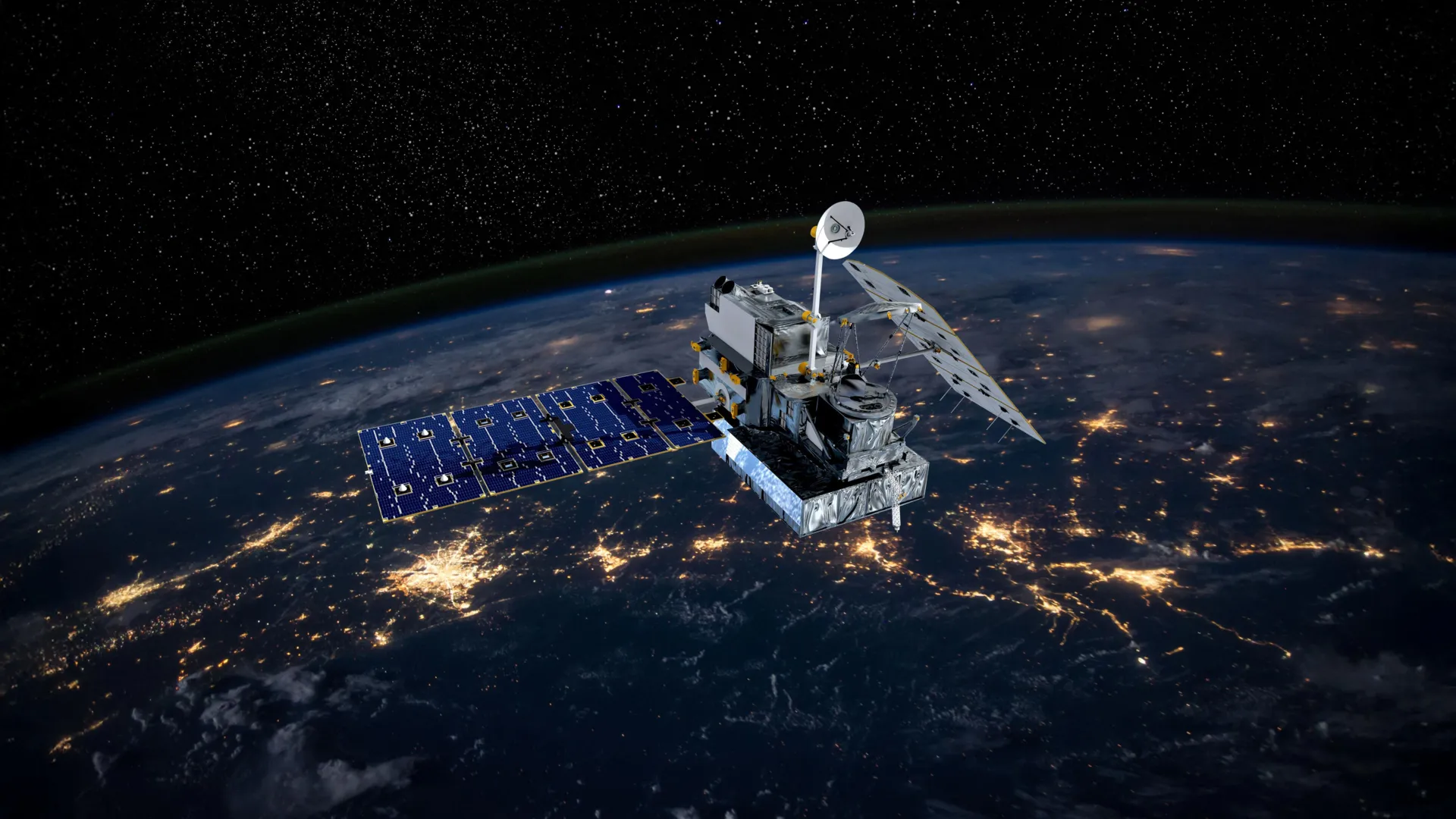
- 2026: SpaceX formally announced the design of its "AI1 Compute Satellite," marking a significant milestone in the shift from theoretical research to prototype development. While modest in capacity, it represents the first major corporate attempt to move operational compute architecture into orbit.
The Mechanics of Earth-Based Infrastructure
To understand the audacity of the orbital data center, one must first look at the complexity of its terrestrial counterpart. A modern data center is a marvel of engineering, built as an integrated system of power, cooling, and connectivity.
The Three Pillars of Compute
- Electric Power: Servers are the primary consumers, but they require massive, reliable power delivery systems. As AI workloads become more complex, the energy density requirements per square foot of rack space have hit historic highs.
- Thermal Management: Physics dictates that almost every watt of electricity fed into a server is eventually converted into waste heat. Without robust air or liquid cooling systems, equipment suffers from "thermal throttling," leading to catastrophic hardware failure.
- Physical Integration: Data centers are not just warehouses; they are nodes in a massive fiber-optic network. They require proximity to population centers to minimize latency—the time it takes for a signal to travel from a user’s device to the server and back.
The Space Proposition: Promises and Paradoxes
Why would a company go through the Herculean effort of launching servers into orbit? The "seductive logic" cited by proponents is twofold: abundant energy and "free" cooling.
The Energy and Thermal Advantage
In space, the sun is a constant, unblocked power source. Solar arrays can capture energy without the intermittency issues caused by Earth’s atmosphere or weather patterns. Furthermore, the vacuum of space provides a thermal sink at approximately -455 degrees Fahrenheit. In theory, if heat can be moved from the server chips to a radiator, it can be radiated away into the cold expanse of the universe, potentially eliminating the need for the billions of gallons of water currently used in Earth-based cooling.
The Physics of the "Radiator Problem"
However, this is where theory meets the brutal reality of orbital mechanics. In the absence of an atmosphere, convection—the process by which air moves heat away from a surface—is non-existent. Heat transfer in space must occur entirely through radiation, which is an agonizingly slow process.
Engineers estimate that to shed just 10 megawatts of waste heat, a space-based data center would require radiator surface areas equivalent to two football fields. The mass of these radiators, combined with the structural weight of the computing hardware, makes the "cost per launch" a staggering economic hurdle.
Implications for Global Policy and Environment
The shift toward orbital infrastructure is not without its critics. As companies look to space to escape environmental regulations on Earth, they are creating new, potentially more hazardous challenges in orbit.
The Orbital Debris Crisis
Space is not an infinite void; it is becoming increasingly crowded. Launching thousands of large-scale data center modules adds to the existing cloud of "space junk." A single collision could create a debris field capable of destroying other critical satellites, leading to a "Kessler Syndrome" scenario—a chain reaction where the debris makes Earth orbit unusable for generations.
Community and Regulatory Backlash
While orbital data centers might solve the problem of local NIMBY (Not In My Backyard) protests in Virginia or Texas, they are not immune to regulatory scrutiny. Protests at launch complexes, such as SpaceX’s facility in Boca Chica, highlight that the environmental impact of these systems starts long before they reach orbit. The noise, pollution, and resource consumption associated with the heavy-lift rockets required to put these data centers into place are becoming a central point of contention for local activists.
The "Refresh Cycle" Dilemma
Perhaps the most significant barrier to the commercial viability of space-based data centers is the rapid pace of technological innovation. On Earth, data center operators upgrade hardware every three to five years to keep up with the latest GPU capabilities and AI processing power.
In orbit, the cost of "replacing" a server is essentially the cost of a new launch. If an orbital data center is launched with today’s cutting-edge processors, it may become obsolete while the surrounding infrastructure (solar panels, structural frames) is still in its infancy. This "hardware obsolescence trap" threatens the return on investment for any company looking to compete with terrestrial providers.
Official Responses and Strategic Outlook
Major industry players, while optimistic, have been tempered in their expectations. SpaceX’s AI1 Compute Satellite, while a technological achievement, is estimated to be 100 to 1,000 times less powerful than a standard ground-based hyperscale data center.
Industry analysts suggest that the immediate future of space-based compute is not the replacement of the cloud, but the augmentation of space operations. Early adopters are likely to be:
- Intelligence and Defense Agencies: Processing classified satellite imagery in orbit to avoid the latency of sending raw, high-resolution data down to Earth.
- Scientific Missions: Deep-space research that requires real-time data analysis where signal delay (latency) makes Earth-based processing unfeasible.
- Space-to-Space Connectivity: Creating a "mesh network" for the growing constellation of LEO satellites, allowing them to process data autonomously without relying on ground stations.
Conclusion: A New Infrastructure Layer
The dream of a space-based, solar-powered, infinite-compute utopia remains a compelling vision. It addresses the fundamental tension between our insatiable hunger for AI and the physical constraints of our planet. However, the path to achieving this is paved with significant engineering risks.
Space-based data centers are unlikely to become the primary cloud providers for our daily digital lives—at least not in the next decade. The speed of light, while fast, still imposes a latency floor that makes Earth-based computing the only viable choice for things like high-frequency trading or interactive gaming.
Instead, we are likely to see the emergence of a hybrid model. The "Cloud" will remain anchored on Earth, while a new "Edge of Space" infrastructure layer emerges to handle the specialized, high-bandwidth data needs of the emerging space economy. We are witnessing the birth of a new industry, but the transition from science fiction to operational reality will be measured in decades of iterative engineering, not just in the excitement of a stock market IPO. The infrastructure of the future will be orbital, but it will be built one radiator, one solar panel, and one mission at a time.
 Sagoh
Sagoh  Asro
Asro  Siti Muinah