
 By Dwi Wanna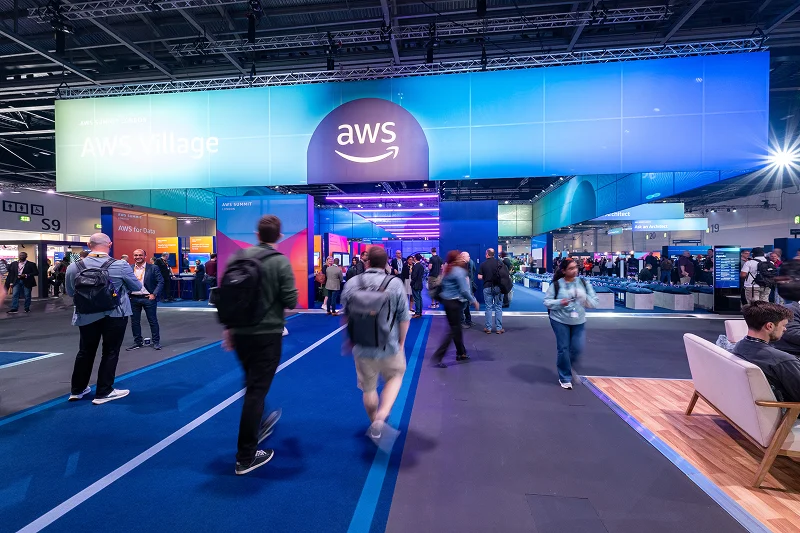
As the tech industry converges on the Javits Center for the annual AWS Summit in New York City, the atmosphere is electric with the promise of "agentic" transformation. This year’s event serves as a pivotal showcase for how AWS is moving beyond simple generative AI chatbots toward autonomous systems capable of executing complex workflows. While the physical halls of the Javits Center are bustling with thousands of developers and enterprise leaders, the ripples of these announcements are being felt globally—from the boardroom to the campsite.
The 2026 Summit, anchored by keynote addresses from Dr. Swami Sivasubramanian, VP of Agentic AI, and Chet Kapoor, VP of Security Services and Observability, marks a significant shift in the AWS roadmap. The focus has moved decisively toward AI infrastructure, advanced developer tools, and a security-first approach to automation.
Main Facts: The Rise of the Frontier Team
The headline of this week’s summit is undoubtedly the publication of a foundational report by Dr. Swami Sivasubramanian regarding "frontier teams." By synthesizing data from hundreds of internal Amazon engineering experiments, AWS has provided a blueprint for how organizations can pivot to "AI-native development."
The data is startling. One Amazon engineering team, tasked with rebuilding the Amazon Bedrock inference engine, successfully completed a project in just 76 days—a task originally forecasted to take a 30-person team between 12 and 18 months. This is not an outlier; across the Amazon Stores organization, pilot programs reported a median productivity gain of 4.5x in deployment velocity, with some high-performing teams exceeding a 10x improvement.
Key Performance Metrics
- Feature Velocity: The "Perfect Order Experience" team reduced their feature release cycle from two weeks to a single afternoon.
- Operational Efficiency: The WW Grocery division transformed their design document creation process, cutting the time required from five days to mere hours.
- Development Throughput: By leveraging AI-assisted coding and agentic workflows, engineering teams are reallocating time from boilerplate generation to high-level architectural innovation.
Chronology of the Transformation
The shift toward agentic AI within the AWS ecosystem did not happen overnight. It is the result of a multi-year investment in foundational models and integration tools.
- Early 2025: AWS began pilot programs internally to stress-test the integration of AI agents within standard CI/CD pipelines.
- Q1 2026: Initial rollout of advanced "steering files" and structured repository management protocols across core AWS engineering teams.
- June 2026 (Summit Week): Formal announcement of the FinOps Agent preview and the publication of the "frontier team" methodology, marking the public transition from theoretical AI utility to enterprise-grade autonomous operations.
Supporting Data: Five Pillars of the Frontier Team
The report published this week distills the success of Amazon’s internal teams into five core operational mandates. For organizations looking to mirror these results, AWS suggests the following framework:
- Investment in Agent Context: Before writing production code, teams must invest in "steering files," coding standards, and structured repositories. The quality of the AI’s output is directly proportional to the clarity of the context provided.
- Managing the "J-Curve" of Adoption: Organizations should expect an initial dip in velocity as workflows are restructured to accommodate AI agents. The key is to persevere through the transition period rather than reverting to legacy manual processes.
- Parallel Execution: Maintaining a backlog of well-scoped, independent tasks is critical. This allows AI agents to operate in parallel, significantly reducing the bottleneck of human supervision.
- Explicit Intent: Code generation is only as good as the requirements provided. Frontier teams mandate the creation of structured specifications before any code is generated, ensuring the AI understands the "why" behind the "what."
- Shift-Left Testing: To maintain velocity, testing must be integrated into the earliest stages of the development cycle. By enabling agents to self-correct in the pre-deployment phase, teams avoid the costly delays of debugging downstream.
Official Responses and Tooling: The FinOps Agent
Beyond the methodology, AWS has introduced tangible tools to facilitate this transition. The most notable release is the AWS FinOps Agent, now available in preview.
Historically, FinOps has been a manual, data-intensive discipline, often requiring cross-functional teams to spend days reconciling cloud spend against performance metrics. The new FinOps Agent acts as an autonomous administrator. It is designed to:
- Query Cost Data: Provide real-time insights into spending patterns.
- Surface Optimization: Identify idle resources, rightsizing opportunities, and Savings Plan recommendations.
- Automated Remediation: Perhaps most significantly, the agent can autonomously open Jira tickets for engineering teams when inefficiencies are detected.
- Incident Response: When cost anomalies occur, the agent initiates root-cause analysis and pushes findings directly to Slack, closing the feedback loop between finance and engineering teams in minutes rather than days.
Implications: The Future of Cloud Development
The implications of these announcements extend far beyond a few productivity metrics. We are entering an era where the "developer" role is evolving into the "architect of agents."
The Human-AI Symbiosis
As AWS pushes forward with agentic AI, the role of the engineer is shifting from the manual writing of syntax to the curation of systems. As Dr. Sivasubramanian noted in his recent work, commit velocity is only one slice of the pie. The next frontier in this evolution will address the complexities of release management, security operations (SecOps), and the long-term maintenance of end-of-life (EOL) software upgrades.
Economic and Organizational Impact
For the enterprise, the message from the 2026 AWS Summit is clear: AI-native development is no longer a "nice-to-have" competitive advantage; it is the new baseline for operational efficiency. Companies that fail to adopt these agentic frameworks risk being outpaced by competitors who can iterate at 10x the speed.
However, the transition requires a cultural shift. The "frontier team" methodology demands a higher degree of discipline in documentation and specification. Teams that refuse to define their intent explicitly will find that their AI agents create more technical debt than they solve.

Security and Observability
Chet Kapoor’s focus on Security Services and Observability highlights the "guardrail" side of the equation. As agents gain the autonomy to open tickets and suggest code changes, the security posture of the CI/CD pipeline becomes paramount. AWS is clearly positioning itself to be the platform where this autonomy is not just enabled, but governed by robust, enterprise-grade security protocols.
Conclusion: Looking Ahead
While the Summit continues at the Javits Center, the broader tech community is tasked with internalizing these lessons. Whether you are an individual developer or a leader of a multi-national engineering team, the roadmap for the remainder of 2026 is becoming increasingly visible.
AWS is providing the tools—from the FinOps Agent to the frameworks for AI-native development—but the execution rests on the shoulders of the builders. As we move into the second half of the year, the questions to ask are not about if you will use AI, but how you will structure your team to harness the agentic wave.
For those unable to attend the Summit in person, the recorded sessions and the comprehensive documentation available through the AWS Builder Center offer a roadmap for this transition. As we continue to see these updates roll out, the promise of the "frontier team" seems increasingly attainable, provided we are willing to change how we work, how we document, and how we trust the machines to help us build the future.
Stay tuned to the AWS Weekly Roundup as we continue to track the impact of these developments on the global engineering landscape.
 Neng Nana
  Suro Senen
  Lina Hope