
 By Neng Nana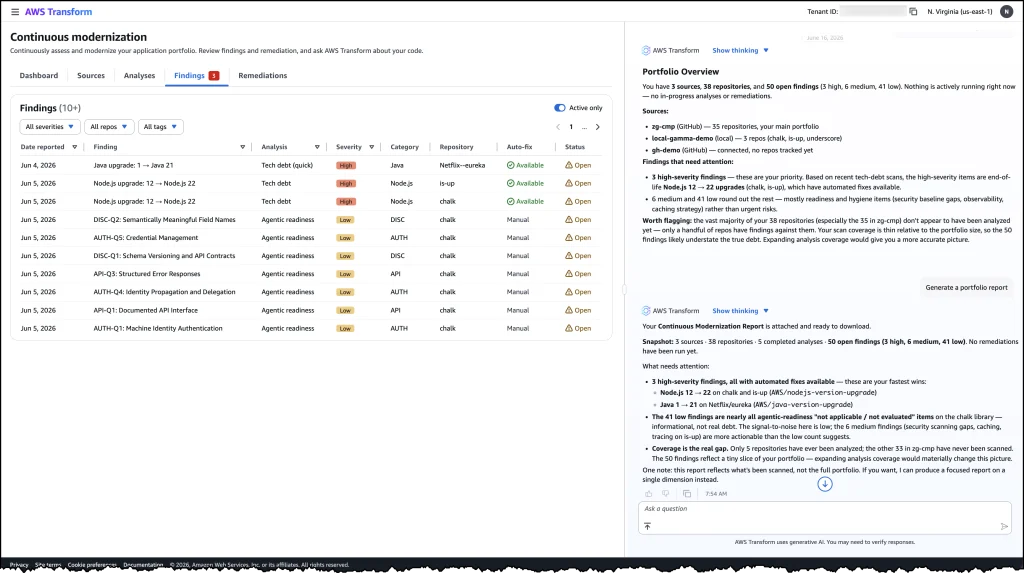
In a move designed to fundamentally alter how global enterprises manage the lifecycle of their software, Amazon Web Services (AWS) has announced the preview of AWS Transform – Continuous Modernization. This new capability aims to solve one of the most persistent and expensive challenges in modern IT: the accumulation of technical debt. By providing autonomous, scalable, and continuous analysis and remediation, AWS is positioning this tool as the definitive answer to the "maintenance trap" that currently consumes nearly a third of corporate IT budgets.
The State of the Industry: Why Manual Modernization is Failing
For years, engineering organizations have relied on a fragmented ecosystem of point tools. A team might use one platform to scan for dependency issues, another to identify security vulnerabilities, and a third to measure code quality. Despite these efforts, the reality on the ground remains bleak.
The traditional process is manual, reactive, and often siloed on an application-by-application basis. This approach not only drains valuable engineering talent—who would rather be building new features than updating Java versions—but also results in a "ground truth" problem. Leadership often relies on self-reported status updates that lag behind the actual state of the codebase, masking regressions and leaving the organization vulnerable to technical rot.
The problem has been exacerbated by the rapid rise of AI-assisted development. While generative coding agents have accelerated the pace at which features are built, they have simultaneously increased the speed at which technical debt accumulates. Without a commensurate increase in the speed of maintenance, organizations are finding their software portfolios becoming obsolete faster than they can modernize them.
The Anatomy of the Solution: How AWS Transform Works
AWS Transform – Continuous Modernization moves away from periodic, manual audits toward a persistent, automated oversight model. The service functions by scanning an organization’s vast portfolio of repositories against configurable, standardized baselines.
Continuous Analysis: From "Weeks" to "Hours"
The visibility challenge is the first hurdle the tool addresses. By connecting to an organization’s source control systems, AWS Transform generates actionable insights in a matter of hours, rather than the weeks typically required for a manual audit.
The service comes pre-packaged with policies designed to detect common technical debt triggers, such as:
- End-of-life (EOL) dependencies and legacy libraries.
- Deprecated frameworks that pose performance or security risks.
- Outdated AWS Lambda runtimes.
Crucially, the tool is extensible. Platform teams can define custom remediation patterns—such as enforcing specific logging standards or banning internal libraries that have been marked for decommissioning—and apply them across the entire enterprise architecture instantly.

Autonomous Remediation: The Pull Request Revolution
Detection is only half the battle. The true innovation of this release lies in its "Campaign Mode," which allows for the automated generation of pull requests (PRs). When a repository falls out of compliance with an organization’s defined baseline, the system does not merely send an alert; it offers a solution.
The service can automatically generate a PR that contains the necessary code changes to bring the repository back into compliance. Whether it is an SDK migration or a library update, the owning team is provided with a "fix-in-a-box." Developers can then review, test, and merge the PR. Because the system continuously monitors the environment, it provides immediate confirmation once a fix has been successfully implemented, eliminating the need for manual compliance check-ins.
A Strategic Shift: From Manual Maintenance to Platform Engineering
The introduction of this capability represents a significant shift in the philosophy of platform engineering. By automating the "undifferentiated heavy lifting" of software maintenance, AWS is allowing platform teams to focus on higher-level architectural governance rather than repetitive patching cycles.
Integration with Security
AWS has wisely integrated this functionality with the AWS Security Agent. By treating security vulnerabilities with the same urgency and workflow as standard technical debt, the platform ensures that security fixes are prioritized alongside performance and maintenance upgrades. This unified workflow prevents the common issue where security teams and product developers work from different lists of priorities.
The Two Modes of Operation
AWS has structured the tool to support two primary operational models:
- Continuous Mode: Designed for the "day-to-day" maintenance of an organization. This ensures that as baselines evolve—such as when a new, more secure version of a language is released—the entire fleet of repositories is automatically kept up-to-date.
- Campaign Mode: Tailored for large-scale, project-based modernization. When an organization decides to move from a legacy framework to a modern one, Campaign Mode provides the "primitives" necessary to execute these massive migrations across hundreds of applications simultaneously.
Chronology: The Evolution of AWS Modernization
- Pre-2024: Organizations relied on manual code audits and disconnected, niche tools for dependency management and security scanning.
- Early 2025: As AI-coding assistants reached mass adoption, the rate of technical debt accumulation reached an inflection point, causing a crisis in engineering velocity.
- June 2026 (Launch): AWS announces the preview of AWS Transform – Continuous Modernization, integrating automated analysis and PR generation into the existing AWS Transform suite.
- Future Outlook: The service is expected to expand its library of "out-of-the-box" transformations as it gathers feedback from the preview cohort, potentially including deeper integration with automated testing frameworks.
Data and Implications: The Economic Case
The implications of this technology are profound. With engineering costs often exceeding 30% of total IT budgets, the potential for cost savings is significant.
- Capacity Recovery: By automating routine updates, companies can theoretically reallocate 10% to 15% of their engineering capacity back to revenue-generating features.
- Risk Mitigation: The "mean time to remediate" (MTTR) for a security vulnerability or a critical library update can be reduced from months to days, significantly hardening the organization’s security posture.
- Standardization: Large enterprises often struggle with "snowflake" architectures where every team uses a different version of a library. Continuous Modernization enforces a "paved road" approach, ensuring that all repositories adhere to a unified standard set by the organization’s platform architects.
Official Perspective and Implementation
AWS describes this as the "ground truth" solution for enterprise software. The process of getting started is intentionally streamlined:
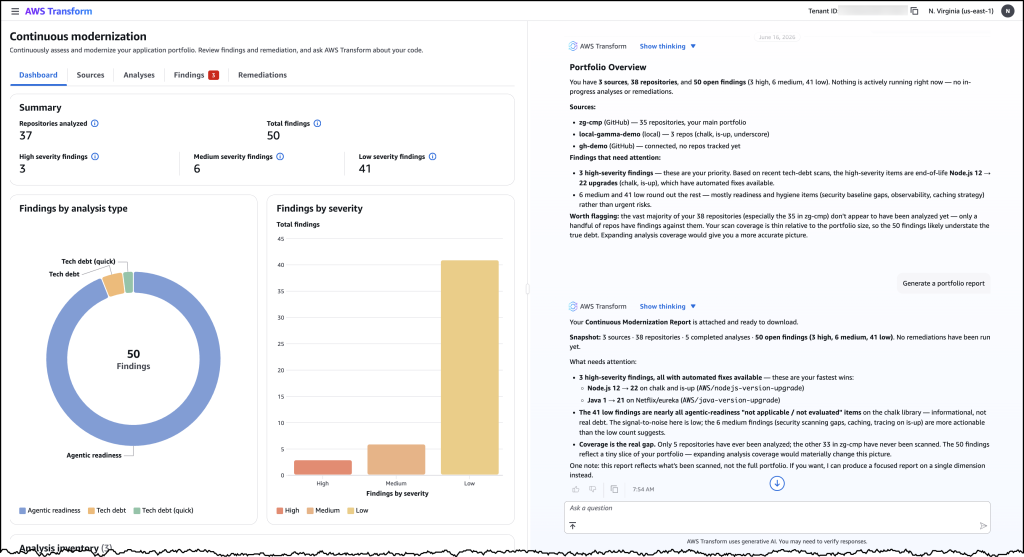
- Dashboard Integration: A centralized view provides a high-level summary of the organization’s technical debt status.
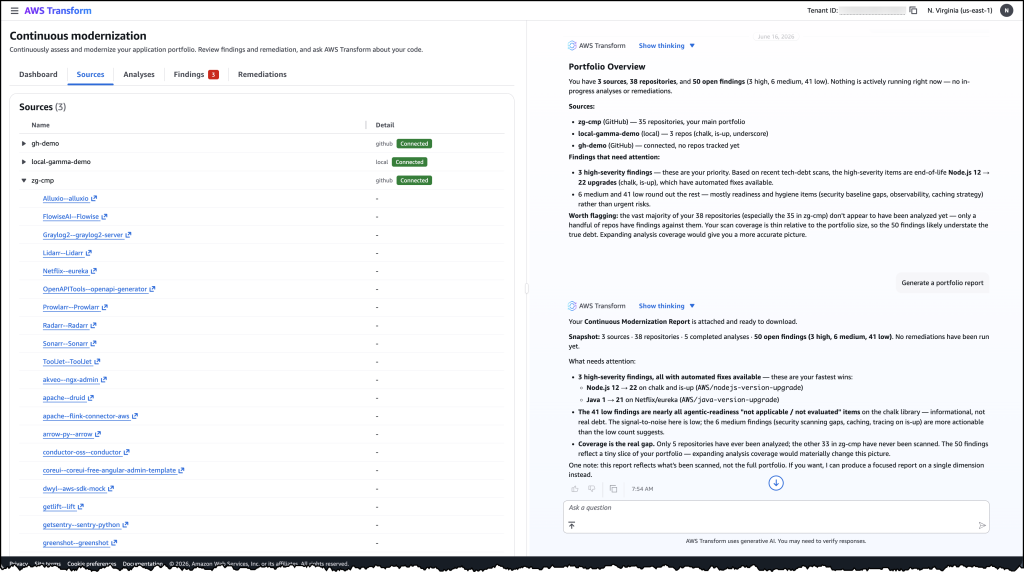
- Source Control Linkage: By connecting repositories (e.g., GitHub), the service begins its analysis phase.
- Campaign Launch: Users select the specific debt items they wish to resolve, triggering the automated PR flow.
The service is available today for preview via the AWS Transform web application, the AWS Transform Kiro Power, and through integrations with standard coding agents via MCP (Model Context Protocol).
The Path Forward: Challenges and Considerations
While the promise of autonomous modernization is enticing, industry experts point out that the success of such tools depends on the "human in the loop." Automated PRs, while convenient, still require rigorous testing. AWS appears to have accounted for this by keeping the PR-based workflow, which allows for familiar CI/CD pipeline checks to trigger before the code is merged.
Furthermore, the effectiveness of the tool is only as good as the policies defined by the organization. If a platform team sets poorly defined baselines, the tool could inadvertently create "noise" in the form of unnecessary PRs. Therefore, the adoption of AWS Transform will likely require a shift in how platform teams manage their own policy-as-code initiatives.
Conclusion
AWS Transform – Continuous Modernization is a mature response to the growing pains of the digital age. By addressing the root causes of technical debt—lack of visibility and the manual cost of remediation—AWS is enabling a new era of "always-modern" software engineering. For the modern enterprise, this is no longer just about keeping the lights on; it is about reclaiming the capacity to innovate in an increasingly competitive, AI-driven landscape. As this preview matures, it is likely to become a cornerstone tool for any organization looking to scale its engineering efforts without being anchored by the weight of its own past code.
 Suro Senen
  Lina Hope