
 By Dwi Wanna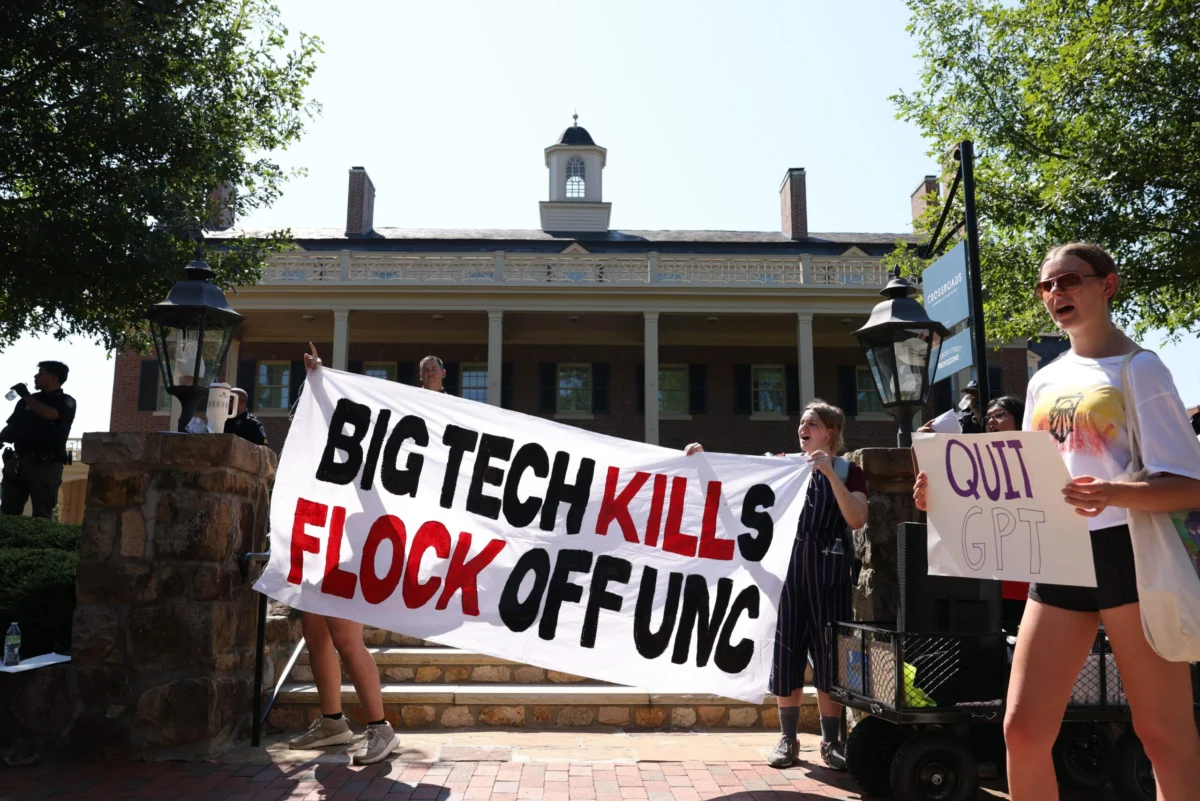
From the sun-scorched highways of Florida to the quiet Pacific Northwest in Washington state, a profound reckoning is underway. Across the United States, local governments are cutting ties with Flock Safety, the private tech firm that became a household name for deploying artificial intelligence-enabled automated license plate readers (ALPRs).
What began as a low-profile pitch for neighborhood security has rapidly morphed into a nationwide political flashpoint. Driven by a bipartisan wave of public outrage, towns and cities are rushing to cancel their contracts. Yet, as communities pull the plug on the cameras, a darker reality is emerging: cutting ties with the vendor does not automatically mean the surveillance apparatus disappears. Millions of data points remain floating in limbo, private corporations continue to fill the gaps, and alternative vendors stand ready to absorb the fallout.
Main Facts: The Rise and Reckoning of Flock Safety
Founded in 2017, Flock Safety positioned itself as an unobtrusive, friendly guardian of public safety. The company marketed its solar- and battery-powered cameras not only to local police departments, but also to private businesses, shopping centers, and homeowners associations (HOAs). Early on, some municipal governments even offered financial grants to encourage neighborhoods to install Flock devices at residential entry and exit points.
The strategy worked with astonishing speed. Today, Flock has installed more than 120,000 cameras across the United States. These devices do far more than simply snap photos of passing vehicles; they use advanced computer vision and machine learning to capture vehicle makes, models, colors, temporary tags, bumper stickers, and specific vehicle characteristics. They index this information in a searchable national database that can track a car’s movements across city and state lines in real-time.
However, this frictionless web of mass surveillance eventually exposed a dangerous underbelly. Investigative reports began surfacing nationwide detailing egregious abuses of the technology. Police officers in multiple states were caught using the proprietary network to stalk ex-romantic partners and track personal acquaintances. Privacy advocates, civil rights organizations, and ordinary citizens realized that a private corporation had quietly built a pervasive infrastructure capable of monitoring the daily lives of nearly every American motorist.
The public response was swift and uncompromising. From sprawling metropolitan areas to rural hamlets with populations under 7,000, local officials found themselves facing intense pressure from constituents demanding the immediate removal of the cameras.
Chronology of Resistance: From Slow Burn to Legislative Revolt
2017–2021: Rapid Expansion and Unchecked Growth
During its foundational years, Flock expanded with virtually no regulatory friction. Law enforcement agencies welcomed the force multiplication, while cash-strapped municipalities accepted private donations or federal grants to seed the infrastructure. Few questions were asked about long-term data retention, third-party access, or constitutional implications.
2024–2025: Early Abuses and Legal Pushback
As the camera footprint expanded, the first cracks appeared. Civil rights organizations, most notably the Electronic Frontier Foundation (EFF) and the American Civil Liberties Union (ACLU), began filing public records requests and lawsuits. In San Jose, California, the EFF filed a landmark lawsuit challenging the city’s warrantless ALPR mass surveillance network under the Fourth Amendment. Reports also began trickling out regarding rogue law enforcement officers using the system to harass citizens, including incidents involving domestic surveillance and attempts to bypass state-level restrictions—such as a Texas sheriff using Flock to track a woman suspected of violating the state’s strict abortion ban under the guise of a "missing person" search.
Summer–Fall 2026: The Dam Breaks
The opposition exploded into a mainstream political crisis in mid-2026. A cascade of local government revocations hit the news cycle:
- Florida: State authorities enacted bans preventing Flock cameras from operating on state highways, though enforcement gaps remained.
- Washington State: Following a procedural error, the city council in Edmonds, Washington, unanimously canceled its Flock contract.
- Wisconsin: Lawmakers in Sheboygan voted unanimously to sever ties after discovering that Flock allegedly attempted to sell anonymized local data back to the city’s public works department. Meanwhile, Stevens Point Mayor Mike Wiza not only canceled the city’s contract but personally directed municipal workers to cover up the 10 cameras scattered across town with physical bags.
- Virginia: The town council of Bridgewater, Virginia, voted to cancel its contract and similarly bagged its cameras after investigative reports revealed that data collected in the town of fewer than 7,000 residents had been searched by law enforcement agencies an astounding 7 million times in a single 12-month period.
Supporting Data: The Scale of Data Harvesting and Sharing
The primary engine driving the municipal backlash is not just the cameras themselves, but the invisible web of data sharing and retention that underpins them.
- 7 Million Searches: In Bridgewater, Virginia, a population of under 7,000 generated 7 million law enforcement queries in one year, illustrating the compounding effect of interconnected data-sharing agreements where external agencies harvest information collected by small-town infrastructure.
- 120,000+ Cameras: Flock’s vast physical footprint spans over 120,000 devices nationwide, creating a continuous grid of surveillance that records billions of data points daily.
- Data Retention Limbo: Historically, Flock’s default data retention period stood at 30 days, though individual contracts frequently permitted longer storage windows. Even when a city terminates its contract, legal ambiguities remain regarding whether historical logs are completely wiped or if they continue to sit in searchable corporate repositories.
- Third-Party Integrations: Public records obtained by outlets like 404 Media revealed that non-police entities—such as Florida’s Fish and Wildlife Conservation Commission—utilized Flock networks to conduct Immigration and Customs Enforcement (ICE) operations and, reportedly, to track political critics.
Official Responses: Corporate Reforms vs. Skepticism
Faced with mounting cancellations and severe reputational damage, Flock Safety leadership has attempted to appease critics through a series of sweeping policy updates and feature overhauls.
In recent months, Flock CEO Garrett Langley announced new guardrails designed to curb abuse. Among them is a mandatory requirement for law enforcement officers to input verifiable case codes before executing any search—a step that was previously optional. The company also rolled out "Audit Assistance," a feature engineered to flag abnormal or suspicious queries automatically. Furthermore, Flock shortened its standard data retention window from 30 days down to seven, while granting local agencies the technical ability to restrict data sharing for specific use cases, such as blocking immigration-related queries while permitting homicide investigations.
"This is such an obvious way to curb abuse," Langley told industry reporters. "And I said, ‘Fine. You know what? I think that’s right, and we got this one wrong. We should make it a requirement.’"
Despite these concessions, privacy advocates remain deeply skeptical. Representatives from the ACLU dismissed the changes as a superficial public relations exercise rather than a genuine fix for systemic harms. Critics point out that mandatory case codes are easily circumvented by officers willing to falsify justifications, as demonstrated by the Texas sheriff who mislabeled an abortion-related tracking query as a missing person investigation.
Furthermore, while Flock insists it does not directly sell consumer data to private entities or grant direct access to federal immigration authorities, local police departments that have deputized their officers through federal 287(g) agreements can—and do—utilize the network for immigration enforcement.
Implications: The Hydra Effect and the Future of Urban Surveillance
The most sobering realization to emerge from the anti-Flock movement is that canceling a single vendor’s contract does not cure the underlying disease of municipal surveillance. It merely shifts the revenue to competitors.
As cities like South Pasadena, California, and Durango, Colorado, cancel their Flock agreements, many are actively fielding proposals from rival tech firms. Chief among the beneficiaries is Axon, the dominant manufacturer best known for Tasers and police body-worn cameras.
Privacy experts warn that moving from Flock to Axon is akin to jumping from the frying pan into an incinerator. Saira Hussain, senior staff attorney at the EFF, points out that Axon’s ecosystem is vastly more integrated and deeply entrenched than Flock’s standalone setup.
"Axon has other technologies as well that they stack on top of their automated license plate readers," Hussain explains. "They have a bunch of other data streams, including feeds coming from their body-worn cameras, so you’re able to build out quite a surveillance system. You’re not going to be able to stop this mass surveillance technology by moving to another vendor. The only thing that is going to solve this whole problem is not relying on this technology."
Compounding the issue is the proliferation of private-sector surveillance. Even if a city government bans cameras from municipal poles and public rights-of-way, private entities are rapidly filling the void. Major retail giants like Home Depot and Lowe’s, shopping malls, and private neighborhood homeowners associations continue to install Flock and competing AI cameras on private land. Because these cameras capture public streets from private vantage points, they effectively bypass municipal bans, feeding data directly back into regional law enforcement sharing pools.
Ultimately, the revolt against Flock Safety has exposed a critical governance gap in the digital age. It has forced lawmakers and citizens to confront the reality that convenience and safety narratives have quietly eroded foundational civil liberties. As the battle lines shift from small-town city halls to corporate boardrooms and federal courts, the core question remains unanswered: Will American society accept a permanent state of automated tracking as the price of modern life, or will communities muster the political will to dismantle the surveillance state brick by digital brick?
 Raul Delapena Setiawan
  Siti Muinah
  Asro
Asro 