
 By Asep Darmawan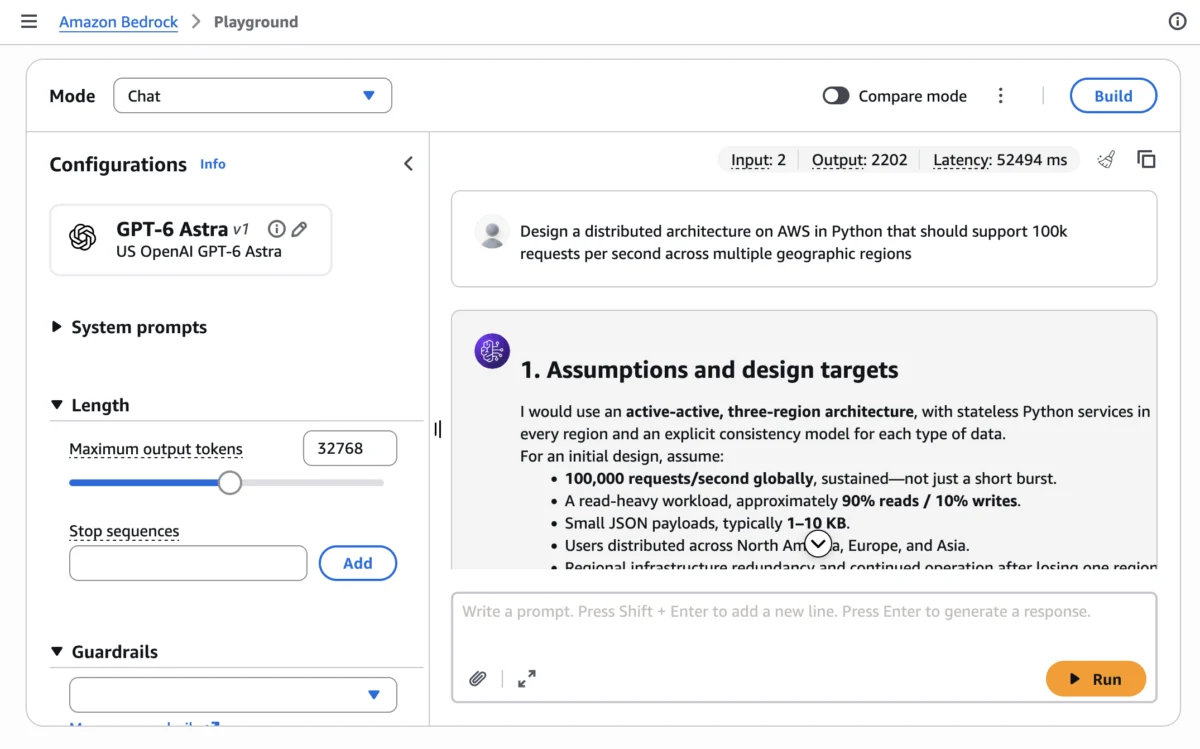
NEW YORK — There is an unmistakable energy that descends upon New York City in mid-September. The frantic heat of summer gives way to crisp morning air, seasonal lattes reappear in hand, and the city locks back into full professional stride. True to form, the Amazon Web Services (AWS) launch calendar is accelerating alongside the changing season.
This week, the big tech headlines are dominated by a massive leap forward in generative artificial intelligence (AI): OpenAI’s most advanced frontier model to date, GPT-6 Astra, is now generally available on Amazon Bedrock. Alongside this flagship integration, AWS continues to roll out productivity-enhancing tools—such as a dedicated desktop application for Amazon Quick—while industry experts emphasize that the organizations reaping the highest returns from AI agents aren’t simply deploying better tools; they are fundamentally redefining how they work.
Below is an in-depth breakdown of the major developments, chronological context, underlying data, enterprise guardrails, and broader industry implications shaping the cloud and AI landscape this week.
Main Facts: GPT-6 Astra Arrives on Amazon Bedrock
The centerpiece of this week’s AWS announcements is the official general availability of OpenAI GPT-6 Astra on Amazon Bedrock. As OpenAI’s flagship and most capable model released to date, GPT-6 Astra brings a suite of next-generation capabilities designed to tackle the most demanding, complex enterprise workflows.
Key Capabilities of GPT-6 Astra:
- Advanced Reasoning and Judgment: Built to handle intricate multi-step problem-solving, deep logic tasks, and strategic decision-making frameworks.
- Professional-Quality Writing and Design: Capable of generating publication-ready documentation, marketing materials, and complex structural design assets.
- Computer and Browser Use: Features native capabilities to interact directly with software interfaces and web browsers, acting as an active digital worker.
- Massive Context Window: Supports an input context window of up to 1 million tokens. This allows enterprises to ingest entire source-code repositories, exhaustive legal contracts, or multi-year financial archives in a single prompt and ask the model to analyze, synthesize, or reconcile conflicting inputs.
Integration and Accessibility
Developers and enterprise architects can invoke GPT-6 Astra seamlessly through standard, supported Amazon Bedrock APIs. Furthermore, organizations can configure ChatGPT Work and Codex to leverage the model directly within their existing Amazon Bedrock environments.
Simultaneously, OpenAI is rolling out a series of new enterprise plugins for ChatGPT Work. These plugins specifically extend Astra’s browser-use capabilities, allowing the model to safely navigate and execute tasks across common, mission-critical business software applications.
Chronology of the Launch and Fall Roadmap
To understand the weight of this week’s announcement, it is helpful to look at the timeline of generative AI integration within cloud ecosystems:
- Early 2024: Multi-model strategies take center stage on cloud platforms, with enterprises demanding the flexibility to choose between various foundational models rather than being locked into a single provider.
- Late 2024 to 2025: Demand surges for massive context windows and agentic capabilities—systems that can not only generate text or code, but actively execute tasks via computer interfaces.
- Mid-2026: OpenAI pushes the boundaries of agentic workflows with the development of the Astra architecture, focusing on complex reasoning, browser interaction, and granular enterprise execution.
- September 2026 (This Week): AWS officially integrates GPT-6 Astra into Amazon Bedrock. Simultaneously, AWS rolls out complementary developer productivity updates, including new desktop application features for Amazon Quick, setting the stage for the autumn enterprise technology push.
Supporting Data and Enterprise Guardrails
Deploying a frontier model with a 1 million-token context window into production raises immediate questions regarding security, data privacy, and compliance. AWS and OpenAI have structured the Amazon Bedrock integration to meet the strict demands of enterprise risk-management teams.
Security and Governance Frameworks
- Zero Data Retention for Training: AWS and OpenAI have confirmed that customer inference data processed through Amazon Bedrock is not used to train or fine-tune underlying OpenAI models. Intellectual property and proprietary data remain strictly siloed within the customer’s secure environment.
- Robust AWS Controls: Organizations can leverage established AWS security controls—such as AWS Identity and Access Management (IAM), AWS Key Management Service (KMS) for encryption, and AWS CloudTrail—to govern access, enforce least-privilege permissions, and maintain comprehensive audit logs of every model invocation.
- Data Residency and Sovereignty: By running GPT-6 Astra via Amazon Bedrock, enterprises retain control over where their data is processed and stored, ensuring compliance with regional data regulations such as GDPR and CCPA.
Official Responses and Industry Perspectives
The integration of a frontier model of this caliber onto a managed cloud service like Bedrock marks a maturation point in how enterprises consume artificial intelligence.
Cloud architects and enterprise technology leaders have noted that the availability of a 1 million-token context window effectively eliminates the barrier of information fragmentation. Instead of breaking down massive codebases or corporate compliance archives into bite-sized Retrieval-Augmented Generation (RAG) chunks, teams can now pass entire systems to the model for holistic review.
Furthermore, industry analysts point out that the inclusion of native browser and computer-use tools signals a permanent shift from conversational AI to action-oriented AI. "We are moving past the era where generative AI is simply an advanced autocomplete or a conversational chatbot," notes one enterprise cloud strategist. "Models like GPT-6 Astra are digital coworkers capable of navigating software suites, executing multi-step workflows, and reconciling competing inputs across thousands of pages of documentation in seconds."
Concurrently, developer productivity experts emphasize that the organizations extracting the highest return on investment (ROI) from AI agents are those undergoing cultural and structural workflow transformations. Tools like Amazon Quick’s new desktop applications are most effective when paired with teams that have redesigned their processes to accommodate autonomous agent delegation, moving human workers into supervisory and strategic review roles.
Implications for the Future of Enterprise Software
The landing of GPT-6 Astra on Amazon Bedrock carries several profound implications for software development, cloud infrastructure, and the broader enterprise market:
1. The Death of Fragmented Contexts
With a 1 million-token limit natively supported in a production-grade cloud environment, developers no longer need to build complex, brittle chunking architectures for many standard analysis tasks. Legal teams can upload entire multi-party litigation histories, and software engineers can drop legacy repositories straight into the prompt window to identify architectural debt or refactoring opportunities.

2. Deepened Cloud Ecosystem Lock-in via Flexibility
Paradoxically, by offering the absolute best third-party frontier models (like OpenAI’s latest releases) alongside proprietary models (like Amazon Nova and Anthropic’s Claude) on Amazon Bedrock, AWS strengthens its position as the ultimate control plane for enterprise AI. Customers do not have to leave the AWS ecosystem to access state-of-the-art external capabilities; they can govern, secure, and scale them using familiar cloud native tools.
3. Acceleration of Agentic Automation
As computer-use plugins and browser-navigation features mature within enterprise workspaces, the definition of software interaction will change. Routine administrative, data-entry, and cross-platform reconciliation tasks will increasingly be handled autonomously by agents running on secure cloud infrastructure, freeing human capital for creative problem-solving and high-level strategy.
Looking Ahead
As the fall conference and launch season picks up steam, developers and cloud engineers are encouraged to explore the AWS Builder Center to connect with peers, share architectural patterns, and access hands-on training labs.
For a complete, real-time catalogue of the latest announcements, updates, and feature rollouts, keep a close watch on the official What’s New with AWS page and the AWS Blogs.
Check back next week for another comprehensive Weekly Roundup highlighting the most impactful news across the cloud computing universe.
— Micah
 Lina Hope
  Neng Nana
  Suro Senen