
 By Nana Wu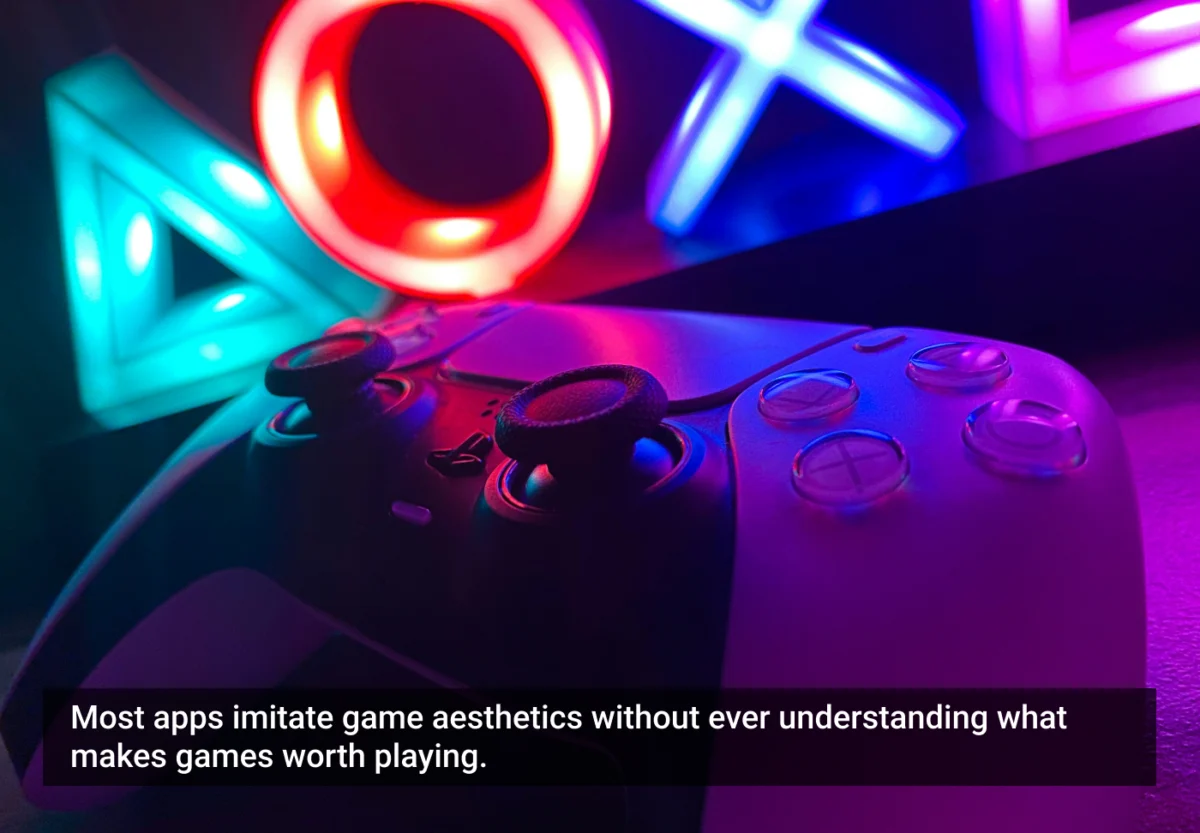
SAN FRANCISCO — For over a decade, digital product managers, corporate HR departments, and educational technologists have operated under a singular, seductive assumption: if you want people to engage with an app, a corporate training module, or a software platform, simply sprinkle a little gameplay on top. Add a progress bar, hand out virtual badges for completing mundane tasks, and maybe top it off with a competitive leaderboard.
Yet, industry veterans are sounding the alarm. According to designers with decades of experience building multi-million-player video games, the traditional approach to "gamification" is fundamentally broken. Users are no longer fooled by superficial rewards. They see right through the hollow psychological tricks of early digital applications.
Now, a new movement is emerging—one dubbed Gamification 2.0. This philosophy argues that true engagement cannot be achieved by tacking childish rewards onto boring software. Instead, it requires developers to abandon fake metrics and embrace the core, foundational principles that have driven the multi-billion-dollar video game industry for the past forty years.
Main Facts: The Crisis of Superficial Engagement
The core conflict in modern product design is stark: traditional gamification relies on extrinsic rewards (points, badges, streaks, and superficial level-ups), whereas actual video game engagement relies on intrinsic motivation (mastery, autonomy, flow, and genuine connection).
When an enterprise application tells a user, "You completed five tasks! You are now Level 3!" it commits the cardinal sin of Gamification 1.0. It offers a progress bar masquerading as progression. Users are left asking a vital question: What skill did I actually develop? What can I do now that I couldn’t do before?
If the answer is nothing, the user loses interest. Gamification 2.0 seeks to rectify this by integrating rigorous, time-tested mechanics derived from legendary gaming franchises—ranging from rhythm games like Guitar Hero to deep strategic simulations like Civilization and World of Warcraft.
Chronology: The Evolution of Digital Motivation
To understand how the industry arrived at Gamification 2.0, it is helpful to trace the trajectory of interactive design over the last four decades:
- 1980s–1990s (The Golden Era of Core Design): Game developers mastered the art of intrinsic engagement. Creators focused on building balanced challenge curves, rich worlds, and systems of real agency, ensuring players remained hooked voluntarily for thousands of hours without needing corporate incentives.
- Early 2010s (The Birth of Gamification 1.0): As smartphones proliferated, marketers and software developers noticed how addicted people were to games. However, instead of studying why games were engaging, they isolated the most superficial elements—points, badges, and leaderboards (often referred to in the industry as "PBLs")—and pasted them onto non-game contexts like banking apps, fitness trackers, and enterprise software.
- The Late 2010s (Fatigue and Disillusionment): Users began experiencing "badge fatigue." Daily streaks in productivity apps and meaningless level-ups felt less like fun and more like digital chore lists or manipulative dark patterns.
- The Present Day (The Rise of Gamification 2.0): Industry leaders, cognitive scientists, and veteran game designers are pushing for a paradigm shift. Moving past cosmetic achievements, Gamification 2.0 treats users not as laboratory rats responding to pellets, but as active participants seeking competence, autonomy, and meaningful social interaction.
Supporting Data: Principles That Drive Real Engagement
Industry insights derived from decades of player behavior reveal six core principles that separate thriving interactive experiences from failing software.
1. Mastery and Progression (Real vs. Fake)
In Guitar Hero, players do not receive points merely for holding a controller. The game provides undeniable, visual proof of burgeoning competence. In week one, a novice fails on Easy mode; by week four, they are effortlessly nailing complex tracks on Hard. That is measurable competence development.
Contrast this with applications that inflate numbers without increasing capability. Duolingo achieves a balance when a user suddenly realizes they can independently read a Spanish restaurant menu, but stumbles when it aggressively celebrates a "7-day streak" while the learner still cannot hold a basic conversation. True progression means users can tangibly execute tasks they were previously incapable of doing.
2. Agency and Meaningful Choice
In strategic masterpieces like Civilization, every decision carries heavy consequences. Should a player research sailing or mathematics first? Do they invest resources into a military unit or a granary? These choices shape the entire trajectory of the game.
Conversely, most gamified apps offer illusory choices: selecting an avatar color or picking a notification sound. These are not decisions; they are decorative theater. Real agency, akin to Spotify curating distinct pathways between "Discover Weekly" and "Release Radar," ensures that user choices yield genuinely different, impactful outcomes.
3. Challenge and Flow
Psychologist Mihaly Csikszentmihalyi defined "flow" as a state of complete absorption in an optimally challenging activity. If an experience is too easy, users grow bored; if it is too hard, they experience frustration.
Games like FromSoftware’s Dark Souls master this dynamic. While notoriously difficult, the game is meticulously fair. Every failure is a direct result of user error, teaching a lesson that fuels subsequent attempts. Gamification 1.0 rarely creates flow because it fails to introduce genuine challenge, instead substituting unnecessary friction—such as forcing users to click through five redundant screens, which is merely bad user experience (UX) wrapped in a progress bar.
4. Curiosity and Discovery
When The Legend of Zelda: Breath of the Wild drops players into an open world, it offers a simple directive: "Go explore." Almost every object can be reached, and nearly every experimental idea is supported by the game’s physics engine. The exploration itself is the primary reward.
Traditional software onboarding, by contrast, frequently front-loads features via exhaustive ten-minute tutorials that users desperately click through just to get started. This completely obliterates curiosity. Effective gamification, however, reveals depth gradually, rewarding users when they organically stumble upon advanced capabilities.
5. Identity and Self-Expression
In role-playing epics like Mass Effect, players do not merely control a predefined avatar (Commander Shepard); they define the character’s moral compass, alliances, and personal relationships.
Generic apps often rely on participation metrics: "You’re Level 12!"—a status shared by every other user who has used the platform for three weeks. This is not identity; it is a participation trophy. True identity is reflected in tools like Notion or Obsidian, where users build bespoke personal knowledge graphs that mirror their unique modes of thought.
6. Social Dynamics and Interdependence
The enduring success of World of Warcraft guilds relied heavily on a profound psychological mechanism: interdependence. A 40-person raid required specialized roles—tanks, healers, and damage dealers—coordinating seamlessly. People showed up not for login bonuses, but because dozens of other real humans depended on them.
Most application "social features" are shallow leaderboards pitting strangers against one another for arbitrary stakes. True social design fosters genuine human collaboration, such as fitness accountability partners, joint study groups, or cooperative workspaces. If a social feature functions identically when populated by bots, it is not truly social.
Official Responses and Industry Perspectives
UX designers and product architects are increasingly vocal about the need to overhaul digital strategy.
"For too long, companies thought gamification was a magic sprinkle you put on top of a broken product to make people swallow it," notes a prominent product design lead. "Gamification 2.0 flips the script. You cannot paint over bad architecture with badges. You have to build systems that respect human intelligence and the psychology of play."
Corporate learning and development (L&D) executives are echoing these sentiments, noting that employees subjected to superficial gamified compliance training routinely report higher levels of cynicism. Platforms that pivot toward real simulations, authentic scenario-based challenges, and genuine peer collaboration are seeing drastically higher retention and comprehension rates.
Implications for the Future of Software Design
The shift toward Gamification 2.0 carries massive implications for software developers, educators, enterprise leaders, and consumer tech companies alike:
- Higher Development Standards: Product teams can no longer rely on superficial behavioral hacks (such as manipulative push notifications and meaningless streak counters) to manufacture engagement. They must invest in deep, qualitative UX research that maps out authentic user mastery.
- Erosion of Trust in "Gamified" Marketing: As consumers grow increasingly sophisticated, applications that utilize manipulative, shallow gamification will face immediate abandonment. Users can readily differentiate between a platform designed to foster genuine capability and one engineered solely to inflate engagement metrics for venture capital dashboards.
- A Renaissance in Product Design: By aligning digital experiences with proven game design principles—agency, flow, discovery, and community—the next generation of software promises to be not only more effective, but genuinely enjoyable to use.
Ultimately, the central question facing product architects in the era of Gamification 2.0 is refreshingly direct: Are you willing to design your application like an actual game, or will you keep adding badges to a broken experience?
Players—and users—see right through the progress bars. The future belongs to those who design for substance.
Up next in the "Gamification" series: Gamification 2.0. Beyond Points and Badges: Designing for Players, Not Metrics. Chapter 3: The Framework.
 Azzam Bilal Chamdy
  Ammar Sabilarrohman
  Neng Nana