
 By Sagoh
For years, Lightspeed eCom served as a reliable bridge for brick-and-mortar retailers looking to digitize their storefronts. By tethering an online presence directly to the robust infrastructure of Lightspeed Retail, business owners could manage their physical registers and digital orders through a single, unified database. However, the retail landscape has shifted. As e-commerce demands evolve toward sophisticated design, AI-driven marketing, and lower operational overhead, many retailers are finding that Lightspeed’s rigid, bundled pricing structure is no longer the optimal fit for their growth trajectory.
If you are reading this, you have likely reached the plateau of the Lightspeed experience. Perhaps the monthly costs have ballooned as you added registers and locations, or maybe you’ve hit the ceiling of their storefront design capabilities. This comprehensive guide examines why businesses are migrating and provides a data-backed breakdown of the five best alternatives currently dominating the market.
The Core Reality: Why Retailers are Leaving Lightspeed
Lightspeed eCom is no longer available as a standalone product. Today, it is inextricably bundled into the broader "Lightspeed Retail" ecosystem. According to current pricing documentation, the Basic plan begins at $89 per month (billed annually), with Core and Plus tiers scaling significantly higher. While this investment provides deep inventory management, supplier tools, and purchase order capabilities, it becomes a burden for businesses that don’t utilize those high-end features.

The Trigger Points for Migration:
- The "Bundle Tax": Retailers who primarily focus on online sales find themselves paying for heavy-duty POS features they do not need.
- Design Limitations: Compared to modern "web-first" platforms, Lightspeed’s storefront tooling often feels dated and restrictive, lacking the visual flair required to compete in the current DTC (Direct-to-Consumer) market.
- Integration Constraints: While Lightspeed’s ecosystem is stable, it lacks the expansive, plug-and-play app marketplaces found in platforms like Shopify or WooCommerce.
- Scalability Costs: As your store grows—adding more locations or registers—the subscription costs for Lightspeed can quickly outpace the value provided.
Comparative Analysis: The Five Best Alternatives
When evaluating a replacement for your retail stack, it is critical to consider the balance between Point-of-Sale (POS) capabilities and e-commerce flexibility.
| Platform | Best For | Starting Price (Annually) | Built-in POS | AI Tools |
|---|---|---|---|---|
| Shopify | All-round scaling | $29/mo | Yes | Yes |
| Square Online | Budget/Small Biz | $0/mo | Yes | Yes |
| BigCommerce | Large Catalogs | $29/mo | Via Integration | Yes |
| WooCommerce | Total Customization | Free (hosting extra) | Via Extension | Limited |
| Wix | Design-led stores | $17/mo | Yes (US only) | Yes |
1. Shopify: The Gold Standard for Unified Commerce
Shopify stands as the most logical successor to Lightspeed eCom. It mirrors the "online-meets-offline" philosophy but executes it with a significantly more modern engine.
The Implications of the Switch
Shopify was built as an e-commerce platform first. Consequently, its checkout process, mobile responsiveness, and SEO tools are industry-leading. By choosing Shopify, you gain access to the largest app ecosystem in the world, allowing you to add loyalty programs, advanced shipping rules, or social media selling features with a single click.

Key Pros and Cons
- Pros: Seamless omnichannel selling, massive app library, predictable growth path.
- Cons: Transaction fees for third-party gateways, section-based editor can feel restrictive for custom web design.
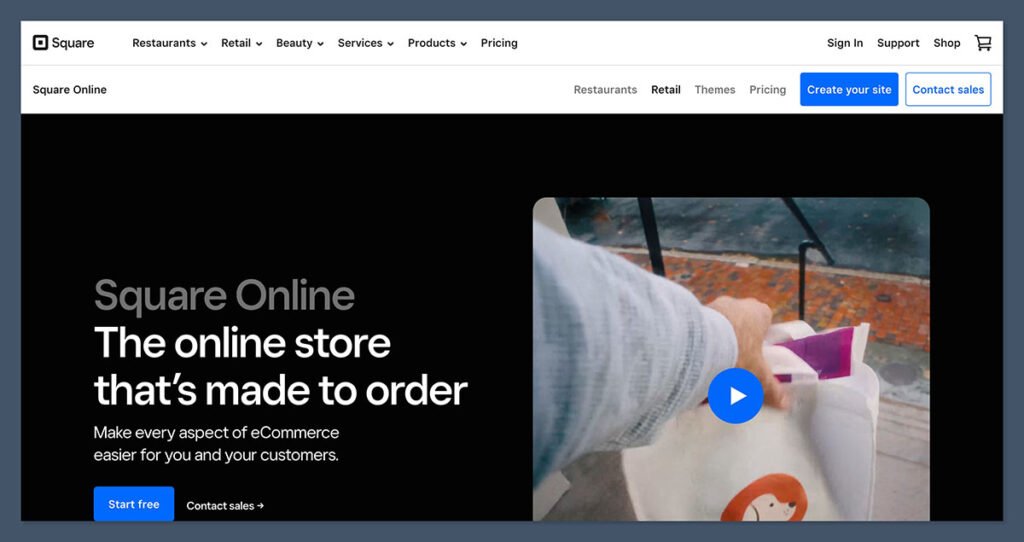
2. Square Online: The Budget-Conscious Powerhouse
For retailers whose primary pain point is the monthly subscription fee, Square Online offers a compelling, almost "frictionless" exit from the Lightspeed ecosystem.
The Economic Shift
Because Square integrates its POS directly into its online store, a small business can theoretically operate for $0 in monthly subscription fees, paying only for payment processing. This is a game-changer for independent retailers, coffee shops, or service-based businesses that need to maintain a lean balance sheet.
Limitations to Consider
While cost-effective, Square is "lightweight." It lacks the granular inventory controls and complex reporting that Lightspeed users are accustomed to. It is best suited for businesses with manageable catalogs that prioritize simplicity over complex supply-chain management.
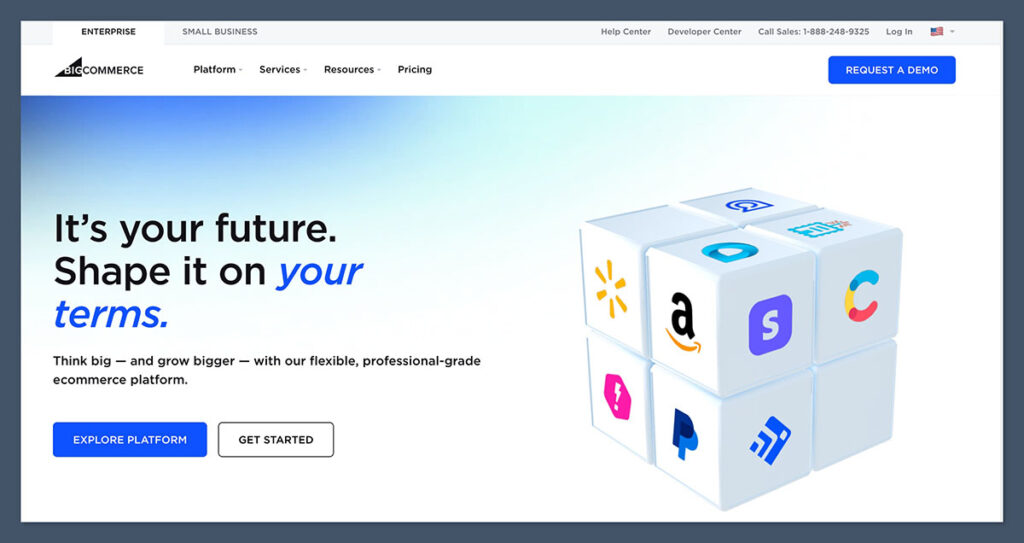
3. BigCommerce: The Enterprise-Grade Solution
If your business is defined by a massive product catalog and complex variants, BigCommerce is the superior alternative. Unlike Shopify, which relies on apps to extend functionality, BigCommerce includes advanced features—such as faceted search, multi-currency support, and sophisticated B2B wholesale tools—natively.
Strategic Advantages
BigCommerce charges zero platform transaction fees, which can result in significant savings for high-volume merchants. While it lacks a native POS, it offers robust API integrations that allow you to sync with external retail systems, making it the preferred choice for scaling e-commerce brands.
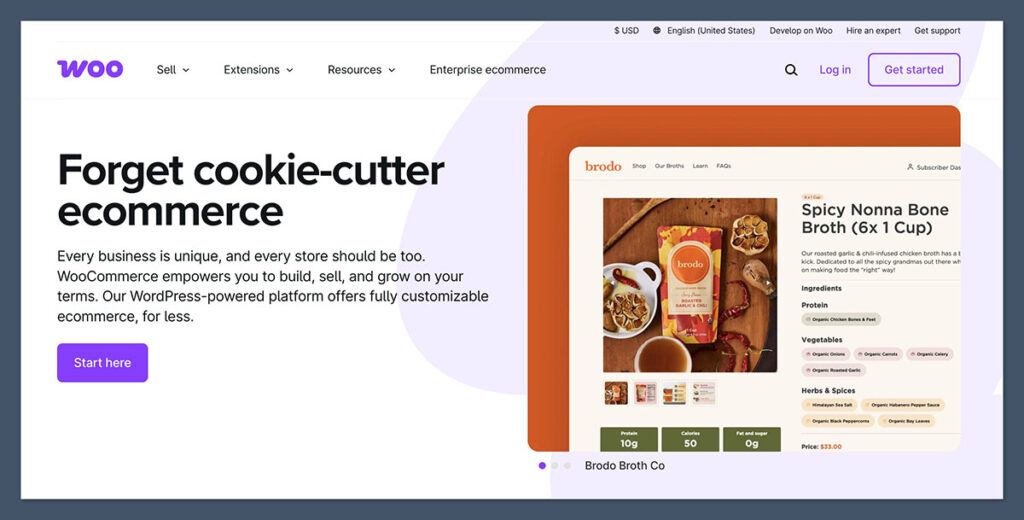
4. WooCommerce: The Developer’s Choice
WooCommerce is not a SaaS platform; it is a plugin for WordPress. This means you own your code, your database, and your destiny.
The Trade-off
The flexibility is unparalleled, but the responsibility is yours. You must manage hosting, security, and updates. For a retailer with a technical background or a dedicated IT team, WooCommerce allows for a completely bespoke storefront that no hosted platform could replicate. However, for a "plug-and-play" merchant, the overhead of managing a server can be an unwelcome distraction from selling.
5. Wix: Aesthetic Freedom for Small Stores
Wix has transformed from a simple site builder into a legitimate e-commerce contender. Its drag-and-drop editor remains the most intuitive on the market.
Why Choose Wix?
If your brand’s identity is tied to visual storytelling, Wix allows for a level of design freedom that Shopify’s section-based editor cannot match. With the recent introduction of AI-assisted site building, a store owner can go from concept to live site in a matter of hours.
Migration Strategy: How to Move Your Business
Switching platforms is a significant operational event, but it does not have to be catastrophic. Follow this chronological checklist to minimize downtime:
- Inventory Audit: Export your product catalog from Lightspeed as a CSV. Clean the data to ensure that SKU numbers and attributes are formatted for your new platform.
- Data Mapping: Decide what data you are moving. Products are easy; customer history and open orders are harder. Use automated tools like Cart2Cart or LitExtension to bridge the gap.
- Parallel Operations: Never shut down Lightspeed before your new site is fully tested. Run the new store in a "hidden" or staging mode to verify that your POS inventory syncs correctly.
- Go-Live: Redirect your domain name. Update your payment gateway credentials and ensure your shipping labels and printer integrations are firing correctly.
- Post-Migration Review: Check for broken links, missing product images, and test a live transaction to ensure the payment flow is uninterrupted.
Conclusion: Making the Final Decision
The choice to leave Lightspeed is rarely about the platform being "bad"—it is about the platform no longer aligning with your business’s current velocity.
- Choose Shopify if you want the best all-rounder that handles both physical and online growth with ease.
- Choose Square Online if your primary goal is to slash overhead costs.
- Choose BigCommerce if you have thousands of SKUs and require enterprise-grade catalog management.
- Choose WooCommerce if you demand total control over your digital infrastructure.
- Choose Wix if you are a design-led brand that prioritizes the "look and feel" of the customer experience.
Before committing, leverage the free trials offered by these platforms. Most offer 14-day or 30-day windows to stress-test their features. Your retail business is a dynamic entity; your technology should be just as flexible. Take the time to test, migrate carefully, and choose the platform that supports your vision for the next five years, not just the last one.
 Asep Darmawan
  Nana Muazin
  Dwi Wanna