
 By Nana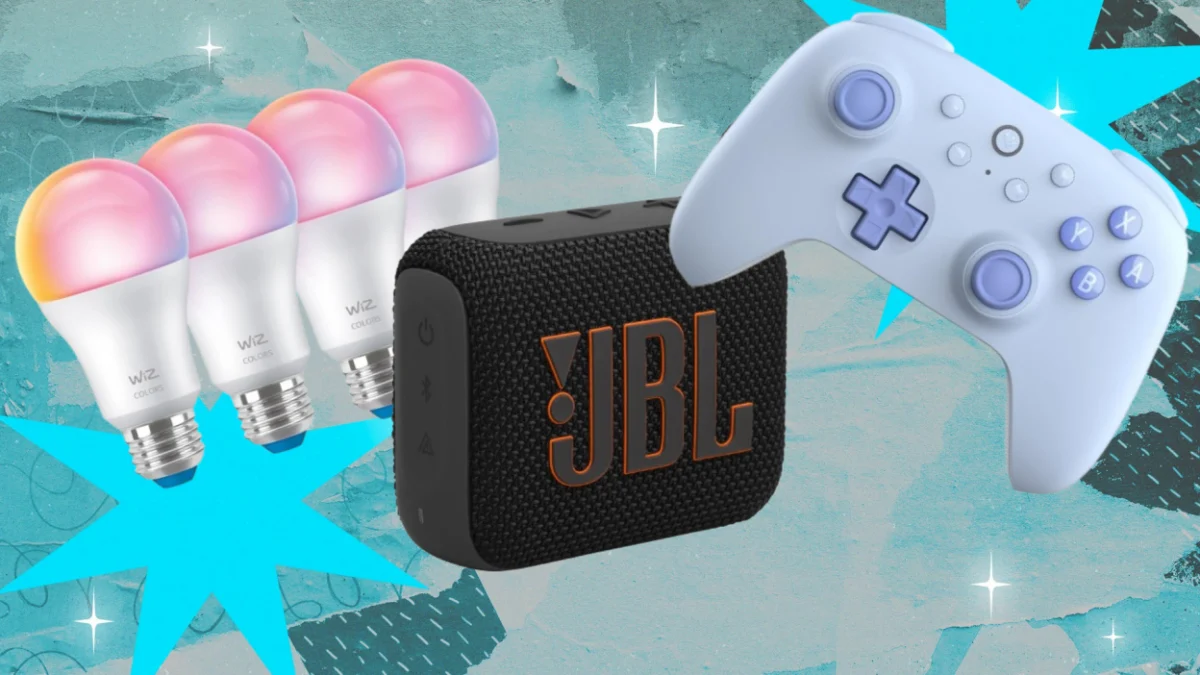
By Jake Peterson
Senior Technology Editor
September 17, 2026
In an era defined by skyrocketing hardware costs, persistent memory supply crunches, and premium pricing models across the consumer electronics sector, upgrading your tech ecosystem can feel like a financial obstacle course. Walk into any major electronics retailer, and you are immediately greeted by $1,200 smartphones, $2,000 laptops, and flagship headphones that demand a significant portion of a monthly paycheck.
Yet, beneath the tier of hype-driven flagship devices lies a thriving ecosystem of high-value, budget-friendly tech. While certain categories—such as full-fledged laptops, modern tablets, and contemporary home gaming consoles—still require a higher baseline investment to ensure basic longevity and performance, a wealth of peripheral devices, audio gear, smart home automation tools, and charging solutions remain surprisingly affordable.
To help consumers navigate this landscape, we have curated a comprehensive guide to the best technology products available for under $50. Whether you are looking to revitalize your portable audio setup, streamline your charging routine, or cut the cord on cable television, these carefully vetted options punch well above their weight class.
Chronology of the Budget Tech Market: How We Got Here
The modern landscape of affordable consumer electronics is shaped by decades of component commoditization, manufacturing maturation, and fierce competition among secondary brands.
- The Early 2010s (The Rise of the Accessory Market): As smartphones became ubiquitous following the introduction of the iPhone and early Android flagships, a secondary market for protective cases, basic portable chargers, and third-party charging cables exploded. Brands like Anker established themselves by undercutting major OEM accessory prices while maintaining baseline reliability.
- The Mid-to-Late 2010s (True Wireless and Smart Assistants): The removal of the 3.5mm headphone jack catalyzed the growth of affordable Bluetooth audio and true wireless earbuds. Concurrently, the advent of smart home hubs and streaming sticks (such as early Roku and Fire TV devices) brought internet-connected media consumption down to sub-$50 price points.
- The 2020s (The Value Renaissance and Supply Constraints): Global supply chain disruptions and component shortages drove up the prices of flagship electronics. Ironically, this economic pressure accelerated innovation in the budget sector. Manufacturers leveraged economies of scale to pack features once reserved for flagships—such as Active Noise Cancellation (ANC), multi-device Bluetooth pairing, and rapid USB-C Power Delivery—into low-cost alternatives.
- 2026 and Beyond: Today, consumers face an unprecedented memory crisis affecting core computing hardware, making sub-$50 gadgets an increasingly attractive avenue for satisfying tech upgrade impulses without straining personal finances.
Supporting Data: What $50 Buys You in 2026
When evaluating tech under $50, expectations must be managed, but the technological floor has risen dramatically over the last several years. According to consumer tech retail metrics:
- Audio Performance: Bluetooth 5.3 and 5.4 chips have become standard in sub-$50 speakers and earbuds, resulting in lower latency, improved energy efficiency, and stable multi-speaker pairing that was previously limited to premium ecosystems.
- Power Delivery: Standard 5W and 10W charging blocks have been largely replaced by Gallium Nitride (GaN) chargers in the sub-$50 bracket, allowing pocket-sized bricks to deliver up to 65W of power.
- Ecosystem Integration: Proprietary protocols (such as Apple’s Find My network and W1/H1 ecosystem chips) are increasingly accessible via licensed third-party hardware or discounted entry-level peripherals (like the Beats Flex), blurring the line between premium and budget tiers.
Portable Audio Giants: JBL Go 4 vs. Anker Soundcore 2
When you want to take your music outdoors without risking an expensive piece of equipment to sand, water, or accidental drops, ultra-portable Bluetooth speakers are the ideal solution.
The JBL Go 4
Priced comfortably below the $50 threshold, the JBL Go 4 delivers surprising acoustic power relative to its pocket-sized footprint. It offers up to seven hours of continuous playback on a single charge and features an IP67 dust- and water-resistance rating, rendering it nearly impervious to beach environments or poolside splashes.
One of its standout features is JBL’s multi-speaker pairing architecture. By pressing a single physical button, users can daisy-chain multiple JBL speakers together—regardless of whether friends are using the Go series or larger JBL units—to create an impromptu multi-room or outdoor sound system. (Note: Shoppers should also keep an eye out for occasional sales on the newer Go 5 model, which frequently dips under $50.)
The Anker Soundcore 2
If your primary concern is battery endurance, the Anker Soundcore 2 presents a compelling alternative. While it lacks the rugged dust-proofing of the JBL Go 4 (earning an IPX7 water-resistance rating rather than full IP67 protection), it boasts an impressive 24-hour battery life. It delivers a rich sound profile for its price point and supports stereo pairing if you happen to own a second unit.
Tracking Your Valuables: AirTags vs. Tile Trackers
Misplacing keys, wallets, or luggage is a universal frustration, and Bluetooth item trackers offer an inexpensive insurance policy against lost items.
Apple AirTag
For users deeply entrenched in the Apple ecosystem, the AirTag remains the gold standard. Retailing for around $30 each—and significantly less when purchased in multi-packs—AirTags leverage the global network of iOS devices to relay location data securely via the Find My app.
Compatible iPhone and Apple Watch owners can utilize "Precision Finding," which provides directional, step-by-step UI guidance straight to the tracker. With a reliable one-year battery life utilizing user-replaceable CR2032 coin cells, upkeep is minimal.
Life360 Tile Trackers
If your household relies on a mix of Android and iOS devices, Apple’s Find My network is exclusionary. The Life360 Tile lineup offers a versatile, ecosystem-agnostic alternative. Available in multiple form factors—including the standard Tile tracker, the rugged Tile Pro, and the credit-card-thin Tile Slim designed to slip seamlessly into a wallet—these trackers retail under $50 and function across both major mobile platforms.
Inexpensive Wireless and Wired Earbuds
Audio consumption habits vary wildly, and the sub-$50 market reflects this diversity through competitive offerings in both wireless and wired categories.

Anker Soundcore P31i
Wireless earbuds with advanced features used to cost upwards of $150. The Soundcore P31i defies this trend by offering Active Noise Cancellation (ANC), high-fidelity audio drivers, and an impressive 10 hours of continuous playback (scaling up to 50 hours total with the charging case). Furthermore, a rapid 10-minute top-off yields roughly 3.5 hours of listening time. Uniquely for this price bracket, Anker markets these buds with live translation capabilities supporting up to 100 languages, alongside an IP55 dust and water resistance rating suitable for workouts and inclement weather.
Beats Flex Wireless
Apple users seeking seamless device switching can turn to the Beats Flex. Integrating Apple’s custom W1 chip, these neckband-style wireless earphones provide automatic device pairing, audio sharing with other Beats or AirPods, and up to 12 hours of battery life. While standard retail hovers around $65, persistent market discounting over recent months has consistently brought them below the $50 threshold.
Sennheiser CX 80U and Apple EarPods
For purists who reject Bluetooth latency and battery degradation, wired options remain undefeated. The Sennheiser CX 80U USB-C earbuds deliver uncompressed, zero-latency audio that allows listeners utilizing lossless streaming tiers to discern finer details in their music. Available in both USB-C and traditional 3.5mm configurations, they require no charging whatsoever.
Alternatively, Apple’s original EarPods continue to serve as a reliable, ergonomic classic. Priced under $20, they feature an inline microphone, straightforward plug-and-play functionality, and zero maintenance overhead.
Home Entertainment and Gaming Upgrades
Upgrading your living room or gaming setup does not require a blank check.
Amazon Fire TV Stick 4K Plus
Smart TV interfaces can grow sluggish over time. Rather than replacing the television, plugging in a dedicated streaming media player can instantly modernize the user experience. Amazon’s Fire TV Stick 4K Plus supports crisp 4K resolution alongside comprehensive HDR formats (including Dolby Vision, HDR10, HDR10+, and HLG). Beyond standard streaming apps, it integrates Wi-Fi 6 connectivity, Alexa Home Theater integration, and cloud gaming access via Amazon Luna, Xbox Game Pass, and NVIDIA GeForce NOW.
8BitDo Ultimate 2C Controller
Console-branded pro controllers frequently push past the $70 to $90 mark. The 8BitDo Ultimate 2C, however, provides an exceptional alternative for Nintendo Switch, Switch 2, and PC gamers. It replicates the ergonomic layout of official pro controllers while introducing responsive mechanical switches and an extra set of programmable shoulder triggers, connecting seamlessly via Bluetooth or USB.
Power Solutions and Smart Home Automation
Keeping devices charged and automating domestic environments are foundational pillars of modern life hacking.
INIU 10,000mAh Portable Charger
A reliable power bank should be lightweight, compact, and capable of multiple recharges. The INIU 10,000mAh portable charger checks every box, delivering up to 45W fast-charging capabilities sufficient to rapidly replenish modern flagships like the iPhone 17 Pro or Galaxy S26 Ultra. Notably, it includes a detachable, braided USB-C cable, avoiding the obsolescence of power banks with fixed, integrated cords that fail when the wire frays.
Anker 622 Magnetic Charging Stand & 65W 3-Port Charger
For stationary desk or nightstand use, the Anker 622 Magnetic Charging Stand provides MagSafe-compatible wireless power while propping up an iPhone for hands-free viewing. Meanwhile, when plugged into a wall outlet, the Anker 65W Max 3-Port USB-C charger block utilizes advanced GaN technology to safely power up to three devices simultaneously (split across two USB-C ports and one USB-A port), easily managing a smartphone, tablet, and laptop setup from a single pocket-sized brick.
WiZ Smart Light Bulbs
Home automation can quickly become an expensive endeavor if you buy into closed, proprietary ecosystems. WiZ smart light bulbs offer an accessible entry point into smart lighting, retailing for around $10 individually, with multi-packs driving the per-bulb cost even lower (such as a six-bulb bundle approaching the $50 mark). They integrate smoothly with major smart home platforms without requiring an expensive standalone hub.
Daant TV Antenna
For those looking to bypass subscription fatigue entirely, over-the-air digital television remains entirely free and legal. An indoor antenna like this model from Daant allows users in viable broadcast regions to pull in major networks (NBC, CBS, ABC, Fox) in uncompressed HD quality for a nominal, one-time hardware fee.
Official Responses and Industry Implications
Industry analysts note that the proliferation of high-end features in sub-$50 consumer tech reflects a broader shift in manufacturing economics. As foundational components like Bluetooth modules, lithium-ion battery cells, and surface-mount LEDs become commoditized, original equipment manufacturers (OEMs) must compete on software features, build quality, and ecosystem integration rather than raw technological exclusivity.
Consumer advocacy groups have broadly welcomed this trend, noting that budget-tier democratization reduces the digital divide and ensures that robust productivity, connectivity, and entertainment tools remain accessible regardless of macroeconomic inflation or personal disposable income constraints.
Conclusion
Building out a capable, modern tech kit does not require emptying your savings account. By looking past flashy flagship marketing and focusing on high-value peripherals, reliable audio gear, and efficient charging accessories, consumers can secure tools that deliver exceptional utility and longevity—all while keeping total expenditures safely under $50 per item.
 Muslim
  Layla Zulfa