
 By Nana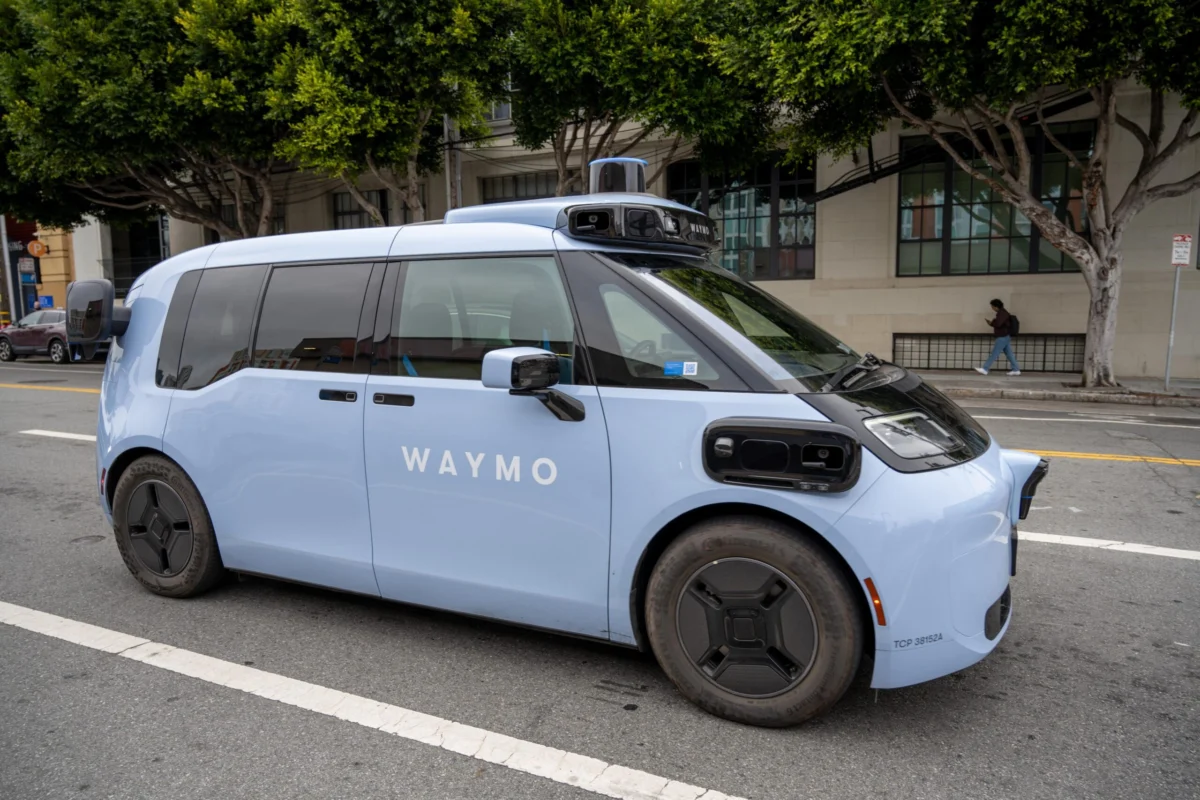
SINGAPORE — Alphabet-owned autonomous driving pioneer Waymo has announced an ambitious roadmap to bring its commercial robotaxi service to Singapore by 2028, marking a monumental step in the company’s aggressive international expansion strategy. The move signals a major pivot toward global markets as the company seeks to scale its driverless technology beyond the United States, navigating a complex web of overseas regulatory frameworks, urban densities, and international partnerships.
The announcement comes amidst a broader, rapid globalization effort by Waymo. In recent months, the company has laid out timelines for international deployments across Europe and Asia, establishing a formidable blueprint to cement its status as the world’s leading autonomous ride-hailing provider. However, the road to Singapore’s bustling streets will require careful coordination with local regulators, extensive local testing, and strict adherence to the city-state’s rigorous safety protocols.
Main Facts
Waymo’s rollout plan for Singapore is structured in distinct, methodical phases. Vehicles are scheduled to arrive in the island nation in the coming months, initiating a multi-year preparatory pipeline.
- The Timeline: Initial mapping and autonomous testing—with human safety drivers stationed behind the wheel—are slated to begin in 2027. If these trials proceed according to plan, Waymo intends to launch a fully autonomous, commercial ride-hailing service for the general public by 2028.
- Regulatory Oversight: To transition from testing to a public-facing service, Waymo must secure explicit operational approval from Singapore’s Land Transport Authority (LTA).
- Testing Mandates: Singapore law dictates that all autonomous vehicles (AVs) must successfully complete a comprehensive safety assessment at the Centre of Excellence for Testing and Research (CETRAN). These standardized evaluations have been collaboratively developed by the LTA, CETRAN, and Singapore’s Traffic Police to simulate the dense, high-pressure conditions of local roadways.
- Local Integration: Waymo is far from a stranger to the local ecosystem. The company established a formal corporate entity, Waymo Singapore Pte Ltd, earlier this year and actively participates in Singapore’s Steering Committee on Autonomous Vehicles, ensuring deep alignment with government stakeholders.
Chronology of Expansion: From Domestic Dominance to Global Ambitions
Waymo’s journey to Singapore is part of a meticulously coordinated global expansion wave that began taking shape in earnest this year. While the company has spent years refining its hardware and software stacks in the United States, its leadership has clearly identified international markets as the next frontier for growth.
The Domestic Foundation
Waymo currently operates a fleet of approximately 4,000 autonomous vehicles across roughly 15 major U.S. markets. Throughout the year, the company has continued to scale domestically, announcing new operations in cities such as Nashville, Denver, San Diego, and Las Vegas.
Despite this domestic footprint, Waymo has faced persistent regulatory hurdles, municipal pushback, and political opposition in several key American urban centers—most notably New York City, Chicago, and Washington, D.C. These domestic bottlenecks, combined with a fierce national debate over AV safety and labor impacts, have underscored the strategic value of diversifying into forward-thinking international markets.
The International Roadmap
Recognizing the limitations of relying solely on the U.S. landscape, Waymo has aggressively planted its flag across multiple continents over the past year:
- London (Late 2026): Waymo’s first major European passenger deployment, bringing its self-driving technology into the complex, historic, and congested traffic ecosystem of the British capital.
- Tokyo (2027): An Asian beachhead designed to tackle one of the world’s most technologically advanced and densely populated urban centers.
- Munich, Germany (Late 2027): Waymo’s inaugural expansion into the European Union, navigating stringent EU-wide regulatory standards.
- Singapore (2028): A Southeast Asian crown jewel, offering a hyper-efficient, highly regulated testbed for tropical urban autonomy.
Supporting Data and Singapore’s Autonomous Ecosystem
Singapore has long positioned itself as a global testbed for cutting-edge mobility solutions, making it an ideal laboratory for Waymo’s technology. The city-state’s proactive government, world-class infrastructure, and strict adherence to rule-of-law frameworks have attracted a wave of mobility innovators.
Local authorities have already green-lit a variety of autonomous applications, ranging from freight delivery trucks and automated street-sweepers to self-driving buses designed to shuttle airport workers across restricted zones. The nation’s history with robotaxis also predates Waymo’s arrival; Motional—the US-based autonomous vehicle joint venture majority-owned by Hyundai—conducted a high-profile robotaxi pilot in Singapore as early as 2016.
However, operating in Singapore presents distinct environmental and logistical challenges. The island experiences intense tropical downpours, sudden monsoon squalls, and blinding glare from equatorial sunlight. These conditions provide Waymo’s sensor suite—comprising custom-built LiDAR, radar, and high-definition cameras—with a rigorous stress test regarding perception under extreme weather conditions. Furthermore, Singapore’s hyper-dense pedestrian traffic, intricate network of expressways, and strict traffic enforcement require exceptional behavioral prediction models from autonomous driving software.
Official Responses and Industry Perspectives
The announcement has been met with enthusiasm from both corporate leadership and local stakeholders, who view the partnership as a validation of Singapore’s forward-looking transport strategy.
“Singapore has built one of the safest, most efficient, and most forward-thinking transportation ecosystems in the world,” said Waymo Co-CEO Tekedra Mawakana in an official statement. “Their focus on reliability, sustainability, and human-centric progress directly mirrors how we have built Waymo’s technology and service.”
Transportation analysts note that Mawakana’s emphasis on "human-centric progress" is a calculated nod to Singapore’s strict urban planning ethos. Unlike some Western markets where AV rollouts have faced intense friction from local unions, municipal councils, and skeptical citizens, Singapore’s government views autonomous technology as a vital tool to combat a rapidly aging workforce and alleviate land constraints.
Singapore’s Land Transport Authority has maintained a pragmatic, phased approach to AV deployment. By requiring rigorous closed-circuit testing at CETRAN before permitting open-road trials, the LTA ensures that safety remains paramount without slamming the brakes on innovation. Waymo’s early participation in the Steering Committee on Autonomous Vehicles indicates that the company is taking a collaborative, transparent approach with regulators, contrasting sharply with the aggressive "move fast and break things" ethos historically adopted by some Silicon Valley startups.
Implications for the Global Mobility Market
Waymo’s 2028 Singapore launch carries profound strategic implications for the global autonomous vehicle industry.
1. The Pivot to Pro-Innovation Jurisdictions
As the regulatory climate for autonomous vehicles remains fractured in the United States—bogged down by federal investigations, municipal lawsuits, and ongoing legislative debates overseen by bodies like the National Highway Traffic Safety Administration (NHTSA)—companies like Waymo are finding fertile ground in international markets where governments actively court technological advancement. Singapore, with its streamlined regulatory approvals and centralized governance, offers a frictionless path to commercial scale compared to the patchwork of municipal rules found in the U.S.
2. Setting the Standard for Southeast Asia
Successfully launching in Singapore could serve as a springboard for Waymo into the broader Southeast Asian market. While countries like Indonesia, Malaysia, and Thailand present massive, fast-growing ride-hailing markets, they also feature notoriously chaotic traffic conditions and less predictable road infrastructure. Proving out Waymo One in Singapore’s ultra-regulated, highly structured environment provides a gold-standard credential that can be leveraged across the wider region.
3. Escalating the Global Autonomous Arms Race
Waymo’s synchronized push into London, Tokyo, Munich, and now Singapore turns up the heat on global competitors. Companies such as China’s Baidu (Apollo Go), Cruise (backed by General Motors), and various European AV developers are watching closely. The race to dominate international robotaxi markets is no longer a distant theoretical exercise; it is an active, multi-billion-dollar race for global market share.
As Waymo vehicles begin touching down in Singapore in the coming months, the eyes of the global tech and transportation sectors will be fixed on the island nation. If Waymo can successfully navigate Singapore’s tropical storms, dense urban corridors, and stringent regulatory milestones by 2028, it will not only secure a lucrative foothold in Asia but also prove that autonomous ride-hailing can successfully scale across cultural, geographic, and regulatory divides on a truly global scale.
 Suro Senen
  Azzam Bilal Chamdy