
 By Pevita Pearce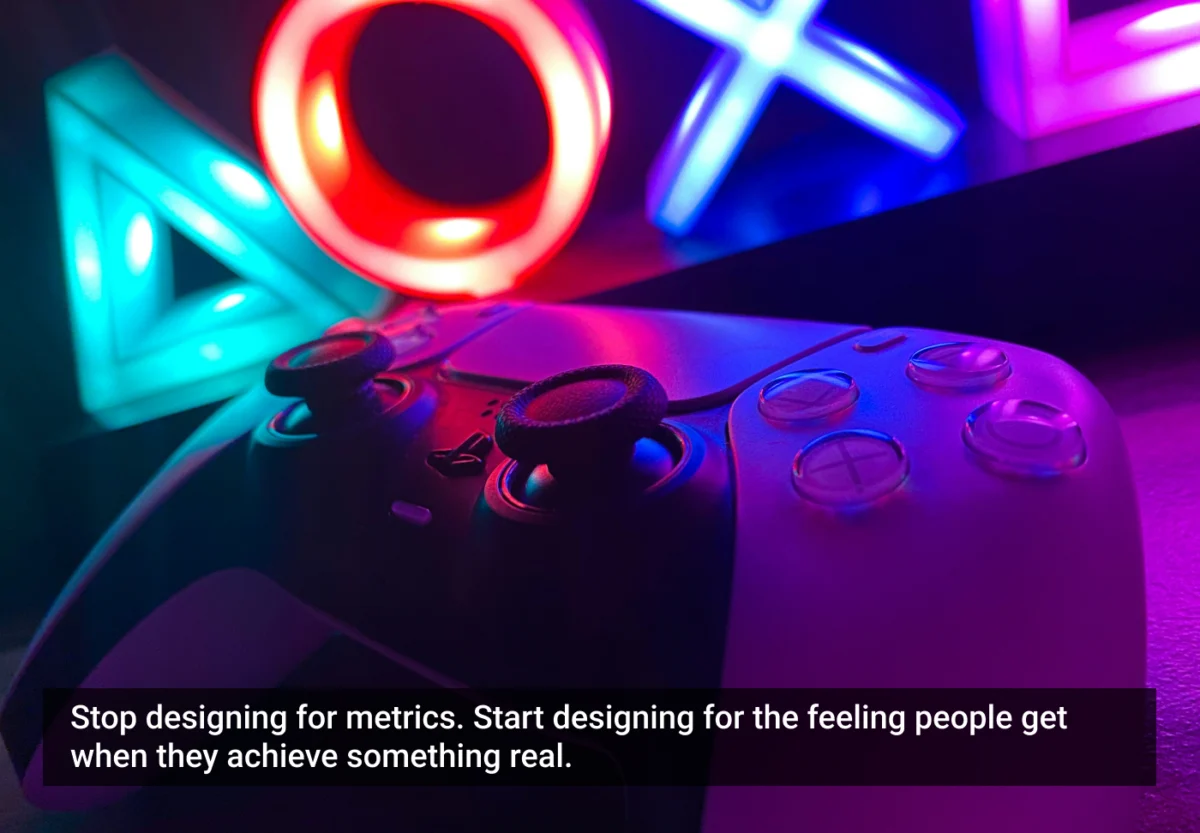
SAN FRANCISCO — In the modern digital economy, the software interface has quietly transformed into a psychological testing ground. Open almost any productivity tracker, language-learning app, or financial dashboard, and you are greeted by an automated reception committee: flashing streak counters, escalating badge tiers, guilt-inducing push notifications, and rigid leaderboards designed to engineer daily active user (DAU) metrics.
Yet, beneath the glossy dashboards and carefully calibrated engagement loops, a quiet exhaustion is setting in among consumers. Users are closing apps not with a sense of triumph, but with a familiar, hollow mixture of relief and self-loathing—the unmistakable hallmark of behavioral manipulation.
This systemic burnout has triggered a philosophical reckoning across the product design and software engineering sectors. Industry veterans, game designers, and UX researchers are rallying behind a new paradigm known as Gamification 2.0. This movement abandons superficial, behaviorist tricks in favor of genuine intrinsic motivation, treating users not as laboratory rats responding to pellet dispensers, but as autonomous human beings seeking mastery, creativity, and connection.
Main Facts: The Crisis of Extrinsic Fatigue
The core thesis of Gamification 2.0 is deceptively simple: people play games because games are worth playing, not because games award points or weaponize fear of missing out (FOMO).
For decades, digital product design has borrowed heavily from the crudest elements of traditional gamification—extrinsic rewards, randomized variable-ratio schedules popularized by slot machines, and artificial scarcity. While these dark patterns often generate short-term spikes in retention metrics and appease corporate dashboards, they fail the test of long-term sustainability.
The industry is waking up to a fundamental realization:
- The Metrics Trap: Product teams have historically optimized for questions like "How do we increase DAU?" or "What mechanics can we copy from competitors?"
- The Value Gap: True engagement cannot be manufactured through guilt over a broken 100-day streak. It must be earned by providing genuine utility that makes a user feel more capable, creative, and connected.
- The Exemplars: Platforms that achieve enduring, generational loyalty—such as Minecraft, Roblox, and Notion—do not rely on sophisticated reward schedules. Instead, they provide expansive agency, deep creative value, and an environment where engagement is its own reward.
Chronology: From Arcade Cabinets to the Attention Economy
To understand how software design arrived at this crossroads, it is helpful to trace the evolution of interactive engagement over the past half-century.
Phase 1: The Era of Intrinsic Play (1970s–1990s)
From early 8-bit arcade cabinets to sprawling 3D console worlds, video games were primarily evaluated by a single, uncompromised metric: Is the experience worth having? Players spent quarters or hard-earned cash because the gameplay challenged their intellect, tested their reflexes, and provided a genuine sense of accomplishment. Success was measured by skill acquisition, not automated praise.
Phase 2: The Metrics Gold Rush and Social Web (2000s–2010s)
As the software industry shifted toward mobile apps, Software-as-a-Service (SaaS), and the attention economy, product managers looked to video games for growth hacks. However, rather than studying why games fostered deep psychological flow, they isolated the most superficial mechanics: points, badges, and leaderboards (PBL).
This gave rise to "Gamification 1.0"—an era where apps across every vertical, from enterprise human resources to toothbrushes, slapped progress bars onto mundane tasks. While effective at driving initial downloads, these systems treated human psychology as a series of easily exploitable levers.
Phase 3: The Reckoning and Gamification 2.0 (Present Day)
Today, consumers are increasingly literate in digital manipulation. Having spent thousands of hours interacting with sophisticated, expertly balanced modern games, users instantly recognize when an enterprise app attempts to weaponize behavioral psychology. The resulting user fatigue has forced product teams to pivot away from extraction and toward respect, giving birth to Gamification 2.0: a design philosophy rooted in dignity, genuine skill acquisition, and intrinsic satisfaction.
Supporting Data & Psychological Insights: Pavlov’s Trap vs. Real Achievement
The distinction between shallow gamification and true engagement lies in the psychological state of the user. Behavioral researchers point to the stark contrast between operant conditioning and authentic mastery.
The Anatomy of Manipulation
Current gamification frequently mirrors the classic "Skinner box"—the psychological apparatus used by B.F. Skinner to study animal behavior.
- The Bell: A push notification signaling that a streak is about to expire at 11:47 PM.
- The Pellet: An arbitrary digital point increment or a badge that holds no real-world utility.
- The Shame: The hollow anxiety experienced when a user breaks a streak, forcing them to perform meaningless tasks purely to appease an algorithmic metric.
When users close an app feeling a mixture of relief and self-loathing, the software has not created loyalty; it has built a trap. Users eventually abandon these platforms not because the mechanics fail to manipulate them, but because being treated like a lab rat fundamentally feels degrading.
The Architecture of Real Achievement
Conversely, authentic achievement fosters pride, curiosity, and measurable self-improvement. Consider how masterclass video games build competence:
- Guitar Hero: Teaches rhythm and finger independence, transferring raw skills that apply directly to real musical instruments.
- Portal: Delivers an electric rush of spatial insight, making the player feel genuinely clever by solving complex physics puzzles.
- Minecraft: Empowers users to construct elaborate, original creations, instilling authentic pride in building something that did not exist before.
- Dark Souls: Demands rigorous pattern recognition and timing, proving to the player through hard-won victories that they have measurably improved.
In each of these scenarios, the player walks away feeling capable. They do not fear the game; they respect its challenges, and in turn, the game respects their intelligence.
Official Responses and Industry Perspectives
As the digital product landscape shifts, thought leaders across software development and UX design are speaking out against legacy metrics-driven design.
"When you watch someone play a game they genuinely love—not a game they are addicted to, but one they love—you see something remarkable," notes a prominent UX design strategist. "They lean forward. They experiment. They laugh when they fail because failure teaches them something. That is the feeling your app should create: joy, curiosity, and genuine engagement, not anxiety about broken streaks."
Product architects emphasizing Gamification 2.0 argue that user bases are not monolithic. Treating all users through a single, universal algorithmic lens—forcing action game mechanics onto a creative sandbox explorer, or rigid linear progression onto a strategic thinker—guarantees eventual churn.
- The Diversity of Motivation: Strategy players, puzzle solvers, and creative builders require entirely different frameworks for engagement. Successful apps tailor their environments to align naturally with what users are already trying to accomplish.
- The Dignity Standard: Industry advocates propose a simple litmus test for any product feature: Would a twelve-year-old nephew, seasoned by thousands of hours of expertly crafted games, roll his eyes at this feature? If the answer is yes, the feature is not gamification—it is manipulation wrapped in a game aesthetic.
Implications for the Future of Product Design
The widespread adoption of Gamification 2.0 carries profound implications for how technology companies will measure success, hire talent, and build software over the coming decade.
1. Redefining Success Metrics
Companies moving away from manipulative design must embrace harder-to-measure Key Performance Indicators (KPIs). Instead of prioritizing short-term retention spikes driven by guilt and FOMO, future-focused organizations will optimize for long-term value creation, skill retention, and voluntary, un-incentivized user advocacy.
2. Interdisciplinary Design Teams
Product teams will increasingly recruit talent from narrative design, game theory, and cognitive psychology—not to exploit behavioral vulnerabilities, but to construct genuinely enriching learning curves and collaborative spaces. The focus will shift from retention engineering to experience architecture.
3. Ethical Software as a Competitive Advantage
As digital fatigue deepens, ethical product design will emerge as a powerful market differentiator. Apps that respect user agency, protect mental well-being, and provide undeniable utility will capture the most valuable asset in the modern economy: unconditional user trust.
Conclusion: Designing for Human Potential
The mandate for the next generation of digital creators is clear. We are not Pavlovian dogs salivating at bells or pressing levers for digital food pellets. We are humans seeking meaning, mastery, and authentic connection.
By abandoning the tired playbooks of forced retention and embracing the core tenets of Gamification 2.0—dignity, intrinsic motivation, and profound respect for user intelligence—product teams can build software that leaves people better, smarter, and more creative than they were before.
It is time to stop designing for dashboards, stop weaponizing anxiety, and start designing for human potential.
 Suro Senen
  Muslim