
 By Basiran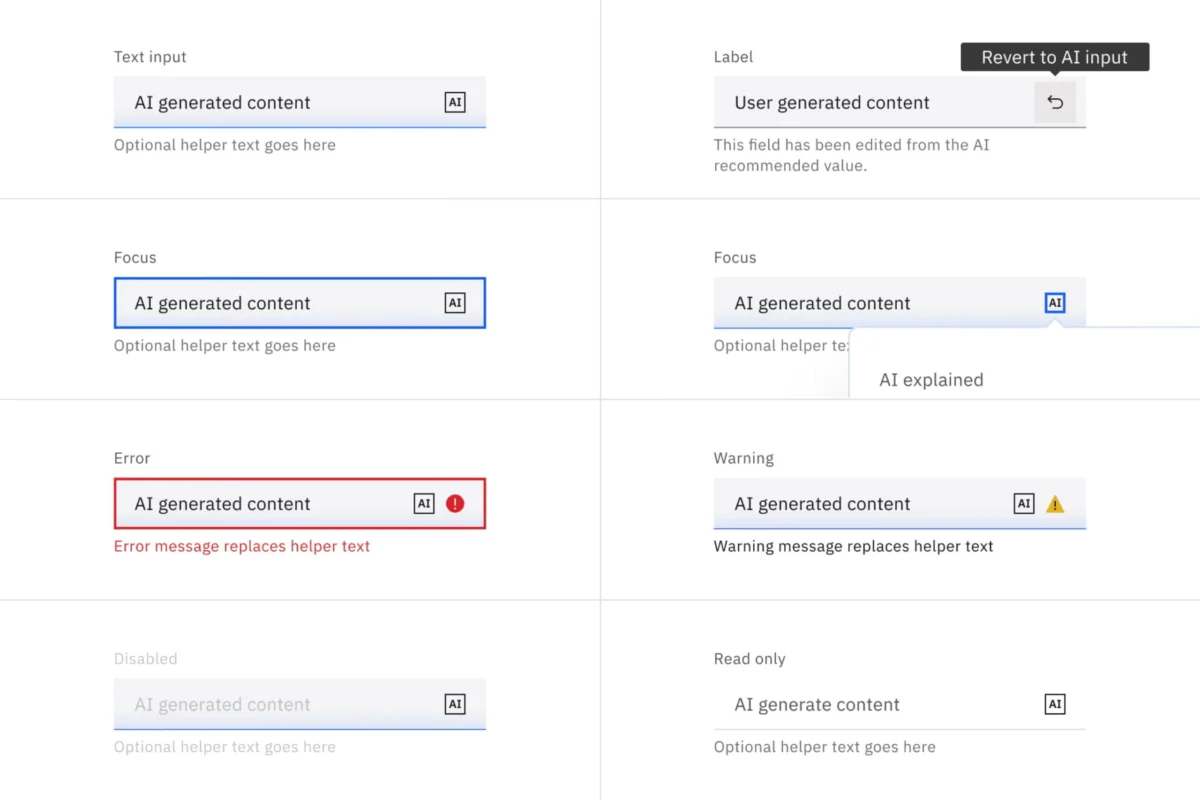
Panic, confusion, and apocalyptic warnings of "drastic measures" and "crippling fines" have dominated tech industry headlines regarding the European Union’s latest regulatory push. However, a closer examination of the framework reveals a far more targeted, sensible, and navigable reality. At its core, the European Union’s transparency mandate—taking full effect on August 2, 2026—is not about halting innovation. Rather, it is designed to establish baseline accountability: making artificial intelligence clearly recognizable when it matters most, particularly for synthetic content that could easily be mistaken for human-crafted work.
Much like the European Accessibility Act (EAA), this legislation transcends geographic borders. It applies to any enterprise worldwide offering products or services within the EU market, provided that their AI-generated outputs are consumed or utilized by European citizens. As global tech companies scramble to audit their digital interfaces, product teams must shift away from ambiguous UI conventions and adopt explicit, robust labelling protocols.
Main Facts: What the EU AI Transparency Mandate Entails
The primary objective of the European Union’s AI labelling requirements is simple yet profound: to empower everyday users to immediately and unmistakably recognize when content has been artificially generated or manipulated.
Under Article 50(4) of the EU AI Act, strict transparency obligations are imposed upon both providers (the entities that develop or supply the underlying AI models) and deployers (the businesses and organizations integrating those tools into consumer-facing products). Crucially, utilizing a third-party API or licensed AI model does not exempt a company from compliance; the legal responsibility for transparent labelling falls squarely on the entity serving the end-user.

However, a common misconception is that all AI-assisted work requires explicit flagging. The legislation specifically targets content that mimics reality or impacts public interest domains. This includes:
- Realistic Synthetic Media: AI-generated images, audio, video, or illustrations that portray real people, places, objects, or events.
- Public Interest Claims: AI outputs touching upon sensitive sectors such as health, safety, environmental protection, economics, finance, politics, science, and culture.
- Automated Customer-Facing Interactions: Systems interacting directly with natural persons, unless the artificial nature of the interaction is blindingly obvious from the context.
Conversely, the vast majority of day-to-day AI-assisted productivity work remains unaffected. Most notably, disclosure obligations do not apply when AI-generated text has undergone rigorous, substantive human review and editing, with a named individual or legal entity taking formal editorial responsibility.

Chronology: The Road to the August 2026 Enforcement Date
Understanding how the regulatory landscape reached this milestone provides valuable context for product designers and legal teams alike:
- Late 2023 – Early 2024: European lawmakers finalize the broad strokes of the EU AI Act, categorizing systems by risk levels and introducing preliminary transparency frameworks for general-purpose AI.
- Mid-2024: The EU AI Act officially enters into force, establishing a phased timeline for compliance across different tiers of AI capabilities.
- Late 2024 – 2025: Legal scholars, UX researchers, and enterprise compliance teams begin dissecting Article 50. Discussions grow around the inadequacies of current UI cues, such as the ubiquitous "AI sparkles" icon.
- Early 2026: The European Commission publishes comprehensive operational guidelines, alongside the official Code of Practice on AI-Generated Content and a standardized set of EU AI transparency icons.
- August 2, 2026: The definitive enforcement date for EU transparency obligations arrives. Compliance ceases to be theoretical; companies serving EU citizens must have compliant labelling systems fully deployed across their digital properties.
Supporting Data and UX Challenges: Why Sparkles Aren’t Enough
As product teams race to comply, UX research has highlighted a major design flaw in current AI interfaces: the over-reliance on the "sparkle" icon ($diamondsuit$ or ✨).

For years, software platforms have used sparkle symbols as a catch-all brand identity for artificial intelligence features. However, usability studies conducted by organizations like the Nielsen Norman Group (NNG) indicate that users find sparkle icons ambiguous. Does a sparkle mean "this feature is powered by AI," "you can click here to generate text," or "this specific sentence was written by an algorithm"?
Because the icon communicates feature capability rather than content provenance, the European Commission has ruled that generic sparkles fall short of the "clear and distinguishable" threshold required by law. To bridge this gap, the Commission released an official set of standardized EU AI label icons—covering basic AI utilization, fully generated content, and partially modified media.

Furthermore, the Commission issued a blunt warning: simply slapping an icon onto a page does not guarantee legal compliance. Icons tucked away in low-contrast footers, hidden behind complex sub-menus, or flashing for a fraction of a second violate the spirit and letter of the law. Compliant design patterns—such as those highlighted in design systems like IBM’s Carbon—pair recognizable iconography with plain-text disclosures (e.g., "AI-generated"). Crucially, these labels must persist even when content is downloaded, exported, or reshared across external platforms.
Official Responses and Regulatory Nuances
Legal experts and industry bodies have actively dissected the European Commission’s guidelines to clarify the boundary between human-edited work and machine generation.

The Commission draws a firm line based on the depth of human intervention. Minor, assistive edits—such as automated spellcheck, grammar correction, formatting adjustments, cropping, basic color grading, and AI-powered translations—do not constitute AI generation. A human tweaking the syntax of an AI-translated sentence does not trigger mandatory disclosure.
However, substantive interventions cross the legal threshold. AI-generated summaries, composite image generation, wholesale text rewriting, or adding and removing core elements from a photograph are classified as AI generation. Furthermore, the Commission explicitly stated that a human merely "skimming" an AI-generated article before publication does not satisfy the editorial review exemption. True editorial accountability requires active, substantive control and a named human author or editor taking legal ownership of the material.

While software companies outside Europe may view these rules as an isolated hurdle, they are part of a synchronized global pattern. Similar synthetic media disclosure laws are emerging rapidly across international jurisdictions, targeting specific sectors like political advertising, synthetic human performers, and corporate communications.
Strategic Implications for Product Designers and Developers
For product managers, UX designers, and engineers shipping AI features, the path forward requires proactive cross-functional alignment. Waiting for enforcement day is no longer an option.

- Audit Existing AI Features: Conduct a comprehensive inventory of your product suite to identify every instance where AI-generated text, imagery, or data visualization is presented to users.
- Move Beyond Sparkles: Replace ambiguous decorative icons with explicit, plain-language disclosures paired with standardized, accessible UI markers.
- Establish Editorial Workflows: For content-heavy platforms, formalize human-in-the-loop editorial workflows that record named responsibility for AI-assisted publications.
- Design for Portability: Ensure that AI metadata and visual labels remain intact when users copy, download, or share generated assets outside your primary application interface.
Ultimately, the EU’s transparency rules are not an insurmountable barrier to creativity. By fostering clear communication and distinguishing between genuine human expression and automated output, these guidelines protect consumers from deception while elevating the standard of trustworthy, transparent AI product design.
 Raul Delapena Setiawan
  Nana Muazin
  Iffa Jayyana