
 By Dwi Wanna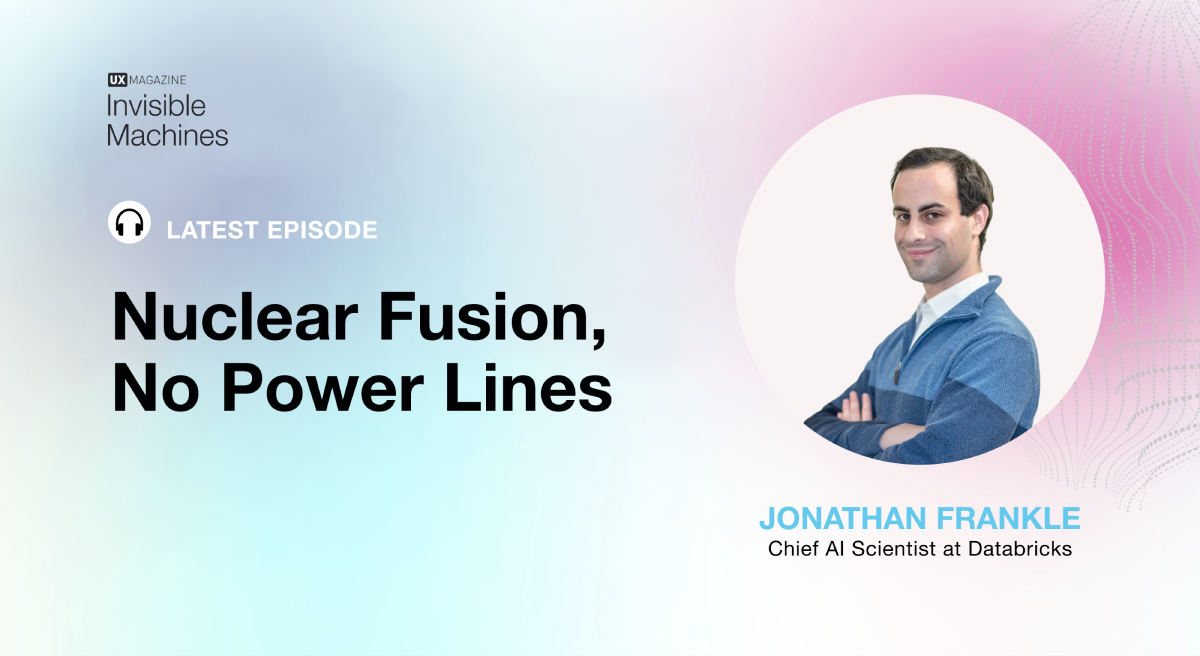
By Global Technology Desk
Published by UXM Intelligence
Main Facts: The Generative AI Infrastructure Gap
Three years after defining the art and science of "data mixology" for language models, Jonathan Frankle—Chief AI Scientist at Databricks and formerly chief scientist at MosaicML—has returned with a stark diagnosis of the artificial intelligence landscape. Speaking on the Invisible Machines podcast, Frankle offered a metaphor that cuts through the prevailing silicon hype: We have successfully unlocked nuclear fusion, but we have completely forgotten to build the power lines.
In Frankle’s estimation, the foundational models driving modern enterprise solutions represent an extraordinary, albeit imperfect and expensive, source of raw intelligence. Yet, the industry suffers from a critical infrastructure deficit. We lack the transmission lines of software engineering—the robust specifications, rigorous testing disciplines, composable tools, and intuitive applications required to reliably channel raw model capability into ordinary human intent.
The core takeaways from Frankle’s latest diagnostic include:
- The Software Maturity Lag: The current state of AI application development is frequently compared to the era of Fortran. According to Frankle, the industry desperately needs to invent its "Java," "Pascal," or "C"—standardized abstractions that allow practitioners to declare intent, edit outputs predictably, and verify systemic execution.
- The Benchmark Illusion: Academic leaderboards and generalized evaluations like HellaSwag offer almost zero correlation with what enterprise users and ChatGPT consumers actually need. Building a localized evaluation set remains distinct from genuinely understanding functional requirements.
- Prompts as Parameters: Interacting with advanced models via natural language constitutes an act of training; users are merely optimizing natural-language parameters rather than internal network weights.
- The Rise of Machine-First Publishing: Enterprise data strategies must account for the reality that digital content is no longer authored solely for human consumption or traditional search engine crawlers. Text acts as the primary training signal for the next generation of models and autonomous agents.
Chronology: From the Cupcake Ladder to Enterprise Scale
To understand where the AI industry stands today, it is instructive to trace the evolution of Jonathan Frankle’s public commentary over the past three critical years of generative AI development.
2023: The Data Mixology Era
When Frankle first appeared on Invisible Machines as MosaicML’s chief scientist, the generative AI boom was in its volatile infancy. Organizations were grappling with the "Betty Crocker problem" of training language models: how to blend disparate datasets, balance pre-training distributions, and test models using a "mini-cupcake ladder" before committing millions of dollars to full-scale training runs.
At the time, Frankle warned against the prevailing rush toward unstructured data ingestion and over-reliance on static academic benchmarks. He argued that baking a massive language model without understanding data composition was akin to baking a cake without knowing the recipe proportions. Shortly after, MosaicML was acquired by Databricks, shifting Frankle’s purview from startup experimentation to advising thousands of global enterprises.
2024–Present: The Databricks Enterprise Reality
Fast forward to the present day, and Frankle’s perspective has scaled alongside the market. Conversations that once centered on boutique pre-training runs now involve twelve thousand enterprise clients attempting to safely operationalize trillion-parameter models.
While the underlying science of large language models has evolved—incorporating massive context windows, multimodal capabilities, and advanced agentic frameworks—the fundamental operational bottlenecks persist. Enterprises are still struggling with garbage-in, garbage-out data pipelines, hallucinating agents, and an acute absence of traditional software testing frameworks in machine learning workflows. The metaphor has evolved from baking cupcakes to managing nuclear fusion, but the underlying demand for empirical discipline remains absolute.
Supporting Data: Context Windows, Retrieval Realities, and the Myth of Omniscience
The debate surrounding long-context windows versus Retrieval-Augmented Generation (RAG) highlights the ongoing tension between raw model capacity and data hygiene.
The Double-Edged Sword of Long Contexts
As foundational model providers race to expand context windows—pushing past millions of tokens to accommodate entire corporate codebases, video feeds, and historical archives—engineers often fall into the trap of assuming that training is dead. The fantasy is simple: dump every enterprise document into a massive context window and let the model sort it out.
However, Frankle’s empirical observations challenge this complacency:
- Diminishing Returns on Retrieval: Performance can paradoxically degrade as context windows expand. Introducing larger volumes of text frequently injects distractors, ambiguous relevance judgments, and noise into a reasoning engine that remains fundamentally fallible.
- Multimodal Bloat: The relentless push toward long context is heavily driven by multimodality. While a single text document consumes relatively few tokens, high-resolution images and video streams consume staggering computational footprints, making token optimization more critical than ever.
- The Garbage-In Rule: Whether inaccurate data, outdated corporate policies, or contradictory instructions arrive via pre-training corpora, RAG retrieval paths, or direct prompt stuffing, the output quality mirrors the input quality. Uncurated document ingestion inevitably leads to enterprise agents manufacturing falsehoods at scale.
Official Perspectives and Industry Implications
The implications of Frankle’s diagnostic extend far beyond data science teams, reaching deep into software engineering, enterprise architecture, and corporate communications strategies.
The Engineering Deficit: Moving Beyond Fortran
In traditional software development, engineers rely on decades-old methodologies: unit tests, integration tests, regression suites, and static typing. These disciplines allow developers to reason about deterministic codebases with absolute confidence.
In contrast, modern AI development lacks mature equivalents. Prompt engineering, while accessible, lacks the deterministic rigor required for mission-critical enterprise deployment. As Josh of OneReach.ai and podcast host Robb observed during the discussion, developers frequently build sophisticated natural language workflows only to rely on complex graphical user interfaces simply to construct and verify a written prompt—a modern manifestation of Marshall McLuhan’s old-media-wrapped-in-new-media loop.
Frankle emphasizes that whether the underlying "source code" of an AI agent is written in English, graphical blocks, algebraic prompts, or emojis is secondary. The industry must invent engineering primitives that allow practitioners to describe intent, edit behavior predictably, and verify execution before arguing over model architectures.
The Emergence of LLM Optimization (LLMO)
For corporate communications and brand strategy teams, the shift toward machine-first publishing carries profound operational changes. As foundational models and autonomous agents increasingly mediate how consumers discover information, the internet is no longer read solely by humans or indexed strictly by keyword-matching search crawlers.
Frankle predicts the emergence of a thriving LLM Optimization (LLMO) cottage industry, running parallel to traditional Search Engine Optimization (SEO). Strategic priorities for enterprises will include:
- Curating static, highly verified FAQ pages and canonical corporate facts.
- Deliberately separating stable, peer-reviewed truth from tentative draft internal content.
- Restructuring document repositories to prevent unread historical files and deprecated policy drafts from poisoning automated ingestion pipelines.
Ideally, enterprise architectures would cleanly separate core reasoning engines from dynamic knowledge bases, allowing organizations to plug fresh brand guidelines into a faithful, immutable reasoner. However, Frankle notes that the industry remains a long way from this architectural separation. Until then, organizations must navigate the inherent uncertainties of trillion-parameter systems.
Conclusion: The Mixologist’s Value System
Jonathan Frankle’s enduring impact on the AI community stems less from theoretical breakthroughs—such as his celebrated work on the "lottery ticket hypothesis" during his graduate studies—and more from his pragmatic value system.
Long before his tenure at Databricks, Frankle gained recognition for a pre-PhD empirical report on the systemic flaws of police facial recognition software, a project that directly influenced legislative policy. That same insistence on real-world impact over academic vanity pervades his current outlook.
As the generative industry matures past its initial wave of uncritical hype, Frankle’s message to practitioners is clear: abandon leaderboard chasing, treat evaluation design as a core engineering discipline, and focus on building the practical infrastructure required to safely harness the raw power of machine intelligence. The fusion reactor is burning brightly; now it is time to string the power lines.
 Pevita Pearce
  Suro Senen