
 By Muslim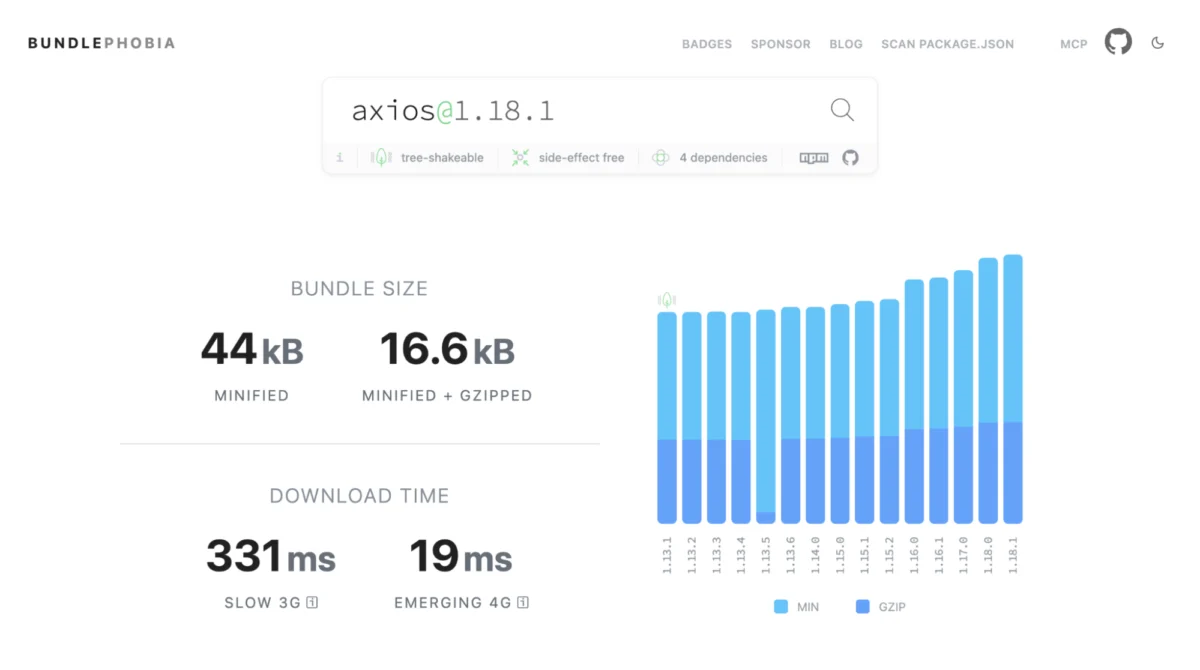
The boundary between external JavaScript dependencies and native web platform capabilities is shifting rapidly. For years, web developers relied on a robust ecosystem of npm packages for everyday tasks like date formatting, HTTP requests, deep cloning, and UI primitives. However, with browsers continuously modernizing through structured feature delivery frameworks, developers now have a unique opportunity to audit their dependency trees and reclaim tens of kilobytes of overhead.
Main Facts: The Great Platform Convergence
For the modern web developer, installing an npm package to solve a localized problem is often a matter of muscle memory. A package is added to the package.json, automated tests pass, and the application moves forward. Yet, the web platform itself never stops evolving. Today, a typical mid-sized JavaScript application harbors anywhere from 60KB to 90KB of minified and gzipped dependencies that modern browsers can now execute natively.
Tasks that once demanded specialized libraries—such as date and number formatting, network requests, modal accessibility traps, tooltip positioning, object deep cloning, and array grouping—are now heavily supported by standardized browser APIs.
Despite these advancements, many development teams fail to re-evaluate their dependency trees systematically. While tools like npm audit safeguard codebases against known vulnerabilities, they rarely answer a more fundamental performance question: Is this library still executing tasks that the browser can handle on its own?

Chronology: The Evolution of Web Features and the Baseline Standard
The rapid closure of the gap between native browser capabilities and external libraries is largely driven by structured cross-browser collaboration and standardization timelines.
- The Pre-Baseline Era: Years ago, developers faced fragmented browser implementations. Core web features lacked universal support, forcing the community to rely heavily on polyfills and utility libraries like Lodash, Moment.js, and Axios to ensure consistent cross-browser behavior.
- The Advent of Baseline: Initiated by the WebDX Community Group, the Baseline project was introduced to bring clarity to web feature compatibility. Baseline tracks feature status across the four major browser engines (Chrome, Edge, Firefox, and Safari) and categorizes them into two distinct stages: Newly available (supported across all major engines for less than 30 months) and Widely available (supported across all major engines for 30 months or more).
- Recent Platform Milestones (2024–2026):
- March 2024:
Object.groupByandMap.groupBylanded as Baseline Newly available features. - June 2024: Native JavaScript
Setoperations (such asintersectionandunion) entered the platform. - January 2025: The Popover API achieved widespread adoption, streamlining light-dismiss UI panels.
- March 2025:
Intl.DurationFormatreached engine implementations, offering native duration formatting. - January 2026: CSS anchor positioning achieved Baseline Newly available status with Firefox’s integration, completing native tooltip and floating UI alignment without third-party layout engines like Popper.
- March 2026: The long-awaited
TemporalAPI reached TC39 Stage 4 as part of the ES2026 specification, though full cross-browser stability continues to roll out.
- March 2024:
Supporting Data: Breaking Down the Bundle Math
To understand the tangible impact of dependency bloat, we must examine specific functional clusters where native browser APIs can replace external packages.
Cluster 1: Internationalization (The Immediate Win)
Internationalization utilities frequently duplicate features already found within the native Intl namespace.
- Relative Time: Instead of
timeago.js, developers can utilizeIntl.RelativeTimeFormat, which is Baseline Widely available. - Numbers, Currency, and Lists: Native APIs like
Intl.NumberFormatandIntl.ListFormateasily handle currency styling, compact notation, and Oxford comma sentence joins. - The Financial Impact: Combining packages like
humanize-duration,timeago.js,pluralize, andnumeralaccounts for roughly 14 KB of gzipped dependencies that can be safely eliminated.
Cluster 2: HTTP Clients
While heavyweight HTTP libraries like axios (approx. 17 KB gz) and superagent (approx. 19 KB gz) provide robust feature sets, basic data fetching is fully supported by the native fetch API paired with AbortController and AbortSignal.timeout(). For straightforward GET and POST operations, dropping Axios in favor of a lean fetch wrapper yields an immediate 17 KB gzipped savings.

Cluster 3: UI Primitives
Accessibility-heavy UI libraries historically introduced significant bundle weight. Today, modern platform features render many of these packages redundant:
- The
<dialog>Element: Replaces dedicated modal managers andfocus-trappackages by natively handling focus containment,Escapekey listeners, and top-layer rendering. - The Popover API & CSS Anchor Positioning: Eliminates the need for external tooltip libraries like
tippy.jsand positioning engines like Popper. - The Financial Impact: Replacing modal libraries, scroll-locking utilities, and popover positioning packages removes approximately 24 KB of gzipped code while improving accessibility baselines.
Cluster 4: Lodash Utilities
While utility libraries are rarely imported in their entirety today, isolated imports of functions like lodash.clonedeep and lodash.groupby accumulate unnecessary weight.
Object.groupByandMap.groupByreplace grouping helpers.structuredClone()provides a native, Widely available solution for deep-copying plain data objects (supporting Maps, Sets, and Date objects).- Native
Setmethods (intersection,union,difference) eliminate custom set-theory helper functions. - The Financial Impact: Pruning these specific utility functions saves upwards of 8 KB gzipped.
Official Responses and Industry Frameworks: A Three-Question Audit Decision Model
Industry experts urge caution against blind find-and-replace refactoring. Migrating away from established dependencies requires a disciplined approach to ensure application stability. Performance advocates recommend running every prospective dependency removal through a strict three-question decision framework:
- Is the native replacement Baseline-safe for my specific audience?
Developers must analyze production analytics andbrowserslistconfigurations. While a B2B dashboard accessed via enterprise-managed browsers can leverage Newly available features immediately, public-facing applications with long tails of legacy mobile traffic require careful feature detection or progressive enhancement. - What does the platform swap actually cost?
Swapping a library for a native feature must not inadvertently inflate bundle size via heavy polyfills. For instance, attempting to adopt the modernTemporalAPI prematurely requires heavy polyfills (such as@js-temporal/polyfillat roughly 44 KB gzipped), which far outweighs lightweight alternatives likedayjs(approx. 3 KB gzipped). In such cases, the framework advises patience until the feature achieves absolute Baseline status. - Does the platform feature cover my actual use cases?
Native APIs often omit specialized edge-case handling. For example, whilefetchreplaces basic Axios functionality, teams relying heavily on Axios interceptors or automated request retries must evaluate whether writing custom wrapper logic outweighs the benefits of bundle reduction.
Implications: Building a Sustainable Quarterly Audit Habit
The transition from external dependencies to native web platform features carries profound implications for web performance, maintainability, and user experience.

By executing a structured quarterly audit of the package.json, engineering teams can consistently shed between 60KB and 90KB of gzipped JavaScript (translating to hundreds of kilobytes of uncompressed code). This reduction directly correlates with faster parse and execution times, lower memory consumption, and improved Core Web Vitals—particularly on resource-constrained mobile devices operating on sluggish network connections.
Ultimately, web development is shifting away from the era of "install a library for everything" toward a platform-first mindset. As the WebDX Community Group and browser vendors continue to close feature gaps, the most resilient and performant applications will be those that continuously prune their dependency trees, trusting the modern browser to handle the heavy lifting.
 Lina Hope
  Basiran
  Raul Delapena Setiawan