
 By Lina Hope
As we navigate the economic landscape of 2026, the dropshipping model has solidified its position as a cornerstone of modern retail. With a global market valuation currently estimated at $543.53 billion, the industry is not merely surviving; it is evolving. However, this massive influx of capital and interest has fundamentally altered the playing field. The "get rich quick" era is effectively over, replaced by a sophisticated, data-driven environment where competition is fiercer than ever.
In this climate, success is no longer about finding a viral product; it is about infrastructure. The choice of a dropshipping partner has become the most critical decision a merchant can make. Today, we examine two industry titans: Doba and Spocket. While both platforms facilitate the connection between suppliers and storefronts, their philosophies, target demographics, and technological capabilities differ significantly.
Main Facts: Defining the Modern Dropshipping Ecosystem
The core challenge for any dropshipper today is operational efficiency. Retailers are expected to offer Amazon-level shipping speeds, diverse product catalogs, and seamless multi-channel integration.
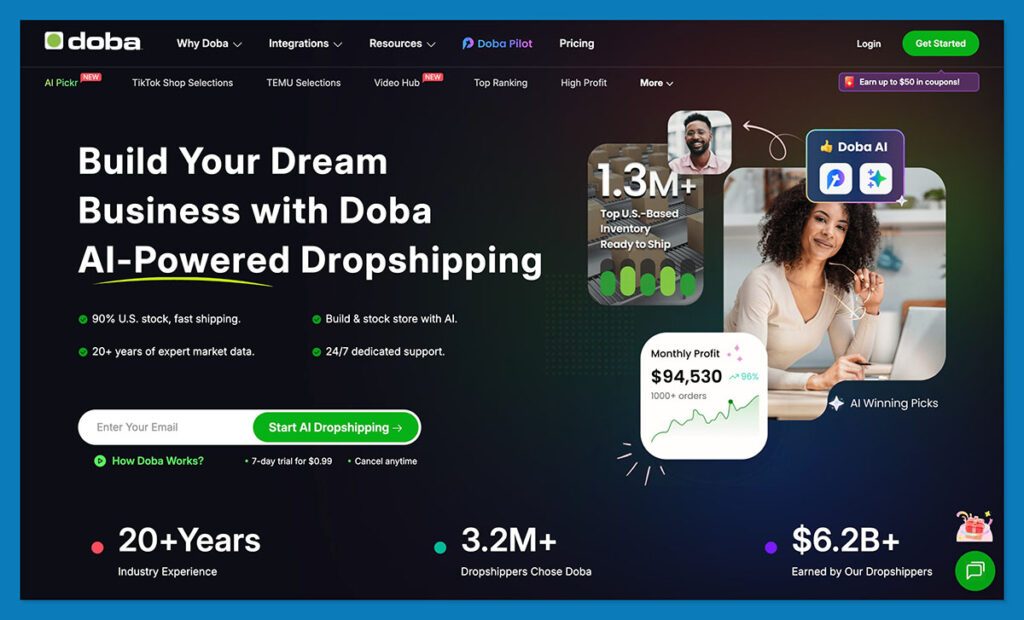
- Doba has repositioned itself as an all-in-one operational hub. It is no longer just a directory of suppliers; it is an integrated ecosystem that handles everything from market research and inventory management to automated fulfillment across various marketplaces.
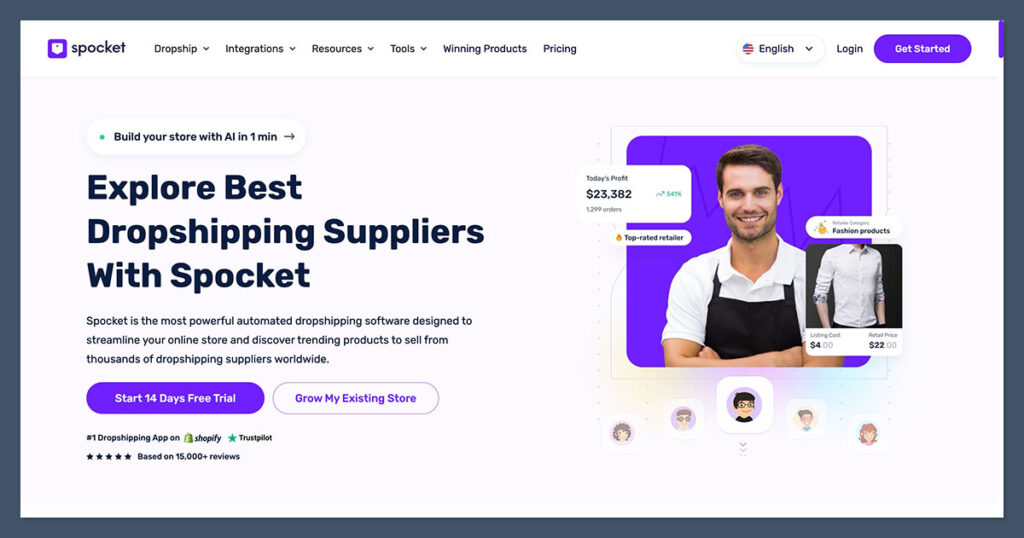
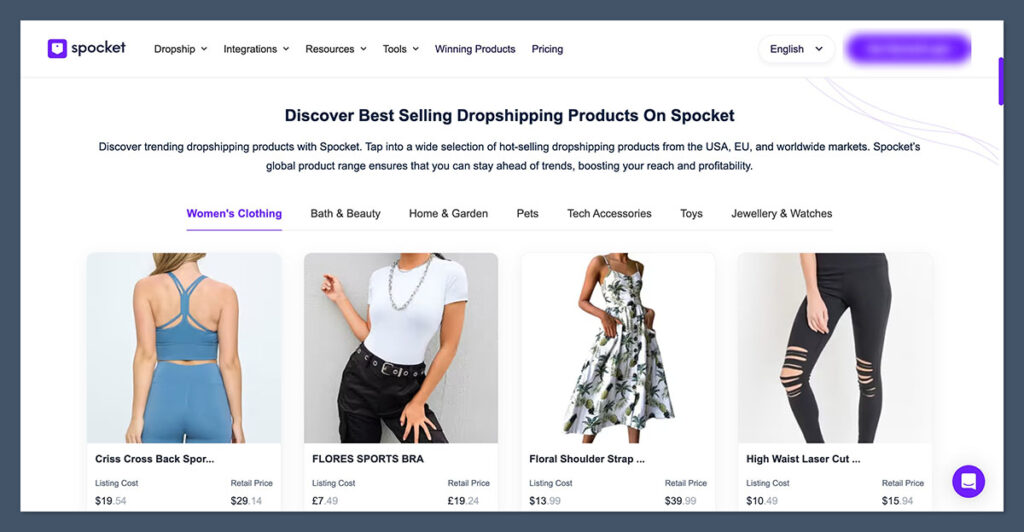
- Spocket remains the curated specialist. Its value proposition is anchored in high-quality, vetted suppliers primarily based in the US and Europe. It prioritizes the "human touch"—easier navigation, simpler branding, and a more streamlined product discovery process.
While Doba caters to the high-volume, multi-channel entrepreneur, Spocket acts as the premier launchpad for boutique stores and beginners who value quality control over massive scale.
Chronology: The Evolution of Automation
The trajectory of these two platforms reflects the wider shift toward AI-integrated e-commerce.
- 2023–2024 (The Foundation): Both platforms focused on refining supplier vetting processes and stabilizing integrations with major storefronts like Shopify and WooCommerce.
- 2025 (The Shift): As market competition increased, the need for faster, more intelligent backend support became apparent. Spocket leaned into its niche, while Doba began its pivot toward becoming an "operations hub."
- 2026 (The AI Revolution): The introduction of Doba Pilot marked a turning point. Moving beyond simple conversational search, Doba Pilot emerged as a comprehensive AI agent capable of executing complex, multi-step tasks. Simultaneously, Spocket solidified its reputation for reliability, focusing on UX enhancements that keep the merchant experience intuitive.
Supporting Data: Comparative Metrics
To understand which platform fits your business model, we must look at the hard numbers.

| Comparison Point | Doba | Spocket |
|---|---|---|
| Best For | Scaling/Multi-channel sellers | Beginners/Curated boutiques |
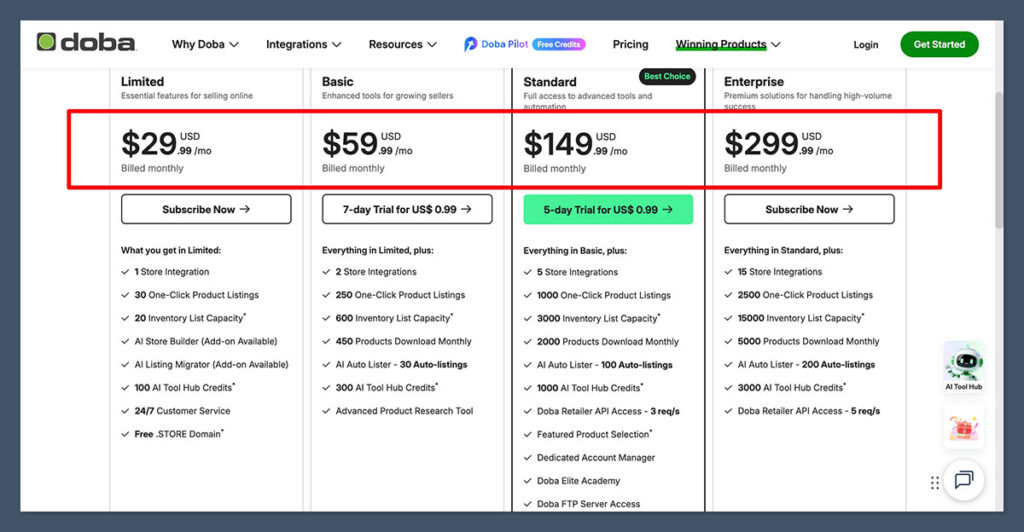
| Starting Price | $29.99/mo | $39.99/mo |
| Catalog Size | 1M+ SKUs | ~1M products |
| Store Integrations | Up to 15 (plan-dependent) | Per-store subscription required |
| Primary Markets | Global (US-focus) | US & EU-focus |
| AI Capability | Advanced (Doba Pilot Agent) | Basic filtering/Sorting |
Pricing and Scalability Implications
Doba offers a lower barrier to entry at $29.99 per month, whereas Spocket begins at $39.99. However, the true cost analysis emerges when managing multiple stores. Spocket requires a separate subscription for every connected store, which can quickly inflate overhead costs for growing businesses. Doba’s tiered structure, which scales up to 15 store integrations, makes it the more cost-effective choice for those managing a network of niche sites.
Official Stance and Philosophical Differences
The Doba Approach: Operational Dominance
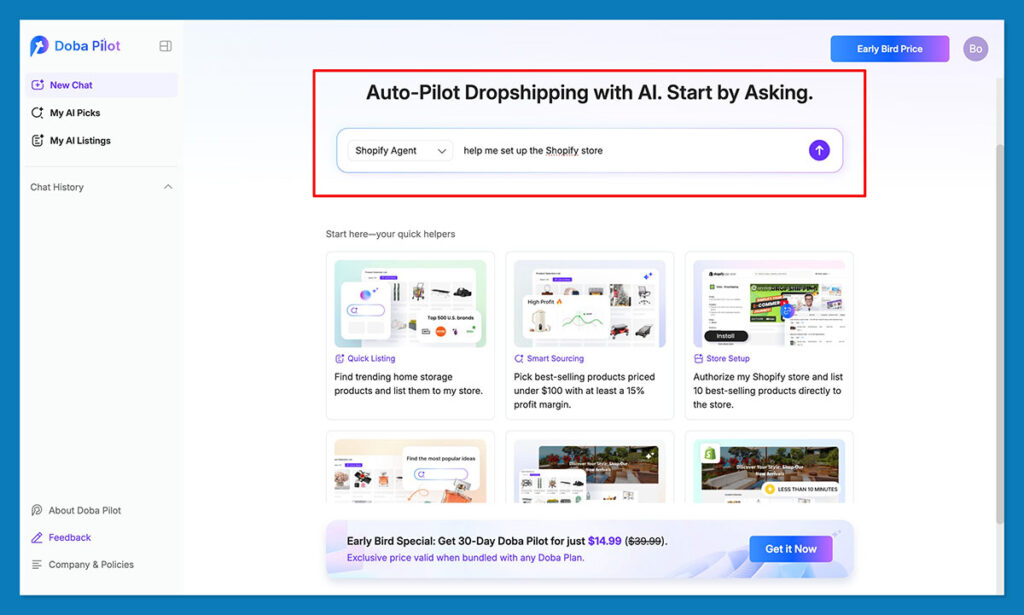
Doba’s management has clearly signaled that their priority is the automation of complexity. By integrating the Doba Pilot AI agent, the platform now handles the "heavy lifting" of e-commerce.
- Market Scout: An AI-driven tool that analyzes demand, competition, and seasonality.
- Smart Sourcing: A conversational interface that filters products based on shipping location and price points.
- Fulfillment Oversight: Doba’s AI can proactively monitor logistics and intercept orders in cases of cancellation, significantly reducing the "administrative burden" that plagues dropshippers.
The Spocket Approach: Curated Quality
Spocket maintains that success is predicated on the customer experience. Their platform forces a high standard for suppliers—every partner must either manufacture their own goods or hold physical inventory. Furthermore, Spocket requires suppliers to provide at least a 25% discount off retail pricing. Their focus is on branding; they enable merchants to use branded invoices, a feature that significantly enhances store legitimacy in the eyes of the end consumer.
Implications for Your Business
When to Choose Doba
If your objective is to expand across platforms like TikTok Shop, Walmart, eBay, and Amazon, Doba is the superior infrastructure. Its ability to sync inventory and pricing across disparate channels in real-time is a massive advantage for high-volume sellers. If you find yourself overwhelmed by the administrative tasks of daily operations, Doba’s AI-integrated workflow will be a game-changer.
When to Choose Spocket
If you are operating a high-end, single-niche Shopify store, Spocket is the better partner. Its curated nature ensures that you aren’t sifting through millions of low-quality items. The ability to order samples easily and use branded invoices makes it the top choice for those building a brand, rather than just a store.
Future-Proofing: The Role of AI in 2026 and Beyond
The divide between these two platforms highlights a broader trend: the bifurcation of the dropshipping market. On one side, we see the rise of the "Automated Merchant," supported by platforms like Doba that leverage AI to manage the logistics of scale. On the other, we see the "Curated Brand-Builder," supported by platforms like Spocket that focus on product quality and consumer trust.
As we look toward the remainder of 2026, the "best" platform is entirely dependent on your business maturity. For the beginner, the simplicity of Spocket’s interface allows for a focus on marketing and sales without the distraction of complex backend management. For the established business, the sheer efficiency provided by Doba’s Pilot AI agent is becoming an industry standard for those who wish to remain competitive.
Final Considerations
Before committing to either, retailers should perform a "test run."
- Check your target market: If you are strictly selling to the US, both have excellent warehouse options. If you are targeting the EU, Spocket’s supplier network is generally more robust.
- Evaluate your bandwidth: Can you handle manual order processing, or do you need an AI agent to handle fulfillment and after-sales support?
- Analyze your channel strategy: If you intend to stay on one platform (like Shopify), both are excellent. If you plan to scale across marketplaces, the multi-channel synchronization provided by Doba is, at present, difficult to beat.
In the competitive landscape of 2026, both Doba and Spocket have proven their worth. By selecting the one that aligns with your specific operational needs, you are not just choosing a supplier directory; you are choosing the partner that will determine the trajectory of your business for the years to come.
 Basiran
  Evan Lee Salim
  Pevita Pearce