
 By Nana Muazin
In the ever-evolving digital landscape, professional content creators are constantly searching for new frameworks to improve audience engagement, refine their brand strategy, and maintain long-term sustainability. Surprisingly, some of the most profound insights into modern blogging aren’t coming from SEO algorithm updates or AI prompt engineering—they are coming from the fastest-growing sport in America: pickleball.
What began as a casual backyard pastime in 1965 on Bainbridge Island, Washington, has transformed into a global cultural phenomenon. Pickleball—a strategic hybrid of tennis, badminton, and ping-pong—has captured the public imagination through its unique combination of accessibility, community, and tactical depth. For the professional blogger, the parallels are striking. Success in the blogosphere, much like success on the court, requires a blend of disciplined strategy, rapid adaptation, and a genuine love for the game.
The Evolution of a Phenomenon: From Backyard to Global Arena
To understand why pickleball serves as a masterclass for content creators, one must look at its history. Conceived by Joel Pritchard, Bill Bell, and Barney McCallum as a way to entertain their bored children, the game was refined over decades. It moved from local community centers to regional tournaments, and eventually, to professional leagues and national television coverage.
This trajectory mirrors the "startup" phase of many successful blogs. Every industry-leading publication began as a singular, humble post—a "backyard" experiment in voice and topic. Just as the founders of pickleball could not have predicted its massive scale, many bloggers start without a clear roadmap. The lesson here is foundational: the growth of your platform is not a result of instant viral success, but of the persistent refinement of a simple, accessible concept.
1. Start Small, Think Big: The Scalability of Content
The most critical takeaway from the sport’s history is that humble beginnings are a prerequisite for massive growth. Bloggers often suffer from "analysis paralysis," waiting for the perfect design, the perfect niche, or the perfect traffic strategy before hitting publish.
Pickleball’s ascent proves that you don’t need a grand infrastructure to start. You need a court, a paddle, and a ball. For the blogger, this means starting with what you have. Your first hundred posts are your "backyard games"—they are where you find your rhythm. By focusing on consistent execution rather than perfection, you build the foundation upon which an international community can be scaled.
2. Rally Your Community: The Power of Persistent Engagement
In pickleball, the "rally" is the lifeblood of the game. A long, sustained rally keeps the energy high, keeps players engaged, and delights spectators. In the blogging world, the rally is your comment section, your email newsletter, and your social media presence.
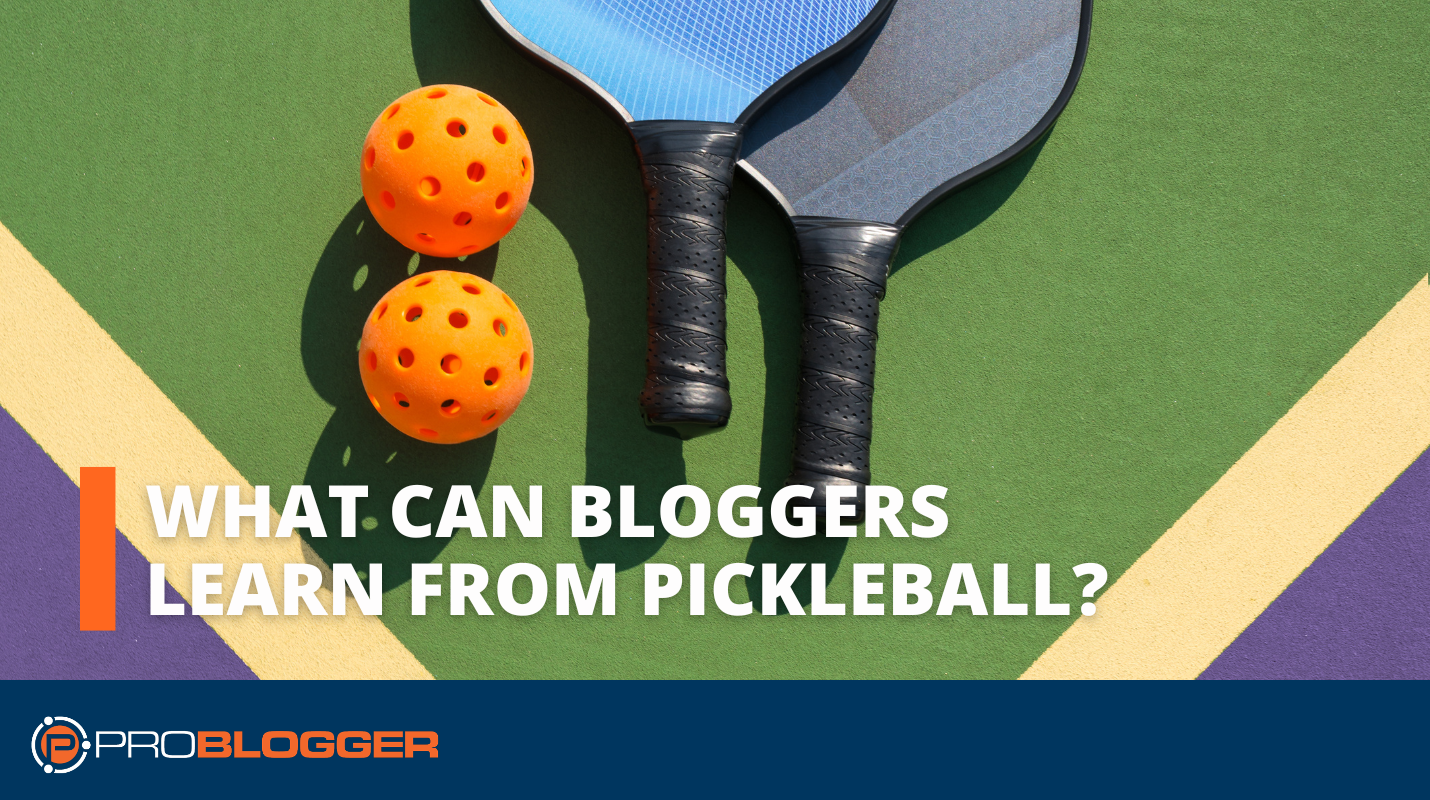
If you treat your blog as a monologue, you are effectively playing against a wall. A true community is built through bidirectional communication. When you respond to comments, host live Q&A sessions, or invite guest contributors, you are keeping the "ball" in the air. The longer the rally, the more invested your readers become. Engagement is not a one-time metric; it is a cumulative effect of sustained attention.
3. The "Dinking" Strategy: Mastering the Art of Simplicity
One of the most misunderstood aspects of pickleball is the "dink"—a soft, high-arching shot meant to force an error or set up a tactical advantage. It is the antithesis of the "power shot."
Bloggers often make the mistake of over-complicating their content, believing that high-level jargon or dense, academic writing equals authority. In reality, the most effective bloggers are masters of the "dink." They take complex, overwhelming industry topics and simplify them into digestible, actionable content. By stripping away the fluff and focusing on clarity, you create a more accessible experience for your audience. Remember: a gentle, well-placed point is often more persuasive than a loud, aggressive "sell."
4. Finding the "Kitchen": Defining Your Strategic Boundaries
In pickleball, the "kitchen" (the non-volley zone) is a protected area that prevents players from dominating the net too easily. It forces players to exercise restraint.
For bloggers, this is a metaphor for personal and professional boundaries. Your "kitchen" is the balance between being helpful and being intrusive. It is the line between being a thought leader and being a "salesy" marketer. When you overstep these boundaries—by spamming your audience or aggressively pushing products without adding value—you lose your position. Successful content creators know how to play the game effectively while respecting the "no-volley" zones of reader trust.
5. Learning from the "Whiffs": The Anatomy of Failure
Even the top-ranked professional pickleball players miss shots. They "whiff." The difference between a professional and an amateur is how they respond to the mistake.
Blogging is an iterative process. You will publish posts that fall flat. You will launch campaigns that don’t convert. These are your "whiffs." The key to long-term success is to avoid emotional attachment to these failures. Analyze the data: Was the headline weak? Was the timing off? Was the content misaligned with audience intent? By viewing every failure as a data point rather than a personal defeat, you refine your strategy for the next serve.
6. The Necessity of Tactical Adaptation
The digital landscape is as volatile as a high-stakes match. SEO guidelines shift, social media platforms rise and fall, and audience preferences evolve. A player who refuses to learn a backhand or a lob in pickleball will eventually be relegated to the sidelines.
Bloggers must maintain a similar posture of agility. This means staying abreast of industry trends—not to blindly follow them, but to understand how to integrate new tools and formats into your existing workflow. Flexibility is your greatest asset. If you are wedded to a specific way of "doing things" that is no longer yielding results, you are not being loyal to your brand; you are being stagnant.
7. Maintaining Focus: Keeping Your Eye on the Ball
It is easy to get distracted by vanity metrics—likes, shares, or the "noise" of the industry. In pickleball, a split-second loss of focus results in a point lost. For a blogger, a loss of focus results in a diluted brand identity.
Always ask: Does this piece of content serve my core mission? If you find yourself chasing trends that don’t align with your expertise or your audience’s needs, you are losing your focus. Consistency in your voice and purpose is what separates a flash-in-the-pan blog from a long-term authority site.
8. Serving Strong: The Architecture of the Post
The serve is the only shot in pickleball that you have complete control over. It dictates the pace of the game. Your blog post’s introduction is your serve.
If your intro is weak, rambling, or uninspired, the reader will "return" the ball by clicking away. A strong serve—a compelling hook, a clear promise, or an intriguing question—sets the tone for the entire interaction. Deliver your value immediately. Use your intro to signal to the reader exactly why their time is being well-spent.
9. Strategic Positioning: Knowing Your Place in the Market
Positioning in pickleball is about geometry—finding the space where you can cover the most ground while exerting the least amount of unnecessary effort. In business, this is your niche strategy.
Don’t try to cover every topic for every person. Successful bloggers position themselves in a specific corner of the court. They know exactly who they are talking to and what problem they are solving. When you understand your position in the market, you don’t have to compete with everyone else; you simply need to excel in your zone.
10. Embracing the Joy: The Sustainable Engine
Perhaps the most important lesson is that pickleball is, fundamentally, fun. It is a game played by people who genuinely enjoy the challenge and the company.
Blogging is a demanding, often solitary profession. If you lose the joy, you will eventually burn out. When you write with passion, it shows. Your enthusiasm acts as a magnet for your readers. By injecting a sense of playfulness and personality into your work, you transform your blog from a generic information hub into a destination.
Conclusion: The Game Continues
The transition from amateur to expert in both pickleball and blogging is a journey of refinement. It is about understanding the rules, respecting the court, and realizing that the game is always changing.
As you return to your keyboard, think like a player. Be strategic in your positioning, be clear in your communication, and most importantly, remember why you started. Whether it’s a drop shot or a long-form article, the objective is the same: to play the game well, to keep the rally going, and to enjoy the process of improvement.
Grab your "paddle," keep your eye on the ball, and get back in the game. Your next "hit" is only one serve away.
 rifanmuazin
  Nana
Nana  Lina Hope