
 By Nana
In the rapidly evolving landscape of the creator economy, the barrier to entry for launching a digital brand has never been lower. However, the path to long-term sustainability is often obstructed by the choice of infrastructure. For years, creators have looked to platforms like Spring (formerly Teespring) to bridge the gap between content and commerce. Yet, a newer, more robust contender—Fourthwall—has emerged, forcing creators to rethink whether they need a simple "merch shelf" or a fully realized digital storefront.
While both platforms allow creators to monetize their audiences, they represent two fundamentally different philosophies regarding growth, ownership, and scalability. This deep dive examines the architectural, financial, and strategic differences between these two titans of creator-led commerce.
Main Facts: Defining the Platforms
To understand the competition, one must first understand the core value proposition of each service.
Spring: The "Plug-and-Play" Social Merchant
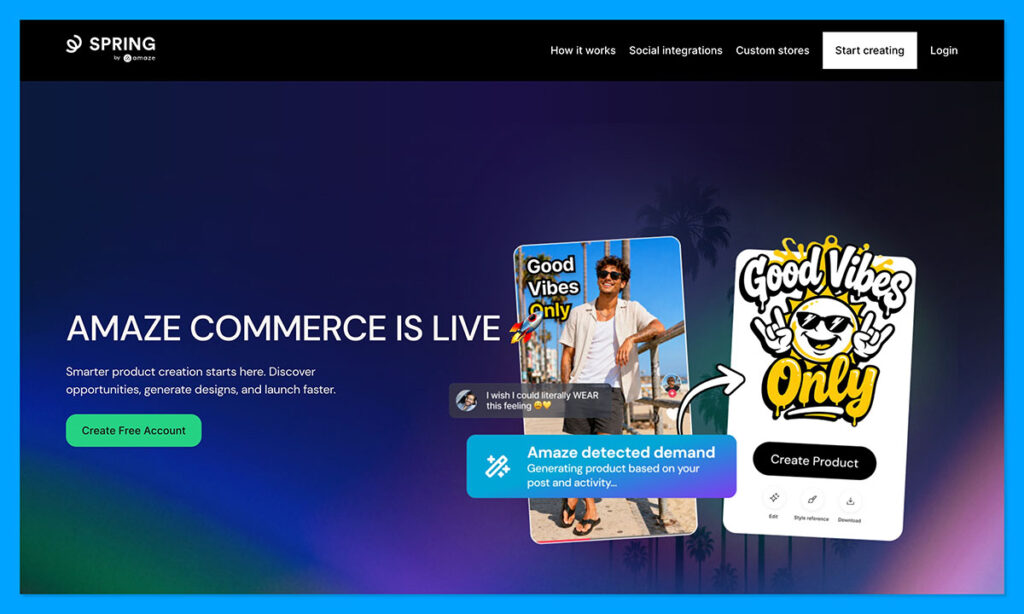
Spring is fundamentally built for the creator who views commerce as an extension of their content schedule. It is an optimized, hosted solution designed to reduce friction. When a YouTuber or Twitch streamer decides they want to launch a limited-edition hoodie or a digital guide, Spring provides the templates and the print-on-demand (POD) machinery to make it happen instantly. It excels at being a low-maintenance, high-speed vehicle for "drop-based" revenue.

Fourthwall: The "Brand-in-a-Box" Ecosystem
Fourthwall operates on a more comprehensive premise: that the creator is a business owner first and a content creator second. It provides the tools to build a branded website that feels like a standalone retail experience. Beyond just POD, Fourthwall acts as a central hub for memberships, digital downloads, donations, and even custom, self-fulfilled physical stock. It is built for those who intend to transition from "influencer" to "brand founder."
Chronological Evolution: From Teespring to Today
The history of these platforms tells a story of the maturation of the creator economy.
- The Teespring Era: Originally, Teespring was synonymous with the early days of influencer merch. It simplified the complex logistics of screen printing, allowing creators to launch designs without holding inventory.
- The Pivot to Spring: As the market grew, Teespring rebranded to "Spring" to reflect a broader catalog, moving beyond just t-shirts into various digital and physical goods. This signaled a shift toward professionalizing the creator-to-customer pipeline.
- The Rise of Fourthwall: Entering the market later, Fourthwall identified a critical gap: creators were tired of the limitations of "hosted social stores." They wanted custom domains, aesthetic control, and the ability to own their audience data. Fourthwall launched with a focus on high-quality, retail-grade production and a comprehensive suite of tools that essentially functions as an all-in-one ecommerce engine.
Supporting Data: The Practical Comparison
When evaluating the two, the devil is in the details—specifically regarding profit margins, store customization, and integrations.
Financial Structures and Fees
Both platforms offer "free" entry, but they monetize differently:
- Spring: Uses a "base cost" model. The platform sets the production cost, and you set the retail price. The gap is your profit. However, for digital products, Spring imposes a 20% commission plus a $1.70 fee per download, which can significantly erode margins for creators selling high-volume, low-cost digital assets.
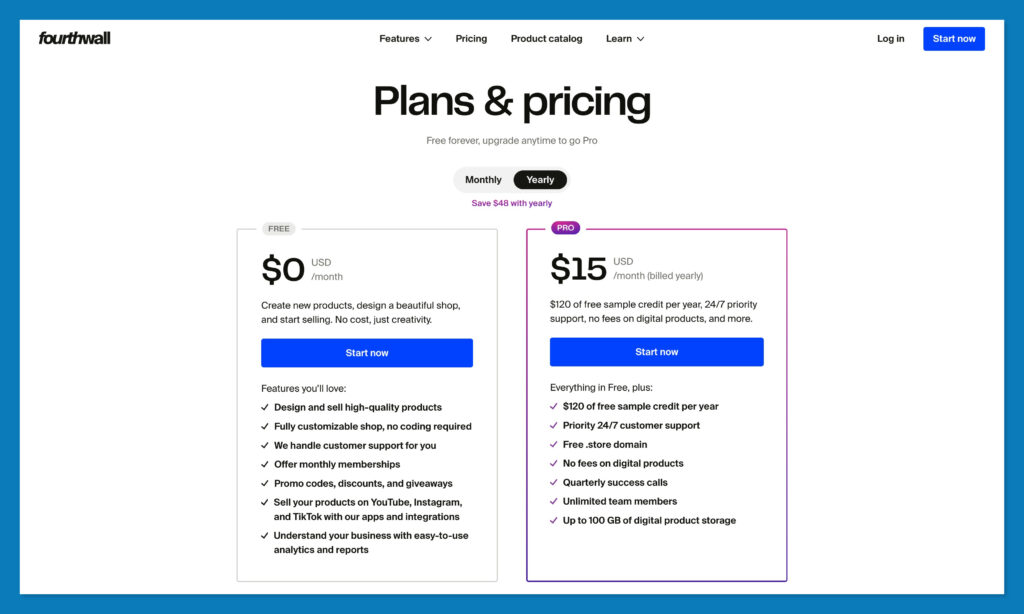
- Fourthwall: Offers a free tier with a 5% fee on memberships and digital goods. For those willing to pay $19/month, the platform removes digital product fees, provides $10 in sample credits, and unlocks advanced support. This makes Fourthwall significantly more cost-effective for creators who reach a certain scale.
Product Quality and Fulfillment
- Fourthwall’s "Curated" Approach: Fourthwall places a premium on product blanks. Their "Signature" collection features retail-grade apparel that mirrors what you would find in high-end streetwear stores. This is a deliberate move to protect the creator’s brand equity.
- Spring’s "Volume" Approach: Spring offers a massive, diverse catalog of over 200 items. While this provides variety, the print consistency can be variable. The platform is excellent for testing concepts, but it may lack the tactile "premium" feel that established brands require.
| Feature | Spring | Fourthwall |
|---|---|---|
| Storefront | Simple, template-based | Fully customizable, custom domain |
| Memberships | None | Native, multi-tier support |
| Tax Handling | Merchant of Record | Merchant of Record |
| Support | Email/Help Center | 24/7 AI Assistant (Eli) + Priority |
Official Responses and Strategic Directions
Recent updates from both companies highlight their divergent paths.
Spring’s Recent Strategic Pivot:
Spring has focused heavily on "Creator Experience." By improving bulk-editing tools, enhancing account security, and streamlining checkout (including support for crypto and Apple Pay), they are doubling down on being the most frictionless tool for the busy creator. Their goal is speed and accessibility.
Fourthwall’s Ecosystem Expansion:
Fourthwall is doubling down on "customer retention." Their recent integration with Kit allows for sophisticated email marketing automation, while the inclusion of an AI assistant (Eli) allows creators to optimize their shop layouts and pricing without hiring a developer. Their new Throne integration and designer marketplace suggest they are positioning themselves as an all-encompassing partner for the creator’s entire professional life.
Implications: Which Path Should You Choose?
The decision between Spring and Fourthwall depends entirely on where you are in your career and where you intend to be in three years.
The Case for Spring
If your business model is "I have a video, I need a shirt, and I don’t want to think about shipping," Spring is the superior choice. It is a "set it and forget it" solution. You are not building a company; you are running a merchandise campaign. It is the perfect starting point for creators who are still testing the waters of monetization.
The Case for Fourthwall
If your business model is "I want to build a brand, own my data, and diversify my revenue streams," Fourthwall is the only logical choice. By providing the tools to run memberships, sell digital products, and manage a professional website, Fourthwall removes the need to "graduate" to a more complex platform like Shopify later. It is built for the long game.
Final Synthesis
The "Merchant of Record" support offered by both companies is a massive weight off the shoulders of any creator. By handling tax remittance and fulfillment, both platforms solve the most tedious aspects of ecommerce. However, the limitation of Spring is its ceiling; you are confined to their templates and their ecosystem.
In conclusion, if you view your merch store as a side-hustle, Spring will serve you well. But if you view your content as a business that requires a professional, scalable, and fully owned home on the internet, Fourthwall is the clear winner. The transition from "influencer" to "founder" is often defined by the infrastructure you choose—choose the one that allows you to grow, not just one that helps you launch.
 Raul Delapena Setiawan
  Lina Hope
  Basiran