
 By Layla Zulfa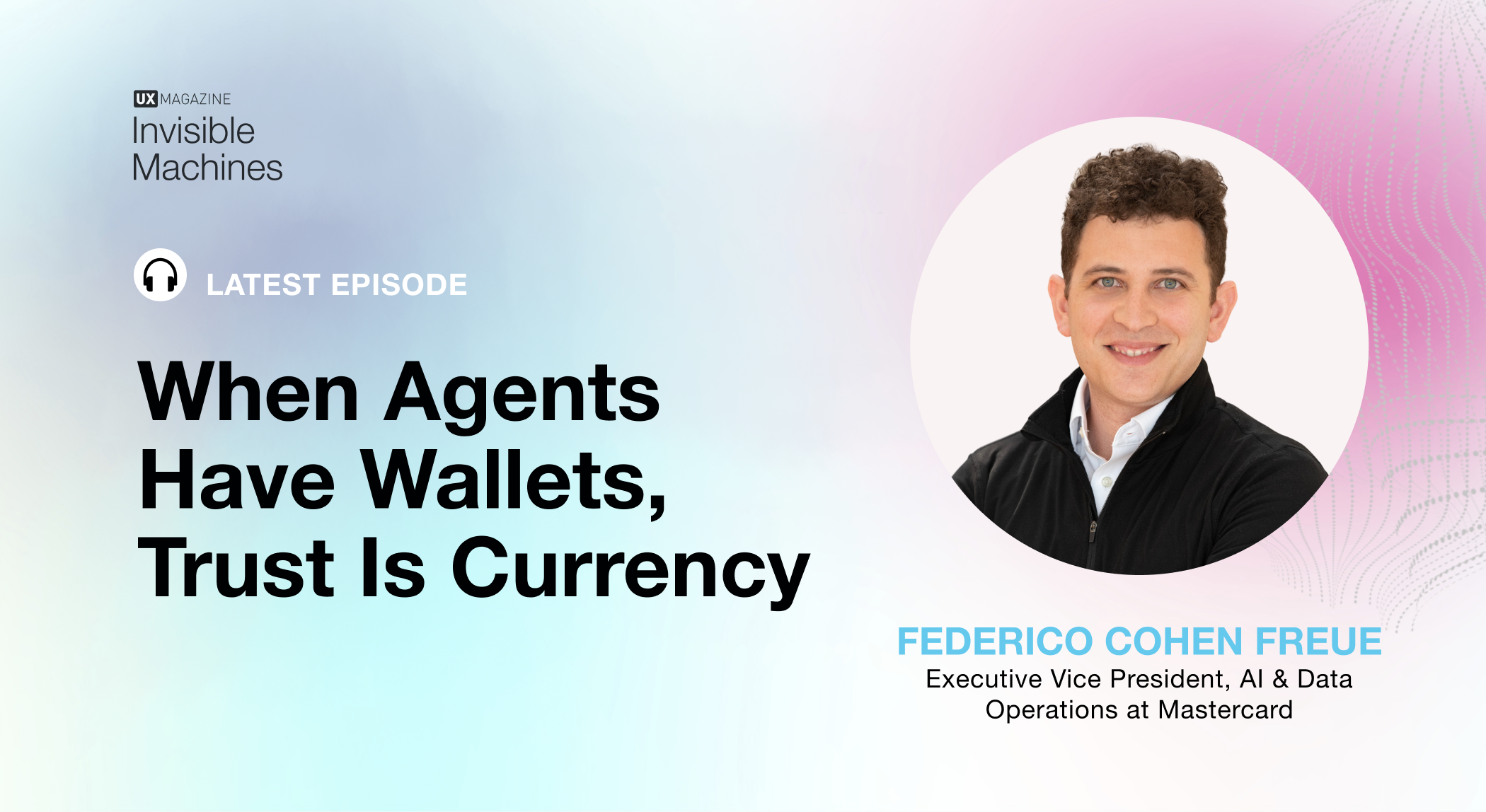
NEW YORK — In the modern corporate landscape, generative artificial intelligence is often treated as a chaotic land grab. Enterprises across the globe are rushing to deploy language models, spin up chatbots, and automate workflows in a desperate bid to avoid being left behind. Yet, beneath the frenzy of implementation lies a quieter, more profound crisis: organizations are deploying powerful technology onto shaky foundations, confusing the desire for innovation with actual readiness.
Few executives understand this paradox better than Federico Cohen Freue, who leads central AI and data initiatives at Mastercard. Fielding roughly arousing thousand AI requests annually from across the global enterprise, Freue sits at the epicenter of corporate digital transformation. His vantage point offers a rare, unfiltered look at how a multinational financial giant separates enterprise-grade strategy from superficial tech trends.
In a recent deep-dive discussion, Freue dissected the shifting currents of enterprise AI, highlighting a foundational truth that most organizations continue to miss: true enterprise transformation is not a race to deploy the newest model. It is a disciplined exercise in sequencing—demanding that knowledge, trust, and structural readiness come long before autonomous action.
Main Facts: The Anatomy of Mastercard’s AI Strategy
Mastercard’s approach to artificial intelligence provides a masterclass in scaling emerging technologies within a highly regulated, high-stakes global ecosystem.
- The Shift to Autonomy: Over the past few years, the nature of internal AI proposals at Mastercard has fundamentally changed. While chatbots once accounted for more than half of all incoming project requests, today over 50% of incoming ideas focus on autonomous AI agents—systems designed to take independent action embedded within enterprise workflows.
- The Four-Pillar Framework: To manage scale and prioritize thousands of competing ideas, Mastercard utilizes a deceptively simple strategic lens: AI must be used to make commerce more secure, smarter, more personal, and to make Mastercard stronger.
- The Infrastructure of Agentic Payments: As consumer demand shifts toward LLM-mediated search and autonomous transactions, Mastercard’s primary focus is not flashy consumer-facing apps, but the invisible plumbing of trust: agent identity verification, delegated authority frameworks, and merchant acceptance standards.
- Knowledge as Infrastructure: Challenging the traditional reactive chatbot model, Mastercard’s leadership stresses that organizations must map canonical knowledge sources and build dynamic "learning twins" before expecting AI systems to act reliably.
Chronology: The Evolution of Enterprise AI Demand
To understand where enterprise AI is heading, one must examine how organizational mental models have evolved over a remarkably short window.
Phase 1: The Novelty Interface (The Chatbot Era)
When generative AI first exploded into public and corporate consciousness, organizations viewed it primarily through a conversational lens. The vast majority of internal proposals submitted to Mastercard’s AI team centered on question-and-answer interfaces. Businesses wanted chatbots to summarize PDFs, answer internal human resources queries, or handle basic customer service interactions. During this phase, the technology was largely treated as an advanced search engine—an external tool queried by human hands.
Phase 2: The Agentic Shift
As foundational models grew more sophisticated, user expectations matured rapidly. Today, more than half of the thousand annual requests landing on Freue’s desk are no longer asking for static Q&A windows. They are asking for agents.
This pivot reflects a profound cognitive shift across the enterprise. Stakeholders are no longer just imagining an interface where they ask a question and read an answer. They are conceptualizing AI agents capable of operating invisibly in the background, executing complex workflows, negotiating, and acting directly on behalf of human users.
However, Freue is careful to draw a sharp line between wanting agents and being operationally ready to support them.
Supporting Data: The "Ball Bearing" Dilemma and Strategic Filtering
As enterprises race to adopt agentic workflows, they run headfirst into what can be described as the "Ball Bearing Problem."
The Illusion of Competence
Consider two ball bearings that appear completely identical to the naked eye. One has been meticulously machined with the correct materials and exact tolerances; the other has not. You cannot tell the difference by looking at them. Yet, if you place the flawed bearing inside a high-stress airplane engine, catastrophic failure is inevitable.
AI agent demonstrations function in precisely the same way. According to Mastercard’s leadership, even a sophisticated observer often cannot distinguish a demo representing a genuinely viable, enterprise-grade solution from a beautifully polished failure waiting to happen. The visual experience of a successful demo and a fragile prototype is identical, but the underlying engineering is worlds apart.
This illusion is precisely why Mastercard’s central AI team heavily prioritizes training and internal fluency before granting greenlights for deployment. Building organizational literacy ensures that teams understand what "machined correctly" actually looks like, allowing them to catch architectural vulnerabilities before they manifest in production environments.
Prioritization at Scale: The Four-Word Lens
With an overwhelming influx of project ideas, Mastercard avoids analysis paralysis by utilizing a strategic filter so simple it fits into a single sentence: use AI to make commerce more secure, smarter, more personal, and to make Mastercard stronger.
Crucially, this framework is not a compliance checklist or a static set of guardrails. Instead, it functions as a strategic cultural lens. When employees across a global organization share a common mental model for where AI belongs, project prioritization transforms from a grueling internal negotiation into an aligned, constructive conversation. It offers a definitive answer to the most critical preliminary question: Does this actually fit our core mission?
Official Responses: Trust as the Ultimate Currency
As autonomous agents begin to interact directly with financial systems, the conversation surrounding artificial intelligence shifts from operational efficiency to existential economic stakes.
Agentic payments—where autonomous AI entities execute financial transactions on behalf of human users—are no longer speculative science fiction. Consumer demand is rising, and product discovery is rapidly shifting toward AI-driven, LLM-mediated platforms.
When asked how Mastercard plans to capture this monumental shift, Freue and other industry leaders emphasize a counter-intuitive priority. Rather than rushing to build glamorous downstream consumer applications—such as multi-vendor trip booking platforms or autonomous algorithmic bargain hunters—Mastercard is doubling down on the foundational plumbing of trust.
"Trust is the currency of innovation," Freue notes.
In an ecosystem where transactions involve multiple parties, dynamic real-time pricing, and autonomous machine-to-machine decisions, the role of a trusted global network does not fade into irrelevance. It compounds exponentially. The traditional middleman, once casually dismissed by tech utopians as a relic of legacy finance, is rapidly emerging as the most critical, stabilizing node in the entire digital economy.
To secure this position, Mastercard is actively engineering the invisible architecture required for safe agentic commerce:
- Agent Identity Verification: Ensuring that an AI agent can cryptographically prove who authorized it.
- Delegated Authority Frameworks: Establishing hard limits on what an agent is legally and financially permitted to spend or commit to.
- Merchant Acceptance Standards: Creating universal rules of engagement so merchants can safely accept payments initiated by non-human actors.
Implications: Knowledge Before Action in Enterprise Transformation
Perhaps the most radical reframing emerging from Mastercard’s AI leadership involves how organizations manage and deploy organizational knowledge.
Traditional enterprise AI models rely on a reactive architecture: a company builds a vast knowledge repository, and human users query it when they need answers. This model places an unfair burden of inquiry on the exact person who needs to learn, assuming they already know what questions to ask.
Mastercard is exploring proactive, AI-first alternatives that reverse this paradigm. Instead of waiting for a query, an advanced knowledge management system maps out a domain as a structured, canonical source of truth—a living map where every idea has a single, definitive home connected to its historical evolution.
From this knowledge map, the system constructs a "learning twin"—a dynamic digital representation of an individual employee’s current understanding. By evaluating where the user is and where they need to go, the system acts as a "GPS for expertise," charting a personalized, turn-by-turn learning route that continuously recalculates as domain knowledge changes.
The Cultural Hurdle
Freue is quick to point out that this is fundamentally a cultural challenge, not merely a technical one. Shifting an organization away from static, once-and-done onboarding toward a culture of dynamic, continuous learning requires a complete redesign of how corporate readiness is evaluated and rewarded. Technology is almost always ready long before human culture is prepared to adapt.
Conclusion: Sequence is Everything
The overarching thread connecting Mastercard’s enterprise AI journey is a strict adherence to proper sequence.
Most corporate AI initiatives fail, not because the underlying machine learning models are deficient, but because organizations prioritize action over understanding. They build agents to automate broken processes, deploy chatbots to answer questions no one asked, and launch products without establishing trust frameworks. When these initiatives inevitably collapse, they are blamed on technology. In reality, they are failures of knowledge and sequencing.
Mastercard’s philosophy offers a vital blueprint for the global enterprise: Before you ask what artificial intelligence can do, you must first understand what your organization actually knows. Because in the age of autonomous agents, the intelligence of the system can never exceed the integrity of the knowledge upon which it is built.
 Lina Irawan
  Ali Ikhwan
  Neng Nana