
 By Lina Irawan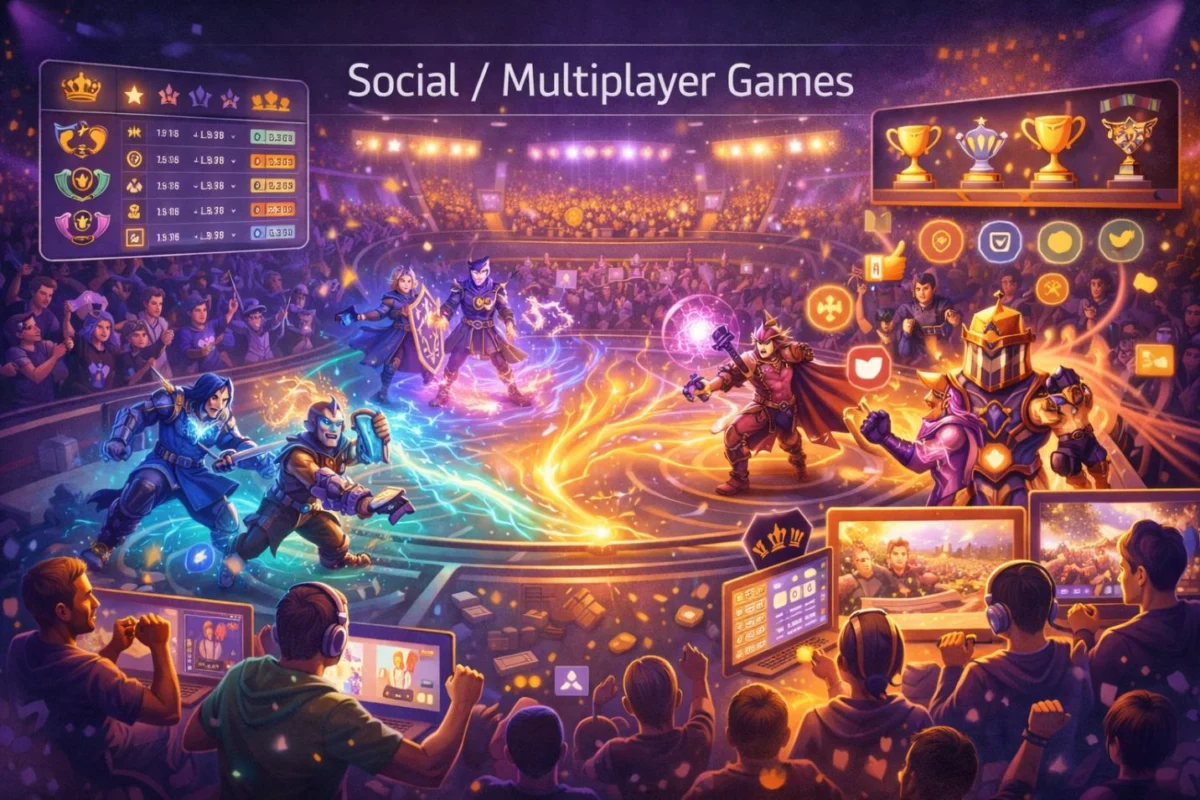
SAN FRANCISCO — In the rapidly expanding ecosystem of product design, a silent epidemic of digital fatigue is eroding user engagement. For over a decade, product teams looking to boost retention, increase daily active users, and drive monetization have turned to a universal, plug-and-play playbook: drop in a progress bar, hand out digital badges, and establish a daily streak counter.
Yet, industry analytics continue to show a dismal reality. Millions of users download productivity trackers, fitness apps, and educational platforms, only to abandon them within weeks. The underlying flaw is not a lack of interest in self-improvement, but a fundamental misunderstanding of motivational architecture.
According to product strategists and experience designers, the most critical error plaguing modern product development is the assumption that a single, monolithic “game psychology” exists.
“When a product team says, ‘Let’s add gamification,’ they’re making the exact same mistake as saying, ‘Let’s add music,’ without specifying what kind of music,” notes design literature from the ongoing Gamification 2.0 initiative. “Jazz? Heavy metal? Classical? Each attracts different audiences through completely different emotional mechanisms. Games work the exact same way.”
This realization has birthed a new paradigm for digital product development: Gamification 2.0. Moving far beyond arbitrary reward loops, this emerging framework requires product teams to intentionally diagnose which gaming genre their application naturally aligns with, studying the deep psychological hooks of that genre and designing bespoke interactive ecosystems accordingly.
Chronology of an Industry Misstep: From Tokenization to Gamification 2.0
To understand how product design arrived at the current crossroads, it is necessary to examine the evolution of engagement mechanics over the past twenty years.
- The Early 2010s (The Era of Tokenization): Sparked by the rise of social media and casual mobile gaming, the first wave of gamification relied heavily on behavioral psychology’s most basic tools: extrinsic rewards. Apps began pasting points, leaderboards, and badges (often referred to in the industry as "PBL") onto everything from corporate software to tooth-brushing apps.
- The Mid-2010s (The Fatigue Crisis): Users quickly grew immune to superficial token incentives. A digital badge lost its dopamine rush once the novelty wore off. Retention curves revealed that extrinsic rewards failed to build long-term habits, leading to high churn rates across the software-as-a-service (SaaS) and consumer app markets.
- The Late 2010s to 2020s (The Rise of Core Loop Optimization): Companies began realizing that successful digital environments required deeply satisfying core interaction loops rather than tacked-on rewards. However, app design remained largely unstructured, borrowing mechanics haphazardly across disparate game categories.
- The Present Day (The Introduction of Gamification 2.0): Industry leaders are now formulating a rigorous, genre-specific framework. By categorizing applications into distinct video game genres—Narrative, Action, Strategy, Puzzle, Simulation, Sandbox, and Social—designers are discovering how to align software mechanics with the exact motivational structures of their target users.
Deconstructing the Seven Pillars: What Apps Can Learn From Gaming Genres
Successful implementation of Gamification 2.0 requires analyzing what makes specific video game categories tick and translating those core mechanics into non-gaming environments.
1. Narrative-Driven Games and RPGs (The Last of Us, Final Fantasy, Mass Effect)
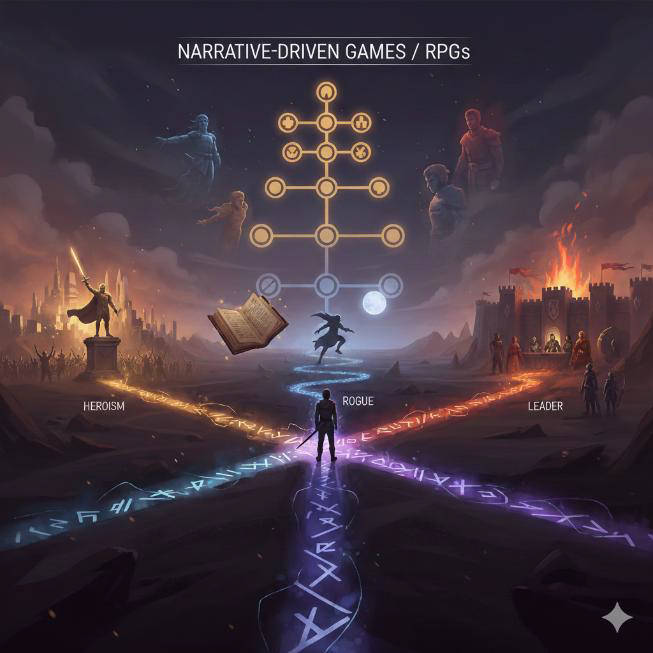
Role-Playing Games attract story-seekers—individuals who crave emotional weight, character development, and world-building.
- The Lesson for Developers: Stop treating the user journey as a static feature checklist. Give users a narrative arc instead of a flat progress bar.
- Real-World Application: Consider language-learning platforms. Rather than merely celebrating a milestone with an arbitrary "Level 5" notification, frame the achievement as a narrative beat: "You’ve mastered the present tense—you can now describe your daily life and navigate conversations in Spanish." This approach builds identity and capability rather than merely accumulating numbers.
2. Action and Twitch-Based Games (DOOM, Street Fighter, Guitar Hero)
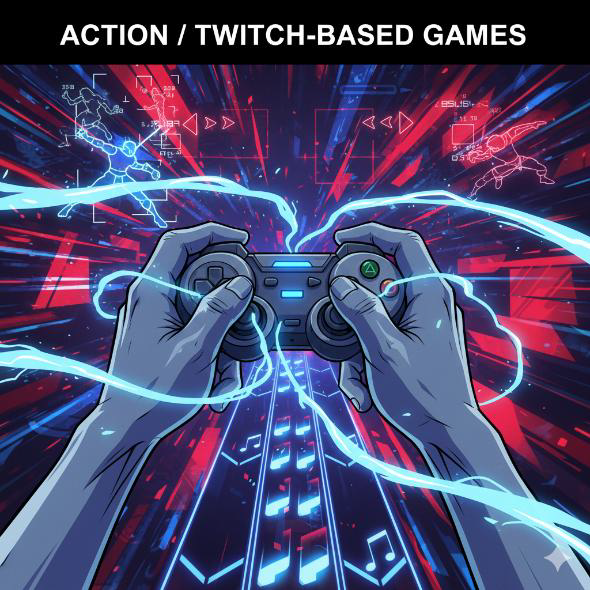
Action games appeal to skill-focused players who seek immediate sensory feedback and motor mastery. The fighting game community, for instance, spends years practicing frame-perfect execution and deliberate micro-movements.
- The Lesson for Developers: Instant feedback matters exponentially more than delayed rewards. The core interaction itself must feel satisfying. If logging a workout feels like an administrative chore, no amount of digital badges will save retention.
- Real-World Application: Fitness and productivity apps should study the "juice" of action games—incorporating responsive animations, clean haptic feedback, and fluid interactions that make the act of logging data rewarding in its own right.
3. Strategy and 4X Games (Civilization, Whiteout Survival, Last War: Survival)
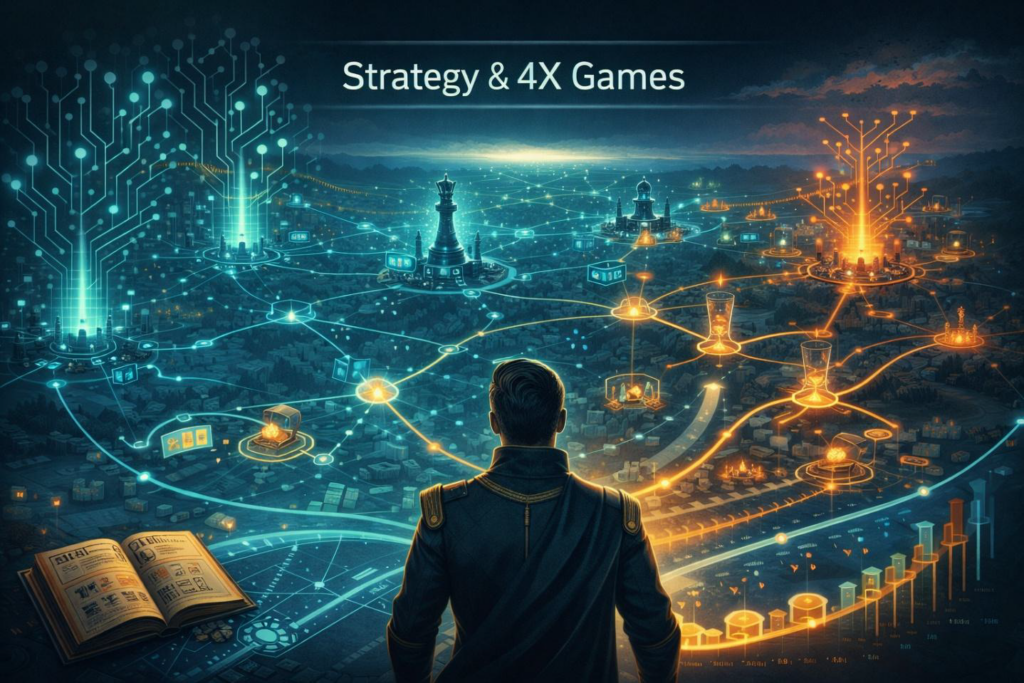
Strategy games attract long-term planners and system optimizers. Mobile strategy titans generate billions of dollars annually not through superficial login bonuses, but by engineering complex social commitments and long-term strategic agency.
- The Lesson for Developers: Allow users to make plans that take weeks or months to yield results, and reveal system complexity gradually rather than front-loading the user with tutorials.
- Real-World Application: Financial planning applications can adopt the "tech tree" model of strategy games, visually demonstrating how small savings decisions compound into different future scenarios over multi-year timelines. Furthermore, professional project management tools can utilize cooperative alliance mechanics, making team members mutually interdependent rather than forcing toxic individual competition.
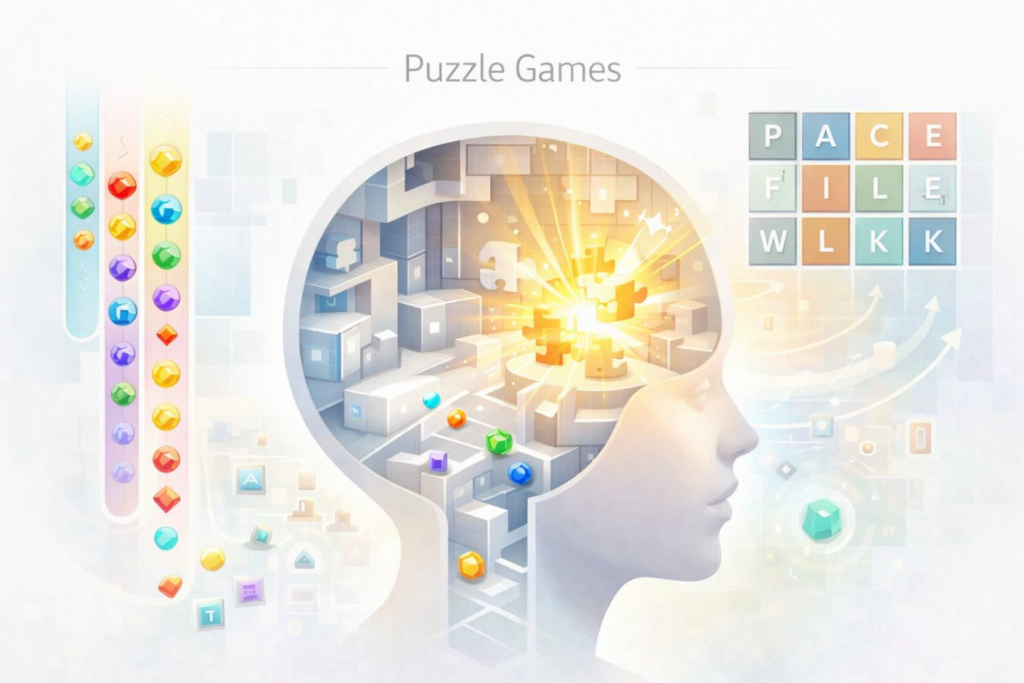
4. Puzzle Games (Portal, Wordle, Royal Match)
Puzzle games thrive on the "aha! moment"—the sudden flash of insight when an elegant solution clicks into place. Casual puzzle hits maintain hundreds of millions of active users through perfectly calibrated difficulty curves.
- The Lesson for Developers: Present concepts as puzzles to be solved rather than facts to be memorized or instructions to be passively followed.
- Real-World Application: Onboarding sequences should function like tutorial levels that teach through play and deduction. Financial budget tools can present monthly spending goals as optimization puzzles (“Here is your income—find three ways to optimize your overhead”), transforming a stressful chore into an intellectual victory.
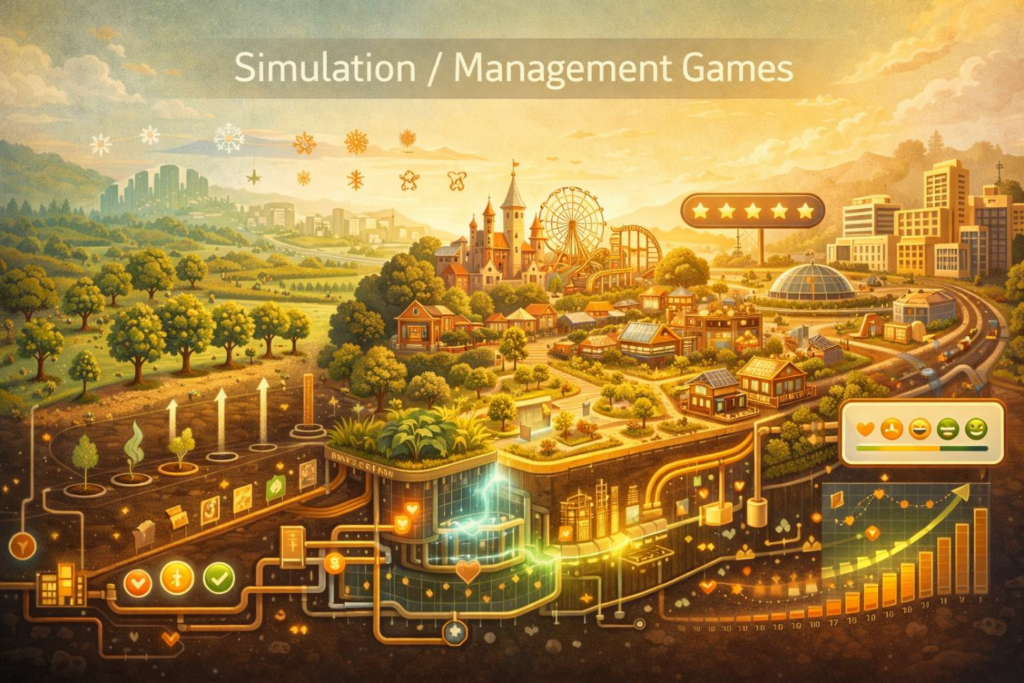
5. Simulation and Management Games (Cities: Skylines, RollerCoaster Tycoon, Stardew Valley)
Management sims attract systems thinkers who want to construct, cultivate, and watch a living environment grow based on their personal decisions.
- The Lesson for Developers: Give users something to build that persists and compounds over time, supporting multiple valid workflows and personal customization.
- Real-World Application: Customer relationship management (CRM) tools can visualize professional networking like tending a garden—planting initial contacts, watering them with regular touchpoints, and watching relationships flourish into a connected ecosystem.
6. Sandbox and Open-Ended Games (Minecraft, Terraria)
Sandbox games cater to creative explorers who resist rigid frameworks and demand absolute agency to define success on their own terms.
- The Lesson for Developers: Provide flexible building blocks and raw capabilities rather than prescriptive workflows.
- Real-World Application: Note-taking platforms like Notion and Obsidian have achieved massive adoption precisely because they act as digital sandboxes, allowing power users to construct bespoke knowledge management frameworks tailored entirely to their cognitive habits.
7. Social and Multiplayer Games (Fortnite, Roblox)
Multiplayer ecosystems thrive on social connection, status through contribution, and user-generated content. Platforms like Roblox generate billions by empowering consumers to become creators.
- The Lesson for Developers: Social features must be baked into the foundational architecture of the product, not bolted on as an afterthought.
- Real-World Application: Professional and educational software can empower advanced users to design templates, tutorials, and resources for newcomers, establishing a sustainable status system built on mentorship and community contribution.
Supporting Data: The Economics of Meaningful Design
Market data underscores the financial viability of moving away from cheap retention gimmicks toward deep, genre-informed design:
- Mid-Core Dominance: Mobile strategy and 4X titles dominate app store revenue charts, proving that players are willing to invest heavily when they feel genuine ownership, strategic agency, and social responsibility within an alliance structure.
- User-Generated Stakes: Sandbox and social ecosystems that transition users from passive consumers to active creators routinely achieve multi-billion-dollar valuations (e.g., Roblox’s multi-billion-dollar economy driven by community developers).
- The Churn Reality: Industry benchmarks indicate that generic gamification apps experience an average user drop-off of over 80% within the first week of installation, primarily due to the psychological emptiness of extrinsic reward loops.
Official Industry Responses and Expert Perspectives
Product design authorities across the technology sector have increasingly spoken out against legacy gamification models.
Dr. Elena Vance, a leading behavioral UX researcher in Zurich, emphasizes that contemporary users have developed a sophisticated resistance to corporate manipulation. "When a user logs into an app and is instantly greeted with a childish cartoon badge for doing the bare minimum, it feels patronizing," Vance explains. "Gamification 2.0 respects the user’s intelligence. It treats them as an adventurer, a strategist, or a creator, rather than a lab rat responding to a food pellet."
Corporate software vendors are taking note. Several enterprise project management firms have begun restructuring their internal design guidelines to phase out traditional global leaderboards—which often demoralize 99% of a workforce—in favor of cooperative "guild-style" milestones that reflect actual collaborative achievements.
Implications and the Road Ahead
The transition to Gamification 2.0 marks a maturation point in digital product development. As artificial intelligence and hyper-personalized user interfaces become standard, software can no longer rely on static, one-size-fits-all engagement tricks.
Product teams face a stark choice: continue pasting superficial points and badges onto uninspired workflows, or invest the analytical rigor required to understand the psychological genre alignments of their users.
By matching product architecture to the proven motivational hooks of narrative, action, strategy, puzzle, simulation, sandbox, and social gaming, developers can create digital environments that do not merely capture fleeting attention, but foster genuine mastery, long-term retention, and profound human satisfaction.
Up next in the "Gamification" series: Gamification 2.0. Beyond Points and Badges: Designing for Players, Not Metrics. Chapter 4: Special Considerations.
 Layla Zulfa
  Ali Ikhwan
  Neng Nana