
 By Evan Lee Salim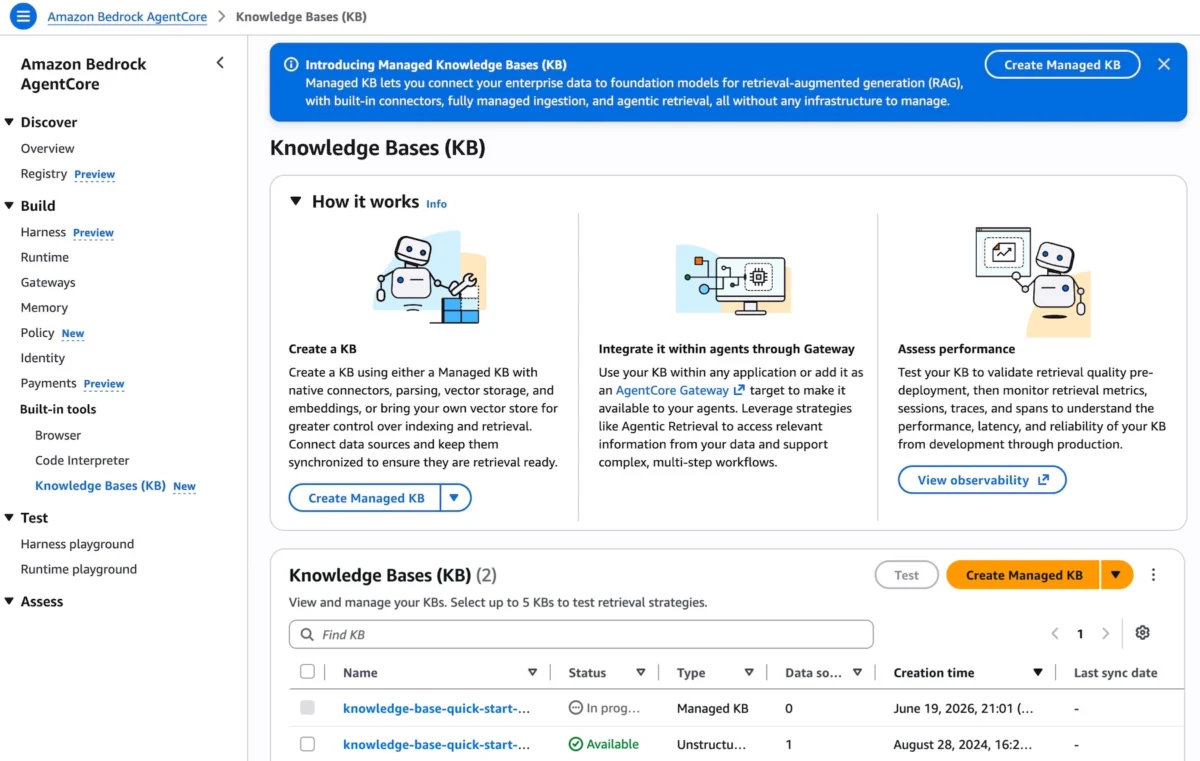
In a significant leap for enterprise-scale artificial intelligence, Amazon Web Services (AWS) has announced the launch of Amazon Bedrock Managed Knowledge Base. This new suite of capabilities is designed to fundamentally alter how organizations build and scale generative AI applications. By abstracting the complex infrastructure required for Retrieval-Augmented Generation (RAG), AWS is enabling developers to transition from months of engineering overhead to production-ready deployments in mere minutes.
The State of the Enterprise AI Landscape
As organizations race to integrate Large Language Models (LLMs) into their workflows, they have encountered a "complexity wall." While foundation models provide the reasoning engine, the true value for an enterprise lies in its proprietary data. To connect the two, developers rely on RAG pipelines—a process that involves ingesting, parsing, chunking, embedding, and retrieving information from private data stores.
Historically, this has been an arduous, manual process. Developers have been forced to act as systems architects, managing storage, retrieval engines, re-ranking logic, and model selection, often leading to fragmented, brittle pipelines that struggle to scale. Amazon Bedrock Managed Knowledge Base arrives as a unified "managed primitive," effectively replacing this fragmented stack with a streamlined, cohesive service.
Core Innovations: Breaking Down the Infrastructure
The power of the Managed Knowledge Base lies in its ability to serve as an intelligent abstraction layer. By automating the foundational components—such as embeddings, re-ranking, and foundation model selection—AWS removes the "undifferentiated heavy lifting" that has traditionally plagued AI development.
1. Smart Parsing for Data Fidelity
Data ingestion is often where AI projects falter. Disparate file formats, inconsistent structures, and messy documentation can lead to poor retrieval accuracy. Amazon Bedrock’s new Smart Parsing feature automates the ingestion process. By analyzing the source document, the system automatically selects the optimal parsing strategy, ensuring that data is structured in a way that maximizes the semantic clarity of the resulting embeddings. This eliminates the need for weeks of manual data cleaning and configuration.
2. The Agentic Retriever: Multi-Hop Reasoning
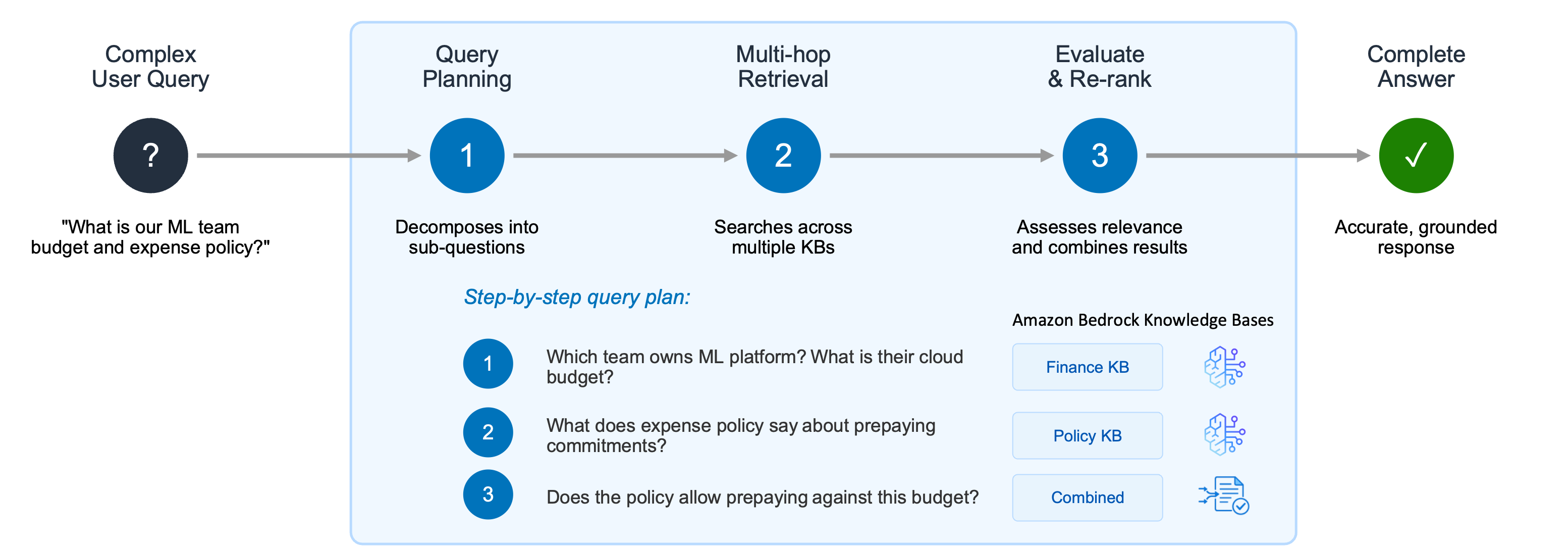
Standard search-and-retrieve systems often struggle with complex, multi-layered queries. If a user asks a question that requires cross-referencing different documents—such as comparing an expense policy against a specific department’s budget—simple keyword or semantic matching is often insufficient.

The Agentic Retriever introduces a sophisticated reasoning engine that decomposes complex user queries into a step-by-step execution plan. It performs multi-hop retrieval, where the system gathers evidence across multiple knowledge bases, evaluates intermediate findings, and synthesizes a grounded answer. This iterative, agentic approach allows developers to move beyond simple chatbots to true "AI agents" capable of navigating complex enterprise logic.
3. Model Context Protocol (MCP) Integration
A standout feature of this release is the native support for the Model Context Protocol (MCP). By integrating directly with the Amazon Bedrock AgentCore Gateway, the Managed Knowledge Base becomes immediately discoverable by any MCP-compatible framework. Whether a team is using LangChain, CrewAI, LlamaIndex, or LangGraph, the knowledge base functions as a plug-and-play tool. This interoperability ensures that developers are not locked into a single ecosystem, maintaining the flexibility that has become a hallmark of the Amazon Bedrock philosophy.
Chronology: A Roadmap to Deployment
The rollout of Managed Knowledge Base is the result of an iterative effort to simplify the Bedrock ecosystem.
- Initial Development: AWS focused on the foundational RAG architecture, identifying the primary pain points: storage management, retrieval latency, and the lack of automated re-ranking.
- The Beta Phase: Through early partnerships, AWS identified that even with advanced RAG, the "orchestration tax"—the time spent managing the pipeline—remained a barrier for enterprise adoption.
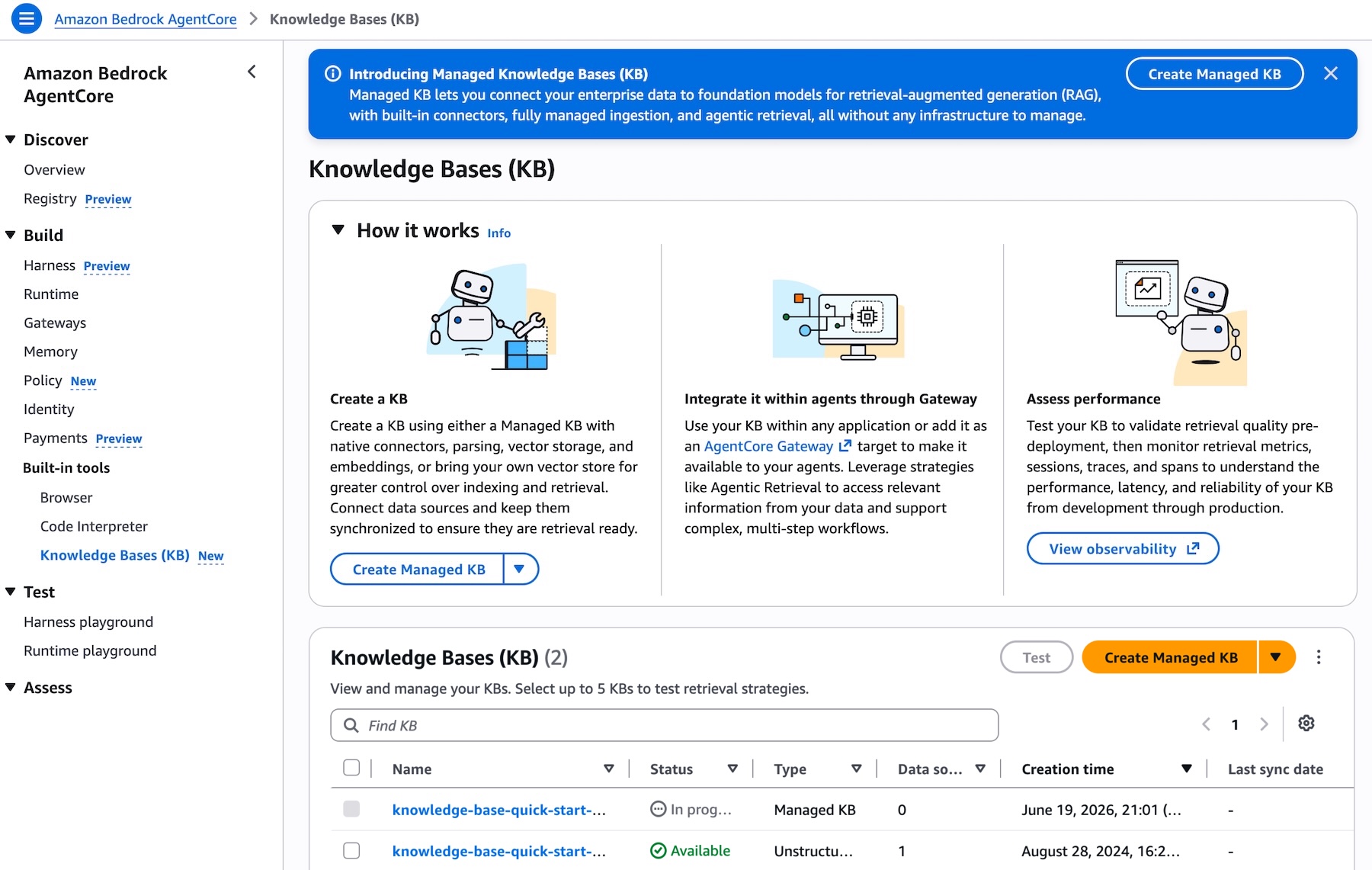
- The June 2026 Launch: Following extensive testing and refinement, AWS debuted the Managed Knowledge Base, complete with an updated console interface and integrated observability tools.
- Post-Launch Refinement: As of June 19, 2026, AWS updated the service documentation and console screenshots to ensure a seamless onboarding experience, reflecting a commitment to developer experience (DevEx).
Supporting Data: Why Managed Services Matter
The economic argument for Managed Knowledge Base is compelling. In traditional RAG setups, organizations typically spend 60% to 70% of their development time on infrastructure and maintenance. By shifting these tasks to a managed AWS service, organizations can:
- Reduce Time-to-Market: Projects that once took weeks to architect can now be initialized in minutes through the AWS Management Console.
- Operational Efficiency: With automatic permission management via IAM and built-in observability metrics provided by the AgentCore dashboard, security and monitoring are no longer afterthoughts.
- Scalability: Because the service is fully managed, it scales automatically with the volume of data and the frequency of queries, removing the need for manual capacity planning.
Official Perspectives: The Developer Experience
"For agent builders, the goal is to focus on business outcomes, not infrastructure management," notes Daniel Abib, a lead on the project. By providing a pre-built target type in the Amazon Bedrock AgentCore Gateway, AWS has reduced the integration effort to just a few lines of code. This shift reflects a broader industry trend where the "infrastructure layer" of AI is becoming invisible, allowing developers to treat AI models as functional components of a larger software architecture.
Implications for the Future of Enterprise AI
The release of Amazon Bedrock Managed Knowledge Base marks a pivotal moment in the commoditization of generative AI. By lowering the barrier to entry, AWS is effectively democratizing access to high-fidelity, RAG-powered applications.
1. The Death of the "AI Silo"
With MCP support, the traditional silos between AI frameworks are breaking down. An enterprise can now build a knowledge base on Bedrock and expose it to a variety of third-party agents without worrying about custom API integrations. This promotes a "best-of-breed" approach where companies can swap out orchestration layers or models as technology evolves.
2. A Shift Toward "Agentic" Workflows
The focus on the Agentic Retriever signals that the industry is moving past simple "chat" interfaces. Future enterprise applications will likely act as autonomous agents—performing research, executing tasks, and providing answers based on real-time, proprietary data. Managed Knowledge Base provides the necessary reliable "memory" for these agents to function effectively.
3. Model Agnosticism
While other providers often force users into proprietary model ecosystems, Amazon Bedrock continues to emphasize choice. The separation of the management layer from the model layer means that an organization can choose the most cost-effective model for simple tasks while reserving higher-performing, more expensive models for complex reasoning—all while keeping the same data infrastructure intact.
Getting Started: A Step-by-Step Path
For organizations ready to deploy, the process is designed for immediate impact:
- Access the Console: Navigate to the Amazon Bedrock AgentCore console.
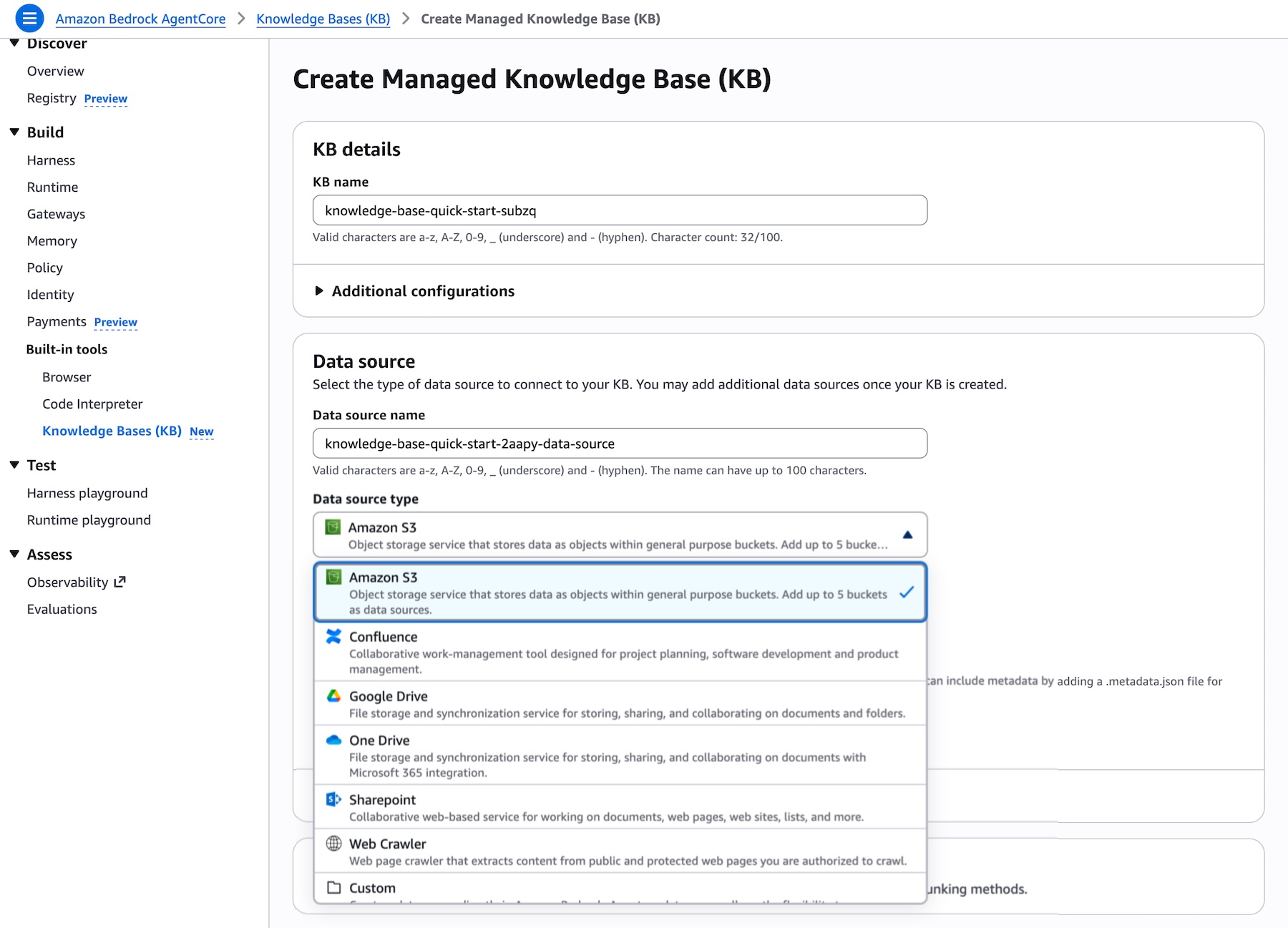
- Define the Data: Use the native connectors to point the service at existing data stores, including Amazon S3, SharePoint, Google Drive, or Confluence.
- Automatic Ingestion: Leverage Smart Parsing to prepare the data for the embedding engine.
- Integrate: Utilize the pre-built target in AgentCore Gateway to link the knowledge base to an agent.
- Monitor: Use the built-in observability dashboard to track retrieval performance and model accuracy.
As generative AI continues to evolve, the distinction between those who can successfully harness their data and those who cannot will define market leaders. By simplifying the path from data to intelligence, Amazon Bedrock Managed Knowledge Base is providing the tools necessary for the next generation of enterprise innovation.
For those interested in exploring the service, the documentation is available via the Bedrock Knowledge Bases Developer Guide, and pricing is available on the official Amazon Bedrock pricing page, which follows a transparent, pay-as-you-go model that avoids the risks of significant upfront investment.
 Neng Nana
  Suro Senen
  Lina Hope