
 By Ali Ikhwan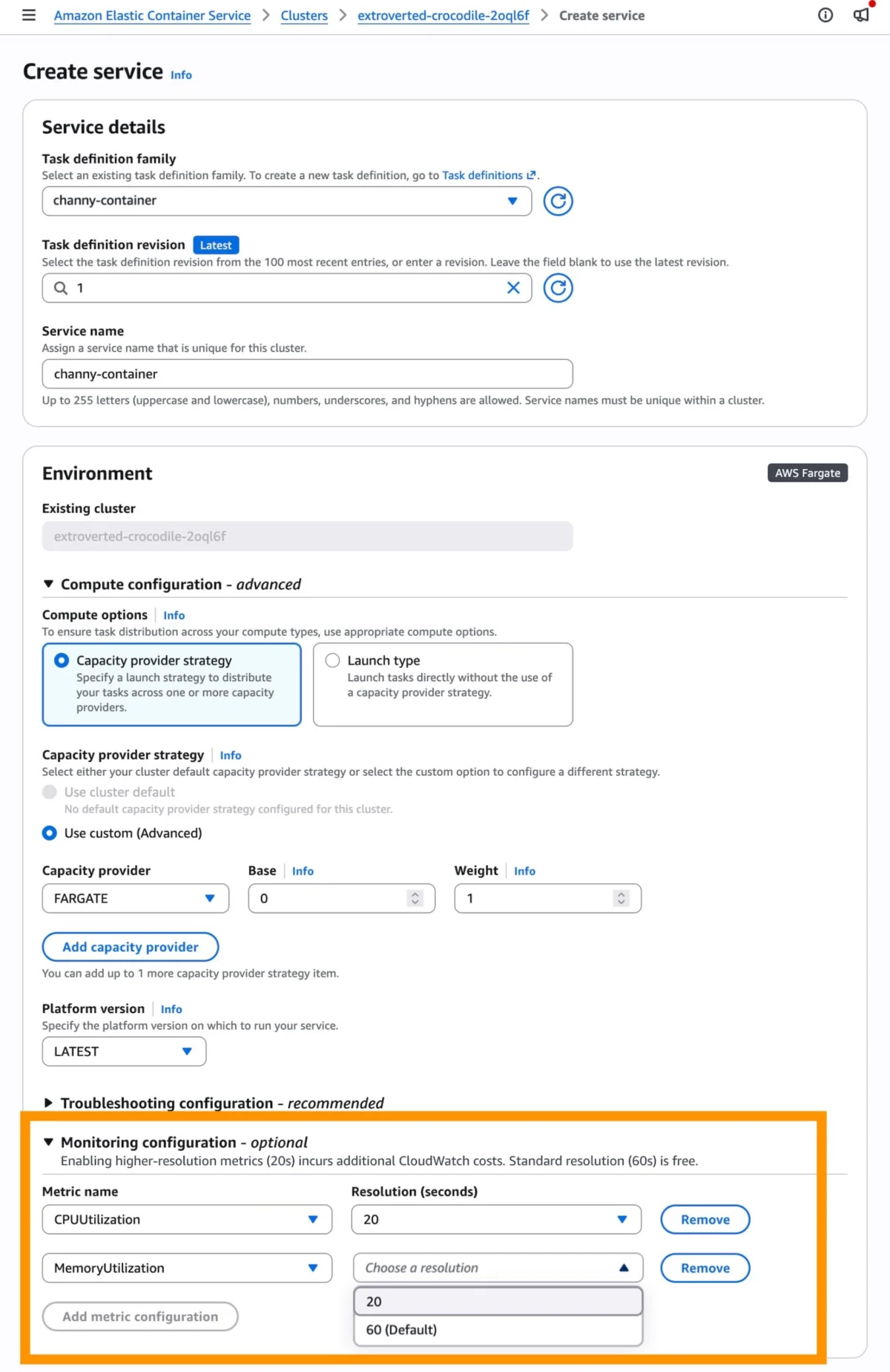
In the high-stakes environment of cloud computing, timing is everything. For developers managing microservices on Amazon Elastic Container Service (ECS), the ability to react to sudden traffic spikes is the difference between a seamless user experience and a service outage. Today, Amazon Web Services (AWS) announced a significant leap forward in operational efficiency: the launch of high-resolution, 20-second interval metrics for Amazon ECS service auto scaling. By reducing the latency between a load surge and the provisioning of new compute resources, AWS is enabling organizations to maintain performance stability even under the most volatile workload conditions.
Main Facts: A Paradigm Shift in Scaling Speed
The core of this update lies in the transition from the industry-standard 60-second metric resolution to a granular 20-second resolution. Amazon ECS service auto scaling has long been a pillar of container orchestration, allowing users to define scaling policies based on CPU and memory utilization, request counts, or custom metrics like queue depth.
Previously, the "reaction loop"—the time taken for a service to detect a change in demand and initiate the deployment of additional tasks—was bound by the standard CloudWatch metric interval. By accelerating this to 20 seconds, AWS has effectively compressed the scaling lifecycle. This update is not merely an incremental improvement; it is a fundamental reconfiguration of how ECS services perceive and respond to their environment.
The feature is globally available across all ECS compute options, including AWS Fargate, ECS Managed Instances, and traditional Amazon EC2 instances. Whether an organization is running stateful applications or ephemeral batch processing, this new capability ensures that the infrastructure remains perfectly synchronized with the real-time demands of the end-user.

Chronology: The Evolution of ECS Scaling
To understand the magnitude of this update, one must look at the progression of auto-scaling within the AWS ecosystem.
- The Early Days (Reactive Scaling): Initially, ECS relied on basic reactive scaling, where thresholds were manually set. If CPU usage hit 70%, the system would trigger a scale-out event. The delay between the trigger and the provisioning was significant, often leaving services vulnerable to "brownouts" during rapid traffic spikes.
- The Era of Intelligence (Predictive and Scheduled Scaling): AWS introduced machine learning-driven predictive scaling and scheduled scaling, allowing customers to preemptively provision resources for known events, such as Black Friday sales or scheduled marketing campaigns. While powerful, these tools were less effective against "black swan" events or unpredictable, micro-burst traffic patterns.
- The Optimization Phase (Target Tracking): The introduction of target tracking simplified the process by allowing users to specify a desired metric—like a 50% CPU target—and letting the system handle the math. However, the 60-second polling interval remained a bottleneck for hyper-scaling applications.
- The Present (High-Resolution Real-Time Scaling): With the introduction of 20-second metrics, AWS has bridged the final gap between detection and execution, moving closer to true "real-time" orchestration.
Supporting Data: Quantifying the Performance Gains
The impact of this update is best illustrated by the benchmarking data provided by AWS. The performance improvements are not just marginal; they represent a fundamental shift in infrastructure responsiveness.
In rigorous AWS benchmarking tests, the time to trigger a scale-out event plummeted from 363 seconds to just 86 seconds. This represents a 76% improvement, or 4.2 times faster than previous benchmarks. When looking at the total time—from the onset of a load spike to the full provisioning and readiness of new tasks—the improvement was equally striking. The total time dropped from 386 seconds to 109 seconds, a 72% reduction, or 3.5 times faster.
For a high-traffic e-commerce platform or a global fintech application, these three to four minutes of reclaimed time are invaluable. It prevents the accumulation of request queues, reduces the risk of 5xx errors, and ensures that the system load remains balanced across the entire container fleet.

Implementation: How It Works
For developers and DevOps engineers, the implementation process has been designed for maximum integration with existing workflows.
Configuring High-Resolution Metrics
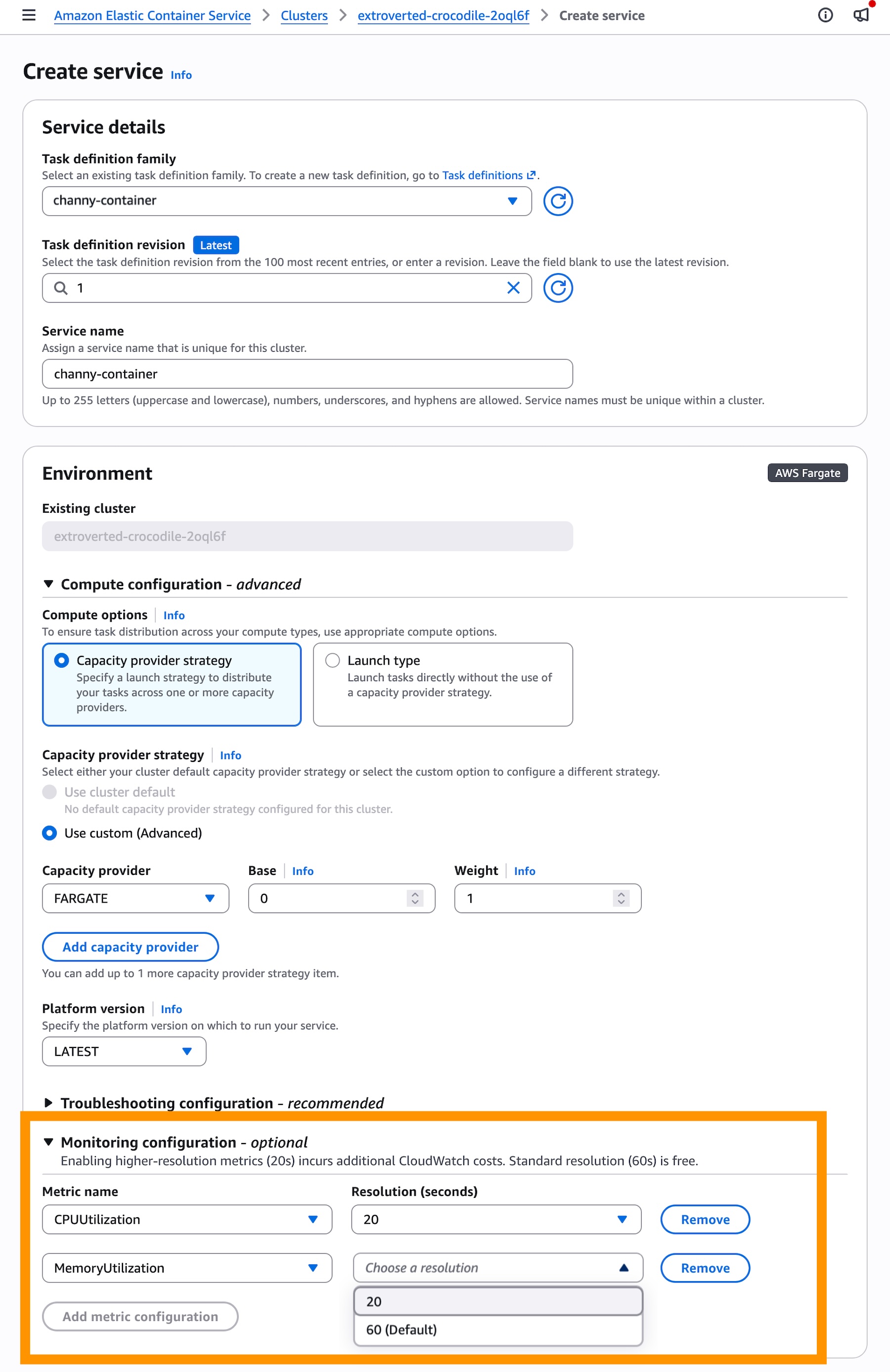
The transition to 20-second resolution is an opt-in configuration. When creating or updating an ECS service via the AWS Management Console, users can now select the "20-second resolution" option within the Monitoring configuration section. It is important to note that while the feature itself is free, the high-resolution metrics will incur additional costs associated with Amazon CloudWatch custom metrics.
Establishing Scaling Policies
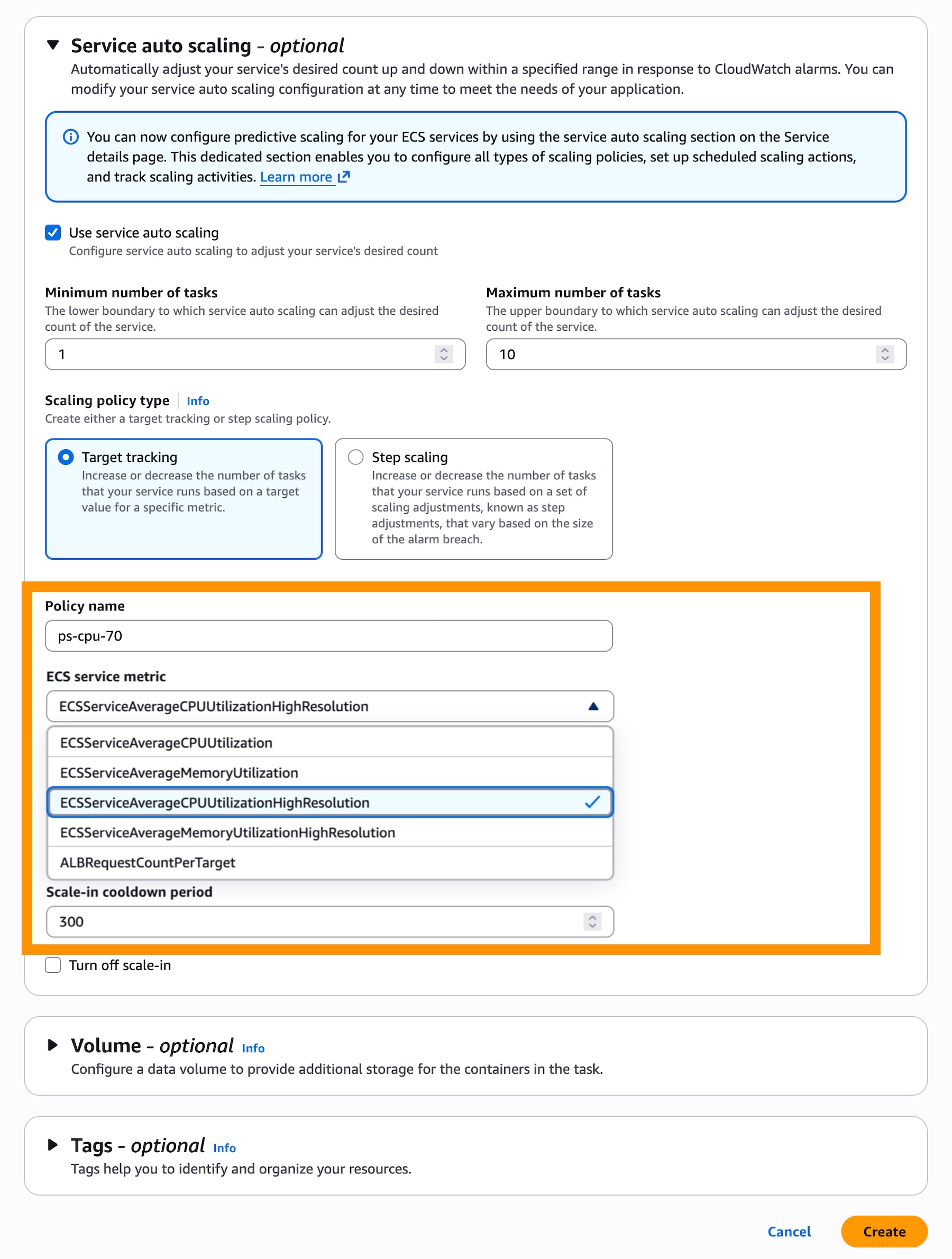
Once high-resolution metrics are enabled, the next step is to configure the target tracking scaling policy. By selecting ECSServiceAverageCPUUtilizationHighResolution or ECSServiceAverageMemoryUtilizationHighResolution as the metric source, the service begins evaluating scaling decisions at the accelerated 20-second interval.
Updating Existing Services
AWS has ensured that this feature is not limited to new deployments. Existing ECS services can be upgraded to faster auto scaling by navigating to the "Update Service" workflow in the ECS console. After enabling high-resolution metrics and performing a service update, the scaling policy can be modified to point to these new, faster metrics. The process is also fully compatible with AWS SDKs, the AWS Command Line Interface (AWS CLI), and infrastructure-as-code tools like AWS CloudFormation.
Implications: The Future of Serverless and Containerized Apps
The implications of this launch extend far beyond simple metrics. This update marks a broader trend toward the "invisible infrastructure" paradigm, where the underlying cloud resources are managed with such precision that the developer is abstracted entirely from the complexities of load balancing and capacity planning.
Resilience and Cost Efficiency
By scaling faster, businesses can be more aggressive with their scaling policies. Previously, engineers might have over-provisioned their ECS clusters to "buffer" against slow scaling times. With 20-second responsiveness, companies can tighten their scaling thresholds, running leaner fleets and reducing idle resource costs without sacrificing application performance. This creates a dual benefit: improved customer experience and better cloud financial management (FinOps).
Handling "Burst" Workloads
The modern web is characterized by erratic traffic. A single social media mention or a viral event can lead to a 10x traffic spike in a matter of seconds. Standard 60-second polling intervals are often too slow to handle such "bursty" traffic before the system reaches capacity limits. The new 20-second window provides a vital safety net, allowing the infrastructure to breathe and expand before it hits a breaking point.
The Developer Experience
AWS has consistently prioritized the developer experience, and this update is no exception. By providing the tools to enable these features directly in the console and through standard SDKs, they have lowered the barrier to entry for advanced performance tuning. DevOps teams can now achieve "SRE-grade" responsiveness without needing to build custom, complex scaling automation logic outside of the AWS platform.
Official Commentary and Looking Ahead
In his announcement, Channy Yun, Principal Developer Advocate at AWS, emphasized that this feature is part of an ongoing commitment to making the cloud more responsive and efficient for all users. The feedback loop for this feature is already open via the AWS re:Post community for ECS, encouraging users to share their experiences and performance data.
As we look toward the future, the integration of higher-resolution metrics suggests a trajectory toward even more intelligent, AI-driven infrastructure. With faster telemetry, the machine learning models that power predictive scaling will have more "data points" to work with, leading to more accurate forecasts and even more efficient resource allocation.
For organizations currently struggling with latency in their container environments, the move to 20-second resolution is a logical and necessary step. By reducing the "wait time" of cloud infrastructure, AWS is ensuring that the platforms built on their services are as dynamic and agile as the businesses they support. Whether you are a startup scaling your first containerized application or a global enterprise managing thousands of tasks, the path toward faster, more efficient auto-scaling is now clear, accessible, and ready for deployment.
 Neng Nana
  Suro Senen
  Lina Hope