
 By Lina Irawan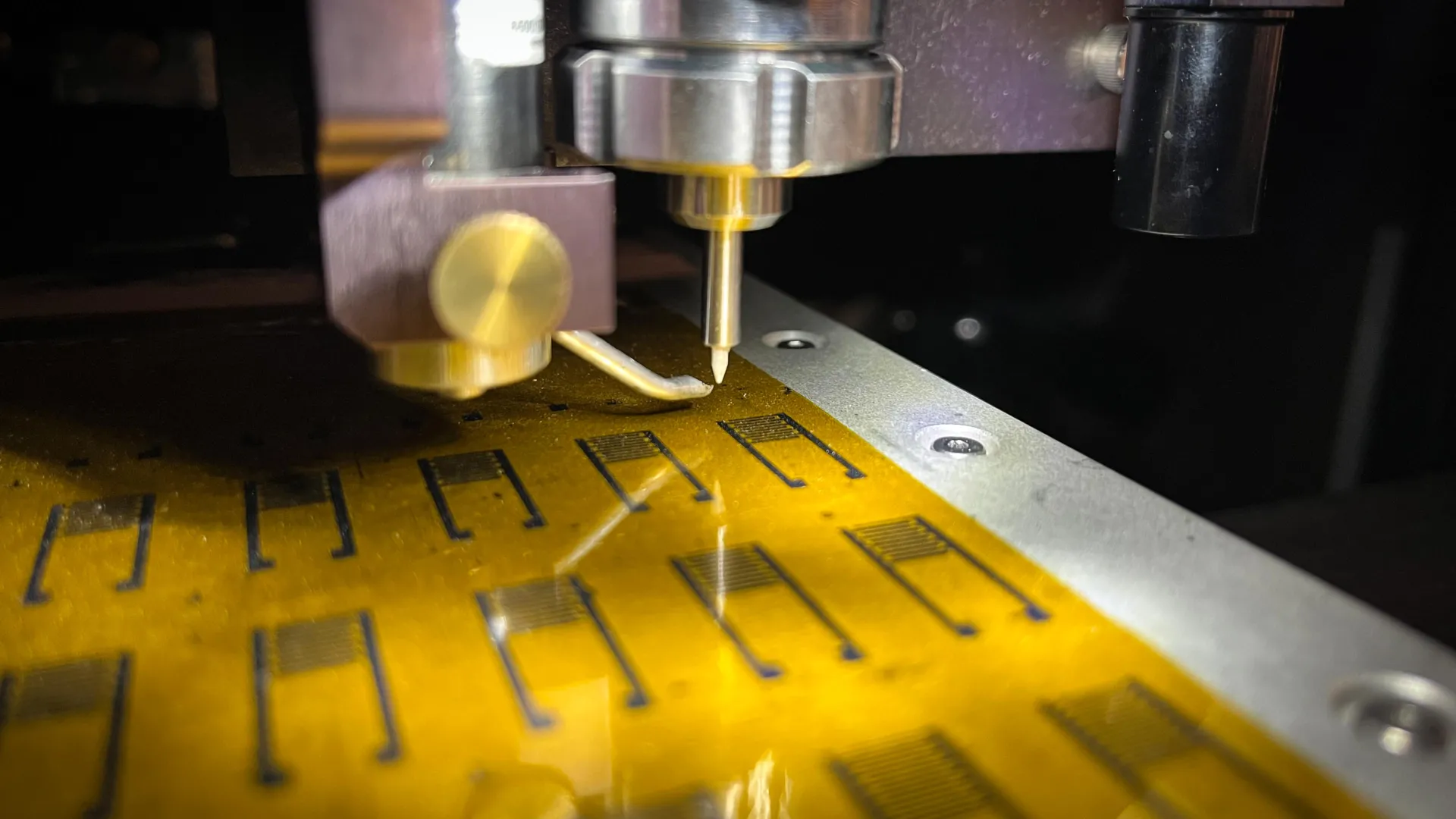
In a breakthrough that could fundamentally alter the trajectory of both artificial intelligence and neuroprosthetics, engineers at Northwestern University have successfully developed printed artificial neurons capable of not only mimicking the behavior of biological brain cells but directly interacting with them. By leveraging advanced nanotechnology and aerosol jet printing, the research team has created flexible, low-cost devices that produce electrical signals virtually indistinguishable from those generated by living neurons.
The findings, scheduled for publication on April 15 in the journal Nature Nanotechnology, represent a departure from traditional rigid, silicon-based computing. By creating a bridge between synthetic electronics and organic biological tissue, this study paves the way for a new era of brain-machine interfaces and energy-efficient hardware that mimics the complex, dynamic architecture of the human brain.
The Core Innovation: Bridging the Biological-Electronic Divide
At the heart of this achievement is a radical rethinking of how artificial neurons are constructed. For decades, the field of neuromorphic computing—which seeks to build hardware that functions like the brain—has struggled to replicate the high-speed, low-energy, and complex signaling patterns of natural neural networks.
Most contemporary artificial neurons rely on rigid, two-dimensional silicon chips. While these chips are marvels of engineering, they suffer from inherent limitations: they are static, energy-intensive, and composed of billions of identical, unyielding transistors. In contrast, the human brain is a heterogeneous, three-dimensional, and constantly evolving network of specialized cells.
To bridge this gap, the Northwestern team, led by Mark C. Hersam, the Walter P. Murphy Professor of Materials Science and Engineering, turned to printable nanomaterials. Using electronic inks composed of molybdenum disulfide (MoS₂) and graphene, the team used aerosol jet printing to create artificial neurons on flexible polymer surfaces.
The key to their success lies in a process the researchers previously viewed as a liability. By partially decomposing the polymer used in the printing process, the team was able to form a conductive filament. When current flows through this device, it is constricted into a narrow, spatially inhomogeneous region. This phenomenon allows the device to generate complex electrical responses—including single spikes, continuous firing, and bursting patterns—that closely replicate the firing habits of biological neurons.
A Chronology of Discovery
The development of these artificial neurons did not happen in a vacuum. It was the result of a multi-disciplinary effort that spanned years of research into materials science, neurobiology, and electrical engineering.
- Early Conceptualization: The Northwestern team began by identifying the limitations of current artificial neurons. Previous attempts using organic materials were often too slow to interface with biological systems, while those using metal oxides were typically too fast.
- The Breakthrough in Printing: The team pivoted toward aerosol jet printing of MoS₂ and graphene. By mastering the decomposition of the polymer binder, they were able to induce "multi-order complexity" in the electrical spikes, allowing a single artificial neuron to do the work that previously required entire circuits.
- Biological Validation: To prove the technology worked, the team collaborated with Indira M. Raman, the Bill and Gayle Cook Professor of Neurobiology. In experiments using slices of mouse cerebellum, the artificial neurons were tasked with stimulating real brain cells.
- Verification: The researchers observed that the artificial signals matched the biological properties of living neurons—specifically regarding timing and duration—successfully triggering neural responses in the brain slices.
Supporting Data: Why the Brain Outperforms Silicon
The urgency of this research is rooted in the unsustainable energy trajectory of modern artificial intelligence. As AI models scale, their appetite for electricity has grown exponentially, leading to massive power consumption and extreme heat generation.
The Energy Efficiency Gap
The human brain is, by several orders of magnitude, the most energy-efficient computing system in existence. A digital supercomputer capable of performing equivalent tasks to the human brain would require a dedicated nuclear power plant and billions of gallons of water for cooling.
"The way you make AI smarter is by training it on more and more data," Hersam explained. "This data-intensive training leads to a massive power-consumption problem. Because the brain is five orders of magnitude more energy efficient than a digital computer, it makes sense to look to the brain for inspiration."
Temporal Precision
One of the most significant metrics in the study was the temporal accuracy of the artificial neurons. For an artificial device to communicate with a biological one, it must speak the same "language." This means the electrical spikes must occur at the right timescale and with the right shape. Hersam’s team achieved a level of temporal precision that had never been demonstrated before, ensuring that the artificial device could effectively "talk" to the living tissue without being ignored or misinterpreted by the biological neural circuit.
Official Responses and Expert Perspective
Mark C. Hersam, who co-led the study with research associate professor Vinod K. Sangwan, holds a unique vantage point as a professor across the McCormick School of Engineering, the Feinberg School of Medicine, and the Weinberg College of Arts and Sciences. His interdisciplinary approach was critical to the project’s success.
"Everything in traditional silicon computing is the same, rigid, and fixed once it’s fabricated," Hersam noted. "The brain is the opposite. It’s heterogeneous, dynamic, and three-dimensional. To move in that direction, we need new materials and new ways to build electronics."
The collaborative nature of the study was emphasized by the involvement of Indira M. Raman. Her expertise in neurobiology allowed the team to validate their findings in a real-world biological environment, moving the project from a theoretical materials science experiment to a functional biomedical breakthrough.
Implications: A Future of Integrated Intelligence
The successful interaction between printed artificial neurons and living brain tissue opens several transformative possibilities for the near future.
1. Neuroprosthetics and Brain-Machine Interfaces
The most immediate clinical application is the development of advanced neuroprosthetics. Current implants, such as those used for cochlear hearing devices or deep-brain stimulation for Parkinson’s disease, are often rigid and can cause tissue irritation. The flexible, printed nature of these new devices suggests they could be integrated more seamlessly into the nervous system. These implants could eventually help restore lost sensory input—such as vision or hearing—or restore motor function to paralyzed limbs by bridging damaged neural pathways.
2. Neuromorphic Computing
On the hardware front, these artificial neurons represent a path toward truly brain-inspired computing. Because these devices are capable of complex signaling on their own, far fewer components are required to execute complex tasks. This could lead to a generation of "neuromorphic" processors that perform computation locally, at the site of the sensor, with a fraction of the power currently demanded by GPU-heavy data centers.
3. Sustainability and Manufacturing
The use of aerosol jet printing is not only cost-effective but also environmentally sustainable. Unlike the subtractive manufacturing processes used in the semiconductor industry—which involve etching away vast amounts of material—additive printing deposits material only where it is needed. This reduces waste and allows for the production of sophisticated electronics on low-cost, flexible substrates, potentially democratizing access to high-performance computing hardware.
4. Solving the AI Energy Crisis
As Hersam warns, we are approaching a physical limit for scaling traditional computing. With AI data centers already stressing local water supplies and demanding gigawatts of power, the industry is hitting a "scaling wall." The transition to brain-inspired, energy-efficient hardware is no longer just an academic curiosity; it is a structural necessity for the continued advancement of artificial intelligence.
Conclusion
The work published in Nature Nanotechnology serves as a critical milestone. By demonstrating that we can print devices that are biologically compatible and computationally complex, the Northwestern team has moved beyond the imitation of the brain toward a true, functional integration with it. As the gap between silicon and biology continues to close, the prospect of computing systems that think, learn, and consume energy like the human brain moves from the realm of science fiction into the laboratory, and eventually, into the clinic and the server rack.
Supported by the National Science Foundation, this research stands as a testament to the power of interdisciplinary collaboration in solving the most pressing technological challenges of the 21st century.
 Sagoh
Sagoh  Asro
Asro  Siti Muinah