
 By Jia Lissa
The vision is as grand as it is audacious: a future where the backbone of the global digital economy is no longer tethered to the Earth’s crust, but instead orbits silently thousands of miles above our heads. As the space economy matures, major industry players—led by the likes of SpaceX—are pivoting away from the singular goal of rocket launches. Instead, they are positioning themselves as the architects of a comprehensive orbital ecosystem, aiming to become the railroad, the power utility, and the primary cloud-computing provider for the next century of human activity.
Investors are increasingly viewing this transition not as a speculative gamble on aerospace, but as a strategic hedge against the growing limitations of Earth-bound infrastructure. By moving massive computing loads into space, these companies believe they can transcend the physical, political, and environmental bottlenecks that currently stifle the growth of artificial intelligence and high-performance computing.
The Genesis of Space-Based Computing
The concept of the "orbital data center" has shifted from the realm of science fiction to the drawing boards of aerospace giants and venture-backed startups. The primary catalyst is the insatiable demand for AI-driven compute power, which is currently hitting a wall of environmental and social opposition.
On Earth, data centers are becoming pariahs in their own neighborhoods. From the massive cooling requirements that drain local aquifers to the immense power loads that threaten the stability of local electrical grids, the friction between communities and tech giants is palpable. In states like Virginia and across parts of Europe, residents are increasingly protesting the construction of massive server farms, citing noise pollution, land-use concerns, and the displacement of local resources.
The "orbital solution" provides a clean slate. In the vacuum of space, land is essentially infinite, and the "Not In My Backyard" (NIMBY) movement is rendered moot. Furthermore, the abundance of solar energy—unfiltered by atmosphere or weather—offers a near-limitless power supply, at least in theory.
Chronology of an Emerging Sector
- 2020–2023: The Satellite Connectivity Boom. The mass deployment of Low Earth Orbit (LEO) constellations, most notably SpaceX’s Starlink, proved that high-speed data transmission between space and Earth was commercially viable.
- 2024: The AI Inflection Point. As AI demand surged, the industry began to realize that transmitting massive datasets to Earth for processing was inefficient. The concept of "edge computing in orbit" began to gain traction.
- 2025: Regulatory and Environmental Friction. Significant backlash against Earth-based data centers intensified globally, leading to the first major investor interest in "off-world" computing as a viable alternative to terrestrial expansion.
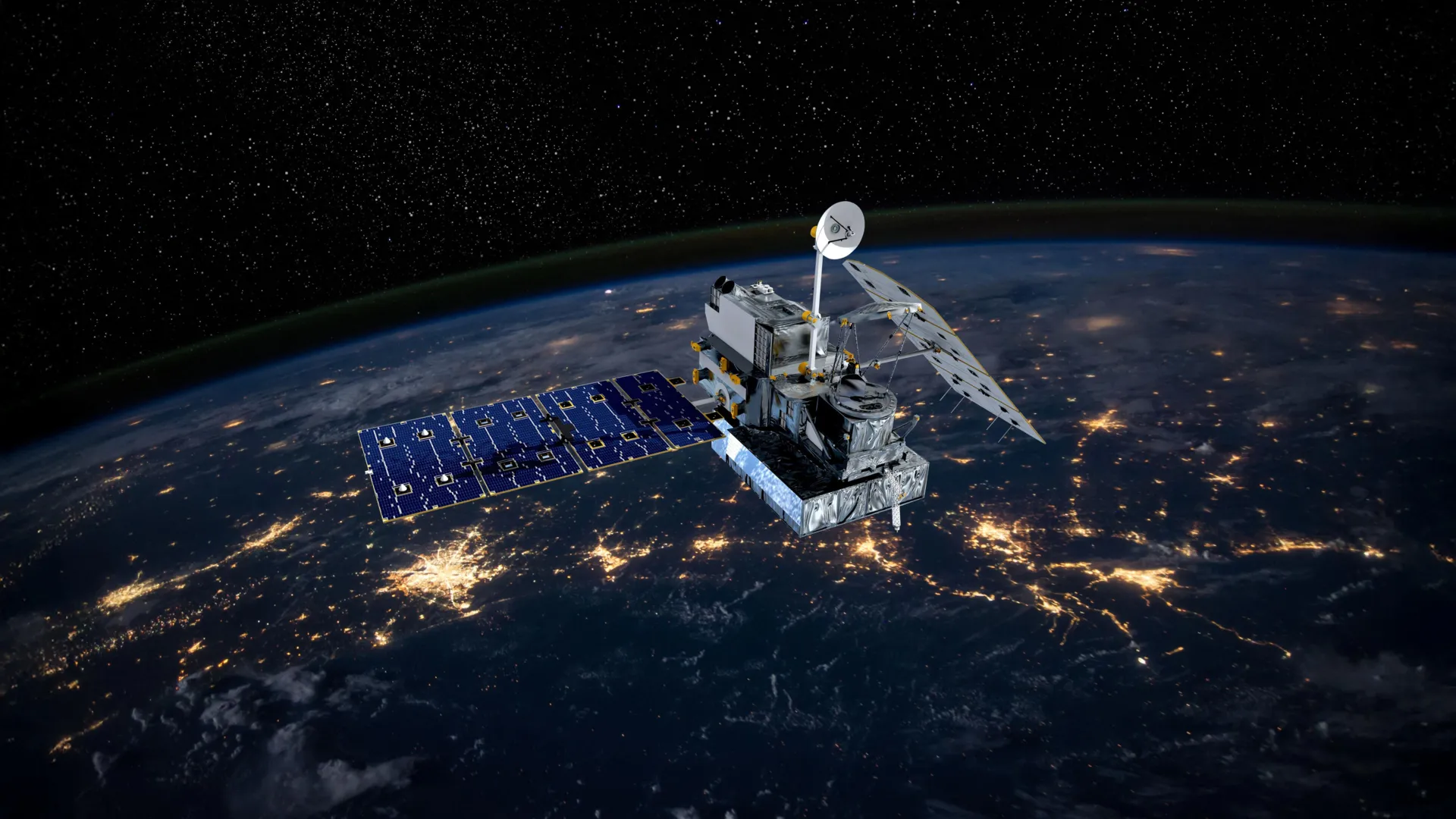
- 2026: The AI1 Announcement. SpaceX officially unveiled design specs for its "AI1 Compute Satellite," signaling the transition from conceptual research to hardware development. While capacity remains limited, it marks the first tangible step toward an orbital server architecture.
The Physics of Orbital Infrastructure
While the logic for orbital data centers is seductive, the engineering reality is unforgiving. Transitioning from the stable environment of a terrestrial data center to the harsh vacuum of space requires overcoming three fundamental physical hurdles: power, thermal management, and hardware durability.
Power Acquisition and Efficiency
A data center is an electrical beast. On Earth, power is pulled from a grid. In space, it must be harvested. While solar panels provide constant energy—uninterrupted by the day-night cycle—the efficiency of current photovoltaic cells remains a challenge. Most solar technology today captures only about 50% of the energy hitting the surface. Moreover, orbiters must deal with "eclipse periods," where the Earth blocks the sun, necessitating complex battery storage or nuclear thermal solutions that add significant weight and cost.
The Thermal Conundrum
Perhaps the greatest challenge is heat. On Earth, data centers rely on massive cooling towers, chillers, and liquid-cooling loops to dissipate the heat generated by thousands of high-performance GPUs. In space, convection—the process of using air to move heat—is impossible. Heat can only be rejected through infrared radiation.
To shed the 10 megawatts of waste heat generated by a modern data center, an orbital facility would require radiator arrays spanning the size of multiple football fields. Designing these structures to be lightweight, deployable, and resistant to micrometeoroid impact is a massive engineering undertaking that is currently in its infancy.
The Durability Gap: Radiation and Vacuum
Space is a hostile environment. High-energy cosmic rays and solar radiation can cause "bit flips" and permanent damage to silicon-based processors. Furthermore, the thermal cycling—moving from the searing heat of direct sunlight to the freezing cold of the Earth’s shadow—puts extreme mechanical stress on hardware. Current data center hardware is designed to operate in climate-controlled rooms, not under the duress of deep space conditions.
Supporting Data: A Comparison of Capacities
Current projections suggest that the first generation of orbital data centers will be far from replacements for terrestrial facilities.
| Metric | Earth-Based Data Center | Early Orbital Data Center (e.g., AI1) |
|---|---|---|
| Cooling Method | Forced air/Liquid cooling | Radiative cooling (infrared) |
| Hardware Refresh | 3–5 years | 5–10 years (or permanent) |
| Latency | Low (milliseconds) | High (dependent on light-speed travel) |
| Compute Density | High | Low (limited by power/weight) |
| Scalability | Extremely high | Limited by launch mass |
The Human Element and Public Response
The industry faces a significant hurdle in the form of public perception. While proponents argue that space data centers save Earth’s resources, opponents point to the environmental impact of the launch vehicles themselves.
The surge in rocket launches required to maintain a constellation of orbital data centers has sparked protests, particularly near facilities like SpaceX’s Starbase in Boca Chica, Texas. Critics argue that the damage to local ecosystems from frequent launches—including noise, chemical exhaust, and land-use changes—is simply exporting the environmental burden of data centers from the neighborhood to the launchpad.
Furthermore, the issue of "space junk" looms large. If a collision were to occur in an orbital data center cluster, the resulting debris could trigger a Kessler Syndrome event, rendering critical orbits unusable for decades.
Implications for the Future of Cloud Computing
Despite the staggering technical and economic hurdles, the momentum behind orbital data centers is not merely hype; it is a calculated bet on a space-centric future.
Initial Use Cases: The "Space-First" Economy
It is highly unlikely that your Netflix streaming or your bank’s backend will be hosted in space in the next decade. The speed-of-light delay (latency) remains a fundamental physical constraint. Instead, the first viable orbital data centers will likely focus on "space-local" applications:
- Earth Observation: Real-time processing of high-resolution satellite imagery before it ever hits the ground.
- Military/Intelligence: Secure, low-latency processing for orbital defense systems and secure communications.
- Space Mission Support: Providing AI-driven navigation and autonomous decision-making for long-duration deep-space missions.
The Hardware Lifecycle Crisis
Perhaps the most significant economic challenge is the "refresh cycle." Terrestrial data centers evolve every three years as chips become faster and more efficient. Sending hardware to orbit is a multi-year, multi-million dollar investment. If the technology becomes obsolete while it is still in orbit, operators face a "dead weight" scenario where the cost of replacement far outweighs the utility of the hardware. This will necessitate a shift toward modular, in-space serviceable designs where robots, rather than humans, perform the upgrades—a technology that is currently still in the experimental phase.
Final Analysis
The dream of an orbital data center is a testament to human ingenuity, but it is also a cautionary tale about the scale of our digital appetite. While moving compute to space solves the "Earthly" problem of land and water use, it replaces those issues with a set of engineering challenges that defy current physics and economic models.
For now, the space-based data center will remain a specialized tool for the space economy. It will not be the "railroad" of the future just yet; it will be the specialized laboratory. As companies continue to iterate, the ultimate success of this endeavor will depend on whether they can prove that the cost of launching and maintaining these systems is worth the immense energy required to escape the gravity well—or if, ultimately, the most efficient place for our data remains, for the foreseeable future, right here on Earth.
 Sagoh
Sagoh  Asro
Asro  Siti Muinah