
 By Raul Delapena Setiawan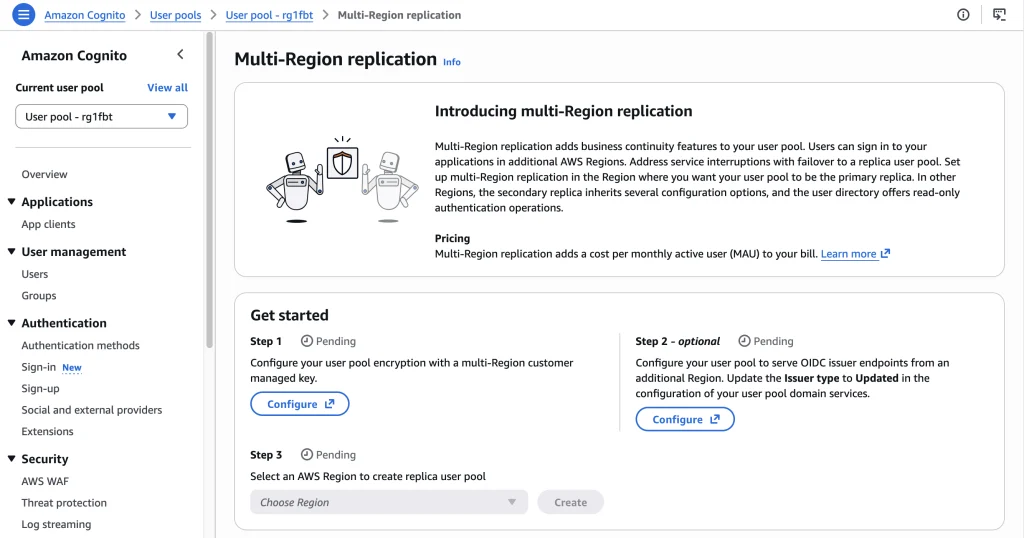
In an era where digital resilience is no longer a luxury but a fundamental requirement for business continuity, AWS has announced a significant evolution in its identity and access management suite. Amazon Cognito, the backbone of authentication for countless web and mobile applications, has introduced two pivotal capabilities: native multi-Region replication and enhanced support for customer-managed encryption keys.
These updates represent a strategic response to the growing complexities of modern application architectures, which now routinely involve microservices, agentic AI, and distributed service accounts. By simplifying the path to high availability, AWS is enabling developers to mitigate the risks of regional outages without the heavy operational burden of building custom synchronization logic.
The Core Transformation: Resilience at Scale
For years, developers have faced a difficult trade-off: either accept the risks of a single-Region deployment or invest significant engineering cycles into building complex, bespoke replication engines. The manual export and import of user data across Regions not only introduced latency and security vulnerabilities but often resulted in data fragmentation.
During regional transitions, end users frequently suffered from disjointed experiences—forced password resets, re-authentication hurdles, and the loss of session continuity. Furthermore, machine-to-machine (M2M) communications faced similar fragility, often requiring teams to reconfigure OAuth-protected resources to recognize tokens issued by new, secondary-region endpoints.

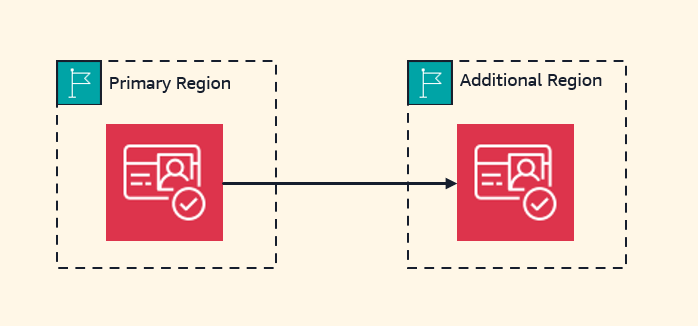
With the launch of multi-Region replication, Amazon Cognito moves this heavy lifting into the managed service layer. The feature allows Cognito to automatically maintain a synchronized, read-only copy of user profiles, credentials, and pool configurations in a secondary AWS Region. Crucially, this transition is seamless for the end user; existing sessions remain valid, and tokens issued in the primary region are recognized by the secondary, ensuring that the transition to a disaster recovery site is virtually imperceptible to the user.
Chronology of the Implementation Process
Achieving a robust multi-Region posture is now a structured, three-phase process accessible via the AWS Management Console. The workflow is designed to ensure that security and data integrity are prioritized at every step.

Phase 1: Establishing the Security Foundation
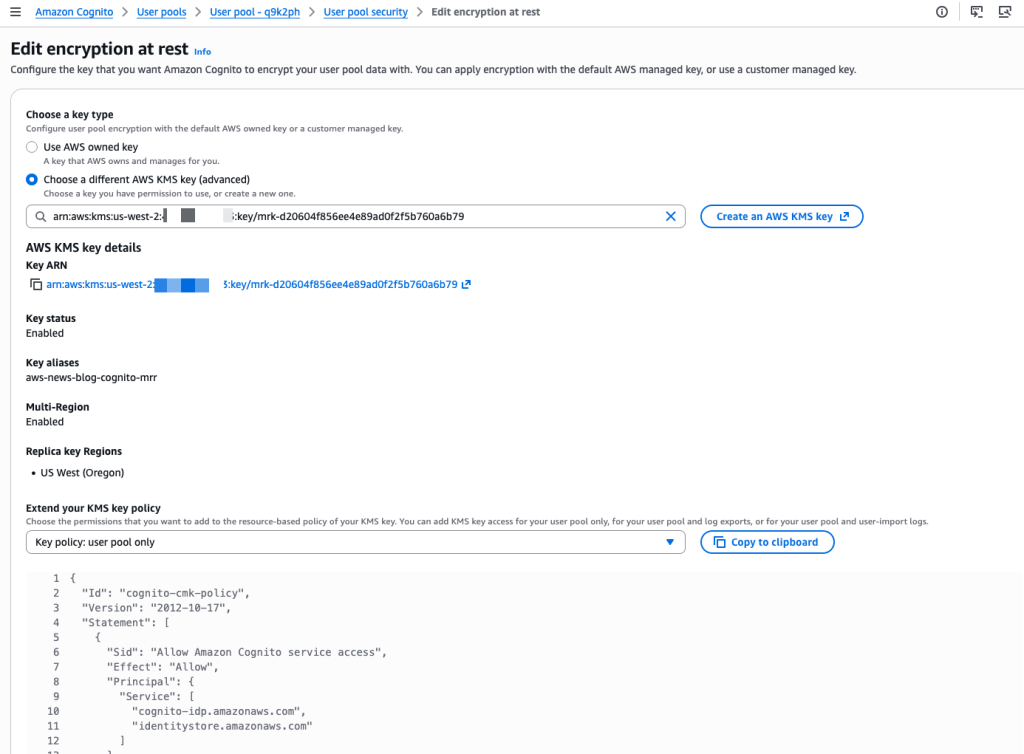
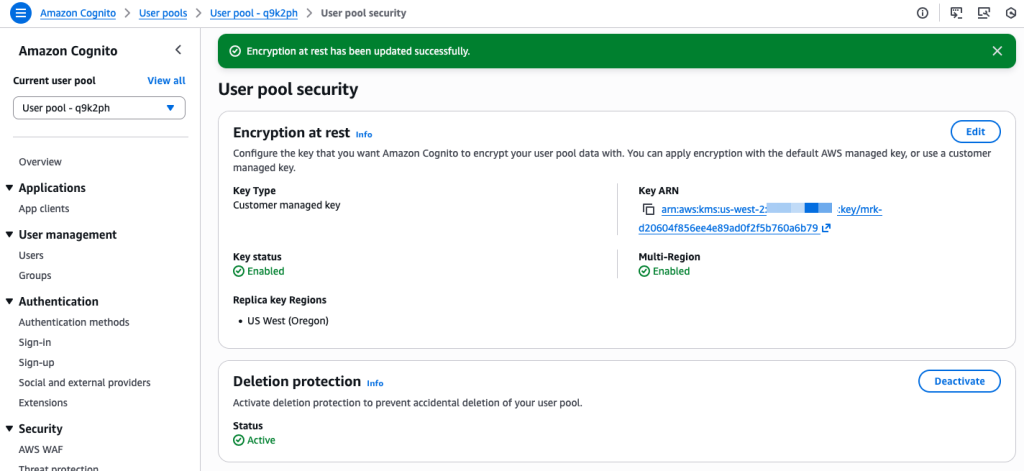
Before data can flow between regions, developers must establish a cryptographically secure environment. This begins with configuring a customer-managed key (CMK) via AWS Key Management Service (AWS KMS). This key acts as the master lock for user data at rest. By replicating this CMK across both the primary and secondary Regions, developers ensure consistent encryption standards while maintaining full control over their cryptographic strategy—a vital requirement for organizations in highly regulated sectors like banking and healthcare.
Phase 2: Updating the Identity Architecture
Once the keys are in place, the developer must configure the OpenID Connect (OIDC) issuer types. This is a mandatory step that involves updating client applications to recognize the new, multi-Region-aware endpoints. This phase is critical: failure to update the endpoints within the application code or the mobile app binaries distributed through the App Store and Google Play will result in service disruption during a failover.
Phase 3: Activation and Sync
With the infrastructure prepared, the replication process is initiated. The time required for the initial synchronization is variable, depending on the volume of data within the user pool. Once the data is synchronized, the secondary Region remains in a standby, read-only state. When the administrator determines that a failover is necessary, they can manually activate the secondary Region, allowing it to begin serving traffic immediately.
Supporting Data: Infrastructure and Regulatory Compliance
The technical implications of these updates are profound, particularly for enterprises managing massive user bases.
Encryption and Compliance
The expansion of customer-managed key support spans a vast array of global regions, including Africa, Asia Pacific, Europe, and the Middle East. For industries governed by strict compliance frameworks—such as HIPAA in the US or GDPR in the EU—the ability to utilize custom encryption keys provides an additional layer of sovereignty. It ensures that even in a managed cloud environment, the keys remain under the firm’s governance.
Operational Guardrails
AWS has been transparent about the limitations of the current implementation. While the replication handles user identity and authentication data, it does not automatically migrate secondary resources. Developers must manually ensure that:

- Lambda Triggers: Custom authentication flows or post-authentication logic must be deployed to the secondary region.
- Notifications: SMS and email service configurations must be mirrored.
- Security Posture: AWS WAF rules and logging streams (such as CloudWatch or S3 buckets for logs) must be configured in the target region to maintain parity with the primary site.
Official Perspective and Strategic Implications
Industry analysts and AWS developer advocates emphasize that this release is not merely a feature addition, but a shift toward "architecting for failure."
"From my conversations with customers," notes Sébastien Stormacq, a Principal Developer Advocate at AWS, "maintaining business continuity during regional incidents while meeting security requirements is a high priority." The sentiment within the AWS community is that the burden of high availability has long acted as a barrier to entry for smaller, agile teams. By automating the "plumbing" of replication, AWS is effectively democratizing enterprise-grade reliability.

The implications for M2M communication are particularly noteworthy. As agentic AI and automated microservices become the norm, these systems cannot afford to wait for human intervention during an outage. The ability for secondary regions to immediately accept existing M2M access tokens ensures that backend systems remain operational, preventing a cascade of failures that could paralyze a business.
Pricing Models and Regional Availability
To support a wide range of use cases, AWS has introduced a transparent, tiered pricing structure:

- Essentials and Plus Tiers: The multi-Region replication feature is an add-on.
- User Authentication: Pricing is based on Monthly Active Users (MAU). For Essentials, the cost is $0.0045 per MAU per replica region; for Plus, it is $0.006.
- M2M Authentication: A 30% surcharge is applied to the standard volume-based pricing for successful tokens issued in the secondary region.
The feature is currently available in most major AWS Regions, covering the Americas, Europe, and the Asia Pacific. This global footprint ensures that companies with a multinational presence can meet latency and data residency requirements by choosing the optimal secondary region for their replication strategy.
Conclusion: The Path Forward
The introduction of multi-Region replication and customer-managed keys for Amazon Cognito marks a maturing of the identity management ecosystem. By abstracting the complexity of data synchronization, AWS is allowing developers to refocus their energy on building features rather than infrastructure.

However, the responsibility for a successful failover remains with the developer. Designing a robust health-check strategy—using tools like Route 53 to monitor latency and error rates—is essential. By implementing a proactive monitoring and failover plan, organizations can now achieve a level of resilience that was previously reserved for the largest, most well-resourced technology companies. As we look toward an increasingly distributed future, these tools will undoubtedly become the standard for any application where uptime is non-negotiable.
 Neng Nana
  Suro Senen
  Lina Hope