
 By Dwi Wanna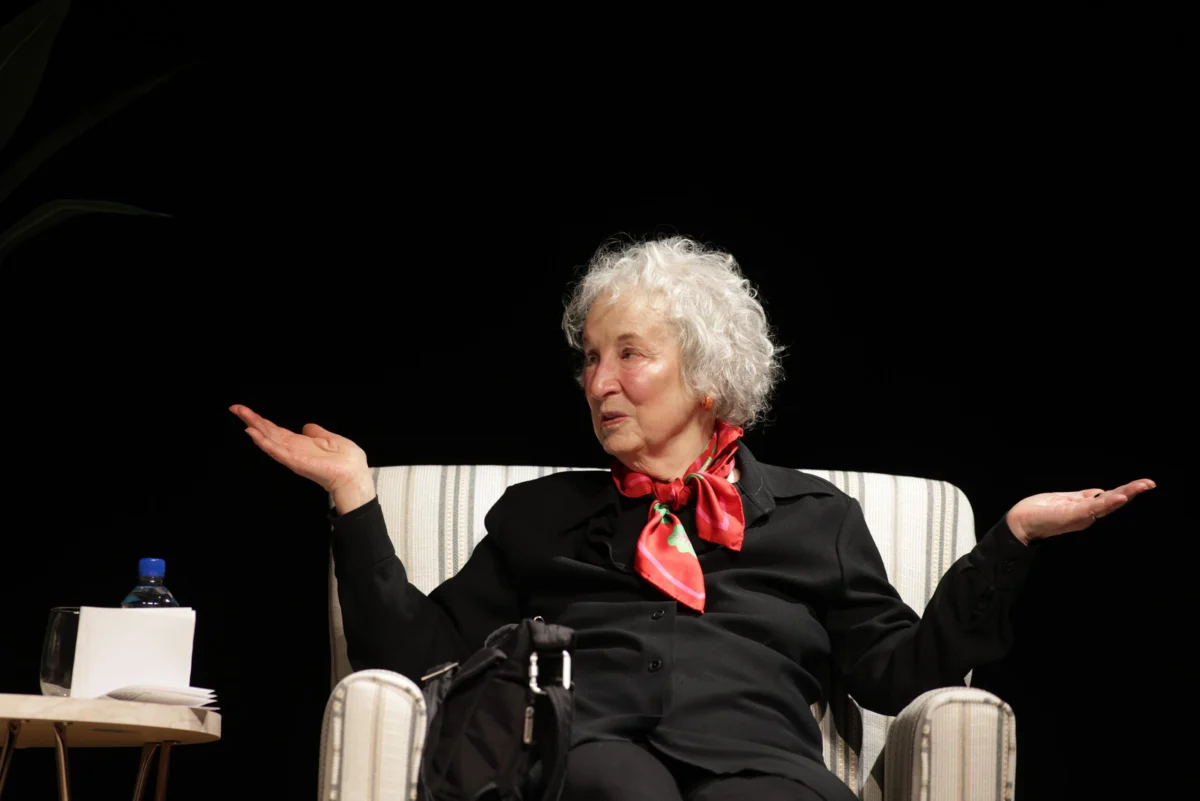
By Terrence O’Brien
Weekend Editor, The Verge
Margaret Atwood, the visionary author behind seminal works like The Handmaid’s Tale and The Blind Assassin, has long been regarded as a literary clairvoyant. Her ability to weave intricate, often chilling, sociological frameworks into compelling narratives has made her a sharp observer of humanity’s relationship with technology. However, when it comes to the current explosion of generative AI, Atwood is far from impressed.
Speaking at the Babell Literary and Cultural Festival in Porto, Portugal, on June 27, 2026, the acclaimed writer offered a blunt assessment of modern large language models (LLMs). Her critique was not merely a philosophical objection to the rise of synthetic intelligence; it was rooted in a practical, failed experiment that highlighted the fundamental limitations of the current technology.
The Core Conflict: A Case of Literary Misunderstanding
The incident, which Atwood recounted to a rapt audience in Porto, centered on her singular attempt to utilize Anthropic’s Claude—one of the industry’s leading AI models—for a mundane task. Seeking information about the classic British detective series Father Brown, Atwood found that the machine’s output was not only factually incorrect but fundamentally flawed in its logic.
"Claude gave me the wrong answer, or it lied," Atwood noted during her talk. "Of course, it didn’t know it was lying because it’s not a human being; it’s a large language model."
The failure, according to Atwood, was a byproduct of the AI’s training methodology. Because the model had "skimmed and sampled" a massive volume of television reviews—content that intentionally avoids spoilers—it lacked the nuanced understanding of the show’s narrative trajectory. Consequently, the model extrapolated false information, misled by the very nature of the critical discourse it had ingested.
This encounter serves as a microcosmic view of the broader debate surrounding generative AI: the tension between the sheer volume of data ingestion and the lack of genuine comprehension or contextual grounding.
Chronology: The Evolution of AI Skepticism
To understand why Atwood’s dismissal carries such weight, one must look at the timeline of the "AI Revolution" and the shifting discourse within the literary and creative communities.
- 2022–2023 (The Hype Phase): The public release of ChatGPT and its competitors triggered a gold rush. Silicon Valley framed these tools as productivity multipliers, capable of everything from drafting emails to writing scripts.
- 2024 (The Legal and Ethical Reckoning): As the dust settled, authors and artists began filing high-profile lawsuits against AI developers, alleging the unauthorized use of copyrighted works to train models. Atwood, among others, became a vocal proponent of protecting intellectual property.
- 2025 (The Integration Era): AI tools became embedded in enterprise software and creative suites. The narrative shifted from "Will AI replace us?" to "How do we work with it?"
- 2026 (The Reality Check): The current landscape, as highlighted by Atwood’s remarks in Porto, is one of growing disillusionment. As models become more pervasive, users are increasingly encountering the limitations that Atwood described: hallucinations, logical fallacies, and a lack of authentic creative intent.
Atwood’s recent experience at the Babell Festival reflects a growing segment of the intellectual community that has moved past the initial awe of AI capabilities and into a phase of critical, sometimes weary, assessment.
Supporting Data: The "Garbage In, Garbage Out" Problem
Atwood’s critique—"garbage in, garbage out"—is a mantra well-understood by data scientists but frequently glossed over by the tech industry’s marketing departments. The assertion is that an LLM is only as reliable as the corpus of data upon which it is trained.
Current models function by predicting the next token in a sequence based on probability, not by accessing an objective "truth" or "understanding." When a model is fed a diet of online reviews, blog posts, and forum discussions, it inherits the biases, factual errors, and narrative gaps present in those sources.

Key Technical Challenges Facing LLMs:
- Hallucination Rates: Despite improvements, top-tier models still exhibit significant hallucination rates when dealing with niche or specific factual queries.
- Contextual Blindness: As seen in the Father Brown example, AI often fails to understand the intent behind a text (e.g., the intentional omission of spoilers in reviews).
- Data Decay: As the internet becomes increasingly saturated with AI-generated content, there is a risk of "model collapse"—a phenomenon where future AI models are trained on the synthetic, error-prone output of previous models, leading to a degradation in quality.
The Human Element: Opportunism vs. Craft
Perhaps the most biting aspect of Atwood’s commentary was her assessment of those who rely on AI. She characterized many of the tool’s proponents as "opportunists" seeking an "easy way out."
"Human beings are not robots, but they are opportunists, so if there’s an easy way to cheat and it’s hard to detect, people will do it," Atwood remarked.
This touches upon a deep-seated fear among professional writers and academics: that the widespread adoption of AI will devalue the labor of creative and critical thinking. If an AI can generate a summary or a draft that is "good enough" for a business context, there is a distinct risk that the standard for quality will decline, favoring efficiency over depth.
Atwood’s argument is that even in business—where efficiency is often prioritized—the reliance on AI is a liability. "Even people who use it for business reasons have to check it because it makes mistakes," she warned. This echoes the sentiment of many industry analysts who argue that the "human-in-the-loop" model is not just a safety precaution, but a mandatory requirement for any credible output.
Implications: The Future of Authorship and AI
The implications of Atwood’s stance are far-reaching. As one of the most respected voices in literature, her skepticism provides a counter-narrative to the prevailing optimism of the tech industry.
1. The Legal and Regulatory Front
Atwood’s comments reinforce the growing demand for transparency in how AI models are trained. If models are, as she suggests, "skimmed and sampled" from existing human work, the question of compensation and attribution remains a critical legal battleground.
2. The Educational Landscape
Her critique serves as a warning for educational institutions. As students increasingly turn to AI for assistance, the risk is that they are not learning to critically evaluate the information provided by these systems. If an author of Atwood’s caliber can be misled by an AI, what hope does a student have of discerning the truth?
3. The Revaluation of "Human-Made"
We may be entering a cycle where "human-made" becomes a premium label. Just as the artisanal movement arose in response to mass industrialization, there is potential for a renewed appreciation for works that are demonstrably and intentionally created by human minds, flaws and all.
Conclusion: A Call for Critical Engagement
Margaret Atwood is not calling for the destruction of technology; she is calling for a more rigorous, skeptical engagement with it. Her experience with Claude is a reminder that we are currently in the "wild west" of artificial intelligence. These tools are powerful, certainly, but they are also fundamentally disconnected from the human experience of meaning-making.
For those who rely on AI for creative or analytical work, Atwood’s advice is clear: do not trust the machine blindly. The "easy way out" is often a path to mediocrity or, worse, to the dissemination of misinformation. As the digital landscape continues to be populated by AI-generated noise, the ability to discern, verify, and think critically remains the most valuable human asset of all.
As for the Father Brown mystery? It seems Atwood will have to rely on her own wit, or perhaps a reliable human critic, to uncover the ending. In a world of synthetic shortcuts, the old-fashioned way of doing things—reading, watching, and thinking for oneself—remains, in her view, the only way to arrive at the truth.
 Raul Delapena Setiawan
  Siti Muinah
  Asro
Asro 