
 By Nana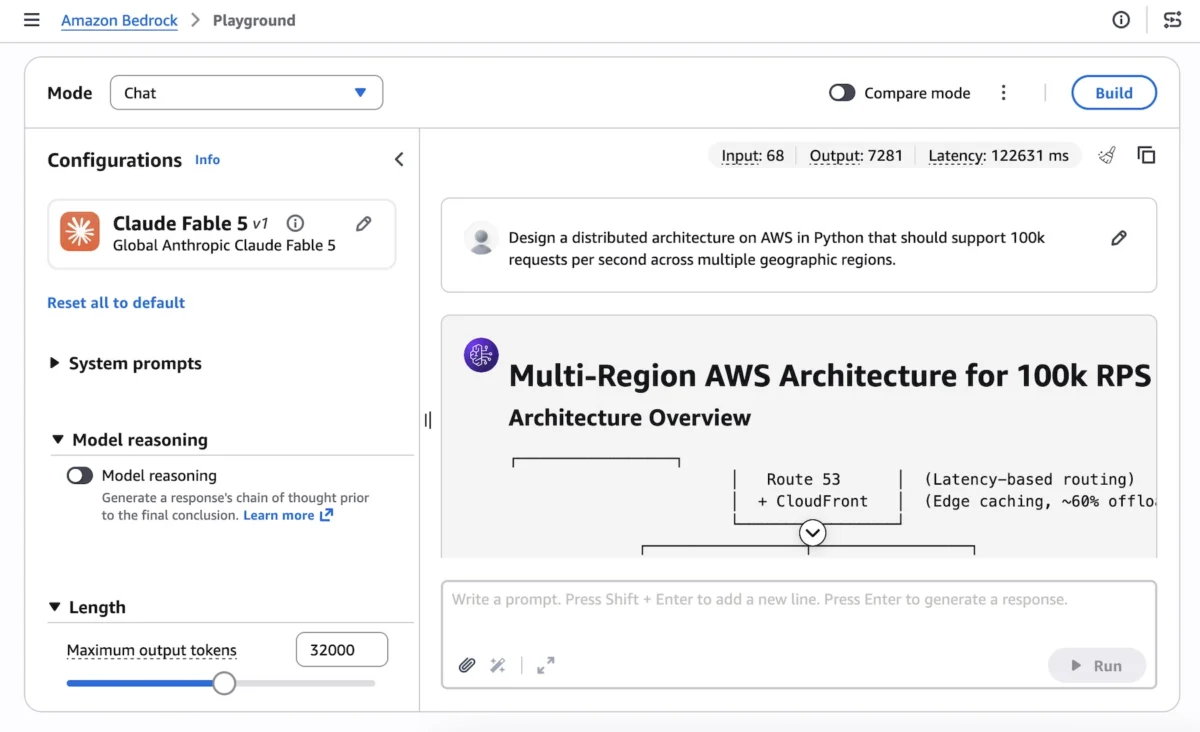
Executive Summary: A Sudden Change in AI Access
On June 12, 2026, the artificial intelligence landscape faced a significant, if abrupt, realignment. Following a new directive from the United States government concerning export controls, Anthropic—in coordination with Amazon Web Services (AWS)—announced the immediate suspension of access to its most advanced AI models, "Claude Fable 5" and "Claude Mythos 5," within the Amazon Bedrock ecosystem.
This move marks a pivotal moment in the intersection of national security and generative AI development. While the suspension is localized to these specific high-capability models, it highlights the increasing scrutiny under which the world’s most powerful Large Language Models (LLMs) are being placed. Despite the disruption, other established models, such as Opus 4.8, remain fully operational and unaffected, providing a measure of continuity for enterprises currently integrated with AWS infrastructure.
Chronology: The Rise and Retraction of Fable 5
The sequence of events leading to the June 12 suspension reflects the high-speed, high-stakes nature of the current AI arms race.
- Initial Launch (Early June 2026): Anthropic unveiled Claude Fable 5 as a state-of-the-art advancement, capable of handling complex software engineering, intricate knowledge-based tasks, and sophisticated vision analysis. The model was designed specifically to support ambitious, long-running computational projects.
- The Strategic Rollout: Alongside Fable 5, Anthropic introduced "Claude Mythos 5," an unrestricted iteration of the model reserved exclusively for a select group of vetted, high-security customers.
- The Regulatory Intervention: By mid-June, following new US government guidance on export controls—designed to prevent the proliferation of advanced AI capabilities that could pose risks in sensitive domains like cybersecurity and biological research—Anthropic was required to pivot.
- The June 12 Suspension: Anthropic issued a formal request to AWS to revoke access to both Fable 5 and Mythos 5. The company’s official stance emphasized compliance and the importance of adhering to federal mandates while ensuring the safety of its broader AI ecosystem.
Supporting Data: Understanding the Model Architecture
Before the suspension, Claude Fable 5 was positioned as a "step-change" in AI capability. According to performance benchmarks provided by Anthropic, Fable 5 represented the pinnacle of their current technical stack.
Safeguard Mechanisms
What made Fable 5 unique was its layered approach to safety. Anthropic implemented "fallback" mechanisms: if a user prompt ventured into high-risk territories—specifically cybersecurity, advanced biology, chemistry, or public health—the system would automatically reroute the query to the Opus 4.8 model. This was intended to provide the power of Fable 5 for general tasks while restricting its performance in areas where the potential for misuse was deemed too high.
Data Retention Requirements
The technical barrier to entry for Fable 5 was notably higher than for previous models. Users were required to opt into a "data sharing" mandate. This included:
- Provider Data Sharing: Users had to utilize the Data Retention API to set
provider_data_share. - 30-Day Retention: Anthropic required a 30-day window for input and output retention to facilitate human review and abuse detection.
- Technical Integration: Developers had to interact with specialized endpoints (
bedrock-mantleorbedrock-runtime) to maintain compliance.
Official Responses and Industry Context
Anthropic has been clear in its public statements: the company is committed to working with regulators to ensure that its most powerful models are deployed responsibly. By limiting the availability of "Mythos 5" to vetted partners and implementing robust, albeit now paused, safeguards on "Fable 5," Anthropic was attempting to balance innovation with safety.
From the AWS perspective, the integration of these models into Amazon Bedrock served as a strategic advantage for enterprise clients. By offering these models within the existing AWS framework, Amazon provided a secure, scalable, and compliant environment for developers. The ease of access via the Anthropic Messages API, the Converse API, and the AWS SDK/CLI allowed for rapid prototyping—a capability now temporarily curtailed for the Fable series.
Implications: The Future of Regulated AI
The suspension of Fable 5 and Mythos 5 has far-reaching implications for the industry.
1. The "Compliance-First" Development Model
Developers and enterprises can no longer assume that the most powerful AI models will remain available without interruption. The incident signals that companies must build their AI pipelines with high degrees of "model agility"—the ability to switch between different versions or providers if a primary model is suddenly pulled due to regulatory changes.
2. The Narrowing Window for "Dual-Use" AI
The US government’s concern revolves around "dual-use" capabilities: AI that can be used for benign tasks (like writing code) but also for malicious purposes (like creating malware or synthesizing pathogens). The decision to pull Fable 5 suggests that even with safeguards, the government may view the underlying weights and capabilities of these models as sensitive enough to warrant total restricted access.
3. Impact on Enterprise Roadmaps
Organizations that had already begun integrating Fable 5 into their workflows now face an immediate operational hurdle. While Opus 4.8 serves as a capable alternative, it may lack the specific architectural optimizations that developers had come to rely on for high-velocity software engineering tasks. IT leaders are now forced to re-evaluate their reliance on single-provider ecosystems.

Technical Guidance for Affected Users
For those currently navigating the transition, AWS has provided clear documentation on how to maintain stability.
- API Continuity: Developers should continue utilizing the
bedrock-runtimeandbedrock-mantleendpoints, but ensure they are targeting approved models like Opus 4.8. - Data Retention Settings: While the data retention scripts (using
curlandAWS CLI) were designed for Fable 5, the underlying infrastructure for managing these settings remains vital for all high-compliance AI deployments on AWS. - Support Channels: Users are encouraged to monitor the AWS re:Post for Amazon Bedrock for updates regarding the restoration of services or the release of future, compliant iterations of the Fable series.
Conclusion: Navigating an Uncertain Landscape
The events of June 2026 serve as a stark reminder that the frontier of AI is not just defined by compute and parameter counts, but by the legal and geopolitical boundaries in which these technologies exist.
As we look toward the remainder of the year, the industry will likely see a surge in "sovereign" and "regulated" AI offerings. Companies like Anthropic will need to work even closer with government agencies to prove that their models can be deployed safely without the risk of abrupt shutdowns. For the end-user, the focus must shift from merely chasing the latest model version to building resilient, multi-model architectures that can withstand the inevitable shifts in the regulatory landscape.
While Claude Fable 5 and Mythos 5 are currently offline, the foundational work done by Anthropic and AWS ensures that when these capabilities return, they will likely be accompanied by even more robust, transparent, and compliant safety frameworks. For now, the "wait and see" approach is the standard for the industry, as all eyes turn to Washington and the next potential update in AI governance.
 Neng Nana
  Suro Senen
  Lina Hope