
 By Pevita Pearce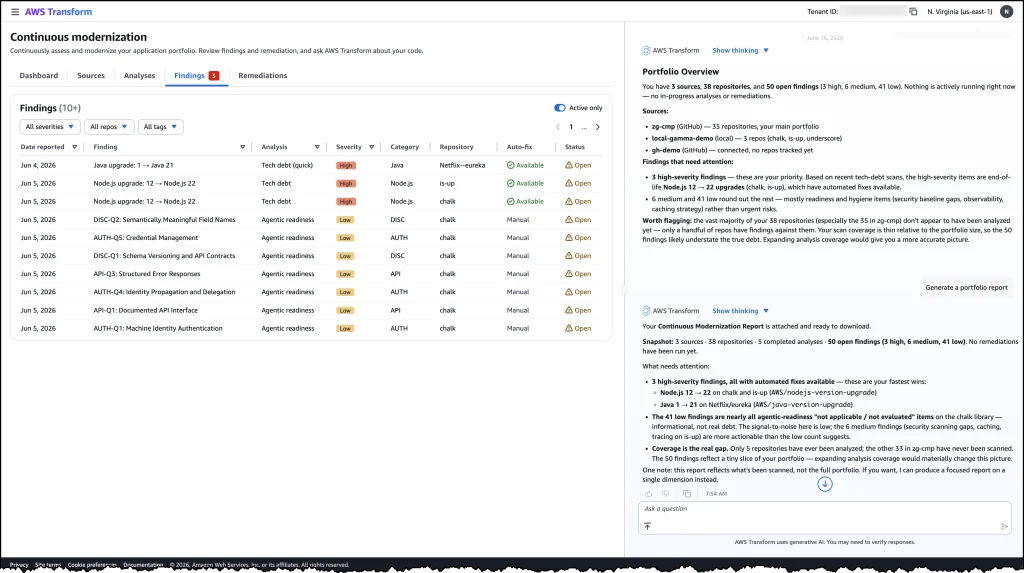
In a move set to redefine how enterprises manage the lifecycle of their software assets, Amazon Web Services (AWS) has announced the preview of AWS Transform – Continuous Modernization. This new capability, integrated into the existing AWS Transform suite, introduces a paradigm shift in how engineering organizations handle "technical debt"—the silent, mounting cost of outdated frameworks, unpatched vulnerabilities, and legacy code that consumes an estimated 30% of global IT budgets.
By leveraging autonomous analysis and automated remediation, AWS aims to move organizations away from manual, piecemeal maintenance cycles toward a state of "continuous compliance" across thousands of repositories.
The Core Challenge: Why Technical Debt Stifles Innovation
Modern engineering organizations are currently trapped in a cycle of fragmentation. To keep codebases functional and secure, teams typically deploy a "stitching" strategy, utilizing a disparate array of point tools. One tool might flag dependency vulnerabilities, another checks code quality, and a third identifies deprecated frameworks.
The result is not efficiency, but a heavy administrative burden. Platform teams are forced into manual, app-by-app remediation cycles that drain precious engineering capacity. Furthermore, as generative AI and automated coding agents accelerate the speed of software development, the accumulation of technical debt has reached a velocity that traditional human-led processes can no longer match.
"Leaders are currently falling back on self-reported team status that lags behind reality and hides regressions," says the AWS engineering team. "As coding agents accelerate the pace of change, tech debt accumulates faster than developers can keep up. Customers need a capability that detects, prioritizes, and remediates tech debt continuously, autonomously, and at scale."
Chronology of Development: From Manual Migration to Autonomous Evolution
AWS Transform has historically functioned as a high-level service helping enterprises migrate out of data centers and modernize monolithic applications. The roadmap to this week’s announcement follows a strategic evolution:
- Phase 1: The Migration Era: Initial AWS Transform capabilities focused on heavy-lifting tasks, such as shifting Windows applications to the cloud and refactoring mainframe architectures.
- Phase 2: Targeted Maintenance: Recognizing that modernization is not a one-time event, AWS introduced features to handle software maintenance, specifically focusing on Java version upgrades and Lambda runtime updates.
- Phase 3: The Autonomous Shift (Current): With the introduction of "Continuous Modernization," AWS has pivoted from reactive support to a proactive, persistent monitoring and remediation model. This preview represents the shift from "tools that help you fix" to "systems that identify and offer the fix."
How It Works: Continuous Analysis and Autonomous Remediation
The architecture of the new AWS Transform capability is built on two primary pillars: Continuous Analysis and Autonomous Remediation.
1. The Continuous Analysis Engine
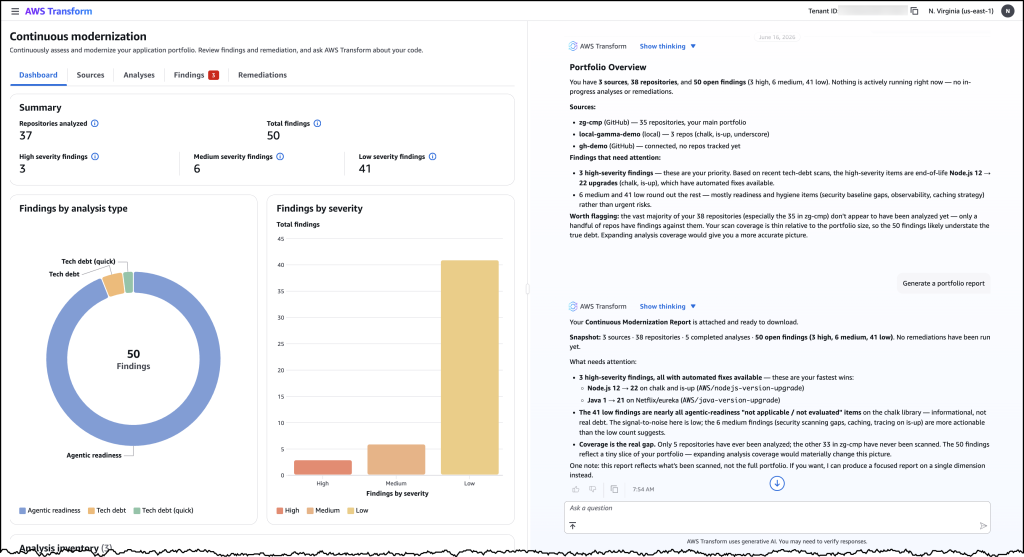
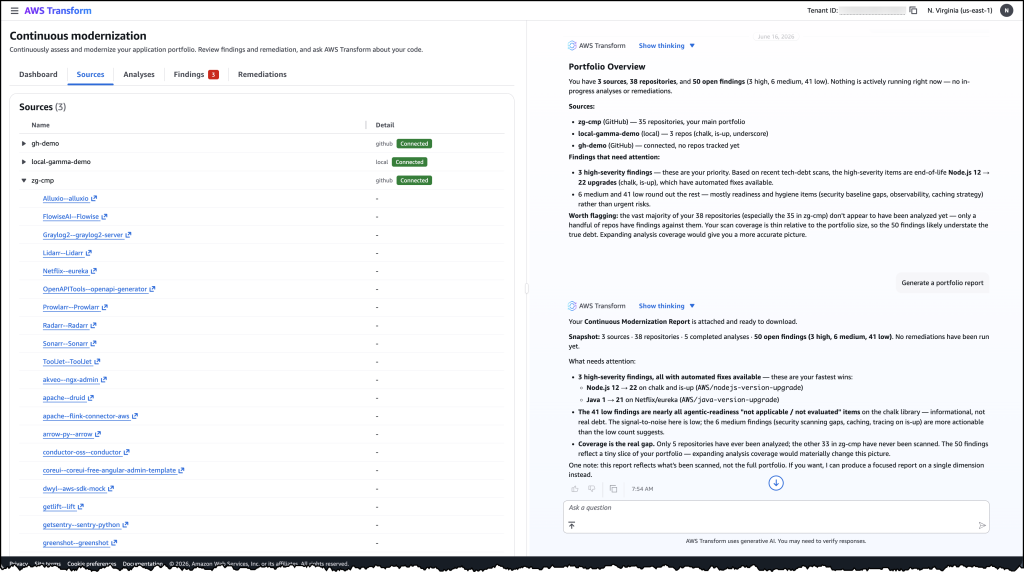
The system functions by scanning source code repositories against configurable baselines. Unlike legacy scanners that require periodic, manual triggering, this engine operates continuously. Within hours of connection, the system provides a comprehensive "ground truth" dashboard that highlights exactly which repositories are behind the baseline, by what margin, and the specific nature of the technical debt.
Crucially, organizations can define their own "policies." If an internal team has a specific preference for logging patterns, security libraries, or architectural standards, these can be codified into the AWS Transform policy engine. This ensures that the platform team’s standards are enforced globally without the need for endless internal audit meetings.
2. Autonomous Remediation at Scale
Identification is only half the battle. Once findings are generated, the system moves to remediation. It does not simply send an email notification; it generates actual Pull Requests (PRs).

When a repository is flagged for an outdated dependency or a deprecated framework, AWS Transform initiates a PR that includes the fix. Developers receive a notification detailing the change, allowing them to review, test, and merge the code. Once the PR is merged, the system automatically marks the item as resolved, updating the organization’s dashboard in real-time.
Supporting Data: The Cost of Inaction
To understand the implications of this launch, one must look at the financial and operational data currently plaguing the enterprise landscape:
- 30% Budget Allocation: Industry analysis consistently suggests that nearly one-third of IT budgets are consumed by the "undifferentiated heavy lifting" of maintenance—upgrading Java versions, swapping libraries, and patching end-of-life runtimes.
- Visibility Gaps: In organizations with hundreds or thousands of repositories, the "mean time to detect" (MTTD) a critical tech debt issue can stretch into weeks. AWS claims its new system reduces this visibility window to hours.
- The AI Acceleration Factor: With the rapid adoption of AI-assisted coding, the volume of code produced annually is projected to grow exponentially. Without an automated guardrail, the "technical debt-to-innovation ratio" is expected to widen, potentially leading to a crisis in software maintainability by 2027.
Official Perspectives: Shifting the Developer Mindset
AWS has emphasized that this tool is designed to augment, not replace, the developer. By automating the "boring" aspects of software maintenance, the service aims to return time to developers for high-value feature development.
"This is about giving platform teams an always-current view of their technical debt landscape," a spokesperson noted. "It eliminates the need for manual status check-ins and allows for a, ‘fix-as-you-go’ culture."
The integration with AWS Security Agent is particularly noteworthy. By surfacing security vulnerabilities alongside general technical debt in a unified workflow, AWS is forcing a convergence between the "Security Ops" and "Platform Engineering" departments. Security is no longer an isolated compliance silo; it is treated as a component of general code health.
Implications for the Future of Enterprise IT
The implications of this release are profound for three specific groups:
For Platform Engineers
The role of the platform engineer is shifting from "enforcer of standards" to "curator of policies." By using AWS Transform to codify standards, platform teams can ensure compliance across massive, distributed microservice architectures without needing to personally inspect every PR.
For Security Architects
The ability to push security patches through the same automated PR workflow as library updates is a game-changer. It enables a "patch-everything-now" capability that has historically been impossible for large-scale, heterogeneous environments.
For CIOs and CTOs
The most significant impact is on the bottom line. If AWS Transform can successfully reduce the 30% maintenance overhead, it frees up a massive portion of the IT budget for R&D and product innovation. This could fundamentally alter the competitive landscape, where companies with better-maintained, more modern codebases can iterate faster than their peers.
Strategic Modes: Continuous vs. Campaign
AWS has wisely distinguished between two modes of operation:
- Continuous Mode: Designed for the "day-to-day" maintenance of libraries, patches, and standards. It is the automated backbone of a healthy repository.
- Campaign Mode: Designed for massive, organization-wide migrations (e.g., a shift from Java 11 to 21 or a migration to a new cloud-native framework). This allows teams to launch a temporary, targeted blitz to modernize a specific slice of their infrastructure across hundreds of apps simultaneously.
Conclusion: A New Standard for Code Hygiene
AWS Transform – Continuous Modernization (preview) arrives at a critical juncture. As software becomes the primary engine of modern enterprise value, the ability to maintain that software at scale has become a competitive differentiator.
By treating technical debt as a continuous, manageable, and automated process rather than an inevitable decay, AWS is providing a vital utility for the modern developer. Whether this tool will fully replace the need for manual code review remains to be seen, but the trajectory is clear: the future of software maintenance is autonomous.
For organizations looking to gain early access, the service is currently available via the AWS Transform web application, the Kiro Power tool, and through integrations with various MCP and coding agent frameworks. As the industry watches this preview unfold, one thing is certain: the era of "manual tech debt remediation" is rapidly coming to an end.
 Neng Nana
  Suro Senen
  Lina Hope