
 By Asep Darmawan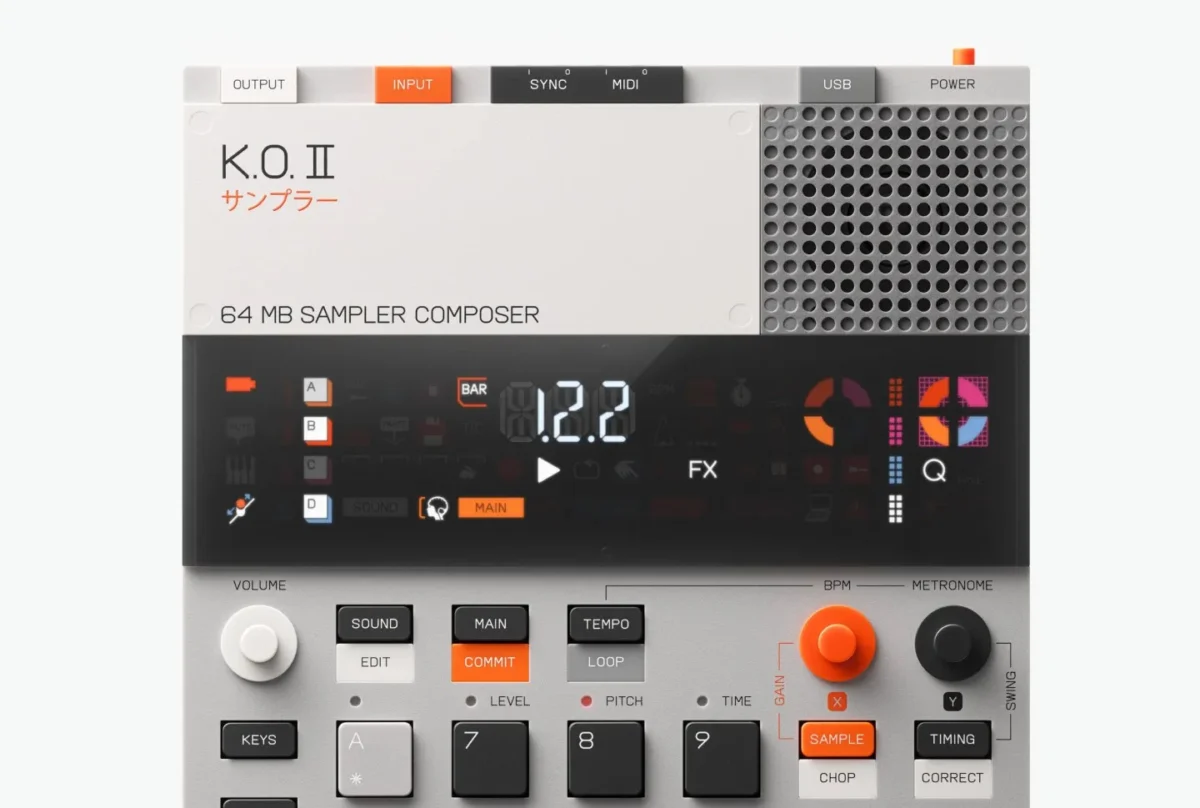
Since its inception, Teenage Engineering has carved out a unique niche in the music technology landscape, balancing high-fidelity sound design with whimsical, industrial-chic hardware. Their $329 EP-133 KO II sampler, a device that effectively serves as the spiritual successor to the iconic Casio SK-1, has become a staple for producers seeking tactile, immediate workflow. Today, the Swedish manufacturer solidifies the KO II’s position as a powerhouse with the release of OS 2.5—perhaps the most significant firmware update in the product’s history.
This update does more than simply patch bugs; it fundamentally expands the creative utility of the sampler, adding features that users have clamored for since the device’s launch in late 2023. From expanded memory management to the introduction of lo-fi character modes, OS 2.5 marks a transformative moment for the EP-133 ecosystem.
The Core Transformation: What OS 2.5 Brings to the Table
The OS 2.5 update is a comprehensive feature drop that touches almost every aspect of the EP-133’s performance. While previous updates focused on stability and minor optimizations, this iteration introduces architectural changes that alter how musicians interact with the sampler.
Audio Over USB
Perhaps the most requested feature, the inclusion of audio over USB, is a game-changer for home studio setups. Previously, users were tethered to analog outputs, which often meant dealing with signal-to-noise ratios and the inconvenience of external audio interfaces. With OS 2.5, the KO II can stream digital audio directly into a DAW, simplifying the recording process and ensuring a pristine signal path.
Expanded Sampling Capacity
The EP-133 has long been praised for its agility, but its 20-second sample limit was a point of contention for those looking to capture longer melodic phrases or atmospheric textures. By introducing a mono-sampling mode, Teenage Engineering has effectively doubled the maximum sample length to 40 seconds. This allows for significantly more complex arrangements and longer loop-based compositions without sacrificing the device’s characteristic punch.
Creative Tools: Arpeggiators and Reverse
The addition of sample reverse is long overdue. In the realm of experimental music and hip-hop production, reversing a sample is a fundamental technique for creating haunting atmospheres or "glitch" textures. Furthermore, the new arpeggiator—while an unconventional addition to a sampler—unlocks new possibilities for synth-style basslines and leads. Because the KO II handles pitch-shifting so elegantly, the arpeggiator transforms the device into a capable melodic synthesizer, further bridging the gap between a pure sampler and a melodic workstation.
Lo-Fi Textures and Sample Rates
Teenage Engineering has leaned into the aesthetic preferences of modern producers by introducing selectable sample rates. Users can now toggle between the standard 46 kHz, a gritty 32 kHz, and a heavily compressed 26 kHz mode. This allows users to dial in specific textures, from clean, modern digital clarity to the warm, artifact-heavy crunch of 90s-era hardware samplers.
A Chronology of the EP-133 KO II Ecosystem
The journey of the EP-133 KO II has been one of rapid iteration. Since its release in November 2023, Teenage Engineering has maintained a consistent, if sometimes erratic, update schedule that demonstrates a commitment to the "living product" philosophy.
- November 2023: The EP-133 KO II is launched to critical acclaim, lauded for its sequencer, built-in microphone, and immediate UI.
- Early 2024: Following initial user feedback, Teenage Engineering releases a series of minor firmware patches aimed at resolving stability issues and refining the punch-in effects.
- Mid-2024: The "Riddim" edition (EP-1320) is introduced, bringing reggae-themed sound sets and a specialized voice-changing microphone to the platform.
- August 2024: The release of the EP-1320 Medieval sampler captures public imagination with its bizarre historical aesthetic, though it highlights a growing disparity in feature parity across the "EP" product line.
- Late 2024 (Current): The launch of OS 2.5 brings the KO II and the Riddim into a new era of functionality, while simultaneously drawing attention to the stagnation of the Medieval series.
Supporting Data: Why Feature Parity Matters
The inclusion of equal-length autochopping is a significant improvement for the KO II’s workflow. Previously, the transient-based autochopper was excellent for percussive material but struggled with melodic loops, often resulting in uneven slices that required manual correction. Equal-length chopping allows for a more "grid-based" approach to sampling, which is essential for modern house, techno, and trap production.
Coupled with per-pad time shifting, these features move the KO II away from being a "toy" and into the territory of professional-grade production tools. When you combine these with the new time-stretching algorithms—which now handle pitch-shifted material with fewer artifacts—the KO II becomes an incredibly dense creative hub.
The "Medieval" Disparity: Official Responses and Community Frustration
While the community has celebrated the OS 2.5 update, a shadow looms over the EP-1320 Medieval sampler. Despite being a premium product, the Medieval is receiving only the USB audio update, with none of the advanced sampling, arpeggiation, or lo-fi rate features provided to its siblings.
This has sparked a heated debate within the Teenage Engineering community. Is the Medieval hardware architecture too limited to handle the new features, or is the company prioritizing its core product lines over its novelty hardware?
When approached for comment, Teenage Engineering remained characteristically vague regarding their development roadmap for the Medieval. The company has not provided a technical breakdown of why the EP-1320 is being left behind, leading many to speculate that the device was intended as a standalone "experience" rather than a platform for ongoing development. This silence has created a rift in consumer trust, with some users questioning the long-term support for future specialized releases.
Implications for the Music Tech Industry
The success of the EP-133 KO II and its continuous improvement via OS 2.5 suggests a shift in how boutique hardware manufacturers view product lifecycles. Rather than releasing "Mark II" versions of their hardware, companies like Teenage Engineering are proving that deep firmware support can maintain a product’s relevance in an increasingly saturated market.
The Rise of the "Living Instrument"
The move toward software-defined hardware—where the functionality of the device is as fluid as its software—is becoming the industry standard. By adding features like arpeggiators and bit-rate reduction, Teenage Engineering is essentially giving users a "new" instrument every few months. This keeps the community engaged and discourages users from looking toward competitors like Elektron or Akai.
Market Positioning
At $329, the KO II occupies a "sweet spot." It is affordable enough for bedroom producers but capable enough for professional live performance. OS 2.5 strengthens this position, making the device a viable option for those who previously required a more expensive setup. The integration of USB audio further cements the KO II as a legitimate interface, not just a standalone sampler.
The Burden of Expectations
However, this success brings with it a burden of expectation. Because Teenage Engineering has set a high bar with the KO II, users now expect consistent, high-value updates for every product in the line. The perceived neglect of the EP-1320 Medieval serves as a cautionary tale: when a manufacturer introduces multiple hardware variants, they must be prepared to support them with equal fervor, or risk damaging the brand’s reputation for quality and longevity.
Conclusion: The Future of the KO Series
The EP-133 KO II remains a standout piece of modern gear. With the arrival of OS 2.5, it has matured from a fun, punchy sampler into a robust production station that can handle everything from complex sampling tasks to synth-heavy melodic sequences.
For current owners, the update is an essential download that breathes new life into the hardware. For those on the fence, the combination of USB audio, 40-second sampling, and new lo-fi character modes makes the KO II one of the best value propositions in the current music technology market.
As for the broader EP series, the industry will be watching closely to see how Teenage Engineering manages its diverse hardware portfolio. Whether they choose to address the feature gap in the Medieval series or focus entirely on the core KO II and Riddim lines remains to be seen. Regardless, one thing is clear: the era of the static hardware instrument is over. The future belongs to devices that evolve, and with OS 2.5, Teenage Engineering has proven they are at the vanguard of that evolution.
How to Update:
Users can download the latest firmware for the EP-133 KO II, EP-1320 Medieval, and the Riddim series via the official Teenage Engineering guide portal. It is recommended that users back up all project files before initiating the update process, as firmware flashes can occasionally lead to data loss if not performed according to the manufacturer’s instructions.
 Raul Delapena Setiawan
  Siti Muinah
  Asro
Asro 