
 By Asep Darmawan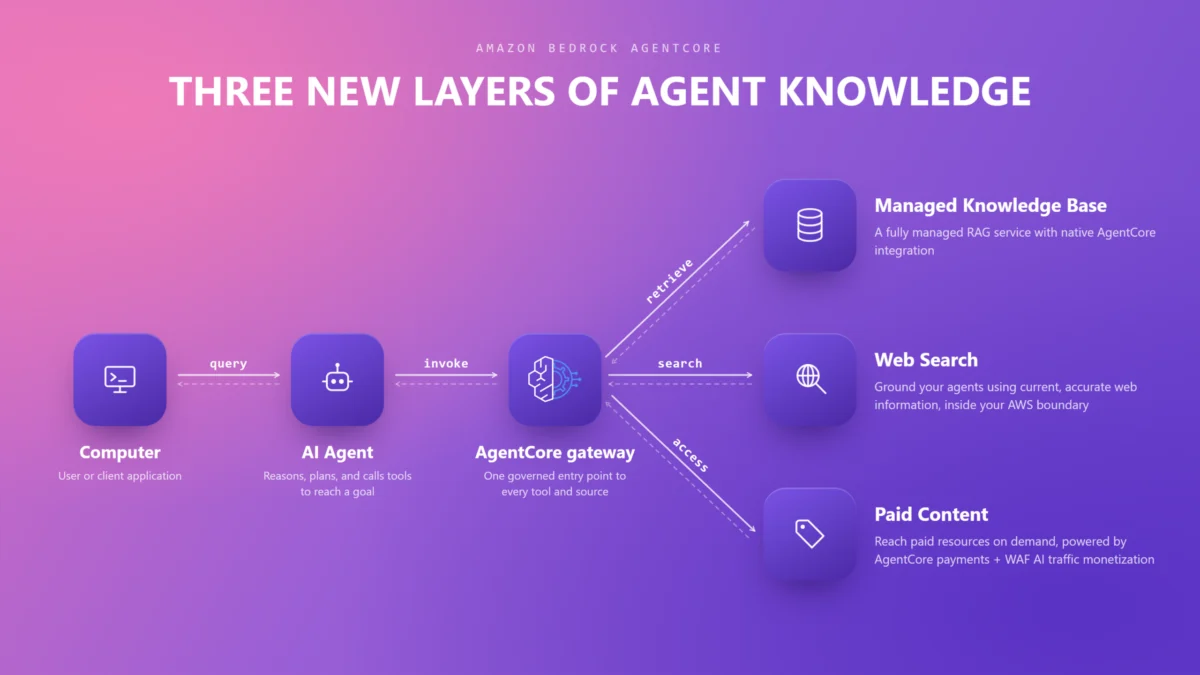
NEW YORK CITY — The landscape of enterprise artificial intelligence shifted significantly this week as Amazon Web Services (AWS) took center stage at the AWS Summit in New York City. Swami Sivasubramanian, AWS Vice President of Agentic AI, delivered a keynote address that signaled a strategic pivot from passive generative AI models to active, autonomous "agentic" systems. As organizations move beyond simple chatbots, AWS is positioning itself to be the primary infrastructure provider for the next generation of business-critical AI agents.
The announcements, which spanned the Amazon Bedrock platform and the introduction of "Amazon Quick" autonomous agents, represent a concerted effort to solve the "last mile" problem of AI: moving from creative text generation to autonomous, goal-oriented execution.
The Core Announcements: A New Era for Amazon Bedrock
The centerpiece of the summit was the evolution of Amazon Bedrock AgentCore. AWS is fundamentally re-engineering how agents interact with the enterprise ecosystem. For years, the primary limitation of LLMs has been their isolation from real-time organizational data and their inability to act reliably across complex toolchains.
Amazon Bedrock AgentCore: Scaling Knowledge and Governance
AWS introduced a suite of new capabilities designed to bridge the gap between AI capability and enterprise reliability. According to Sivasubramanian, the new features focus on three pillars: broader knowledge integration, production-grade observability, and scalable governance.
- Knowledge Layer Expansion: Agents can now ingest data from disparate silos—including organizational internal documentation, real-time web streams, and paid third-party data services. By providing agents with a "Knowledge Layer," developers can ensure that the AI is making decisions based on the most current internal and external context.
- Production Observability: A major hurdle for AI adoption has been the "black box" nature of agent decision-making. AWS is rolling out new diagnostic tools that allow teams to trace, identify, and remediate failures within production environments, effectively bringing DevOps-style rigor to AI agent lifecycles.
- Scalable Governance: As agents move from experimental sandboxes to production workloads, the need for guardrails is paramount. The updated AgentCore includes refined control frameworks that allow administrators to enforce security policies and operational limits that automatically scale alongside the agent’s increasing functional complexity.
Amazon Quick: The Rise of Autonomous Work Agents
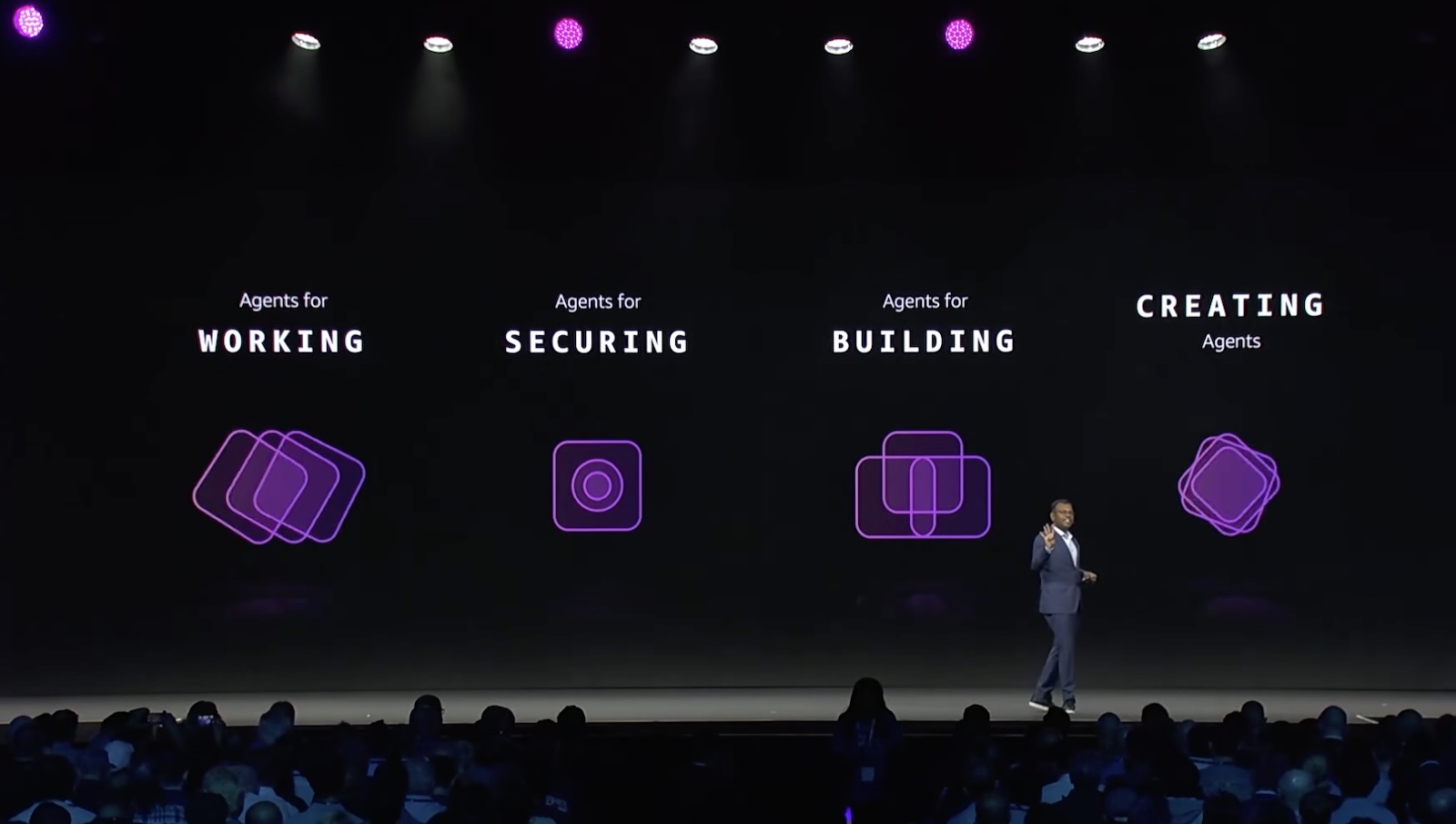
Perhaps the most disruptive announcement of the summit was the debut of "Amazon Quick." While Bedrock provides the foundational infrastructure, Amazon Quick is designed to be the application layer for autonomous work.
From Chatbots to Colleagues
The vision behind Amazon Quick is to move beyond the "prompt-response" paradigm. Instead, AWS is enabling the creation of specialized, background-operating agents that possess distinct personas, tool access, and domain expertise.
- Financial Operations Agents: AWS showcased agents capable of handling end-to-end order processing. By integrating with ERP systems, these agents can validate invoices, cross-reference purchase orders, and trigger fulfillment workflows without human intervention, flagging anomalies for human review only when necessary.
- Sales Intelligence Agents: These agents are designed to act as proactive members of a sales team. By monitoring CRM platforms, email threads, and communication channels like Slack, these agents can draft follow-up correspondence, highlight potential risks in a deal pipeline, and recommend data-driven next steps based on historical sales performance.
The Unified Activity Feed
Complementing these agents is a new, intelligent activity feed. Recognizing that "AI fatigue" is a growing concern for the modern workforce, AWS has developed a consolidated interface that aggregates calendars, tasks, emails, and messaging into a single, prioritized view. This feed utilizes machine learning to understand the user’s work patterns—identifying which threads are critical, which can be delegated, and which topics dominate the user’s weekly workflow.
Chronology of the AWS Summit Developments
The announcements made in New York reflect a calculated, multi-year progression in AWS’s AI strategy:
- Early 2024: Focus on Bedrock as a foundational model hub, allowing customers to choose between various LLMs (Claude, Llama, Titan).
- Late 2024 – Early 2025: Introduction of basic "Agents" that could execute simple tool calls using APIs.
- June 16, 2026 (Pre-Summit): Initial rollout of the Knowledge Layer frameworks for Bedrock, setting the stage for more complex data integration.
- June 17, 2026 (Keynote Day): Official unveiling of Amazon Quick and the full suite of Bedrock AgentCore capabilities.
- June 18, 2026: Additional specialized launches and integrations announced to support the new agentic ecosystem, focusing on security and compliance certifications for these new tools.
Supporting Data and Technical Context
The industry is currently witnessing a transition where the bottleneck for AI value is no longer the model size, but the integration quality.
Data provided by AWS during the summit indicated that organizations utilizing "Agentic" workflows—those where an AI is given a goal and a set of tools rather than just a prompt—saw a 40% reduction in the time required to complete cross-functional tasks like lead qualification and incident response.
The architecture for these agents relies on a "chain-of-thought" methodology where the agent breaks down high-level user requests into granular sub-tasks. By utilizing Amazon Bedrock’s new observability features, developers can monitor this decomposition process in real-time, allowing for "human-in-the-loop" interventions at specific failure points.
Official Responses and Industry Implications
The response from the analyst community and early enterprise adopters has been one of cautious optimism.

"AWS is moving to commoditize the ‘agent’ pattern," said a lead analyst at a major cloud research firm. "By providing the governance and observability layer, they are essentially saying to the enterprise: ‘We will provide the safety rails, so you can focus on the business logic.’"
Sivasubramanian emphasized in his keynote that the goal of this technology is not to replace human workers, but to liberate them from the "drudgery" of information synthesis. "We are moving into an era where the software works for you, rather than you working for the software," he remarked.
However, industry experts also point out that the integration of agents into core systems like CRM and email introduces new security vectors. AWS has responded to these concerns by baking in identity and access management (IAM) directly into the agentic workflow, ensuring that an agent can only perform actions that the logged-in user is authorized to perform.
Strategic Implications: The Future of the Cloud
The shift toward autonomous agents changes the definition of cloud services. Traditionally, cloud computing was about storage and compute. With the rise of agentic AI, AWS is positioning itself as the "orchestration layer" for corporate intelligence.
1. The Death of the Interface
The introduction of the Amazon Quick activity feed suggests a future where the traditional "app" becomes secondary to the "agent." If an AI agent can synthesize your emails and tasks, the need to navigate through five different SaaS dashboards diminishes. AWS is betting that the winner of the AI race will be the platform that provides the most seamless "work surface."
2. The Governance Competitive Advantage
Large enterprises have been slow to adopt generative AI due to fears of hallucinations and data leaks. By prioritizing governance in this release, AWS is targeting the highly regulated sectors—finance, healthcare, and government—that have been hesitant to embrace AI.
3. Continuous Learning Loops
The most significant long-term implication is the move toward "continuous learning." The new agents do not just execute tasks; they log the outcomes of those tasks, creating a feedback loop that improves the agent’s decision-making over time. This creates a "flywheel effect" where the more an organization uses these agents, the more effective the agents become, further entrenching the user within the AWS ecosystem.
Conclusion
The 2026 AWS Summit in New York City will likely be remembered as the moment when the "agentic" era truly began. By focusing on the practical, operational realities of deploying AI—governance, observability, and deep integration—AWS has provided a roadmap for enterprises to move past the hype cycle and into a phase of tangible, autonomous productivity.
As the industry watches these tools roll out over the coming months, the focus will undoubtedly shift to how well these agents perform in the wild. If AWS can deliver on the promise of agents that are not only capable but also secure and reliable, they will have effectively defined the operating system for the next decade of enterprise work.
For developers and organizations looking to stay ahead, the message from the summit is clear: start building your agentic strategy now, because the tools for autonomous enterprise execution are no longer theoretical—they are available today.
 Neng Nana
  Suro Senen
  Lina Hope