
 By Basiran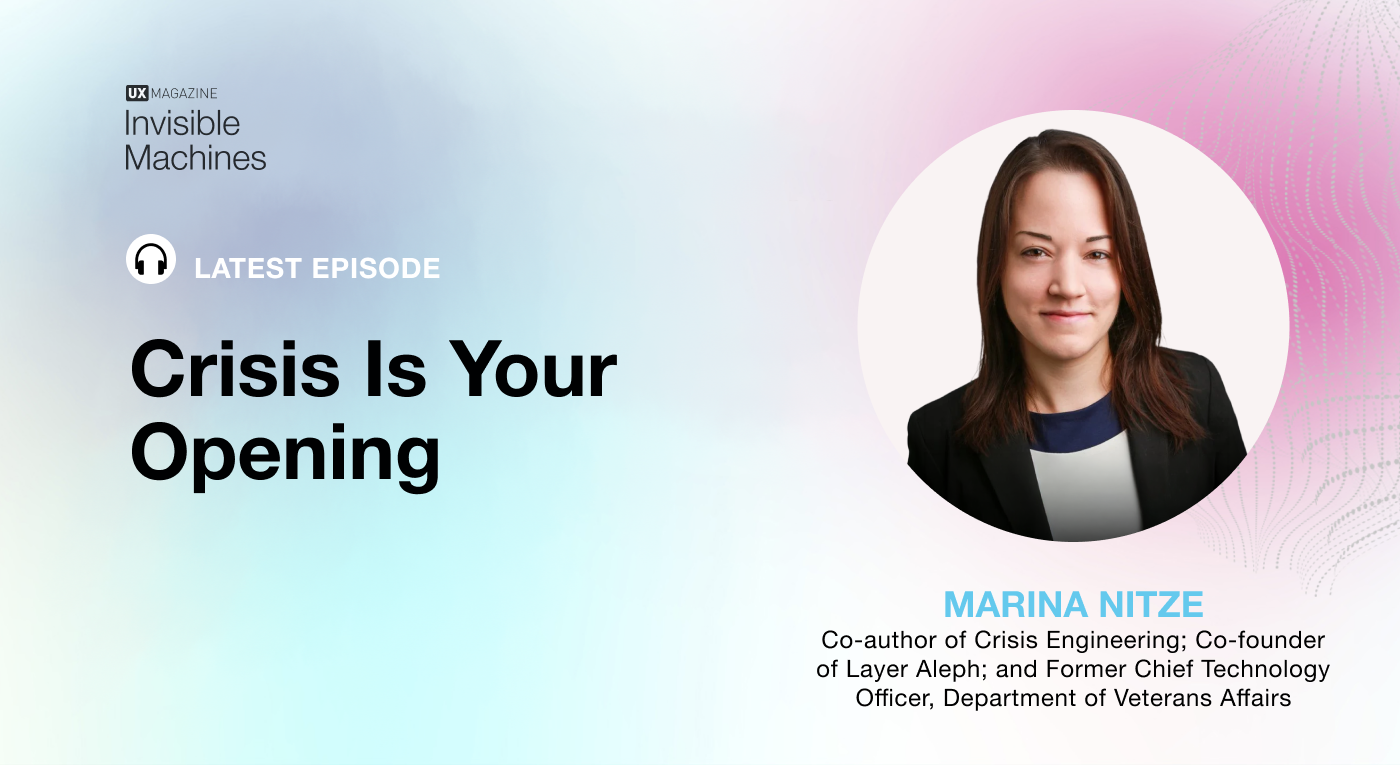
In the quiet corners of modern institutions, there exists a dangerous phenomenon: the gap between how an organization believes it functions and how it actually operates. This discrepancy is not merely an administrative annoyance; it is a systemic vulnerability that, when left unaddressed, leaves organizations defenseless against the inevitable. Marina Nitze, a former Chief Technology Officer of the U.S. Department of Veterans Affairs and co-author of Crisis Engineering, argues that the most critical tool for any leader is not a strategic plan, but a willingness to confront the brutal reality of their own infrastructure—before a crisis forces them to.
The Myth of the Call Center: A Case Study in Institutional Fiction
The most vivid illustration of this systemic "sensemaking" failure occurred during the COVID-19 pandemic. As California’s unemployment system buckled under unprecedented volume, the state government looked to experts at Layer Aleph to stabilize a crumbling digital infrastructure.
Throughout the crisis, the directive from leadership was consistent: "Don’t worry. We have the call center. People who need help can call."
Driven by the necessity of verifying this assertion, Nitze and her colleagues physically visited the facility designated as the call center. They did not find a bustling hive of agents managing high-volume traffic. Instead, they walked into a room of empty cubicles. In the corner sat one employee—a specialist who was confused by the presence of investigators. He did not run a call center; he processed unemployment claims.
The "call center" was a complete fiction. It was, in practice, a phone number that routed randomly to the desks of various employees. When the pandemic forced staff to work from home, the calls simply rang into the void of an empty office. Executives, managers, and workers had repeated the phrase "we have a call center" like a talisman, shielding themselves from the uncomfortable truth that their primary support mechanism did not exist.
Chronology of a Collapse: From Sensemaking to Strategy
The breakdown of the California unemployment system provides a masterclass in how institutional narratives—what organizational psychologist Karl Weick calls "sensemaking"—can become detached from reality.
1. The Construction of the Narrative
Organizations naturally construct stories to explain how they function. These stories are rarely malicious lies; they are convenient subsets of facts that help employees navigate complex systems. Once these stories are codified into the culture, they become remarkably resistant to revision.
2. The Incubation of Dissonance
In the foster care sector, Nitze encountered a similar dysfunction. A six-month licensing delay for "foster grandparents" was blamed on the DMV’s "19th-century" reliance on carbon copy forms. Yet, when Nitze visited the DMV, she found that the staff there were happy to email the documents. The delay existed only in the "map" held by the child welfare department, which blamed the DMV for a problem created by their own internal, unverified processes.
3. The Window of Opportunity
When a crisis strikes—a fundamental surprise that disrupts core functions—the prevailing story shatters. This is the "window of opportunity." For a few hours or days, the old, comfortable narrative is broken, and stakeholders are desperate for a new explanation. This is the moment when years of institutional change can be implemented in a single afternoon.
The Five Indicators of a "Useful Crisis"
Nitze’s framework, Crisis Engineering, moves beyond the emotional weight of a disaster to focus on the mechanical reality of the situation. She defines a "useful crisis" through five specific indicators:
- Fundamental Surprise: The event was entirely unforeseen.
- Disruption in Core Function: Essential services, such as website uptime or claim processing, have ceased.
- Rigid Timeline: External pressures—such as a live event or a regulatory deadline—mandate immediate resolution.
- High Visibility: The organization is under public or executive scrutiny.
- Failure of Sensemaking: The reality of the situation contradicts the organization’s established mental model.
The fifth indicator is the engine of change. Humans feel a physical urgency to resolve cognitive dissonance. If a leader can step into that window with a reality-based solution, they can bypass the typical bureaucracy that would otherwise stall progress for years.
The Emerging Threat: AI and the Escalation of Complexity
The urgency of Nitze’s framework has been amplified by the rapid, asymmetric adoption of Artificial Intelligence. As noted by Josh Tyson and Robb Wilson, hosts of Invisible Machines, consumer-grade AI agents are now capable of probing and stress-testing institutional systems at a scale previously reserved for state-level actors.
Consider the "outbound AI call center attack." An automated agent, programmed to navigate complex Interactive Voice Response (IVR) trees and extract concessions, can now be deployed by the thousands. When these agents interact with an organization that believes it has a robust, human-staffed call center—when, in reality, it has the equivalent of the empty room in California—the collapse will be near-instantaneous.
These AI tools will find the "seams" in institutional processes faster than human teams ever could. They will exploit the gaps between the map and the territory, turning minor inefficiencies into high-visibility, core-function-disrupting crises.
Implications: The Necessity of "Crisis Engineering"
The core danger for modern organizations is the impulse to automate without first verifying the underlying process. As Robb Wilson argues, many institutions are rushing to fund AI integration while ignoring the "foundational layer" of knowledge management. By automating a broken, unverified process, they are merely building a high-speed machine for generating errors.
To avoid the fate of the California unemployment office, organizations must adopt a specific discipline of preparation:
- Walk the Process: Before implementing any new system, leaders must physically or digitally trace the entire workflow from end-to-end. They must identify the "carbon copy forms" that no one can justify.
- Build the "Spicy Day" Infrastructure: Organizations should maintain independent crisis-management infrastructure—communication channels and status pages that operate separately from primary systems.
- Practice "Novel Action": Avoid the urge to convene committees and task forces during a crisis. Instead, use "novel action": form a hypothesis, test it, and learn. If the action succeeds, the crisis is resolved. If it fails, you have gained a true understanding of the system’s actual limitations.
- Curate a Portfolio of Solutions: As Milton Friedman famously suggested, the ideas implemented in a crisis are the ones that happen to be "laying around." Leaders should keep a repository of pilot projects, data-backed reforms, and updated processes ready for the moment the old narrative shatters.
Conclusion: The Truth of the Territory
The ultimate goal of Crisis Engineering is not to prevent crises—which are often inevitable in complex systems—but to survive them with the organization’s integrity intact. The organizations that fail are those that spend the "window of opportunity" producing progress reports and holding status meetings, waiting for the window to close so they can return to their comfortable, albeit false, stories.
The organizations that thrive are those that have stopped hiding behind their maps. They recognize that their employees, their technology, and their processes are not what they claim to be on paper. By constantly testing their assumptions, they ensure that when the inevitable crisis comes, they have a story ready—one that is close enough to the truth to be the one that sticks.
In the final analysis, institutional resilience is not found in the perfection of the plan, but in the speed and humility with which an organization can align its map with the brutal, changing territory of the real world.
 Ammar Sabilarrohman
  Neng Nana
  Sagoh
Sagoh 