
 By Siti Muinah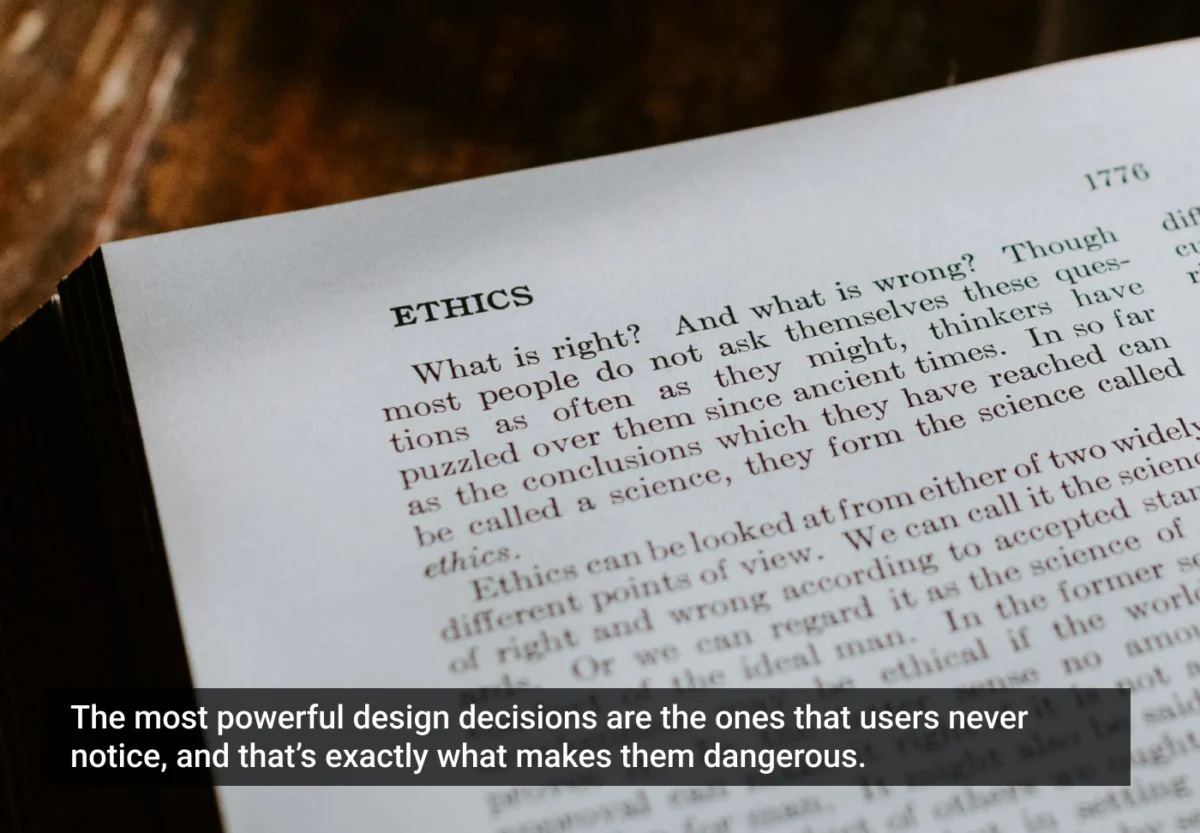
At the heart of the WorldUXForum, we operate on a fundamental premise: design is not merely an exercise in aesthetics or technical functionality; it is an act of profound responsibility. Every pixel rendered, every interaction sequence scripted, and every navigational pathway forged actively shapes human behavior. As we navigate the 9th installment of our Ethical UX Series, we turn our gaze toward a silent yet formidable force in digital strategy: the nudge.
These micro-signals—often invisible to the casual user—act as the invisible hand guiding the digital economy. While they hold the potential to foster positive outcomes, they also sit precariously on the precipice of manipulation. Understanding this dichotomy is no longer optional for the modern technologist; it is the cornerstone of ethical practice.
The Anatomy of the Nudge: A Historical Context
To understand the modern digital nudge, we must look back to the foundational work of Nobel laureate Richard H. Thaler and legal scholar Cass R. Sunstein. In their seminal work, they defined a nudge as "any aspect of the choice architecture that alters people’s behavior in a predictable way without forbidding any options or significantly changing their economic incentives."
Chronology of Behavioral Influence
- The Pre-Digital Era: Nudges were primarily physical—the placement of fruit at eye level in a cafeteria or the default selection of organ donation on driver’s license forms.
- The Early Web (1995–2005): Influences were largely functional, focusing on navigation cues and basic web usability.
- The Data-Driven Turn (2010–2018): As A/B testing matured, platforms began using psychological triggers (scarcity, social proof) to drive conversion rates.
- The Current Ethical Frontier (2020–Present): Regulators and designers are now grappling with "Dark Patterns," forcing a reassessment of where user guidance ends and coercion begins.
Supporting Data: The Mechanics of Micro-Signals
To deconstruct the influence of a nudge, we must look at the five primary mechanisms through which they operate:
- Defaults (The Power of Inertia): By pre-selecting an option, designers leverage the human tendency toward status quo bias. When users are presented with a pre-checked box, they are statistically more likely to accept the default, regardless of the effort required to opt-out.
- Framing (The Power of Perception): The way information is presented—whether as a "gain" or a "loss"—significantly alters decision-making. Highlighting what a user loses by not acting is a more potent motivator than highlighting what they gain.
- Social Proof (The Power of Conformity): Displays like "1,200 people are viewing this item" tap into our innate desire to follow the crowd, often triggering impulsive decision-making.
- Temporal Scarcity (The Power of Urgency): Countdown timers and "limited time offer" badges utilize the fear of missing out (FOMO) to bypass rational deliberation.
- Gamification (The Power of Reward): Progress bars and digital badges trigger dopamine loops, encouraging users to complete tasks they might otherwise abandon.
The Ethical Threshold: Nudges vs. Dark Patterns
A central question arises: when does a helpful nudge become an exploitative dark pattern? The distinction lies in the intentionality and the transparency of the design.
The Red-Flag Checklist
For UX researchers and designers, an ethical breach occurs when:
- Information Asymmetry: The design obscures the true cost or consequence of an action to benefit the platform at the user’s expense.
- Forced Continuity: Making it easy to enter a service but intentionally difficult to leave (e.g., the "Roach Motel" pattern).
- Emotional Exploitation: Using shame, guilt, or fear to force a user’s hand.
- Cognitive Overload: Deliberately confusing the user through complex UI to lead them toward an unintended choice.
As UX professionals, we must conduct rigorous design reviews that differentiate between persuasion (which respects user agency) and manipulation (which undermines it).
Behavioral Psychology: The "Rationalizing Animal"
Robert A. Heinlein once famously noted, "Man is not a rational animal; he is a rationalizing animal." Designers must acknowledge that users operate under "bounded rationality." We do not have the cognitive bandwidth to evaluate every choice optimally.
Why Nudges Work
- Heuristics: We rely on mental shortcuts. A well-placed tooltip acts as a cognitive crutch.
- Cognitive Load: When users are tired or overwhelmed, they default to the path of least resistance.
- The Success Case: A landmark example remains the UK government’s organ donor campaign. By shifting the phrasing from "Would you like to join?" to a more pointed, "If you needed an organ, would you take one?" they achieved a 96% increase in registrations. This is the gold standard of ethical nudging: using influence to benefit the public good rather than corporate revenue.
Implications: Cultural and Demographic Nuance
A nudge that functions flawlessly in a Western, individualistic context may misfire—or even cause harm—in a collectivist culture.
The Pitfalls of Universal Design
- Language and Literacy: A nudge that relies on subtle sarcasm or complex idioms may exclude users with different linguistic backgrounds.
- Accessibility: Relying on visual cues (like flashing colors) to nudge users can be exclusionary to those with visual impairments or neurodivergence.
- Socioeconomic Variance: A nudge toward a "premium subscription" may be a minor inconvenience for one demographic but a significant financial burden for another.
Research Imperative: UX research must be localized. Responsive design is not just about screen size; it is about "responsive psychology"—the ability to adapt our design strategy to respect the unique values, literacy levels, and life contexts of our diverse user base.
Auditing Nudges: A Framework for Accountability
To ensure that our influence remains ethical, the WorldUXForum recommends implementing the following Nudge Audit Framework during the design lifecycle:
- The Beneficiary Test: Who gains the most from this specific interaction? If the answer is exclusively the platform (and not the user), reconsider the design.
- The Reversibility Test: How easily can a user undo the decision prompted by the nudge?
- The Transparency Test: If the user were fully aware of the psychological mechanism being used, would they still feel the design was fair?
- The Autonomy Test: Does the nudge remove options, or does it merely highlight a beneficial path?
Conclusion: Designing with Empathy and Integrity
Ethical nudging is not about neutrality; it is about the intentional, equitable application of design power. We are not just building interfaces; we are building environments that influence the collective human experience.
To move forward, we must adopt a culture of radical transparency. We must be willing to interrogate our own work, subjecting our designs to the same scrutiny we apply to our code. As we look toward the future, the goal of the UX professional should be to build systems that act as a "useful servant" rather than a "dangerous master."
We leave you with a final challenge: The next time you sit down to map a user journey, ask yourself not just "What do I want them to do?" but "Is this the path that truly serves their best interest?"
Recommended Reading & References
- Thaler, R. H., & Sunstein, C. R. (2008). "Nudge: Improving Decisions About Health, Wealth, and Happiness."
- Kahneman, D. (2011). "Thinking, Fast and Slow."
- WorldUXForum Research Archive: "The Ethics of Choice Architecture."
- Cialdini, R. B. (2006). "Influence: The Psychology of Persuasion."
Stay tuned for the next entry in our Ethical UX Series: "Consent Fatigue: Are We Designing People into Compliance?"
 Ammar Sabilarrohman
  Neng Nana
  Sagoh
Sagoh 