
 By Suro Senen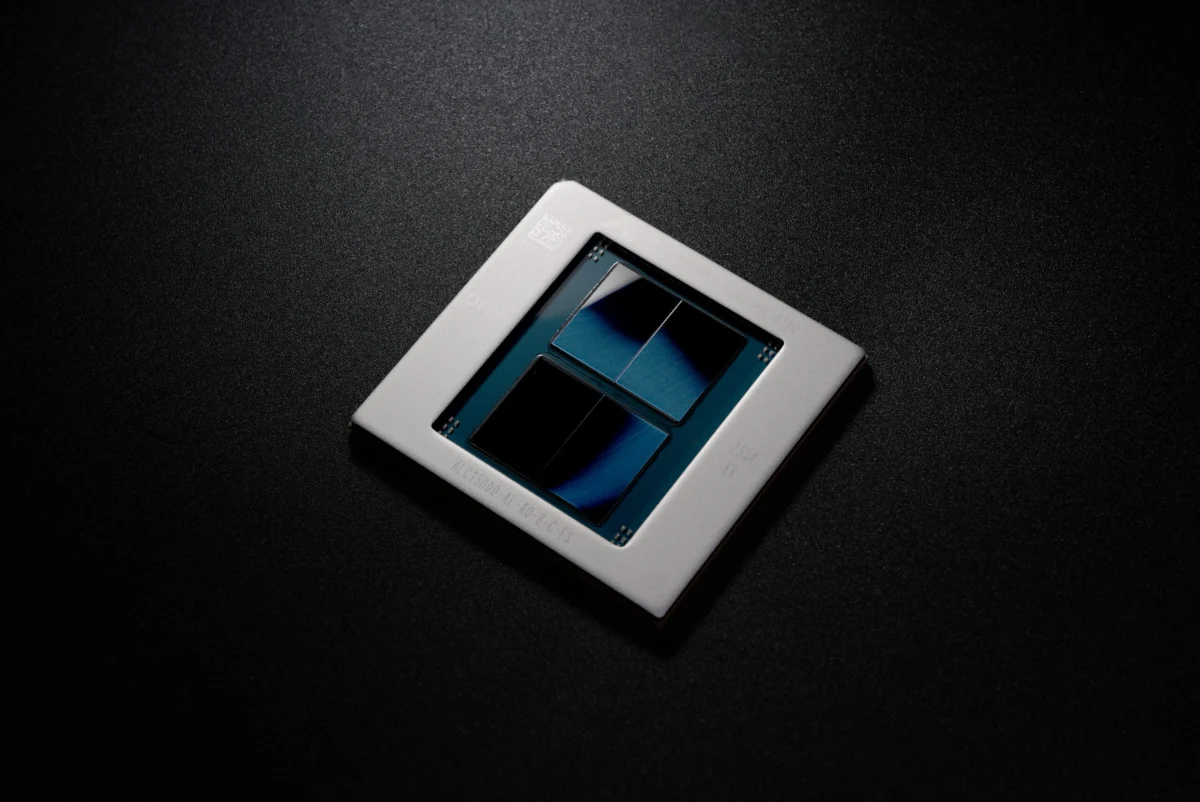
In a move that signals a seismic shift in cloud infrastructure, Amazon Web Services (AWS) has officially announced the general availability of its EC2 M9g and M9gd instances, powered by the fifth-generation Graviton5 processor. This launch marks the culmination of eight years of relentless innovation in custom silicon, positioning the new instances as the most powerful and energy-efficient compute resources ever deployed by the cloud giant. As AI workloads evolve from simple conversational models to complex, agentic task-orchestration systems, the M9g series arrives as a critical pillar for enterprises aiming to balance high-octane performance with stringent sustainability goals.
The Evolution of Custom Silicon: A Chronology of Graviton
The journey to Graviton5 is not merely a story of iterative hardware updates; it is a narrative of AWS’s strategic pivot toward vertical integration. Since the inception of the Graviton program, AWS has aimed to break the dependency on general-purpose commodity processors, tailoring its hardware specifically for the unique demands of cloud-native workloads.
- 2018 (The Beginning): AWS introduced the first-generation Graviton processor, a modest entry into the Arm-based server market. While limited in scope, it proved that custom silicon could offer a viable, cost-effective alternative for scale-out workloads.
- 2019–2021 (Accelerated Maturity): With Graviton2 and Graviton3, AWS saw massive adoption. The industry witnessed a shift as performance-per-watt metrics became the primary benchmark for cloud efficiency. Graviton3 notably introduced DDR5 memory and a significant jump in floating-point performance.
- 2023 (Graviton4): This generation solidified AWS’s lead in core density and memory bandwidth, enabling the company to challenge the x86 duopoly in high-performance computing (HPC) and complex data analytics.
- 2025 (The Preview): At re:Invent 2025, the M9g instances were unveiled. During the preview period, early adopters—ranging from database giants like ClickHouse to observability leaders like Honeycomb—reported unprecedented performance gains, setting the stage for today’s general availability.
Technical Prowess: Under the Hood of Graviton5
The M9g and M9gd instances are built upon the sixth-generation AWS Nitro System, a sophisticated platform that offloads virtualization, networking, and storage functions to dedicated hardware. This offloading allows the Graviton5 processor to dedicate its 192 cores almost entirely to user workloads.
Architectural Breakthroughs
Graviton5 represents a significant leap in microarchitecture. Key technical advancements include:
- Massive L3 Cache: Boasting five times the L3 cache of its predecessor, the Graviton5 minimizes the "memory wall" that often throttles high-performance CPUs.
- DDR5-8800 Integration: The move to DDR5-8800 memory provides the highest bandwidth available in the current cloud landscape, facilitating rapid data movement for large-scale analytics and machine learning (ML) inference.
- PCIe Gen6 Support: As the first AWS CPU to integrate PCIe Gen6, Graviton5 enables ultra-fast communication between the processor and peripherals, essential for high-throughput AI and data-intensive applications.
Performance Benchmarks
The gains are not purely theoretical. According to early testing and validation, M9g instances demonstrate:
- Up to 25% better compute performance compared to Graviton4.
- 35% faster performance for web applications and ML inference tasks.
- 30% improvement in database query processing, as validated by HubSpot’s deployment, which saw query durations drop by as much as 60%.
The "Agentic" Shift: Why AI Demands Graviton5
The computing industry is currently undergoing a fundamental transformation. AI models are shifting from passive chatbots to "agentic" systems—entities capable of executing code, utilizing external tools, and orchestrating multi-step workflows. This transition is profoundly CPU-intensive.

Unlike training, which relies heavily on GPUs, agentic AI requires rapid decision-making, logic processing, and tool coordination—tasks that are the hallmark of high-performance CPUs. Graviton5’s design—characterized by high core density, reduced inter-core latency (down by 33%), and enormous memory bandwidth—is specifically engineered to keep these AI agents running at peak efficiency.
Meta, one of the world’s largest users of AWS compute, has already begun deploying Graviton at a scale of tens of millions of cores. By leveraging the density and efficiency of Graviton5, Meta is effectively lowering the cost-to-reasoning ratio for its AI initiatives, a move that provides a competitive edge in the rapidly consolidating AI market.
Security Redefined: The Nitro Isolation Engine
In an era of sophisticated side-channel attacks and complex multi-tenant vulnerabilities, security can no longer be an "add-on" feature. With the introduction of the M9g and M9gd, AWS has debuted the Nitro Isolation Engine.
This is not merely an update to existing hypervisor logic; it is a fundamental re-engineering of the isolation layer. The Nitro Isolation Engine employs formal verification, a rigorous mathematical process that proves the system’s behavior remains within intended parameters under all possible conditions. By mediating access to CPU registers, memory states, and I/O devices through a minimal, formally verified API set, AWS is setting a new industry standard: mathematically proven cloud security. This innovation addresses the most critical concerns of enterprise clients in the finance, healthcare, and government sectors, where isolation is non-negotiable.
Operational Flexibility and Ecosystem Support
AWS has ensured that the transition to M9g is as frictionless as possible. The instances are available in a variety of configurations, including the "d" variants (M9gd), which feature high-speed local NVMe SSD storage—ideal for applications requiring temporary scratch space or rapid I/O, such as media processing or batch logging.
Tools for Migration
To support the adoption of Graviton5, AWS has curated a robust ecosystem of migration tools:

- AWS Transform: An AI-powered service that automates the migration of Java applications from x86 architectures to Graviton. It handles compatibility analysis, recompilation, and dependency updates, significantly reducing the "time-to-migration."
- Graviton Savings Dashboard: A dedicated utility within the AWS console that allows financial operations (FinOps) teams to quantify the exact cost savings realized by switching to Arm-based instances.
- Getting Started Guides: Extensive documentation and community-driven GitHub repositories ensure that developers have a clear path to optimizing their containerized and serverless workloads.
Implications for the Cloud Market
The general availability of Graviton5 instances is a clear message to the broader tech industry: custom silicon is the future of cloud economics. By controlling the entire stack—from the processor architecture to the hypervisor and the underlying networking fabric—AWS has created a "virtuous cycle." They can push performance boundaries that are simply not achievable on commodity hardware while simultaneously reducing the energy footprint of their data centers.
For startups, this means the ability to run more complex, intelligent applications at a lower cost, extending their runway and accelerating product velocity. For large enterprises, it provides a pathway to modernize aging monolithic applications without the traditional "tax" of cloud migration.
Furthermore, the emphasis on sustainability cannot be ignored. As corporations face increasing pressure to report on their Scope 3 emissions, the energy efficiency of Graviton5 acts as a powerful lever for carbon reduction. Each unit of compute consumes less electricity than previous generations, allowing AWS to provide more "compute-per-watt," thereby helping customers meet their ESG (Environmental, Social, and Governance) targets.
Final Thoughts: The Path Forward
As the cloud continues to evolve into a decentralized, AI-driven engine for global commerce, the hardware layer remains the invisible hero of the digital age. With the M9g and M9gd instances, AWS has successfully bridged the gap between raw, high-performance compute and the intricate demands of agentic AI, all while layering on a new, mathematically verified security model.
The Graviton5 processor is more than just a chip; it is the manifestation of eight years of learning. As the industry watches Meta and other early adopters scale these systems, it is clear that the standard for cloud computing has been raised. Whether you are managing midsize key-value stores, running massive container fleets, or developing the next generation of autonomous AI agents, the M9g series offers a compelling, efficient, and highly secure path toward the future of high-performance cloud computing.
For developers and architects, the directive is clear: the era of Graviton5 has arrived, and it is time to optimize for the next wave of cloud performance.
 Neng Nana
  Lina Hope