
 By Nana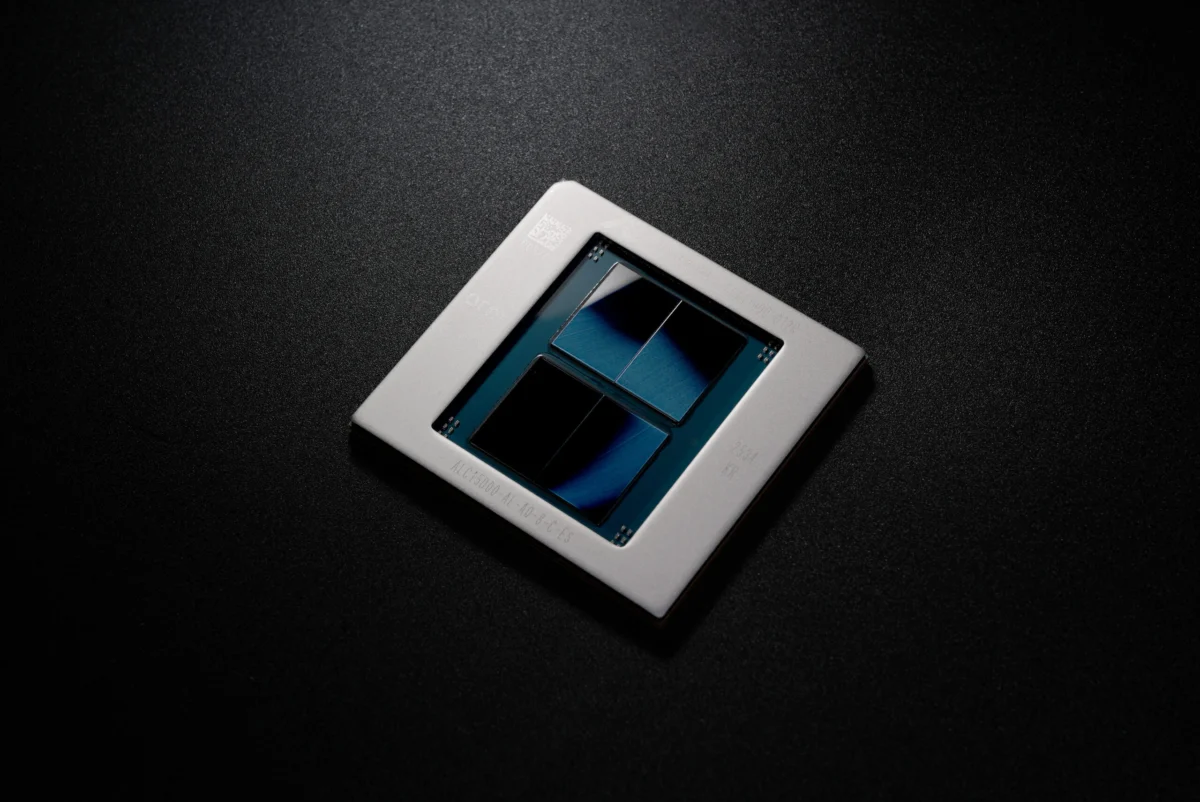
In the hyper-competitive landscape of cloud computing, where the race for efficiency, raw power, and ironclad security is relentless, Amazon Web Services (AWS) has once again set a new benchmark. With the general availability of the Amazon EC2 M9g and M9gd instances, powered by the fifth-generation Graviton5 processor, AWS is signaling a significant shift in how enterprises approach compute-intensive workloads, particularly those involving the rapidly evolving field of agentic AI.
This launch represents the culmination of eight years of iterative silicon design, solidifying the AWS Graviton family as the industry leader in Arm-based cloud infrastructure. With over 350 instance types and 120,000 customers relying on its custom silicon, AWS is no longer just a cloud provider; it has effectively become one of the world’s most formidable chip designers.
The Evolution of Custom Silicon: A Chronology of Innovation
To understand the magnitude of the M9g release, one must look back at the trajectory of the Graviton roadmap. Since the introduction of the first Graviton processor, AWS has maintained a cadence of performance and efficiency improvements that consistently outpace general-purpose industry standards.
- The Early Years (2018): AWS launched the first Graviton processor, introducing the concept of custom silicon to the cloud. While modest, it proved that Arm architecture could be highly effective for scale-out workloads.
- The Maturation (2020–2022): With Graviton2 and Graviton3, AWS introduced the Nitro System, decoupling hardware and software. These generations proved that custom silicon could handle not just simple web servers, but high-performance computing, databases, and machine learning workloads.
- The Generative Shift (2024–2025): The introduction of Graviton4 brought massive jumps in memory bandwidth and core density. During the re:Invent 2025 conference, AWS unveiled the preview of Graviton5, specifically designed to handle the burgeoning demand for AI-driven agentic workflows.
- The Present (2026): With the general availability of M9g and M9gd, AWS has officially moved into an era where "agentic AI"—AI that doesn’t just generate text but executes multi-step tasks and orchestrates code—is a first-class citizen of the cloud compute environment.
Graviton5: Under the Hood of a Powerhouse
The Graviton5 processor is not merely a speed bump over its predecessor; it is a fundamental architectural overhaul. Built to address the specific bottlenecks of the AI era, it boasts a staggering 192 cores, a 5x larger L3 cache, and a 33% reduction in inter-core latency.
Perhaps most critical to modern workloads is the integration of DDR5-8800 memory—the fastest memory available in any cloud instance today. By combining this with PCIe Gen6 support, AWS has effectively removed the I/O bottlenecks that have traditionally plagued data-intensive applications.
Performance Benchmarks That Move the Needle
Early adopters have reported staggering gains, validating the engineering team’s focus on "real-world" performance rather than just synthetic metrics. ClickHouse, the high-performance database, reported a 36% performance boost compared to M8g instances with zero code changes. Honeycomb, during a rigorous six-month A/B test of production observability workloads, saw a 36% increase in throughput per core. Even more striking, HubSpot utilized the M9g instances to power its MySQL databases, witnessing a 60% reduction in query duration—a massive optimization for any enterprise-scale application.

Security as a Mathematical Certainty: The Nitro Isolation Engine
One of the most significant announcements accompanying the general availability of these instances is the introduction of the Nitro Isolation Engine. In an era of increasing concerns regarding multi-tenant security, AWS is moving beyond software-based hypervisors.
The Nitro Isolation Engine leverages formal verification—a mathematical technique used to prove that hardware and software behave exactly as intended, without logical flaws or backdoors. By mediating access to memory, CPU registers, and I/O devices through a minimal set of verified APIs, AWS has established the first formally verified cloud hypervisor. This provides customers with a level of security assurance that is mathematically precise, addressing the most stringent compliance requirements of the financial, healthcare, and government sectors.
The Agentic AI Imperative
As AI transitions from static chatbots to "agentic" systems—AI capable of browsing the web, executing code, and making decisions—the load on CPU infrastructure is ballooning. Unlike Large Language Model (LLM) training, which relies heavily on GPUs, agentic AI is highly CPU-bound. It requires rapid logic, context switching, and the orchestration of multiple tools in real-time.
Graviton5 was purpose-built for this shift. Meta, one of the world’s largest users of cloud compute, is currently deploying Graviton at a scale of tens of millions of cores to support its agentic AI initiatives. The processor’s high memory bandwidth and core density allow these AI agents to run more concurrent environments simultaneously, ensuring that the "brains" of the operation—the accelerators—are never left waiting for the CPU to catch up.
Implications for Enterprise Architecture
For CTOs and system architects, the arrival of M9g and M9gd signifies a major opportunity to re-evaluate their cloud spend and technical debt.
Sustainability and Efficiency
The "green" imperative is no longer just a marketing talking point; it is a financial one. Graviton5 is the most energy-efficient processor AWS has ever produced. By maximizing the ratio of compute-to-power, organizations can meet their sustainability targets without sacrificing the performance required by their developers.

Flexibility and Storage
The M9gd variant, which includes high-speed local NVMe SSD storage, addresses a specific gap for workloads that require low-latency scratch space. With a 30% increase in IOPS and storage performance compared to the M8gd, these instances are ideal for log processing, media transcoding, and high-velocity caching fleets.
The Ecosystem Advantage
AWS has not just provided the silicon; they have provided the roadmap to migrate to it. Tools like the "AWS Transform" service use AI to automate the migration of Java applications from x86 to Graviton, reducing the friction that has historically prevented teams from switching architectures. With the Graviton Savings Dashboard, finance teams can quantify the exact ROI of these migrations, turning a technical upgrade into a clear balance-sheet win.
A New Standard for the Cloud
The general availability of the Graviton5-powered M9g and M9gd instances represents a mature stage in the evolution of the cloud. AWS has successfully moved the "heavy lifting" of the cloud from off-the-shelf components to highly optimized, custom-engineered silicon.
By doubling down on core density, formal verification for security, and specialized support for the next wave of agentic AI, AWS is ensuring its platform remains the default choice for the world’s most demanding applications. Whether it is a lean startup trying to maximize its runway or a global enterprise managing petabytes of data, the Graviton5 ecosystem offers a path to faster, cheaper, and more secure infrastructure.
As we look toward the future, the integration of Nitro Isolation and PCIe Gen6 signals that AWS is not slowing down. The era of the "General Purpose" cloud is evolving into an era of "Performance-Optimized" cloud, and with M9g, that future has officially arrived.
 Neng Nana
  Suro Senen
  Lina Hope