
 By Suro Senen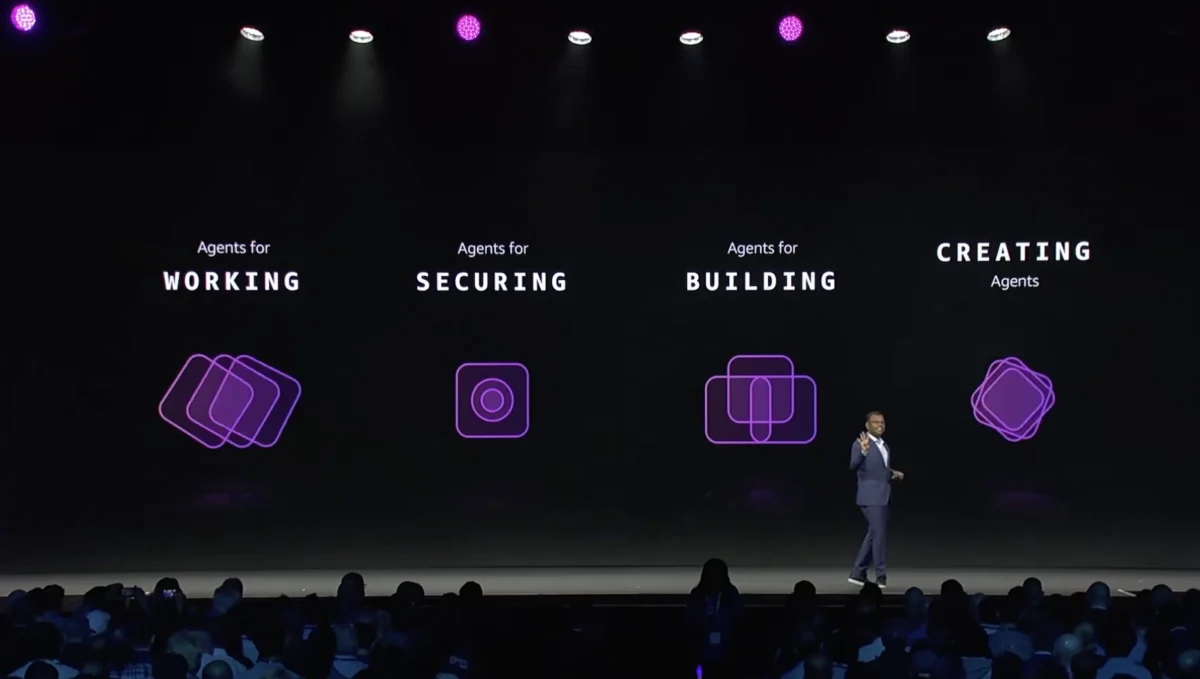
Executive Summary: A New Paradigm for Generative AI
Last week, the cloud computing landscape shifted as thousands of developers, enterprise leaders, and technology enthusiasts converged at the Javits Center for the AWS Summit New York City. The event served as a high-stakes showcase for Amazon Web Services’ latest innovations, but it was defined by a single, overarching theme: the transition from static generative AI models to "agentic" systems.
Dr. Swami Sivasubramanian, Vice President of Agentic AI at AWS, took center stage to articulate a vision that moves beyond simple chatbots and text generation. The core thesis presented was one of "compounding value"—the idea that AI agents should not only perform discrete tasks but should evolve, learn, and improve their utility the longer they operate within a business environment. This shift marks a departure from the "one-and-done" query-response model toward persistent, autonomous workflows capable of managing complex enterprise logic.
The Chronology of Innovation: From Models to Agents
The Summit was not merely a networking opportunity; it was a launchpad for a series of technical releases designed to bridge the gap between AI theory and operational reality.
The Keynote Vision
In his keynote address, Dr. Sivasubramanian outlined the roadmap for the coming year. He emphasized that the next frontier in cloud computing is not just about the size of a Large Language Model (LLM) or the speed of its inference, but about the "agentic orchestration"—the ability of AI to plan, reason, and execute multi-step processes across heterogeneous software stacks.
Key Announcements and Technical Milestones
While the summit served as the primary venue for these revelations, the following days saw a cascading series of updates to the AWS ecosystem. For observers tracking the "What’s New with AWS" portal, the announcements were consistent with the narrative of lowering the barrier to entry for complex AI integration.
The technical updates focused on three primary pillars:
- Model Versatility: Expanding support for a wider array of foundation models to ensure that developers can choose the right tool for specific agentic tasks.
- Operational Efficiency: Reducing the latency and overhead associated with long-running agent processes.
- Security and Governance: Introducing guardrails that allow agents to operate within the strict compliance boundaries of regulated industries like finance and healthcare.
Supporting Data: Why "Compounding Value" Matters
To understand the significance of the shift toward agentic AI, one must look at the current state of enterprise AI adoption. According to industry analysis, while over 80% of organizations have experimented with generative AI, less than 20% have successfully moved these projects into high-value production workflows.
The "compounding value" thesis addresses the primary bottleneck in this adoption curve: integration fatigue. In the current paradigm, developers spend significant time building "glue code" to connect AI models to internal databases, CRM systems, and legacy APIs. AWS’s new agentic approach aims to automate this glue.
- Efficiency Gains: By utilizing agentic workflows, preliminary AWS benchmarks suggest a 40% reduction in the time required for developers to deploy end-to-end automated business processes.
- Performance Metrics: The focus on infrastructure optimization—often seen in the "Price Reductions" section of the recent AWS updates—is not just about lower costs; it is about providing the massive compute overhead required for iterative agentic reasoning. When an agent "thinks" through a problem rather than providing an instant response, the compute cost rises. AWS’s commitment to lowering these prices is a strategic move to make agentic AI economically viable at scale.
Official Responses and Strategic Direction
The leadership team at AWS has been clear about their intent: they want to be the "home" for the agentic enterprise.
"We are moving from an era of generation to an era of action," stated Dr. Sivasubramanian during the summit. "An agent that cannot connect to your data, your tools, and your business processes is merely a toy. We are building the engine that turns those toys into essential corporate infrastructure."
This sentiment is echoed by AWS’s broader ecosystem strategy. By investing heavily in the "AWS Builder Center" and fostering community-driven development, the company is attempting to create a network effect. The goal is for the most sophisticated AI agents to be built on AWS not just because of the compute power, but because the ecosystem provides the best "hooks" into the existing enterprise software landscape.
Implications for the Tech Landscape
The pivot toward agentic AI will have profound implications for several key sectors of the technology industry.
1. The Death of the "One-Off" AI Prototype
Enterprises that have been treating AI as a "cool feature" to add to their apps will find themselves behind. The new standard requires AI that maintains context over weeks and months. This will necessitate a massive architectural shift in how companies store and access their operational data.
2. The Resurgence of Data Governance
As AI agents become more autonomous, the risk of "hallucination" or unauthorized data access increases. AWS’s focus on secure, enterprise-grade agents implies a future where data governance is baked into the model’s architecture rather than bolted on as an afterthought.

3. The Economic Shift in Cloud Spend
We are likely to see a shift from "compute-per-query" pricing to "value-per-outcome" metrics. As agents compound value, the cloud providers that offer the best "reasoning-to-cost" ratio will capture the lion’s share of the enterprise market.
Looking Ahead: The Weekly Roundup and Beyond
As the echoes of the New York Summit fade, the focus shifts to implementation. For the developer community, the next few months will be critical. The "Weekly Roundup" blog, curated by industry veterans like Channy, will serve as the primary pulse-check for how these high-level architectural shifts manifest in day-to-day AWS operations.
The commitment shown by AWS to increase performance while simultaneously driving down costs suggests a long-term play. They are preparing for an explosion in demand for compute resources as agents begin to run continuously in the background of global business operations.
Conclusion: Preparing for the Agentic Future
The AWS Summit New York City was more than a promotional event; it was a signal of a mature industry. We are leaving the "hype" phase of Generative AI and entering the "utility" phase. Whether through the new capabilities in the AWS Builder Center or the upcoming community events, the message to builders is clear: the tools are now available to create AI that doesn’t just answer questions, but performs work.
For those looking to stay at the cutting edge, the advice from the AWS leadership remains consistent: lean into the community, attend the developer-focused events, and start architecting your systems with the assumption that your AI will be a persistent, compounding member of your workforce.
The roadmap for the remainder of 2026 is ambitious. With further updates expected in the "What’s New" feed, the cloud will continue to evolve into a more intelligent, autonomous, and proactive environment. For the builder, the opportunity has never been greater—but the requirement for technical depth and architectural foresight has never been higher.
For ongoing updates on these developments, readers are encouraged to monitor the AWS News Blog and participate in the AWS Builder Center.
 Neng Nana
  Lina Hope