
 By Layla Zulfa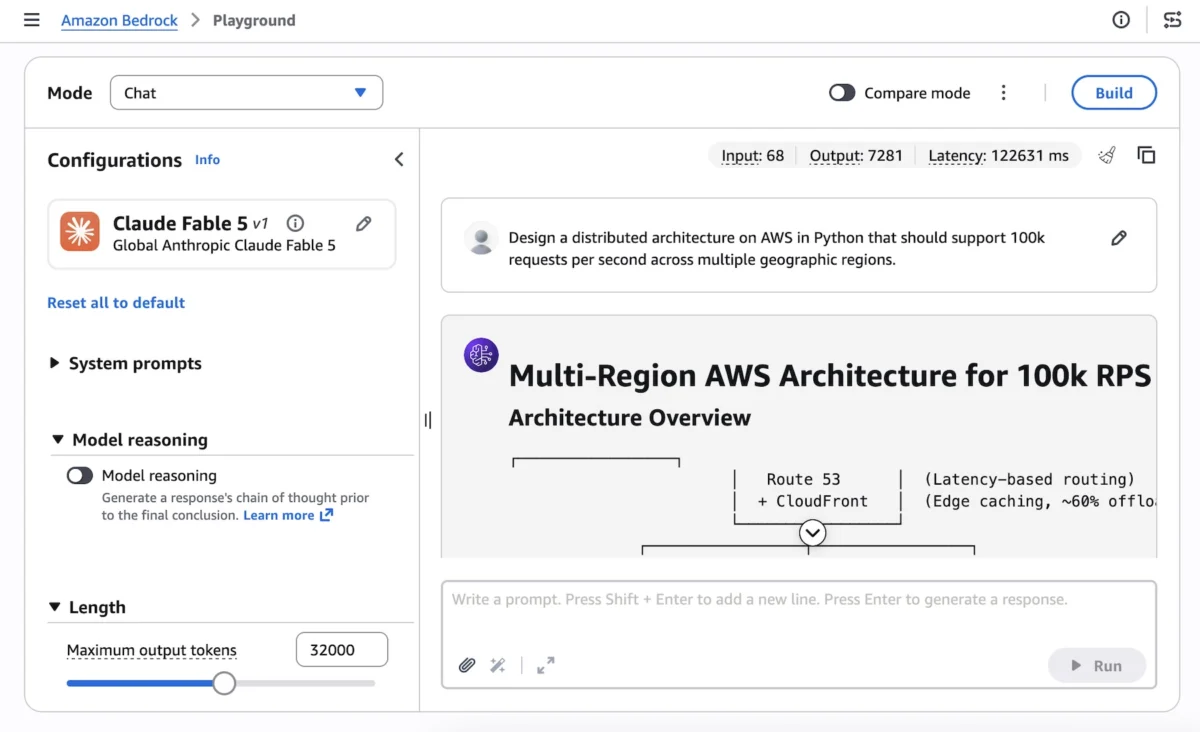
Date: July 1, 2026
The landscape of generative artificial intelligence witnessed a turbulent series of developments this June, as Anthropic and Amazon Web Services (AWS) navigated the complex intersection of high-performance model deployment, strict data governance, and shifting geopolitical regulatory requirements. The saga of "Claude Fable 5" serves as a quintessential case study in the modern challenges of scaling frontier AI models within enterprise cloud environments.
Main Facts: The Arrival of a New Frontier
On June 9, 2026, the technology sector was abuzz with the announcement that Claude Fable 5—Anthropic’s latest flagship model—had arrived on Amazon Bedrock and the Claude Platform on AWS. Positioned as a "step-change" in AI capability, Fable 5 was engineered to handle the most demanding computational workloads, including complex software engineering, intricate knowledge synthesis, and advanced vision processing.
Claude Fable 5 was designed to bring "Mythos-level" capabilities to a broader enterprise audience. However, the release came with a critical caveat: safety. Anthropic implemented a sophisticated gating mechanism where high-risk prompts—specifically those involving cybersecurity, advanced biology, chemistry, or sensitive health data—were automatically routed to the more conservative Opus 4.8 model. The "unrestricted" version, dubbed Claude Mythos 5, was strictly reserved for a small, vetted cohort of users, emphasizing the industry’s growing commitment to responsible AI deployment.
Chronology of a Volatile Month
The trajectory of the Fable 5 release was anything but linear. The month of June 2026 saw rapid iterations in technical requirements and sudden shifts in availability.
- June 9, 2026: Official launch of Claude Fable 5 on Amazon Bedrock. The release was accompanied by technical documentation for the
bedrock-mantleandbedrock-runtimeendpoints. - June 10, 2026: Following initial feedback, AWS updated the implementation guide to include support for AWS SigV4 (Signature Version 4) and expanded AWS CLI support for managing data retention settings.
- June 12, 2026: A sudden halt. In a move that shocked the developer community, access to both Claude Fable 5 and Mythos 5 was revoked on Amazon Bedrock. This action was taken to ensure compliance with a new US Government export control directive.
- July 1, 2026: Restoration of service. After weeks of regulatory review and compliance alignment, AWS and Anthropic successfully restored access to the models, allowing enterprise customers to resume their workflows.
The Data Governance Hurdle
A central theme of the Fable 5 release was the stringent data retention requirement. Unlike previous iterations of Claude, accessing Fable 5 necessitated a mandatory opt-in to a "provider data share" mode.
Anthropic required a 30-day retention window for both inputs and outputs to facilitate human review and abuse detection—a prerequisite for the company to grant access to a model of such potency. This requirement underscored the tension between the "black box" nature of proprietary AI and the transparency required by enterprise security teams. The lack of a console UI for this specific setting at launch forced developers to interact directly with the Data Retention API, creating a barrier to entry that favored sophisticated engineering teams over casual users.
Technical Implications: Engineering for Scale
For organizations integrating Claude Fable 5, the model represents a significant leap in performance. By utilizing the Anthropic Messages API or the Boto3 SDK, developers can architect systems capable of handling massive concurrency.
The sample architecture provided by AWS for a system supporting 100,000 requests per second across multiple geographic regions highlights the intended use case for Fable 5: high-stakes, long-running, and mission-critical enterprise applications. The flexibility offered through both the bedrock-runtime and the bedrock-mantle endpoints allows for a "unified multi-model experience," where developers can swap between Fable 5 and other models depending on the specific cost-performance requirements of a given task.
Official Responses and Regulatory Context
The June 12 suspension of the model was perhaps the most significant event in the timeline. The brevity of the official notice—citing a "US Government export control directive"—speaks volumes about the current state of AI regulation. As frontier models like Mythos 5 approach human-level parity in sensitive fields like synthetic biology and offensive cyber operations, they are increasingly being treated as dual-use technologies, similar to high-end semiconductors or cryptographic hardware.
Anthropic’s strategy to mitigate these risks—routing potentially harmful queries to the Opus 4.8 model—demonstrates a "defense-in-depth" approach to AI safety. By limiting the capabilities of the widely available model, they provide a buffer that satisfies regulators while still delivering state-of-the-art utility to the vast majority of legitimate commercial users.
Implications for the Future of Enterprise AI
The restoration of Claude Fable 5 on July 1, 2026, marks the beginning of a new chapter. It signals that the partnership between hyperscalers like AWS and foundation model providers like Anthropic is maturing into a highly regulated, tightly managed ecosystem.

1. The Normalization of "Managed Safety"
The future of AI deployment in the enterprise will likely be defined by the "Fable/Mythos" model structure. We can expect to see more "tiered" access where the raw power of a model is gated behind compliance checks, data retention agreements, and specialized vetting processes.
2. The API-First Security Paradigm
The requirement to programmatically set data retention via the provider_data_share mode is a sign of things to come. Enterprise security teams will no longer rely on simple dashboard toggles; they will need to treat "AI Policy as Code," managing model access, data retention, and safety thresholds via CLI and SDK-driven pipelines.
3. Geopolitical Sensitivity
The June 12 outage serves as a permanent warning to enterprises: AI models are not immune to international trade law. Companies building long-term strategies around specific frontier models must now factor in "regulatory risk" alongside technical performance metrics. The ability to pivot between different models—or even different providers—is no longer a luxury but a fundamental necessity for business continuity.
Conclusion: A New Baseline
As of July 2026, Claude Fable 5 is back online, and the infrastructure surrounding it has been hardened. The episode underscores the sheer speed at which the AI industry is moving—from experimental chatbot interfaces to highly regulated, enterprise-grade, government-compliant powerhouses.
For developers and CTOs, the lesson is clear: the frontier of AI is not just about parameter counts or benchmark scores. It is about the ability to navigate the complex, rapidly shifting regulatory and security frameworks that govern the most powerful tools ever built. As we move forward, the successful deployment of models like Fable 5 will depend as much on the robustness of one’s API implementation as it does on the underlying intelligence of the model itself.
For further guidance on navigating these integration complexities, developers are encouraged to visit the official Amazon Bedrock User Guide and participate in the AWS re:Post community forums.
 Neng Nana
  Suro Senen
  Lina Hope